Effects of sodium butyrate, a new pharmacological agent, on cells in culture.
Sodium butyrate,at millimolar concentrations,when added to cell cultures produces many morphological and biochemical modifications in a reversible manner. Some of them occur in all cell lines. They concern regulatory mechanisms of gene expression and cell growth: an hyperacetylation of histone resulting from an inhibition of histone deacetylase and an arrest of cell proliferation are almost constantly observed. Some other modifications vary from one cell type to another: induction of proteins,including enzymes,hormones,hemoglobin,inhibition of cell differentiation,reversion of transformed characteristics of cells to normal morphological and biochemical pattern,increase in interferon antiviral efficiency and induction of integrated viruses. Most if not all these effects of butyrate could result from histone hyperacetylation,from changes in chromatin structures as measured by accessibility to DNases and from modifications in cytoskeleton assembly. We do not know at the present time whether butyrate acts on a very specific target site in cell or if it acts on several cell components.
View Publication
产品类型:
产品号#:
72242
产品名:
丁酸钠(Sodium Butyrate)
Lesley J and Trowbridge IS (MAR 1982)
Immunogenetics 15 3 313--20
Genetic characterization of a polymorphic murine cell-surface glycoprotein.
As described in the preceding paper,monoclonal antibodies have been raised by immunization of rats with mouse hematopoietic cells which detect a major cell-surface glycoprotein (Mr = 95 000) of mouse bone-marrow cells of the granulocytic series. While most of the monoclonal antibodies detect this molecule one bone-marrow and spleen cells of all mouse strains,two antibodies recognize alternative allelic forms of the molecule. One alloantigen is expressed in all the remaining inbred strains examined. The alloantigens are codominantly expressed on the cells of F1 mice. Backcrosses of DBA/2 and C57BL/6 with F1 mice (B6D2F1) confirmed that a single genetic locus is involved in the expression of the two antigenic forms and demonstrated linkage to Ly-m11 which has previously been mapped to mouse chromosome 2. These genetic mapping experiments and the biochemical properties of the glycoprotein suggested that it might be identical to a glycoprotein first identified on murine fibroblasts by Hughes and August and designated Pgp-1. This has been firmly established by exchange of monoclonal antibody reagents and sequential immunoprecipitations.
View Publication
产品类型:
产品号#:
产品名:
Ponchio L et al. (NOV 1995)
Blood 86 9 3314--21
Quantitation of the quiescent fraction of long-term culture-initiating cells in normal human blood and marrow and the kinetics of their growth factor-stimulated entry into S-phase in vitro.
A method for quantitating the proportion of cycling long-term culture-initiating cells (LTC-IC) in heterogeneous populations of human hematopoietic cells is described. This procedure involves incubating the cells of interest for 16 to 24 hours in a serum-free medium containing 100 ng/mL Steel factor (SF),20 ng/mL interleukin-3 (IL-3),and 20 ng/mL granulocyte-colony-stimulating factor (G-CSF),with or without 20 microCi/mL of high specific activity 3H-thymidine (3H-Tdr) before plating the recovered cells in standard LTC-IC assays. The details of this procedure are based in part on the finding that the number of LTC-IC (regardless of their cycling status) remains constant for at least 24 hours under these culture conditions,as long as 3H-Tdr is not present. In addition,we have determined that a 16-hour period of exposure to the 3H-Tdr is sufficient to maximize the discrimination of cycling LTC-IC but not long enough to allow a detectable redistribution of LTC-IC between noncycling and cycling compartments. Finally,any isotope reutilization that may occur is not sufficient to affect the LTC-IC 3H-Tdr suicide values measured. Application of this methodology to normally circulating LTC-IC showed these to be a primarily quiescent population. However,within 72 hours of incubation in a serum-free medium containing SF,IL-3,and G-CSF,most had entered S-phase,although there was no net change in their numbers. This suggests that,under certain conditions in vitro,self-renewal divisions of LTC-IC can occur and,at least initially,balance any losses of these cells due to their differentiation or death. In contrast,many of the LTC-IC in freshly aspirated samples of normal marrow were found to be proliferating,although those that were initially quiescent could also be recruited into S-phase within 72 hours in vitro when incubated under the same conditions used to stimulate circulating LTC-IC. This modified 3H-Tdr suicide procedure should facilitate further investigation of the mechanisms regulating the turnover of the most primitive compartments of human hematopoietic cells and how these may be altered in disease states or exploited for a variety of therapeutic applications.
View Publication
产品类型:
产品号#:
05150
05350
产品名:
MyeloCult™ H5100
Conneally E et al. (JAN 1996)
Blood 87 2 456--64
Rapid and efficient selection of human hematopoietic cells expressing murine heat-stable antigen as an indicator of retroviral-mediated gene transfer.
Recombinant retroviruses offer many advantages for the genetic modification of human hematopoietic cells,although their use in clinical protocols has thus far given disappointing results. There is therefore an important need to develop new strategies that will allow effectively transduced primitive hematopoietic target populations to be both rapidly characterized and isolated free of residual nontransduced but biologically equivalent cells. To address this need,we constructed a murine stem cell virus (MSCV)-based retroviral vector containing the 228-bp coding sequence of the murine heat-stable antigen (HSA) and generated helper virus-free amphotropic MSCV-HSA producer cells by transfection of GP-env AM12 packaging cells. Light density and,in some cases,lineage marker-negative (lin-) normal human marrow or mobilized peripheral blood cells preactivated by exposure to interleukin-3 (IL-3),IL-6,and Steel factor in vitro for 48 hours were then infected by cocultivation with these MSCV-HSA producer cells for a further 48 hours in the presence of the same cytokines. Fluorescence-activated cell sorting (FACS) analysis of the cells 24 hours later showed 21% to 41% (mean,27%) of those that were still CD34+ to have acquired the ability to express HSA. The extent of gene transfer to erythroid and granulopoietic progenitors (burst-forming unit-erythroid and colony-forming unit-granulocyte-macrophage),as assessed by the ability of these cells to form colonies of mature progeny in the presence of normally toxic concentrations of G418,averaged 11% and 12%,respectively,in 6 experiments. These values could be increased to 100% and 77%,respectively,by prior isolation of the CD34+HSA+ cell fraction and were correspondingly decreased to an average of 2% and 5%,respectively,in the CD34+HSA- cells. In addition,the extent of gene transfer to long-term culture-initiating cells (LTC-IC) was assessed by G418 resistance. The average gene transfer to LTC-IC-derived colony-forming cells in the unsorted population was textless or = 7% in 4 experiments. FACS selection of the initially CD34+HSA+ cells increased this value to 86% and decreased it to 3% for the LTC-IC plated from the CD34+HSA- cells. Transfer of HSA gene expression to a phenotypically defined more primitive subpopulation of CD34+ cells,ie,those expressing little or no CD38,could also be shown by FACS analysis of infected populations 24 hours after infection. These findings underscore the potential use of retroviral vectors encoding HSA for the specific identification and non-toxic selection immediately after infection of retrovirally transduced populations of primitive human hematopoietic cells. In addition,such vectors should facilitate the subsequent tracking of their marked progeny using multiparameter flow cytometry.
View Publication
产品类型:
产品号#:
04436
04064
04100
04230
04236
04431
04434
04444
04464
04531
04535
04545
04536
04564
04035
04330
04034
04044
04435
04445
04534
04544
04437
04447
产品名:
MethoCult™ SF H4436
MethoCult™ H4034 Optimum 入门试剂盒
MethoCult™ H4100
MethoCult™ H4230
MethoCult™ SF H4236
MethoCult™ H4431
MethoCult™ H4434 Classic
MethoCult™ H4434 Classic
MethoCult™ H4434 Classic 套装
MethoCult™ H4531
MethoCult™ H4535 Enriched,不含EPO
MethoCult™ H4535 Enriched,不含EPO
MethoCult™ SF H4536
MethoCult™ H4534 Classic 无 EPO 入门试剂盒
MethoCult™ 不含EPO的H4035 Optimum
MethoCult™ H4330
MethoCult™ H4034 Optimum
MethoCult™ H4034 Optimum
MethoCult™ H4435 Enriched
MethoCult™ H4435 Enriched
MethoCult™ H4534 Classic(不含 EPO)
MethoCult™ H4534 Classic(不含 EPO)
MethoCult™ Express
MethoCult™ Express
Petzer AL et al. (FEB 1996)
Proceedings of the National Academy of Sciences of the United States of America 93 4 1470--4
Self-renewal of primitive human hematopoietic cells (long-term-culture-initiating cells) in vitro and their expansion in defined medium.
A major goal of experimental and clinical hematology is the identification of mechanisms and conditions that support the expansion of transplantable hematopoietic stem cells. In normal marrow,such cells appear to be identical to (or represent a subset of) a population referred to as long-term-culture-initiating cells (LTC-ICs) so-named because of their ability to produce colony-forming cell (CFC) progeny for textgreater or = 5 weeks when cocultured with stromal fibroblasts. Some expansion of LTC-ICs in vitro has recently been described,but identification of the factors required and whether LTC-IC self-renewal divisions are involved have remained unresolved issues. To address these issues,we examined the maintenance and/or generation of LTC-ICs from single CD34+ CD38- cells cultured for variable periods under different culture conditions. Analysis of the progeny obtained from cultures containing a feeder layer of murine fibroblasts engineered to produce steel factor,interleukin (IL)-3,and granulocyte colony-stimulating factor showed that approximately 20% of the input LTC-ICs (representing approximately 2% of the original CD34+ CD38- cells) executed self-renewal divisions within a 6-week period. Incubation of the same CD34+ CD38- starting populations as single cells in a defined (serum free) liquid medium supplemented with Flt-3 ligand,steel factor,IL-3,IL-6,granulocyte colony-stimulating factor,and nerve growth factor resulted in the proliferation of initial cells to produce clones of from 4 to 1000 cells within 10 days,approximately 40% of which included textgreater or = 1 LTC-IC. In contrast,in similar cultures containing methylcellulose,input LTC-ICs appeared to persist but not divide. Overall the LTC-IC expansion in the liquid cultures was 30-fold in the first 10 days and 50-fold by the end of another 1-3 weeks. Documentation of human LTC-IC self-renewal in vitro and identification of defined conditions that permit their extensive and rapid amplification should facilitate analysis of the molecular mechanisms underlying these processes and their exploitation for a variety of therapeutic applications.
View Publication
产品类型:
产品号#:
04436
04064
04100
04230
04236
04431
04434
04444
05150
04464
04531
04535
04545
04536
04564
04035
04330
04034
04044
04435
04445
04534
04544
产品名:
MethoCult™ SF H4436
MethoCult™ H4034 Optimum 入门试剂盒
MethoCult™ H4100
MethoCult™ H4230
MethoCult™ SF H4236
MethoCult™ H4431
MethoCult™ H4434 Classic
MethoCult™ H4434 Classic
MyeloCult™ H5100
MethoCult™ H4434 Classic 套装
MethoCult™ H4531
MethoCult™ H4535 Enriched,不含EPO
MethoCult™ H4535 Enriched,不含EPO
MethoCult™ SF H4536
MethoCult™ H4534 Classic 无 EPO 入门试剂盒
MethoCult™ 不含EPO的H4035 Optimum
MethoCult™ H4330
MethoCult™ H4034 Optimum
MethoCult™ H4034 Optimum
MethoCult™ H4435 Enriched
MethoCult™ H4435 Enriched
MethoCult™ H4534 Classic(不含 EPO)
MethoCult™ H4534 Classic(不含 EPO)
Vittet D et al. (NOV 1996)
Blood 88 9 3424--31
Embryonic stem cells differentiate in vitro to endothelial cells through successive maturation steps.
The mechanisms involved in the regulation of vasculogenesis still remain unclear in mammals. Totipotent embryonic stem (ES) cells may represent a suitable in vitro model to study molecular events involved in vascular development. In this study,we followed the expression kinetics of a relatively large set of endothelial-specific markers in ES-derived embryoid bodies (EBs). Results of both reverse transcription-polymerase chain reaction and/or immunofluorescence analysis show that a spontaneous endothelial differentiation occurs during EBs development. ES-derived endothelial cells express a full range of cell lineage-specific markers: platelet endothelial cell adhesion molecule (PECAM),Flk-1,tie-1,tie-2,vascular endothelial (VE) cadherin,MECA-32,and MEC-14.7. Analysis of the kinetics of endothelial marker expression allows the distinction of successive maturation steps. Flk-1 was the first to be detected; its mRNA is apparent from day 3 of differentiation. PECAM and tie-2 mRNAs were found to be expressed only from day 4,whereas VE-cadherin and tie-1 mRNAs cannot be detected before day 5. Immunofluorescence stainings of EBs with antibodies directed against Flk-1,PECAM,VE-cadherin,MECA-32,and MEC-14.7 confirmed that the expression of these antigens occurs at different steps of endothelial cell differentiation. The addition of an angiogenic growth factor mixture including erythropoietin,interleukin-6,fibroblast growth factor 2,and vascular endothelial growth factor in the EB culture medium significantly increased the development of primitive vascular-like structures within EBs. These results indicate that this in vitro system contains a large part of the endothelial cell differentiation program and constitutes a suitable model to study the molecular mechanisms involved in vasculogenesis.
View Publication
产品类型:
产品号#:
06902
06952
00321
00322
00323
00324
00325
产品名:
Blair A et al. (MAY 1997)
Blood 89 9 3104--12
Lack of expression of Thy-1 (CD90) on acute myeloid leukemia cells with long-term proliferative ability in vitro and in vivo.
Acute myeloid leukaemia (AML) is thought to be maintained by a small population of leukemic progenitor cells. To define the phenotype of such cells with long-term proliferative capacity in vitro and in vivo,we have used the production of leukemic clonogenic cells (CFU) after 2 to 8 weeks in suspension culture as a measure of these cells in vitro and compared their phenotype with that of cells capable of engrafting nonobese diabetic severe combined immune deficient (NOD/SCID) mice. Leukemic blast peripheral blood cells were evaluated for expression of CD34 and Thy-1 (CD90) antigens. The majority of AML blast cells at diagnosis lacked expression of Thy-1. Most primary CFU-blast and the CFU detected at up to 8 weeks from suspension cultures were CD34+/Thy-1-. AML cells that were capable of engrafting NOD/SCID mice were also found to have the CD34+/Thy-1- phenotype. However,significant engraftment was achieved using both CD34+/Thy-1- and CD34- subfractions from one AML M5 patient. These results suggest that while heterogeneity exists between individual patients,the leukemic progenitor cells that are capable of maintaining the disease in vitro and in vivo differ from normal hematopoietic progenitor cells in their lack of expression of Thy-1.
View Publication
产品类型:
产品号#:
02690
02696
02697
09300
09500
09600
09650
09850
产品名:
StemSpan™ CC100
StemSpan™巨核细胞扩增添加物 (100X)
StemSpan™ CC110
含有10% 牛血清白蛋白(BSA)的 Iscove's MDM
BIT 9500血清替代物
StemSpan™ SFEM
StemSpan™ SFEM
Kö et al. (JUN 1998)
Bone marrow transplantation 21 Suppl 3 S48--53
An eight-fold ex vivo expansion of long-term culture-initiating cells from umbilical cord blood in stirred suspension cultures.
Simultaneous ex vivo expansion of different progenitor cell types may be beneficial for cord blood (CB) transplantation,to overcome a potential limitation due to restricted cell numbers. Therefore,1.5 x 10(6) CD34+ cells isolated from fresh or thawed CB samples were inoculated in a large-scale stirred suspension bioreactor and cultured in the presence of Flt3-L,SCF and IL-3. At days 0,7,10,14,21 and 28,the spinner cultures were analyzed for viable cells,colony-forming cells (CFC),including erythroid burst-forming unit (BFU-E),granulocyte-macrophage colony-forming unit (CFU-GM) and granulocyte-erythrocyte-megakaryocyte-monocyte colony-forming unit (CFU-GEMM) as well as long-term culture-initiating cells (LTC-IC). Expansion of thawed CD34+ cells resulted in a substantial amplification of total cells (maximal at day 28: 154 +/- 132-fold),CFC (maximal at day 14: 45 +/- 36-fold),CFU-GM (maximal at day 14: 88 +/- 85-fold),CFU-GEMM (maximal at day 7: 4 +/- 2-fold) and of LTC-IC (maximal at day 10: 8 +/- 3-fold). There was no significant difference between fresh and thawed CD34+ cells. These results demonstrate that simultaneously committed progenitors as well as the more immature CFU-GEMM and LTC-IC can be substantially amplified from CD34+-enriched CB samples in large-scale stirred suspension cultures within 7-14 days without exhausting the proliferative potential and,thus,it may be possible to improve CB transplantation by ex vivo generated cells.
View Publication
产品类型:
产品号#:
05150
05350
产品名:
MyeloCult™ H5100
Miyoshi H et al. (JAN 1999)
Science (New York,N.Y.) 283 5402 682--6
Transduction of human CD34+ cells that mediate long-term engraftment of NOD/SCID mice by HIV vectors.
Efficient gene transfer into human hematopoietic stem cells (HSCs) is an important goal in the study of the hematopoietic system as well as for gene therapy of hematopoietic disorders. A lentiviral vector based on the human immunodeficiency virus (HIV) was able to transduce human CD34+ cells capable of stable,long-term reconstitution of nonobese diabetic/severe combined immunodeficient (NOD/SCID) mice. High-efficiency transduction occurred in the absence of cytokine stimulation and resulted in transgene expression in multiple lineages of human hematopoietic cells for up to 22 weeks after transplantation.
View Publication
Hwang GH et al. (DEC 2017)
Journal of cellular physiology 232 12 3384--3395
Purification of small molecule-induced cardiomyocytes from human induced pluripotent stem cells using a reporter system.
In order to realize the practical use of human pluripotent stem cell (hPSC)-derived cardiomyocytes for the purpose of clinical use or cardiovascular research,the generation of large numbers of highly purified cardiomyocytes should be achieved. Here,we show an efficient method for cardiac differentiation of human induced pluripotent stem cells (hiPSCs) in chemically defined conditions and purification of hiPSC-derived cardiomyocytes using a reporter system. Regulation of the Wnt/β-catenin signaling pathway is implicated in the induction of the cardiac differentiation of hPSCs. We increased cardiac differentiation efficiency of hiPSCs in chemically defined conditions through combined treatment with XAV939,a tankyrase inhibitor and IWP2,a porcupine inhibitor and optimized concentrations. Although cardiac differentiation efficiency was high (>80%),it was difficult to suppress differentiation into non-cardiac cells,Therefore,we applied a lentiviral reporter system,wherein green fluorescence protein (GFP) and Zeocin-resistant gene are driven by promoter activation of a gene (TNNT2) encoding cardiac troponin T (cTnT),a cardiac-specific protein,to exclude non-cardiomyocytes from differentiated cell populations. We transduced this reporter construct into differentiated cells using a lentiviral vector and then obtained highly purified hiPSC-derived cardiomyocytes by treatment with the lowest effective dose of Zeocin. We significantly increased transgenic efficiency through manipulation of the cells in which the differentiated cells were simultaneously infected with virus and re-plated after single-cell dissociation. Purified cells specifically expressed GFP,cTnT,displayed typical properties of cardiomyocytes. This study provides an efficient strategy for obtaining large quantities of highly purified hPSC-derived cardiomyocytes for application in regenerative medicine and biomedical research.
View Publication


 EasySep™小鼠TIL(CD45)正选试剂盒





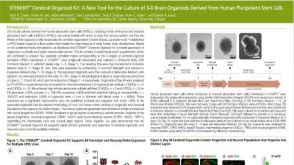 科学海报STEMdiff Cerebral Organoid Kit: A New Tool for the Culture of 3D Brain Organoids Derived from Human Pluripotent Stem Cells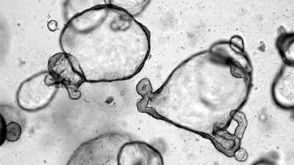

 沪公网安备31010102008431号