Abdelwahab SF et al. (DEC 2003)
Proceedings of the National Academy of Sciences of the United States of America 100 25 15006--10
HIV-1-suppressive factors are secreted by CD4+ T cells during primary immune responses.
CD4+ T cells are required for immunity against many viral infections,including HIV-1 where a positive correlation has been observed between strong recall responses and low HIV-1 viral loads. Some HIV-1-specific CD4+ T cells are preferentially infected with HIV-1,whereas others escape infection by unknown mechanisms. One possibility is that some CD4+ T cells are protected from infection by the secretion of soluble HIV-suppressive factors,although it is not known whether these factors are produced during primary antigen-specific responses. Here,we show that soluble suppressive factors are produced against CXCR4 and CCR5 isolates of HIV-1 during the primary immune response of human CD4+ T cells. This activity requires antigenic stimulation of naïve CD4+ T cells. One anti-CXCR4 factor is macrophage-derived chemokine (chemokine ligand 22,CCL22),and anti-CCR5 factors include macrophage inflammatory protein-1 alpha (CCL3),macrophage inflammatory protein-1 beta (CCL4),and RANTES (regulated upon activation of normal T cells expressed and secreted) (CCL5). Intracellular staining confirms that CD3+CD4+ T cells are the source of the prototype HIV-1-inhibiting chemokines CCL22 and CCL4. These results show that CD4+ T cells secrete an evolving HIV-1-suppressive activity during the primary immune response and that this activity is comprised primarily of CC chemokines. The data also suggest that production of such factors should be considered in the design of vaccines against HIV-1 and as a mechanism whereby the host can control infections with this virus.
View Publication
产品类型:
产品号#:
09500
09600
09650
19155
19155RF
产品名:
BIT 9500血清替代物
StemSpan™ SFEM
StemSpan™ SFEM
Fang H et al. (APR 2005)
Journal of immunology (Baltimore,Md. : 1950) 174 8 4966--71
Anthrax lethal toxin blocks MAPK kinase-dependent IL-2 production in CD4+ T cells.
Anthrax lethal toxin (LT) is a critical virulence factor that cleaves and inactivates MAPK kinases (MAPKKs) in host cells and has been proposed as a therapeutic target in the treatment of human anthrax infections. Despite the potential use of anti-toxin agents in humans,the standard activity assays for anthrax LT are currently based on cytotoxic actions of anthrax LT that are cell-,strain-,and species-specific,which have not been demonstrated to occur in human cells. We now report that T cell proliferation and IL-2 production inversely correlate with anthrax LT levels in human cell assays. The model CD4+ T cell tumor line,Jurkat,is a susceptible target for the specific protease action of anthrax LT. Anthrax LT cleaves and inactivates MAPKKs in Jurkat cells,whereas not affecting proximal or parallel TCR signal transduction pathways. Moreover,anthrax LT specifically inhibits PMA/ionomycin- and anti-CD3-induced IL-2 production in Jurkat cells. An inhibitor of the protease activity of anthrax LT completely restores IL-2 production by anthrax LT-treated Jurkat cells. Anthrax LT acts on primary CD4+ T cells as well,cleaving MAPKKs and leading to a 95% reduction in anti-CD3-induced proliferation and IL-2 production. These findings not only will be useful in the development of new human cell-based bioassays for the activity of anthrax LT,but they also suggest new mechanisms that facilitate immune evasion by Bacillus anthracis. Specifically,anthrax LT inhibits IL-2 production and proliferative responses in CD4+ T cells,thereby blocking functions that are pivotal in the regulation of immune responses.
View Publication
产品类型:
产品号#:
15022
15062
产品名:
RosetteSep™人CD4+ T细胞富集抗体混合物
RosetteSep™人CD4+ T细胞富集抗体混合物
E. Drent et al. (jul 2019)
Clinical cancer research : an official journal of the American Association for Cancer Research 25 13 4014--4025
Combined CD28 and 4-1BB Costimulation Potentiates Affinity-tuned Chimeric Antigen Receptor-engineered T Cells.
PURPOSE Targeting nonspecific,tumor-associated antigens (TAA) with chimeric antigen receptors (CAR) requires specific attention to restrict possible detrimental on-target/off-tumor effects. A reduced affinity may direct CAR-engineered T (CAR-T) cells to tumor cells expressing high TAA levels while sparing low expressing normal tissues. However,decreasing the affinity of the CAR-target binding may compromise the overall antitumor effects. Here,we demonstrate the prime importance of the type of intracellular signaling on the function of low-affinity CAR-T cells. EXPERIMENTAL DESIGN We used a series of single-chain variable fragments (scFv) with five different affinities targeting the same epitope of the multiple myeloma-associated CD38 antigen. The scFvs were incorporated in three different CAR costimulation designs and we evaluated the antitumor functionality and off-tumor toxicity of the generated CAR-T cells in vitro and in vivo. RESULTS We show that the inferior cytotoxicity and cytokine secretion mediated by CD38 CARs of very low-affinity (Kd {\textless} 1.9 × 10⁻⁶ mol/L) bearing a 4-1BB intracellular domain can be significantly improved when a CD28 costimulatory domain is used. Additional 4-1BB signaling mediated by the coexpression of 4-1BBL provided the CD28-based CD38 CAR-T cells with superior proliferative capacity,preservation of a central memory phenotype,and significantly improved in vivo antitumor function,while preserving their ability to discriminate target antigen density. CONCLUSIONS A combinatorial costimulatory design allows the use of very low-affinity binding domains (Kd {\textless} 1 mumol/L) for the construction of safe but also optimally effective CAR-T cells. Thus,very-low-affinity scFvs empowered by selected costimulatory elements can enhance the clinical potential of TAA-targeting CARs.
View Publication
产品类型:
产品号#:
04534
04544
17856
17856RF
100-1569
产品名:
MethoCult™ H4534 Classic(不含 EPO)
MethoCult™ H4534 Classic(不含 EPO)
EasySep™人CD34正选试剂盒 II
EasySep™人CD34正选试剂盒 II
EasySep™人CD34正选试剂盒 II
P. Li et al. (mar 2022)
Journal for immunotherapy of cancer 10 3
1$\alpha$,25(OH)2D3 reverses exhaustion and enhances antitumor immunity of human cytotoxic T cells.
BACKGROUND Epidemiological surveys have revealed that low serum vitamin D level was correlated with increased risk of tumors. Dysfunctional T cells in patients with tumor are characterized as exhausted with high levels of immune checkpoint receptors (ICRs). However,whether the reduced level of vitamin D in patients with cancer correlates with cytotoxic T-cell exhaustion is unknown. METHODS Periphery blood samples from 172 patients with non-small cell lung cancer (NSCLC) were prospectively collected. Patients with NSCLC received one course of intravenous docetaxel (75 mg/m2) followed by treatment with or without rocaltrol at a dose of 0.5-2.0 µg/day for total of 3 weeks. We performed phenotypical and functional analysis of T-cell through flow cytometry. Vitamin D receptor (VDR) knockout and overexpression CD8+ and V$\delta$2+ T cells were constructed using Cas9-gRNA targeted and overexpressing approaches to identify 1$\alpha$,25(OH)2D3/VDR-mediated transcription regulation for ICRs or antitumor activity in T cells. RESULTS We show that serum level of vitamin D is negatively correlated with expression of programmed cell death-1 (PD-1),T-cell immunoreceptor with Ig and ITIM domains (TIGIT),and T-cell immunoglobulin and mucin-domain containing-3 (Tim-3),but positively correlated with CD28 expression on CD8+ and V$\gamma$9V$\delta$2+ T cells in patients with NSCLC. 1$\alpha$,25(OH)2D3,the active form of vitamin D,promotes the nuclear translocation of VDR,which binds to the promoter region of Pdcd1,Tim3,and Tigit genes and inhibits their expression. Besides,1$\alpha$,25(OH)2D3 pretreatment also promotes the methylation of CpG island in the promoter region of the Pdcd1 gene and increases H3K27 acetylation at the promoter region of the Cd28 gene,which leads to surface PD-1 downregulation and CD28 upregulation,respectively. We further reveal that VDR-mediated Ca2+ influx enhanced expression of Th1 cytokines via T-cell receptor activation. Functionally,1$\alpha$,25(OH)2D3 pretreated CD8+ T cells or V$\gamma$9V$\delta$2+ T cells showed increased Th1 cytokine production and enhanced antitumor immunity. Finally,oral 1$\alpha$,25(OH)2D3 could also decrease expression of PD-1,Tim-3,TIGIT and increase expression of CD28,resulting in cytokine production (associated with antitumor immunity) by cytotoxic T cells of patients with NSCLC. CONCLUSIONS Our findings uncover the pleiotropic effects of 1$\alpha$,25(OH)2D3 in rescuing the exhausted phenotype of human cytotoxic T cells in patients with tumor and in promoting their antitumor immunity. TRIAL REGISTRATION NUMBER ChiCTR2100051135.
View Publication
产品类型:
产品号#:
19255
19255RF
产品名:
EasySep™人Gamma/Delta T细胞分选试剂盒
RoboSep™ 人Gamma/Delta T细胞分选试剂盒
(Feb 2024)
Pathogens and Immunity 8 2
HIV Productively Infects Highly Differentiated and Exhausted CD4+ T Cells During AIDS
Background:Throughout HIV infection,productively infected cells generate billions of viral particles and are thus responsible for body-wide HIV dissemination,but their phenotype during AIDS is unknown. As AIDS is associated with immunological changes,analyzing the phenotype of productively infected cells can help understand HIV production during this terminal stage.Methods:Blood samples from 15 untreated viremic participants (recent infection,n=5; long-term infection,n=5; active opportunistic AIDS-defining disease,n=5) and 5 participants virologically controlled on antiretroviral therapy (ART) enrolled in the Analysis of the Persistence,Reservoir and HIV Latency (APRIL) study (NCT05752318) were analyzed. Cells expressing the capsid protein p24 (p24+ cells) after 18 hours of resting or 24 hours of stimulation (HIV-Flow) revealed productively infected cells from viremic participants or translation-competent reservoir cells from treated participants,respectively.Results:The frequency of productively infected cells tended to be higher during AIDS in comparison with recent and long-term infections (median,340,72,and 32/million CD4+ T cells,respectively) and correlated with the plasma viral load at all stages of infection. Altogether,these cells were more frequently CD4low,HLA-ABClow,CD45RA-,Ki67+,PD-1+,with a non-negligible contribution from pTfh (CXCR5+PD-1+) cells,and were not significantly enriched in HIV coreceptors CCR5 nor CXCR4 expression. The comparison markers expression between stages showed that productively infected cells during AIDS were enriched in memory and exhausted cells. In contrast,the frequencies of infected pTfh were lower during AIDS compared to non-AIDS stages. A UMAP analysis revealed that total CD4+ T cells were grouped in 7 clusters and that productive p24+ cells were skewed to given clusters throughout the course of infection. Overall,the preferential targets of HIV during the latest stages seemed to be more frequently highly differentiated (memory,TTD-like) and exhausted cells and less frequently pTfh-like cells. In contrast,translation-competent reservoir cells were less frequent (5/million CD4+ T cells) and expressed more frequently HLA-ABC and less frequently PD-1.Conclusions:In long-term infection and AIDS,productively infected cells were differentiated and exhausted. This could indicate that cells with these given features are responsible for HIV production and dissemination in an immune dysfunction environment occurring during the last stages of infection.
View Publication
产品类型:
产品号#:
19052
19052RF
产品名:
EasySep™人CD4+ T细胞富集试剂盒
RoboSep™ 人CD4+ T细胞富集试剂盒含滤芯吸头
R. U. W. Friis et al. (Oct 2025)
Cancer Immunology,Immunotherapy : CII 74 11
Development of antigen multimers for detection and evaluation of CAR T cells
Chimeric antigen receptor (CAR) T cell therapy has transformed the treatment landscape of hematologic cancers by engineering T cells to specifically target and destroy cancer cells. Monitoring CAR T cell activity and function is essential for optimizing therapeutic outcomes,but existing tools for CAR detection are often limited in specificity and functional assessment capability. Methods: We developed dextran multimers by conjugating multiple CAR-specific antigens to a dextran backbone. The multimers were compared to previously reported antigen tetramers for their ability to stain and detect CAR T cells. Because these multimers incorporate the CAR target antigen,they uniquely enable assessment of CAR T cell functionality. We tested the staining and functional properties of the multimers across a range of CAR constructs with different affinities,using flow cytometry and microscopy. Results: The dextran multimers demonstrated high specificity and sensitivity in staining CAR T cells,with adjustable antigen density to optimize binding. Dextran multimers also enabled effective clustering and subsequent activation of CARs,showing their utility as both a staining and functional assessment tool. The multimers revealed that CARs with different affinities and clustering tendencies displayed varied binding and activation in response to different antigen densities. Conclusions: Dextran multimers offer a dual advantage as versatile reagents for both staining and functional analysis of CAR T cells. Their capacity to engage CARs with the specific antigen provides a valuable platform for evaluating CAR functionality,informing CAR design improvements,and enhancing therapeutic precision.
View Publication
产品类型:
产品号#:
100-0695
17951
17951RF
产品名:
EasySep™人T细胞分选试剂盒
EasySep™人T细胞分选试剂盒
RoboSep™ 人T细胞分选试剂盒
A. M. Metelo et al. (mar 2022)
Cancer research communications 2 3 158--171
Allogeneic Anti-BCMA CAR T Cells Are Superior to Multiple Myeloma-derived CAR T Cells in Preclinical Studies and May Be Combined with Gamma Secretase Inhibitors.
UNLABELLED Multiple myeloma remains an incurable plasma cell malignancy despite the rapidly evolving treatment landscape. Chimeric antigen receptor T cells targeted against BCMA have recently shown great promise in relapsed refractory multiple myeloma; however,all patients ultimately still progress from their disease. Lack of CAR T-cell persistence,impaired T-cell fitness in autologous CAR T-cell products and the presence of an immunosuppressive bone marrow (BM) microenvironment are contributory factors to treatment failure. We generated anti-BCMA CAR T cells from healthy donors (HD) and patients with multiple myeloma at different stages of disease to compare their T-cell profile,fitness,and cytotoxic activity in preclinical studies. We also used an ex vivo assay with multiple myeloma BM biopsies from distinct genomic subgroups to test the efficacy of HD-derived CAR T cells in a clinically relevant model. HD volunteers showed increased T-cell counts,higher CD4/CD8 ratio,and expanded na{\{i}}ve T-cell population compared with patients with multiple myeloma. After anti-BCMA CAR T-cell production patients with relapsed multiple myeloma had lower frequencies of CAR+ T cells decreased central memory phenotype and increased checkpoint inhibitory markers compared with HD-derived products which compromised their expansion and cytotoxicity against multiple myeloma cells in vitro. Importantly HD-derived CAR T cells efficiently killed primary multiple myeloma cells within the BM microenvironment of different multiple myeloma genomic subgroups and their cytotoxic activity could be boosted with gamma secretase inhibitors. In conclusion allogeneic anti-BCMA CAR T cells are a potential therapeutic strategy for patients with relapsed multiple myeloma and should be further developed in the clinic. SIGNIFICANCE Multiple myeloma is an incurable cancer of the plasma cells. A new therapy with anti-BCMA CAR T cells - the patient's own T cells genetically engineered to find and kill myeloma cancer cells - has shown encouraging results. Unfortunately patients still relapse. In this study we propose to use T cells from HD volunteers which have a stronger T-cell fitness higher cancer killing capacity and are ready to be administered when needed."
View Publication
产品类型:
产品号#:
19051
19051RF
产品名:
EasySep™人T细胞富集试剂盒
RoboSep™ 人T细胞富集试剂盒含滤芯吸头
L. Hang et al. (apr 2019)
Journal of immunology (Baltimore,Md. : 1950) 202 8 2473--2481
Heligmosomoides polygyrus bakeri Infection Decreases Smad7 Expression in Intestinal CD4+ T Cells, Which Allows TGF-beta to Induce IL-10-Producing Regulatory T Cells That Block Colitis.
Helminthic infections modulate host immunity and may protect their hosts from developing immunological diseases like inflammatory bowel disease. Induction of regulatory T cells (Tregs) may be an important part of this protective process. Heligmosomoides polygyrus bakeri infection also promotes the production of the regulatory cytokines TGF-beta and IL-10 in the gut. In the intestines,TGF-beta helps induce regulatory T cells. This study used Foxp3/IL-10 double reporter mice to investigate the effect of TGF-beta on the differentiation of colon and mesenteric lymph node-derived murine Foxp3- IL-10- CD4+ T cells into their regulatory phenotypes. Foxp3- IL-10- CD4+ T cells from H. polygyrus bakeri-infected mice,as opposed to T cells from uninfected animals,cultured in vitro with TGF-beta and anti-CD3/CD28 mAb differentiated into Foxp3+ and/or IL-10+ T cells. The IL-10-producing T cells nearly all displayed CD25. Smad7 is a natural inhibitor of TGF-beta signaling. In contrast to gut T cells from uninfected mice,Foxp3- IL10- CD4+ T cells from H. polygyrus bakeri-infected mice displayed reduced Smad7 expression and responded to TGF-beta with Smad2/3 phosphorylation. The TGF-beta-induced Tregs that express IL-10 blocked colitis when transferred into the Rag/CD25- CD4+ T cell transfer model of inflammatory bowel disease. TGF-beta had a greatly diminished capacity to induce Tregs in H. polygyrus bakeri-infected transgenic mice with constitutively high T cell-specific Smad7 expression. Thus,infection with H. polygyrus bakeri causes down-modulation in Smad7 expression in intestinal CD4+ T cells,which allows the TGF-beta produced in response to the infection to induce the Tregs that prevent colitis.
View Publication
产品类型:
产品号#:
19751
19751RF
产品名:
B. L. Jamison et al. (jul 2019)
Journal of immunology (Baltimore,Md. : 1950) 203 1 48--57
Nanoparticles Containing an Insulin-ChgA Hybrid Peptide Protect from Transfer of Autoimmune Diabetes by Shifting the Balance between Effector T Cells and Regulatory T Cells.
CD4 T cells play a critical role in promoting the development of autoimmunity in type 1 diabetes. The diabetogenic CD4 T cell clone BDC-2.5,originally isolated from a NOD mouse,has been widely used to study the contribution of autoreactive CD4 T cells and relevant Ags to autoimmune diabetes. Recent work from our laboratory has shown that the Ag for BDC-2.5 T cells is a hybrid insulin peptide (2.5HIP) consisting of an insulin C-peptide fragment fused to a peptide from chromogranin A (ChgA) and that endogenous 2.5HIP-reactive T cells are major contributors to autoimmune pathology in NOD mice. The objective of this study was to determine if poly(lactide-co-glycolide) (PLG) nanoparticles (NPs) loaded with the 2.5HIP Ag (2.5HIP-coupled PLG NPs) can tolerize BDC-2.5 T cells. Infusion of 2.5HIP-coupled PLG NPs was found to prevent diabetes in an adoptive transfer model by impairing the ability of BDC-2.5 T cells to produce proinflammatory cytokines through induction of anergy,leading to an increase in the ratio of Foxp3+ regulatory T cells to IFN-gamma+ effector T cells. To our knowledge,this work is the first to use a hybrid insulin peptide,or any neoepitope,to re-educate diabetogenic T cells and may have significant implications for the development of an Ag-specific therapy for type 1 diabetes patients.
View Publication
M. Dobersberger et al. (Mar 2024)
Cell Reports Methods 4 4
An engineering strategy to target activated EGFR with CAR T cells
Chimeric antigen receptor (CAR) T cells have shown remarkable response rates in hematological malignancies. In contrast,CAR T cell treatment of solid tumors is associated with several challenges,in particular the expression of most tumor-associated antigens at lower levels in vital organs,resulting in on-target/off-tumor toxicities. Thus,innovative approaches to improve the tumor specificity of CAR T cells are urgently needed. Based on the observation that many human solid tumors activate epidermal growth factor receptor (EGFR) on their surface through secretion of EGFR ligands,we developed an engineering strategy for CAR-binding domains specifically directed against the ligand-activated conformation of EGFR. We show,in several experimental systems,that the generated binding domains indeed enable CAR T cells to distinguish between active and inactive EGFR. We anticipate that this engineering concept will be an important step forward to improve the tumor specificity of CAR T cells directed against EGFR-positive solid cancers.
View Publication


 EasySep™小鼠TIL(CD45)正选试剂盒




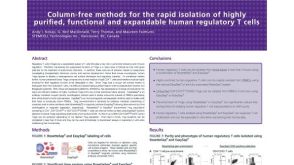 科学海报Rapid Isolation of Highly Purified, Functional and Expandable Human Regulatory T Cells
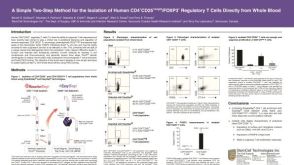 科学海报Isolation of Human CD4+CD25+Bright/Foxp3+ Regulatory T Cells Directly from Whole Blood
 沪公网安备31010102008431号