Nudel I et al. (JAN 2011)
Journal of immunology (Baltimore,Md. : 1950) 186 2 891--900
Dendritic cells in distinct oral mucosal tissues engage different mechanisms to prime CD8+ T cells.
Although oral dendritic cells (DCs) were shown to induce cell-mediated immunity,the identity and function of the various oral DC subsets involved in this process is unclear. In this study,we examined the mechanisms used by DCs of the buccal mucosa and of the lining mucosa to elicit immunity. After plasmid DNA immunization,buccally immunized mice generated robust local and systemic CD8(+) T cell responses,whereas lower responses were seen by lining immunization. A delayed Ag presentation was monitored in vivo in both groups; yet,a more efficient presentation was mediated by buccal-derived DCs. Restricting transgene expression to CD11c(+) cells resulted in diminished CD8(+) T cell responses in both oral tissues,suggesting that immune induction is mediated mainly by cross-presentation. We then identified,in addition to the previously characterized Langerhans cells (LCs) and interstitial dendritic cells (iDCs),a third DC subset expressing the CD103(+) molecule,which represents an uncharacterized subset of oral iDCs expressing the langerin receptor (Ln(+)iDCs). Using Langerin-DTR mice,we demonstrated that whereas LCs and Ln(+)iDCs were dispensable for T cell induction in lining-immunized mice,LCs were essential for optimal CD8(+) T cell priming in the buccal mucosa. Buccal LCs,however,failed to directly present Ag to CD8(+) T cells,an activity that was mediated by buccal iDCs and Ln(+)iDCs. Taken together,our findings suggest that the mechanisms engaged by oral DCs to prime T cells vary between oral mucosal tissues,thus emphasizing the complexity of the oral immune network. Furthermore,we found a novel regulatory role for buccal LCs in potentiating CD8(+) T cell responses.
View Publication
产品类型:
产品号#:
19758
产品名:
Wu X et al. (JAN 2010)
PloS one 5 12 e15549
Selective induction of DNA repair pathways in human B cells activated by CD4+ T cells.
Greater than 75% of all hematologic malignancies derive from germinal center (GC) or post-GC B cells,suggesting that the GC reaction predisposes B cells to tumorigenesis. Because GC B cells acquire expression of the highly mutagenic enzyme activation-induced cytidine deaminase (AID),GC B cells may require additional DNA repair capacity. The goal of this study was to investigate whether normal human B cells acquire enhanced expression of DNA repair factors upon AID induction. We first demonstrated that several DNA mismatch repair,homologous recombination,base excision repair,and ATR signaling genes were overexpressed in GC B cells relative to naïve and memory B cells,reflecting activation of a process we have termed somatic hyperrepair (SHR). Using an in vitro system,we next characterized activation signals required to induce AID expression and SHR. Although AID expression was induced by a variety of polyclonal activators,SHR induction strictly required signals provided by contact with activated CD4+ T cells,and B cells activated in this manner displayed reduced levels of DNA damage-induced apoptosis. We further show the induction of SHR is independent of AID expression,as GC B cells from AID-/-mice retained heightened expression of SHR proteins. In consideration of the critical role that CD4+ T cells play in inducing the SHR process,our data suggest a novel role for CD4+ T cells in the tumor suppression of GC/post-GC B cells.
View Publication
产品类型:
产品号#:
19054
19054RF
产品名:
EasySep™人B细胞富集试剂盒
RoboSep™ 人B细胞富集试剂盒含滤芯吸头
Woods KM et al. (FEB 2011)
Journal of immunology (Baltimore,Md. : 1950) 186 3 1755--62
CR2+ marginal zone B cell production of pathogenic natural antibodies is C3 independent.
Intestinal ischemia-reperfusion (IR)-induced damage requires complement receptor 2 (CR2) for generation of the appropriate natural Ab repertoire. Pathogenic Abs recognize neoantigens on the ischemic tissue,activate complement,and induce intestinal damage. Because C3 cleavage products act as ligands for CR2,we hypothesized that CR2(hi) marginal zone B cells (MZBs) require C3 for generation of the pathogenic Abs. To explore the ability of splenic CR2(+) B cells to generate the damaging Ab repertoire,we adoptively transferred either MZBs or follicular B cells (FOBs) from C57BL/6 or Cr2(-/-) mice into Rag-1(-/-) mice. Adoptive transfer of wild type CR2(hi) MZBs but not CR2(lo) FOBs induced significant damage,C3 deposition,and inflammation in response to IR. In contrast,similarly treated Rag-1(-/-) mice reconstituted with either Cr2(-/-) MZB/B1 B cells (B1Bs) or FOBs lacked significant intestinal damage and displayed limited complement activation. To determine whether C3 cleavage products are critical in CR2-dependent Ab production,we evaluated the ability of the natural Ab repertoire of C3(-/-) mice to induce damage in response to IR. Infusion of C3(-/-) serum into Cr2(-/-) mice restored IR-induced tissue damage. Furthermore,Rag-1(-/-) mice sustained significant damage after infusion of Abs from C3(-/-) but not Cr2(-/-) mice. Finally,adoptive transfer of MZBs from C3(-/-) mice into Rag-1(-/-) mice resulted in significant tissue damage and inflammation. These data indicate that CR2 expression on MZBs is sufficient to induce the appropriate Abs required for IR-induced tissue damage and that C3 is not critical for generation of the pathogenic Abs.
View Publication
产品类型:
产品号#:
19754
19754RF
产品名:
Wang E et al. (FEB 2011)
American journal of clinical pathology 135 2 291--303
Pseudo-Pelger-Huët anomaly induced by medications: a clinicopathologic study in comparison with myelodysplastic syndrome-related pseudo-Pelger-Huët anomaly.
Pseudo-Pelger-Huët anomaly (PPHA) has been documented in association with transplant medications and other drugs. This iatrogenic neutrophilic dysplasia is reversible with cessation or adjustment of medications but is frequently confused with myelodysplastic syndrome (MDS) based on the conventional concept that PPHA is a marker for dysplasia. We investigated the clinicopathologic features in iatrogenic PPHA and compared them with MDS-related PPHA. The 13 cases studied included 5 bone marrow/stem cell transplantations,3 solid organ transplantations,1 autoimmune disease,3 chronic lymphocytic leukemias,and 1 breast carcinoma. For 12 cases,there was follow-up evaluation,and all demonstrated at least transient normalization of neutrophilic segmentation. All 9 cases of MDS demonstrated at least 2 of the following pathologic abnormalities on bone marrow biopsy: hypercellularity (8/9),morphologic dysplasia (8/9),clonal cytogenetic abnormality (7/9),and increased blasts (3/9),whereas these abnormalities were typically absent in iatrogenic PPHA. Iatrogenic PPHA displayed a higher proportion of circulating PPHA cells than in MDS (mean,47.4%; SD,31.6% vs mean,12.3%; SD,9.8; P textless .01). A diagnostic algorithm is proposed in which isolated PPHA is indicative of transient or benign PPHA unless proven otherwise.
View Publication
产品类型:
产品号#:
21000
20119
20155
18081
18081RF
18681
18681RF
产品名:
RoboSep™- S
RoboSep™ 吸头组件抛光剂
RoboSep™分选管套装(9个塑料管)
Rega A et al. (MAR 2013)
Journal of immunology (Baltimore,Md. : 1950) 190 5 2391--402
Plasmacytoid dendritic cells play a key role in tumor progression in lipopolysaccharide-stimulated lung tumor-bearing mice.
The antitumor activity of LPS was first described by Dr. William Coley. However,its role in lung cancer remains unclear. The aim of our study was to elucidate the dose-dependent effects of LPS (0.1-10 μg/mouse) in a mouse model of B16-F10-induced metastatic lung cancer. Lung tumor growth increased at 3 and 7 d after the administration of low-dose LPS (0.1 μg/mouse) compared with control mice. This was associated with an influx of plasmacytoid dendritic cells (pDCs),regulatory T cells,myeloid-derived suppressor cells,and CD8(+) regulatory T cells. In contrast,high-dose LPS (10 μg/mouse) reduced lung tumor burden and was associated with a greater influx of pDCs,as well as a stronger Th1 and Th17 polarization. Depletion of pDCs during low-dose LPS administration resulted in a decreased lung tumor burden. Depletion of pDCs during high-dose LPS treatment resulted in an increased tumor burden. The dichotomy in LPS effects was due to the phenotype of pDCs,which were immunosuppressive after the low-dose LPS,and Th1- and T cytotoxic-polarizing cells after the high-dose LPS. Adoptive transfer of T cells into nude mice demonstrated that CD8(+) T cells were responsible for pDC recruitment following low-dose LPS administration,whereas CD4(+) T cells were required for pDC influx after the high-dose LPS. In conclusion,our data suggest differential effects of low-dose versus high-dose LPS on pDC phenotype and tumor progression or regression in the lungs of mice.
View Publication
Y. P. Zhu et al. (AUG 2018)
Cell reports 24 9 2329--2341.e8
Identification of an Early Unipotent Neutrophil Progenitor with Pro-tumoral Activity in Mouse and Human Bone Marrow.
Neutrophils are short-lived cells that play important roles in both health and disease. Neutrophils and monocytes originate from the granulocyte monocyte progenitor (GMP) in bone marrow; however,unipotent neutrophil progenitors are not well defined. Here,we use cytometry by time of flight (CyTOF) and single-cell RNA sequencing (scRNA-seq) methodologies to identify a committed unipotent early-stage neutrophil progenitor (NeP) in adult mouse bone marrow. Importantly,we found a similar unipotent NeP (hNeP) in human bone marrow. Both NeP and hNeP generate only neutrophils. NeP and hNeP both significantly increase tumor growth when transferred into murine cancer models,including a humanized mouse model. hNeP are present in the blood of treatment-naive melanoma patients but not of healthy subjects. hNeP can be readily identified by flow cytometry and could be used as a biomarker for early cancer discovery. Understanding the biology of hNeP should allow the development of new therapeutic targets for neutrophil-related diseases,including cancer.
View Publication


 EasySep™小鼠TIL(CD45)正选试剂盒





 产品手册用于HLA分析的细胞分选产品
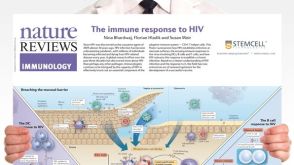 挂图The Immune Response to HIV Poster Summary of how HIV subverts the immune response to establish a chronic infection
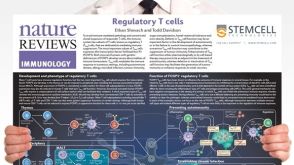 挂图Regulatory T Cells Overview of the development, phenotype and functions of regulatory T cells

 沪公网安备31010102008431号