Fusi A et al. (MAR 2011)
The Journal of investigative dermatology 131 2 487--94
Expression of the stem cell markers nestin and CD133 on circulating melanoma cells.
Different molecular markers have been identified for melanoma-initiating cells including CD133 and nestin. Assuming that metastasis requires a dissemination of tumor-initiating cells,presence of circulating tumor-initiating cells should be associated with worse patient outcome. In this study,20 ml blood was collected from 32 consecutive patients affected by metastatic melanoma and blood was enriched for circulating melanoma cells (CMCs) by CD45 depletion of the non-melanoma cell fraction. Multiparameter cytometry was carried out to co-stain with combinations of CD133 and nestin (NES). Six tissue samples from metastatic lesions of six different patients were stained with the same antibodies by immunohistochemistry. Percentage of NES-positive CMCs correlated with tumor burden and number of metastatic sites. Cox regression analysis revealed levels of lactate dehydrogenase (LDH; hazard ratio: 12.8 (1.35-121.5); P=0.02),number of metastatic sites (hazard ratio 3.87 (1.66-9.03); P=0.02),tumor burden (hazard ratio 5.72 (1.57-20.9); P=0.01),and percentage of NES-expressing CMCs ≥ 35% (hazard ratio 5.73 (1.66-19.7); P=0.006) to be factors related to shorter overall survival. CD133- and NES-expression profiles on CMCs were similar to matched metastatic tissue. These findings show that CMCs expressed stem cell-associated markers NES and CD133. Higher expression of NES on CMCs might represent an index of poor prognosis.
View Publication
产品类型:
产品号#:
18259
18259RF
产品名:
Jeyanathan M et al. ( 2017)
Journal of immunology (Baltimore,Md. : 1950) 199 7 2555--2569
CXCR3 Signaling Is Required for Restricted Homing of Parenteral Tuberculosis Vaccine-Induced T Cells to Both the Lung Parenchyma and Airway.
Although most novel tuberculosis (TB) vaccines are designed for delivery via the muscle or skin for enhanced protection in the lung,it has remained poorly understood whether systemic vaccine-induced memory T cells can readily home to the lung mucosa prior to and shortly after pathogen exposure. We have investigated this issue by using a model of parenteral TB immunization and intravascular immunostaining. We find that systemically induced memory T cells are restricted to the blood vessels in the lung,unable to populate either the lung parenchymal tissue or the airway under homeostatic conditions. We further find that after pulmonary TB infection,it still takes many days before such T cells can enter the lung parenchymal tissue and airway. We have identified the acquisition of CXCR3 expression by circulating T cells to be critical for their entry to these lung mucosal compartments. Our findings offer new insights into mucosal T cell biology and have important implications in vaccine strategies against pulmonary TB and other intracellular infections in the lung.
View Publication
产品类型:
产品号#:
19853
19853RF
产品名:
EasySep™小鼠CD8+ T细胞分选试剂盒
RoboSep™ 小鼠CD8+ T细胞分选试剂盒
Jing W et al. (OCT 2017)
Cancer research 77 20 5676--5686
T Cells Deficient in Diacylglycerol Kinase ζ Are Resistant to PD-1 Inhibition and Help Create Persistent Host Immunity to Leukemia.
Efforts to improve the efficacy of adoptive T-cell therapies and immune checkpoint therapies in myelogenous leukemia are desired. In this study,we evaluated the antileukemia activity of adoptively transferred polyclonal cancer antigen-reactive T cells deficient in the regulator diacylglycerol kinase zeta (DGKζ) with or without PD-1/PD-L1 blockade. In the C1498 mouse model of myeloid leukemia,we showed that leukemia was eradicated more effectively in DGKζ-deficient (DGKζ-/-) mice than wild-type mice. T cells transferred from DGKζ-deficient mice to wild-type tumor-bearing recipients conferred this benefit. Leukemia clearance was similar to mice treated with anti-PD-L1. Strikingly,we found that the activity of adoptively transferred DGKζ-/- T cells relied partly on induction of sustainable host T-cell immunity. Transferring DGKζ-deficient T cells increased the levels of IFNγ and other cytokines in recipient mice,especially with coadministration of anti-PD-L1. Overall,our results offered evidence that targeting DGKζ may leverage the efficacy of adoptive T-cell and immune checkpoint therapies in leukemia treatment. Furthermore,they suggest that DGKζ targeting might decrease risks of antigen escape or resistance to immune checkpoint blockade. Cancer Res; 77(20); 5676-86. textcopyright2017 AACR.
View Publication
产品类型:
产品号#:
19851
19851RF
产品名:
EasySep™小鼠T细胞分选试剂盒
RoboSep™ 小鼠T细胞分选试剂盒
Jounaidi Y et al. (NOV 2017)
Cancer research 77 21 5938--5951
Tethering IL2 to Its Receptor IL2Rβ Enhances Antitumor Activity and Expansion of Natural Killer NK92 Cells.
IL2 is an immunostimulatory cytokine for key immune cells including T cells and natural killer (NK) cells. Systemic IL2 supplementation could enhance NK-mediated immunity in a variety of diseases ranging from neoplasms to viral infection. However,its systemic use is restricted by its serious side effects and limited efficacy due to activation of T regulatory cells (Tregs). IL2 signaling is mediated through interactions with a multi-subunit receptor complex containing IL2Rα,IL2Rβ,and IL2Rγ. Adult natural killer (NK) cells express only IL2Rβ and IL2Rγ subunits and are therefore relatively insensitive to IL2. To overcome these limitations,we created a novel chimeric IL2-IL2Rβ fusion protein of IL2 and its receptor IL2Rβ joined via a peptide linker (CIRB). NK92 cells expressing CIRB (NK92CIRB) were highly activated and expanded indefinitely without exogenous IL2. When compared with an IL2-secreting NK92 cell line,NK92CIRB were more activated,cytotoxic,and resistant to growth inhibition. Direct contact with cancer cells enhanced the cytotoxic character of NK92CIRB cells,which displayed superior in vivo antitumor effects in mice. Overall,our results showed how tethering IL2 to its receptor IL2Rβ eliminates the need for IL2Rα and IL2Rβ,offering a new tool to selectively activate and empower immune therapy. Cancer Res; 77(21); 5938-51. textcopyright2017 AACR.
View Publication
产品类型:
产品号#:
15025
15065
产品名:
RosetteSep™人NK细胞富集抗体混合物
RosetteSep™人NK细胞富集抗体混合物
Muroski ME et al. (JUL 2017)
Scientific reports 7 1 5790
Fatty Acid Uptake in T Cell Subsets Using a Quantum Dot Fatty Acid Conjugate.
Fatty acid (FA) metabolism directly influences the functional capabilities of T cells in tumor microenvironments. Thus,developing tools to interrogate FA-uptake by T cell subsets is important for understanding tumor immunosuppression. Herein,we have generated a novel FA-Qdot 605 dye conjugate with superior sensitivity and flexibility to any of the previously commercially available alternatives. For the first time,we demonstrate that this nanoparticle can be used as a specific measure of fatty acid uptake by T cells both in-vitro and in-vivo. Flow cytometric analysis shows that both the location and activation status of T cells determines their FA uptake. Additionally,CD4+ Foxp3+ regulatory T cells (Tregs) uptake FA at a higher rate than effector T cell subsets,supporting the role of FA metabolism for Treg function. Furthermore,we are able to simultaneously detect glucose and fatty acid uptake directly within the tumor microenvironment. Cumulatively,our results suggest that this novel fluorescent probe is a powerful tool to understand FA utilization within the tumor,thereby providing an unprecedented opportunity to study T cell FA metabolism in-vivo.
View Publication
产品类型:
产品号#:
19851
19851RF
产品名:
EasySep™小鼠T细胞分选试剂盒
RoboSep™ 小鼠T细胞分选试剂盒
Ode Y et al. (JAN 2018)
Journal of leukocyte biology
CIRP increases ICAM-1+ phenotype of neutrophils exhibiting elevated iNOS and NETs in sepsis.
Sepsis represents uncontrolled inflammation due to an infection. Cold-inducible RNA-binding protein (CIRP) is a stress-induced damage-associated molecular pattern (DAMP). A subset of neutrophils expressing ICAM-1+ neutrophils was previously shown to produce high levels of reactive oxygen species. The role of CIRP for the development and function of ICAM-1+ neutrophils during sepsis is unknown. We hypothesize that CIRP induces ICAM-1 expression in neutrophils causing injury to the lungs during sepsis. Using a mouse model of cecal ligation and puncture (CLP)-induced sepsis,we found increased expression of CIRP and higher frequencies and numbers of ICAM-1+ neutrophils in the lungs. Conversely,the CIRP-/- mice showed significant inhibition in the frequencies and numbers of ICAM-1+ neutrophils in the lungs compared to wild-type (WT) mice in sepsis. In vitro treatment of bone marrow-derived neutrophils (BMDN) with recombinant murine CIRP (rmCIRP) significantly increased ICAM-1+ phenotype in a time- and dose-dependent manner. The effect of rmCIRP on increasing frequencies of ICAM-1+ neutrophils was significantly attenuated in BMDN treated with anti-TLR4 Ab or NF-κB inhibitor compared,respectively,with BMDN treated with isotype IgG or DMSO. The frequencies of iNOS producing and neutrophil extracellular traps (NETs) forming phenotypes in rmCIRP-treated ICAM-1+ BMDN were significantly higher than those in ICAM-1- BMDN. Following sepsis the ICAM-1+ neutrophils in the lungs showed significantly higher levels of iNOS and NETs compared to ICAM-1- neutrophils. We further revealed that ICAM-1 and NETs were co-localized in the neutrophils treated with rmCIRP. CIRP-/- mice showed significant improvement in their survival outcome (78% survival) over that of WT mice (48% survival) in sepsis. Thus,CIRP could be a novel therapeutic target for regulating iNOS producing and NETs forming ICAM-1+ neutrophils in the lungs during sepsis.
View Publication
产品类型:
产品号#:
19762
19762RF
产品名:
EasySep™小鼠中性粒细胞富集试剂盒
RoboSep™ 小鼠中性粒细胞富集试剂盒含滤芯吸头
C. R. Seehus et al. (DEC 2017)
Nature communications 8 1 1900
Alternative activation generates IL-10 producing type 2 innate lymphoid cells.
Type 2 innate lymphoid cells (ILC2) share cytokine and transcription factor expression with CD4+ Th2 cells,but functional diversity of the ILC2 lineage has yet to be fully explored. Here,we show induction of a molecularly distinct subset of activated lung ILC2,termed ILC210. These cells produce IL-10 and downregulate some pro-inflammatory genes. Signals that generate ILC210 are distinct from those that induce IL-13 production,and gene expression data indicate that an alternative activation pathway leads to the generation of ILC210. In vivo,IL-2 enhances ILC210 generation and is associated with decreased eosinophil recruitment to the lung. Unlike most activated ILC2,the ILC210 population contracts after cessation of stimulation in vivo,with maintenance of a subset that can be recalled by restimulation,analogous to T-cell effector cell and memory cell generation. These data demonstrate the generation of a previously unappreciated IL-10 producing ILC2 effector cell population.
View Publication
产品类型:
产品号#:
19860
19860RF
85415
85420
85450
85460
86415
86420
86450
86460
产品名:
EasySep™小鼠Streptavidin RapidSpheres™分选试剂盒
RoboSep™ 小鼠Streptavidin RapidSpheres™分选试剂盒
SepMate™-15 (IVD)
SepMate™-15 (IVD)
SepMate™-50 (IVD)
SepMate™-50 (IVD)
SepMate™-15 (RUO)
SepMate™-15 (RUO)
SepMate™-50 (RUO)
SepMate™-50 (RUO)
Hornick EE et al. (FEB 2018)
Journal of immunology (Baltimore,Md. : 1950) 200 3 1188--1197
Nlrp12 Mediates Adverse Neutrophil Recruitment during Influenza Virus Infection.
Exaggerated inflammatory responses during influenza A virus (IAV) infection are typically associated with severe disease. Neutrophils are among the immune cells that can drive this excessive and detrimental inflammation. In moderation,however,neutrophils are necessary for optimal viral control. In this study,we explore the role of the nucleotide-binding domain leucine-rich repeat containing receptor family member Nlrp12 in modulating neutrophilic responses during lethal IAV infection. Nlrp12-/- mice are protected from lethality during IAV infection and show decreased vascular permeability,fewer pulmonary neutrophils,and a reduction in levels of neutrophil chemoattractant CXCL1 in their lungs compared with wild-type mice. Nlrp12-/- neutrophils and dendritic cells within the IAV-infected lungs produce less CXCL1 than their wild-type counterparts. Decreased CXCL1 production by Nlrp12-/- dendritic cells was not due to a difference in CXCL1 protein stability,but instead to a decrease in Cxcl1 mRNA stability. Together,these data demonstrate a previously unappreciated role for Nlrp12 in exacerbating the pathogenesis of IAV infection through the regulation of CXCL1-mediated neutrophilic responses.
View Publication
V. Fang et al. ( 2017)
Nature immunology 18 1 15--25
Gradients of the signaling lipid S1P in lymph nodes position natural killer cells and regulate their interferon-$\gamma$ response.
The lymph node periphery is an important site for many immunological functions,from pathogen containment to the differentiation of helper T cells,yet the cues that position cells in this region are largely undefined. Here,through the use of a reporter for the signaling lipid S1P (sphingosine 1-phosphate),we found that cells sensed higher concentrations of S1P in the medullary cords than in the T cell zone and that the S1P transporter SPNS2 on lymphatic endothelial cells generated this gradient. Natural killer (NK) cells are located at the periphery of the lymph node,predominantly in the medulla,and we found that expression of SPNS2,expression of the S1P receptor S1PR5 on NK cells,and expression of the chemokine receptor CXCR4 were all required for NK cell localization during homeostasis and rapid production of interferon-$\gamma$ by NK cells after challenge. Our findings elucidate the spatial cues for NK cell organization and reveal a previously unknown role for S1P in positioning cells within the medulla.
View Publication
产品类型:
产品号#:
18556
18556RF
产品名:
Friesen TJ et al. (MAY 2016)
The Journal of Experimental Medicine 213 6 913--920
Recent thymic emigrants are tolerized in the absence of inflammation.
T cell development requires a period of postthymic maturation. Why this is the case has remained a mystery,particularly given the rigors of intrathymic developmental checkpoints,successfully traversed by only ∼5% of thymocytes. We now show that the first few weeks of T cell residence in the lymphoid periphery define a period of heightened susceptibility to tolerance induction to tissue-restricted antigens (TRAs),the outcome of which depends on the context in which recent thymic emigrants (RTEs) encounter antigen. After encounter with TRAs in the absence of inflammation,RTEs exhibited defects in proliferation,diminished cytokine production,elevated expression of anergy-associated genes,and diminished diabetogenicity. These properties were mirrored in vitro by enhanced RTE susceptibility to regulatory T cell-mediated suppression. In the presence of inflammation,RTEs and mature T cells were,in contrast,equally capable of inducing diabetes,proliferating,and producing cytokines. Thus,recirculating RTEs encounter TRAs during a transitional developmental stage that facilitates tolerance induction,but inflammation converts antigen-exposed,tolerance-prone RTEs into competent effector cells.
View Publication
产品类型:
产品号#:
19852
19852RF
19853
19853RF
产品名:
EasySep™小鼠CD4+ T细胞分选试剂盒
RoboSep™ 小鼠CD4+ T细胞分选试剂盒
EasySep™小鼠CD8+ T细胞分选试剂盒
RoboSep™ 小鼠CD8+ T细胞分选试剂盒
Apps R et al. (MAY 2016)
Cell Host & Microbe 19 5 686--95
HIV-1 Vpu Mediates HLA-C Downregulation.
Many pathogens evade cytotoxic T lymphocytes (CTLs) by downregulating HLA molecules on infected cells,but the loss of HLA can trigger NK cell-mediated lysis. HIV-1 is thought to subvert CTLs while preserving NK cell inhibition by Nef-mediated downregulation of HLA-A and -B but not HLA-C molecules. We find that HLA-C is downregulated by most primary HIV-1 clones,including transmitted founder viruses,in contrast to the laboratory-adapted NL4-3 virus. HLA-C reduction is mediated by viral Vpu and reduces the ability of HLA-C restricted CTLs to suppress viral replication in CD4+ cells in vitro. HLA-A/B are unaffected by Vpu,and primary HIV-1 clones vary in their ability to downregulate HLA-C,possibly in response to whether CTLs or NK cells dominate immune pressure through HLA-C. HIV-2 also suppresses HLA-C expression through distinct mechanisms,underscoring the immune pressure HLA-C exerts on HIV. This viral immune evasion casts new light on the roles of CTLs and NK cells in immune responses against HIV.
View Publication


 EasySep™小鼠TIL(CD45)正选试剂盒





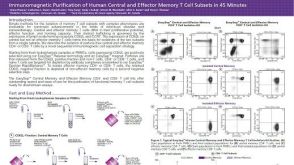 科学海报Immunomagnetic Purification of Human Central and Effector Memory T Cell Subsets in 45 Minutes
 沪公网安备31010102008431号