Ma I and Allan AL (JUN 2011)
Stem cell reviews 7 2 292--306
The role of human aldehyde dehydrogenase in normal and cancer stem cells.
Normal stem cells and cancer stem cells (CSCs) share similar properties,in that both have the capacity to self-renew and differentiate into multiple cell types. In both the normal stem cell and cancer stem cell fields,there has been a great need for a universal marker that can effectively identify and isolate these rare populations of cells in order to characterize them and use this information for research and therapeutic purposes. Currently,it would appear that certain isoenzymes of the aldehyde dehydrogenase (ALDH) superfamily may be able to fulfill this role as a marker for both normal and cancer stem cells. ALDH has been identified as an important enzyme in the protection of normal hematopoietic stem cells,and is now also widely used as a marker to identify and isolate various types of normal stem cells and CSCs. In addition,emerging evidence suggests that ALDH1 is not only a marker for stem cells,but may also play important functional roles related to self-protection,differentiation,and expansion. This comprehensive review discusses the role that ALDH plays in normal stem cells and CSCs,with focus on ALDH1 and ALDH3A1. Discrepancies in the functional themes between cell types and future perspectives for therapeutic applications will also be discussed.
View Publication
产品类型:
产品号#:
01700
01705
01702
产品名:
ALDEFLUOR™ 试剂盒
ALDEFLUOR™ DEAB试剂, 1.5 mM, 1 mL
ALDEFLUOR™检测缓冲液
Wang Y and Adjaye J (JUN 2011)
Stem cell reviews 7 2 331--41
A cyclic AMP analog, 8-Br-cAMP, enhances the induction of pluripotency in human fibroblast cells.
Somatic cells can be reprogrammed into induced pluripotent stem (iPS) cells by ectopic expression of four transcription factors. However,the efficiency of human iPS cell generation is extremely low and therefore elucidating the mechanisms underlying cellular reprogramming is of prime importance. We demonstrate that 8-Bromoadenosine 3',5'-cyclic monophosphate (8-Br-cAMP) improves the reprogramming efficiency of human neonatal foreskin fibroblast (HFF1) cells transduced with the four transcription factors by 2-fold. The combination of 8-Br-cAMP and VPA synergistically increases the efficiency to 6.5-fold. The effect of 8-Br-cAMP or VPA may in part be due to the up-regulation of cytokine-related and inflammatory pathways. Remarkably,the synergistic effect of 8-Br-cAMP and VPA on cellular reprogramming may be due to the transient decrease of p53 protein during the early stages of reprogramming. However,it could also be due to additional differentially regulated genes and pathways such as the up-regulation of cytokine-related,inflammatory pathways and self-renewal supporting gene,namely cyclin-encoding CCND2,and the associated genes CCNA1 and CCNE1. Conversely,we also see the down-regulation of the p53 (CCNB2,GTSE1,SERPINE1) and cell cycle (PLK1,CCNB2) pathways. Our data demonstrates that a cyclic AMP analog,8-Br-cAMP,enhances the efficiency of cellular reprogramming. In addition,8-Br-cAMP and VPA have a synergistic effect on cellular reprogramming,which may be in part due to the transient down-regulation of the p53 signaling pathway during the early stages of reprogramming.
View Publication
产品类型:
产品号#:
73602
73604
产品名:
8-Bromo-cAMP
8-Bromo-cAMP
Zhang L-Z et al. (JUN 2010)
Zhonghua xue ye xue za zhi = Zhonghua xueyexue zazhi 31 6 398--402
[In vitro effects of anti-CD44 monoclonal antibody on the adhesion and migration of chronic myeloid leukemia stem cells.]
OBJECTIVE: To explore the effects of anti-CD44 monoclonal antibody-IM7 on the in vitro adhesion and migration of chronic myeloid leukemia stem cell (CML-LSC) and its mechanism. METHODS: CD34(+)CD38(-)CD123(+) leukemic stem cells (LSC) from 20 newly-diagnosed chronic myeloid leukemia (CML) patients BM cells and CD34(+)CD38(-) hematopoietic stem cells (HSC) from 20 full-term newborn cord blood cells were isolated with EasySep(TM) magnet beads. The CD44 expression of the LSC and HSC was detected by flow cytometry (FCM),and the adhesion and migration ability of the LSC and HSC pre- and post-incubated with IM7 in vitro by MTT assay and transendothelial migration assay,respectively. RESULTS: (1) After incubated with IM7,the LSC and HSC CD44 expression rates were (86.60 ± 2.10)% vs. (25.40 ± 1.70)% (P textless 0.05),respectively. (2) The adhesive ability of the LSC to endothelial cells was decreased markedly after incubated with IM7,the OD value (A(570)) changing from pre-incubation of (0.62 ± 0.11) to post-incubation of (0.34 ± 0.07),while there was little change of A(570) in the HSC group. (3) The migration ability of the LSC group was inhibited evidently after incubated with IM7,the inhibition rate being 46% ∼ 63%,while little change of that in HSC group was detected. (4) The adhesive ability of the LSC group to marrow stromal cells was decreased markedly after incubated with IM7,while little change was found in that of HSC group. CONCLUSION: The anti-CD44 monoclonal antibody-IM7 can effectively inhibit the adhesion and migration abilities of the LSC in vitro,which might provide a theoretical evidence for targeting therapy.
View Publication
产品类型:
产品号#:
产品名:
Tchernychev B et al. (DEC 2010)
Proceedings of the National Academy of Sciences of the United States of America 107 51 22255--9
Discovery of a CXCR4 agonist pepducin that mobilizes bone marrow hematopoietic cells.
The G protein-coupled receptor (GPCR),chemokine CXC-type receptor 4 (CXCR4),and its ligand,CXCL12,mediate the retention of polymorphonuclear neutrophils (PMNs) and hematopoietic stem and progenitor cells (HSPCs) in the bone marrow. Agents that disrupt CXCL12-mediated chemoattraction of CXCR4-expressing cells mobilize PMNs and HSPCs into the peripheral circulation and are therapeutically useful for HSPC collection before autologous bone marrow transplantation (ABMT). Our aim was to develop unique CXCR4-targeted therapeutics using lipopeptide GPCR modulators called pepducins. A pepducin is a synthetic molecule composed of a peptide derived from the amino acid sequence of one of the intracellular (IC) loops of a target GPCR coupled to a lipid tether. We prepared and screened a small CXCR4-targeted pepducin library and identified several pepducins with in vitro agonist activity,including ATI-2341,whose peptide sequence derives from the first IC loop. ATI-2341 induced CXCR4- and G protein-dependent signaling,receptor internalization,and chemotaxis in CXCR4-expressing cells. It also induced dose-dependent peritoneal recruitment of PMNs when administered i.p. to mice. However,when administered systemically by i.v. bolus,ATI-2341 acted as a functional antagonist and dose-dependently mediated release of PMNs from the bone marrow of both mice and cynomolgus monkeys. ATI-2341-mediated release of granulocyte/macrophage progenitor cells from the bone marrow was confirmed by colony-forming assays. We conclude that ATI-2341 is a potent and efficacious mobilizer of bone marrow PMNs and HSPCs and could represent a previously undescribed therapeutic approach for the recruitment of HSPCs before ABMT.
View Publication
产品类型:
产品号#:
03534
产品名:
MethoCult™ GF M3534
Ketola K et al. (DEC 2010)
Molecular cancer therapeutics 9 12 3175--85
Monensin is a potent inducer of oxidative stress and inhibitor of androgen signaling leading to apoptosis in prostate cancer cells.
Current treatment options for advanced and hormone refractory prostate cancer are limited and responses to commonly used androgen pathway inhibitors are often unsatisfactory. Our recent results indicated that sodium ionophore monensin is one of the most potent and cancer-specific inhibitors in a systematic sensitivity testing of most known drugs and drug-like molecules in a panel of prostate cancer cell models. Because monensin has been extensively used in veterinary applications to build muscle mass in cattle,the link to prostate cancer and androgen signaling was particularly interesting. Here,we showed that monensin effects at nanomolar concentrations are linked to induction of apoptosis and potent reduction of androgen receptor mRNA and protein in prostate cancer cells. Monensin also elevated intracellular oxidative stress in prostate cancer cells as evidenced by increased generation of intracellular reactive oxygen species and by induction of a transcriptional profile characteristic of an oxidative stress response. Importantly,the antiproliferative effects of monensin were potentiated by combinatorial treatment with the antiandrogens and antagonized by antioxidant vitamin C. Taken together,our results suggest monensin as a potential well-tolerated,in vivo compatible drug with strong proapoptotic effects in prostate cancer cells,and synergistic effects with antiandrogens. Moreover,our data suggest a general strategy by which the effects of antiandrogens could be enhanced by combinatorial administration with agents that increase oxidative stress in prostate cancer cells.
View Publication
产品类型:
产品号#:
01700
01705
01702
产品名:
ALDEFLUOR™ 试剂盒
ALDEFLUOR™ DEAB试剂, 1.5 mM, 1 mL
ALDEFLUOR™检测缓冲液
Patel MR et al. (DEC 2010)
Cancer research 70 24 10141--9
Longitudinal, noninvasive imaging of T-cell effector function and proliferation in living subjects.
Adoptive immunotherapy is evolving to assume an increasing role in treating cancer. Most imaging studies in adoptive immunotherapy to date have focused primarily on locating tumor-specific T cells rather than understanding their effector functions. In this study,we report the development of a noninvasive imaging strategy to monitor T-cell activation in living subjects by linking a reporter gene to the Granzyme B promoter (pGB),whose transcriptional activity is known to increase during T-cell activation. Because pGB is relatively weak and does not lead to sufficient reporter gene expression for noninvasive imaging,we specifically employed 2 signal amplification strategies,namely the Two Step Transcription Amplification (TSTA) strategy and the cytomegalovirus enhancer (CMVe) strategy,to maximize firefly luciferase reporter gene expression. Although both amplification strategies were capable of increasing pGB activity in activated primary murine splenocytes,only the level of bioluminescence activity achieved with the CMVe strategy was adequate for noninvasive imaging in mice. Using T cells transduced with a reporter vector containing the hybrid pGB-CMVe promoter,we were able to optically image T-cell effector function longitudinally in response to tumor antigens in living mice. This methodology has the potential to accelerate the study of adoptive immunotherapy in preclinical cancer models.
View Publication
产品类型:
产品号#:
18754
18754RF
产品名:
Zhu J et al. (MAR 2011)
Blood 117 11 3045--52
Recombinant erythroid Kruppel-like factor fused to GATA1 up-regulates delta- and gamma-globin expression in erythroid cells.
The β-hemoglobinopathies sickle cell disease and β-thalassemia are among the most common human genetic disorders worldwide. Hemoglobin A2 (HbA2,α₂δ₂) and fetal hemoglobin (HbF,α₂γ₂) both inhibit the polymerization of hemoglobin S,which results in erythrocyte sickling. Expression of erythroid Kruppel-like factor (EKLF) and GATA1 is critical for transitioning hemoglobin from HbF to hemoglobin A (HbA,α₂β₂) and HbA2. The lower levels of δ-globin expression compared with β-globin expression seen in adulthood are likely due to the absence of an EKLF-binding motif in the δ-globin proximal promoter. In an effort to up-regulate δ-globin to increase HbA2 expression,we created a series of EKLF-GATA1 fusion constructs composed of the transactivation domain of EKLF and the DNA-binding domain of GATA1,and then tested their effects on hemoglobin expression. EKLF-GATA1 fusion proteins activated δ-,γ-,and β-globin promoters in K562 cells,and significantly up-regulated δ- and γ-globin RNA transcript and protein expression in K562 and/or CD34(+) cells. The binding of EKLF-GATA1 fusion proteins at the GATA1 consensus site in the δ-globin promoter was confirmed by chromatin immunoprecipitation assay. Our studies demonstrate that EKLF-GATA1 fusion proteins can enhance δ-globin expression through interaction with the δ-globin promoter,and may represent a new genetic therapeutic approach to β-hemoglobinopathies.
View Publication
产品类型:
产品号#:
02690
09600
09650
产品名:
StemSpan™ CC100
StemSpan™ SFEM
StemSpan™ SFEM
Christopher MJ et al. (FEB 2011)
The Journal of experimental medicine 208 2 251--60
Expression of the G-CSF receptor in monocytic cells is sufficient to mediate hematopoietic progenitor mobilization by G-CSF in mice.
Granulocyte colony-stimulating factor (G-CSF),the prototypical mobilizing cytokine,induces hematopoietic stem and progenitor cell (HSPC) mobilization from the bone marrow in a cell-nonautonomous fashion. This process is mediated,in part,through suppression of osteoblasts and disruption of CXCR4/CXCL12 signaling. The cellular targets of G-CSF that initiate the mobilization cascade have not been identified. We use mixed G-CSF receptor (G-CSFR)-deficient bone marrow chimeras to show that G-CSF-induced mobilization of HSPCs correlates poorly with the number of wild-type neutrophils. We generated transgenic mice in which expression of the G-CSFR is restricted to cells of the monocytic lineage. G-CSF-induced HSPC mobilization,osteoblast suppression,and inhibition of CXCL12 expression in the bone marrow of these transgenic mice are intact,demonstrating that G-CSFR signals in monocytic cells are sufficient to induce HSPC mobilization. Moreover,G-CSF treatment of wild-type mice is associated with marked loss of monocytic cells in the bone marrow. Finally,we show that bone marrow macrophages produce factors that support the growth and/or survival of osteoblasts in vitro. Together,these data suggest a model in which G-CSFR signals in bone marrow monocytic cells inhibit the production of trophic factors required for osteoblast lineage cell maintenance,ultimately leading to HSPC mobilization.
View Publication
产品类型:
产品号#:
03434
03444
产品名:
MethoCult™ GF M3434
MethoCult™ GF M3434
Dutta D et al. (APR 2011)
Stem cells 29 4 618--28
Self-renewal versus lineage commitment of embryonic stem cells: protein kinase C signaling shifts the balance.
The intricate molecular mechanisms that regulate ESC pluripotency are incompletely understood. Prior research indicated that activation of the Janus kinase-signal transducer and activator of transcription (STAT3) pathway or inhibition of extracellular signal-regulated kinase/glycogen synthase kinase 3 (ERK/GSK3) signaling maintains mouse ESC (mESC) pluripotency. Here,we demonstrate that inhibition of protein kinase C (PKC) isoforms maintains mESC pluripotency without the activation of STAT3 or inhibition of ERK/GSK3 signaling pathways. Our analyses revealed that the atypical PKC isoform,PKCζ plays an important role in inducing lineage commitment in mESCs through a PKCζ-nuclear factor kappa-light-chain-enhancer of activated B cells signaling axis. Furthermore,inhibition of PKC isoforms permits derivation of germline-competent ESCs from mouse blastocysts and also facilitates reprogramming of mouse embryonic fibroblasts toward induced pluripotent stem cells. Our results indicate that PKC signaling is critical to balancing ESC self-renewal and lineage commitment.
View Publication
产品类型:
产品号#:
72462
产品名:
Gö6983
Fraga AM et al. (NOV 2011)
Stem cell reviews 7 4 775--81
A survey of parameters involved in the establishment of new lines of human embryonic stem cells.
Since the derivation of the first human embryonic stem cell (hESC) lines by Thomson and coworkers in 1998,more than 1,200 different hESC lines have been established worldwide. Nevertheless,there is still a recognized interest in the establishment of new lines of hESC,particularly from HLA types and ethnic groups currently underrepresented among the available lines. The methodology of hESC derivation has evolved significantly since 1998,when human LIF (hLIF) was used for maintenance of pluripotency. However,there are a number of different strategies for the several steps involved in establishing a new line of hESC. Here we make a survey of the most relevant parameters used between 1998 and 2010 for the derivation of the 375 hESC lines deposited in two international stem cell registries,and able to form teratomas in immunocompromised mice. Although we identify some trends in the methodology for establishing hESC lines,our data reveal a much greater heterogeneity of strategies than what is used for derivation of murine ESC lines,indicating that optimum conditions have not been consolidated yet,and thus,hESC establishment is still an evolving field of research.
View Publication


 EasySep™小鼠TIL(CD45)正选试剂盒




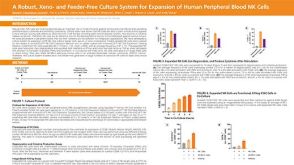 科学海报A Robust, Xeno- and Feeder-Free Culture System for Expansion of Human Peripheral Blood NK Cells

 沪公网安备31010102008431号