Thrombopoietin cooperates with FLT3-ligand in the generation of plasmacytoid dendritic cell precursors from human hematopoietic progenitors.
Type 1 interferon-producing cells (IPCs),also known as plasmacytoid dendritic cell (DC) precursors,represent the key effectors in antiviral innate immunity and triggers for adaptive immune responses. IPCs play important roles in the pathogenesis of systemic lupus erythematosus (SLE) and in modulating immune responses after hematopoietic stem cell transplantation. Understanding IPC development from hematopoietic progenitor cells (HPCs) may provide critical information in controlling viral infection,autoimmune SLE,and graft-versus-host disease. FLT3-ligand (FLT3-L) represents a key IPC differentiation factor from HPCs. Although hematopoietic cytokines such as interleukin-3 (IL-3),IL-7,stem cell factor (SCF),macrophage-colony-stimulating factor (M-CSF),and granulocyte M-CSF (GM-CSF) promote the expansion of CD34+ HPCs in FLT3-L culture,they strongly inhibit HPC differentiation into IPCs. Here we show that thrombopoietin (TPO) cooperates with FLT3-L,inducing CD34+ HPCs to undergo a 400-fold expansion in cell numbers and to generate more than 6 x 10(6) IPCs per 10(6) CD34+ HPCs within 30 days in culture. IPCs derived from HPCs in FLT3-L/TPO cultures display blood IPC phenotype and have the capacity to produce large amounts of interferon-alpha (IFN-alpha) and to differentiate into mature DCs. This culture system,combined with the use of adult peripheral blood CD34+ HPCs purified from G-CSF-mobilized donors,permits the generation of more than 10(9) IPCs from a single blood donor.
View Publication
产品类型:
产品号#:
18058
18058RF
产品名:
Chiu B-C et al. (MAR 2004)
The American journal of pathology 164 3 1021--30
The innate pulmonary granuloma: characterization and demonstration of dendritic cell recruitment and function.
Granulomas are innate sequestration responses that can be modified by superimposed acquired immune mechanisms. The present study examined the innate stage of pulmonary granuloma responses to bead-immobilized Th1- and Th2-inducing pathogen antigens (Ags),Mycobacteria bovis purified protein derivative (PPD) and Schistosoma mansoni soluble egg Ags (SEA). Compared to a nonpathogen Ag,PPD and SEA bead elicited larger lesions with the former showing accelerated inflammation. Temporal analyses of cytokine and chemokine transcripts showed all Ag beads induced tumor necrosis factor-alpha mRNA but indicated biased interleukin (IL)-1,IL-6,and IL-12 expression with PPD challenge. All beads elicited comparable levels of CXCL9,CXL10,CCL2,CCL17,and CCL22 mRNA,but PPD beads caused biased CXCL2 CXCL5,CCL3,and CCL4 expression whereas both pathogen Ags induced CCL7. Immunohistochemical,electron microscopic,and flow cytometric analyses showed that Ag beads mobilized CD11c+ dendritic cells (DCs) of comparable maturation. Transfer of DCs from PPD Ag-challenged lungs conferred a Th1 anamnestic cytokine response in recipients. Surprisingly,transfer of DCs from the helminth SEA-challenged lungs did not confer the expected Th2 response,but instead rendered recipients incapable of Ag-elicited IL-4 production. These results provide in vivo evidence that lung DCs recruited under inflammatory conditions favor Th1 responses and alternative mechanisms are required for Th2 commitment.
View Publication
产品类型:
产品号#:
18554
18554RF
18564
18564RF
产品名:
Curat CA et al. (MAY 2004)
Diabetes 53 5 1285--92
From blood monocytes to adipose tissue-resident macrophages: induction of diapedesis by human mature adipocytes.
Obesity has been suggested to be a low-grade systemic inflammatory state,therefore we studied the interaction between human adipocytes and monocytes via adipose tissue (AT)-derived capillary endothelium. Cells composing the stroma-vascular fraction (SVF) of human ATs were characterized by fluorescence-activated cell sorter (FACS) analysis and two cell subsets (resident macrophages and endothelial cells [ECs]) were isolated using antibody-coupled microbeads. Media conditioned by mature adipocytes maintained in fibrin gels were applied to AT-derived ECs. Thereafter,the expression of endothelial adhesion molecules was analyzed as well as the adhesion and transmigration of human monocytes. FACS analysis showed that 11% of the SVF is composed of CD14(+)/CD31(+) cells,characterized as resident macrophages. A positive correlation was found between the BMI and the percentage of resident macrophages,suggesting that fat tissue growth is associated with a recruitment of blood monocytes. Incubation of AT-derived ECs with adipocyte-conditioned medium resulted in the upregulation of EC adhesion molecules and the increased chemotaxis of blood monocytes,an effect mimicked by recombinant human leptin. These results indicate that adipokines,such as leptin,activate ECs,leading to an enhanced diapedesis of blood monocytes,and suggesting that fat mass growth might be linked to inflammatory processes.
View Publication
产品类型:
产品号#:
18058
18058RF
18056
18056RF
产品名:
Marwali MR et al. (SEP 2004)
Journal of immunology (Baltimore,Md. : 1950) 173 5 2960--7
Lipid rafts mediate association of LFA-1 and CD3 and formation of the immunological synapse of CTL.
Lipid rafts accumulate in the immunological synapse formed by an organized assembly of the TCR/CD3,LFA-1,and signaling molecules. However,the precise role of lipid rafts in the formation of the immunological synapse is unclear. In this study,we show that LFA-1 on CTL is constitutively active and mediates Ag-independent binding of CTL to target cells expressing its ligands. LFA-1 and CD3 on CTL,but not resting T cells,colocalize in lipid rafts. Binding of LFA-1 on CTL to targets initiates the formation of the immunological synapse,which is formed by LFA-1,CD3,and ganglioside GM1 distributed in the periphery of the cell contact site and cholesterol is more widely distributed. The formation of this synapse is Ag independent,but the recognition of Ag by the TCR induces accumulation of tyrosine phosphorylated proteins in the synapse as well as redistribution of the microtubule organization center toward the cell contact site. Our results suggest that LFA-1 recruits lipid rafts and the TCR/CD3 to the synapse,and facilitates efficient and rapid activation of CTL.
View Publication
产品类型:
产品号#:
18554
18554RF
18564
18564RF
产品名:
Allan AL et al. (MAY 2005)
Cytometry. Part A : the journal of the International Society for Analytical Cytology 65 1 4--14
Detection and quantification of circulating tumor cells in mouse models of human breast cancer using immunomagnetic enrichment and multiparameter flow cytometry.
BACKGROUND: Circulating tumor cells (CTCs) in the peripheral blood of breast cancer patients may be an important indicator of metastatic disease and poor prognosis. However,the use of experimental models is required to fully elucidate the functional consequences of CTCs. The purpose of this study was to optimize the sensitivity of multiparameter flow cytometry for detection of human tumor cells in mouse models of breast cancer. METHODS: MDA-MB-468 human breast cancer cells were serially diluted in whole mouse blood. Samples were lysed and incubated with a fluorescein isothiocyanate-conjugated anti-human leukocytic antigen antibody and a phycoerythrin-conjugated anti-mouse pan-leukocyte CD45 antibody. Samples were then immunomagnetically depleted of CD45-positive leukocytes,fixed,permeabilized,and stained with propidium iodide before flow cytometric analysis. RESULTS: Human breast cancer cells could be differentiated from mouse leukocytes based on increased light scatter,cell surface marker expression,and aneuploid DNA content. The method was found to have a lower sensitivity limit of 10(-5) and was effective for detecting human breast cancer cells in vivo in the circulation of experimental mice carrying primary human mammary tumors. CONCLUSIONS: This technique has the potential to be a valuable and sensitive tool for investigating the biological relevance of CTCs in experimental mouse models of breast cancer.
View Publication


 EasySep™小鼠TIL(CD45)正选试剂盒




 产品手册细胞分选相关工具
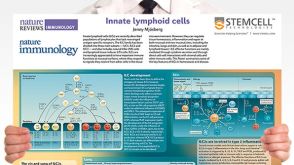 挂图Innate Lymphoid Cells Overview of innate lymphoid cells (ILCs) development, classification, plasticity and functional diversity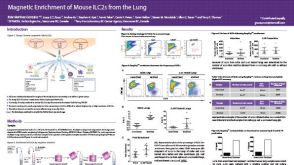
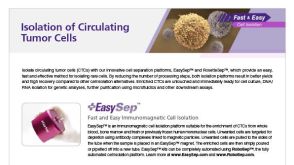 产品手册循环肿瘤细胞的分离
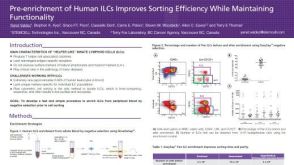 科学海报Pre-enrichment of Human ILCs Improves Sorting Efficiency While Maintaining Functionality

 沪公网安备31010102008431号