CGP 57148, a tyrosine kinase inhibitor, inhibits the growth of cells expressing BCR-ABL, TEL-ABL, and TEL-PDGFR fusion proteins.
CGP 57148 is a compound of the 2-phenylaminopyrimidine class that selectively inhibits the tyrosine kinase activity of the ABL and the platelet-derived growth factor receptor (PDGFR) protein tyrosine kinases. We previously showed that CGP 57148 selectively kills p210BCR-ABL-expressing cells. To extend these observations,we evaluated the ability of CGP 57148 to inhibit other activated ABL tyrosine kinases,including p185BCR-ABL and TEL-ABL. In cell-based assays of ABL tyrosine phosphorylation,inhibition of ABL kinase activity was observed at concentrations similar to that reported for p210BCR-ABL. Consistent with the in vitro profile of this compound,the growth of cells expressing activated ABL protein tyrosine kinases was inhibited in the absence of exogenous growth factor. Growth inhibition was also observed with a p185BCR-ABL-positive acute lymphocytic leukemia (ALL) cell line generated from a Philadelphia chromosome-positive ALL patient. As CGP 57148 inhibits the PDGFR kinase,we also showed that cells expressing an activated PDGFR tyrosine kinase,TEL-PDGFR,are sensitive to this compound. Thus,this compound may be useful for the treatment of a variety of BCR-ABL-positive leukemias and for treatment of the subset of chronic myelomonocytic leukemia patients with a TEL-PDGFR fusion protein.
View Publication
产品类型:
产品号#:
72532
72534
产品名:
Imatinib (Mesylate)
Imatinib (Mesylate), 100 mg
Miyake K et al. (JAN 1999)
Cancer research 59 1 8--13
Molecular cloning of cDNAs which are highly overexpressed in mitoxantrone-resistant cells: demonstration of homology to ABC transport genes.
Reports of multiple distinct mitoxantrone-resistant sublines without overexpression of P-glycoprotein or the multidrug-resistance associated protein have raised the possibility of the existence of another major transporter conferring drug resistance. In the present study,a cDNA library from mitoxantrone-resistant S1-M1-80 human colon carcinoma cells was screened by differential hybridization. Two cDNAs of different lengths were isolated and designated MXR1 and MXR2. Sequencing revealed a high degree of homology for the cDNAs with Expressed Sequence Tag sequences previously identified as belonging to an ATP binding cassette transporter. Homology to the Drosophila white gene and its homologues was found for the predicted amino acid sequence. Using either cDNA as a probe in a Northern analysis demonstrated high levels of expression in the S1-M1-80 cells and in the human breast cancer subline,MCF-7 AdVp3000. Levels were lower in earlier steps of selection,and in partial revertants. The gene is amplified 10-12-fold in the MCF-7 AdVp3000 cells,but not in the S1-M1-80 cells These studies are consistent with the identification of a new ATP binding cassette transporter,which is overexpressed in mitoxantrone-resistant cells.
View Publication
产品类型:
产品号#:
产品名:
Jara-Avaca M et al. (FEB 2017)
Stem cell reports 8 2 305--317
EBIO Does Not Induce Cardiomyogenesis in Human Pluripotent Stem Cells but Modulates Cardiac Subtype Enrichment by Lineage-Selective Survival.
Subtype-specific human cardiomyocytes (CMs) are valuable for basic and applied research. Induction of cardiomyogenesis and enrichment of nodal-like CMs was described for mouse pluripotent stem cells (mPSCs) in response to 1-ethyl-2-benzimidazolinone (EBIO),a chemical modulator of small-/intermediate-conductance Ca(2+)-activated potassium channels (SKs 1-4). Investigating EBIO in human pluripotent stem cells (PSCs),we have applied three independent differentiation protocols of low to high cardiomyogenic efficiency. Equivalent to mPSCs,timed EBIO supplementation during hPSC differentiation resulted in dose-dependent enrichment of up to 80% CMs,including an increase in nodal- and atrial-like phenotypes. However,our study revealed extensive EBIO-triggered cell loss favoring cardiac progenitor preservation and,subsequently,CMs with shortened action potentials. Proliferative cells were generally more sensitive to EBIO,presumably via an SK-independent mechanism. Together,EBIO did not promote cardiogenic differentiation of PSCs,opposing previous findings,but triggered lineage-selective survival at a cardiac progenitor stage,which we propose as a pharmacological strategy to modulate CM subtype composition.
View Publication
产品类型:
产品号#:
85850
85857
85870
85875
产品名:
mTeSR™1
mTeSR™1
Iacovino M et al. (OCT 2011)
Stem Cells 29 10 1580--1587
Inducible cassette exchange: A rapid and efficient system enabling conditional gene expression in embryonic stem and primary cells
Genetic modification is critically enabling for studies addressing specification and maintenance of cell fate; however,methods for engineering modifications are inefficient. We demonstrate a rapid and efficient recombination system in which an inducible,floxed cre allele replaces itself with an incoming transgene. We target this inducible cassette exchange (ICE) allele to the (HPRT) locus and demonstrate recombination in murine embryonic stem cells (ESCs) and primary cells from derivative ICE mice. Using lentivectors,we demonstrate recombination at a randomly integrated ICE locus in human ESCs. To illustrate the utility of this system,we insert the myogenic regulator,Myf5,into the ICE locus in each platform. This enables efficient directed differentiation of mouse and human ESCs into skeletal muscle and conditional myogenic transdetermination of primary cells cultured in vitro. This versatile tool is thus well suited to gain-of-function studies probing gene function in the specification and reprogramming of cell fate.
View Publication
产品类型:
产品号#:
05850
05857
05870
05875
85850
85857
85870
85875
产品名:
mTeSR™1
mTeSR™1
Davis RP et al. (JUL 2013)
Differentiation 86 1–2 30--37
Generation of induced pluripotent stem cells from human foetal fibroblasts using the Sleeping Beauty transposon gene delivery system
Transposon gene delivery systems offer an alternative,non-viral-based approach to generate induced pluripotent stem cells (iPSCs). Here we used the Sleeping Beauty (SB) transposon to generate four human iPSC lines from foetal fibroblasts. In contrast to other gene delivery systems,the SB transposon does not exhibit an integration bias towards particular genetic elements,thereby reducing the risk of insertional mutagenesis. Furthermore,unlike the alternative transposon piggyBac,SB has no SB-like elements within the human genome,minimising the possibility of mobilising endogenous transposon elements. All iPSC lines exhibited the expected characteristics of pluripotent human cells,including the ability to differentiate to derivatives of all three germ layers in vitro. Re-expression of the SB transposase in the iPSCs after reprogramming resulted in the mobilisation of some of the transposons. These results indicate that the SB transposon system is a useful addition to methods for generating human iPSCs,both for basic and applied biomedical research,and in the context of future therapeutic application. textcopyright 2013 International Society of Differentiation.
View Publication
产品类型:
产品号#:
05850
05857
05870
05875
85850
85857
85870
85875
产品名:
mTeSR™1
mTeSR™1
Chung HCY et al. (JAN 2012)
Stem cells and development 21 2 206--16
Human induced pluripotent stem cells derived under feeder-free conditions display unique cell cycle and DNA replication gene profiles.
Use of animal feeder layers and serum containing media in the derivation and propagation of induced pluripotent stem cells (iPSCs) can hinder clinical translation,because of the presence of xeno-material/pathogens. A defined and standardized system would be ideal for generating a homogenous population of iPSCs,which closely resembles human embryonic stem cells (hESCs). This article presents a novel and extensive comparison between in-house produced iPSCs and hESCs under feeder" and "feeder-free" conditions�
View Publication
A practical synthesis of Rho-Kinase inhibitor Y-27632 and fluoro derivatives and their evaluation in human pluripotent stem cells.
A practical synthesis of the Rho-Kinase inhibitor Y-27632 and two new fluoro derivatives was achieved in seven steps and with a good overall yield of 45% starting from commercially available (R)-1-phenylethylamine. Compared to Y-27632 the new fluoro derivatives showed reduced or no effect on hPSC vitality and expansion after dissociation in human pluripotent stem cells.
View Publication
产品类型:
产品号#:
05850
05857
05870
05875
85850
85857
85870
85875
产品名:
mTeSR™1
mTeSR™1
T. Yarlagadda et al. (Jul 2025)
Frontiers in Cellular and Infection Microbiology 15 9
Lactobacillus rhamnosus D3189 modulates antiviral and inflammatory responses in primary nasal epithelial cells, reducing respiratory syncytial virus shedding
Respiratory syncytial virus (RSV) infection in the upper respiratory tract promotes disease progression and transmission,with excessive inflammation contributing to severe lower respiratory tract involvement. This study investigates the immunomodulatory effects of Lactobacillus rhamnosus D3189 on viral kinetics and innate immune responses in well-differentiated nasal epithelial cells (WD-NECs). WD-NECs from healthy adult donors (N = 8) were cultured in vitro,treated with L. rhamnosus D3189,and then infected with RSV (strain RS4) 24 hours later. Viral replication and shedding were assessed via RT-qPCR and plaque assays. Cytotoxicity and epithelial integrity were evaluated using LDH release and transepithelial electrical resistance (TEER). Inflammatory and antiviral responses were investigated using multiplex immunoassays,AlphaLISA,and ELISA. RSV infection induced robust viral replication and shedding,disrupted epithelial barrier integrity,and triggered the release of pro-inflammatory cytokines and type I/III interferons. L. rhamnosus D3189 alone did not induce cytotoxicity or inflammation. While it had no effect on viral replication,TEER,LDH release,or IFN-λ1/3 levels,D3189 significantly enhanced IFN-β production,reduced viral shedding,and attenuated RSV-induced cytokine and chemokine responses. L. rhamnosus D3189 modulates the epithelial immune response to RSV,reducing inflammation and viral shedding without compromising epithelial integrity. These findings support its potential as a novel strategy to limit RSV-associated infection and transmission.
View Publication
产品类型:
产品号#:
05001
05021
05022
05040
产品名:
PneumaCult™-ALI 培养基
PneumaCult™-ALI 培养基含12 mm Transwell®插件
PneumaCult™-ALI 培养基含6.5 mm Transwell®插件
PneumaCult™-Ex Plus 培养基
N. Schmitt et al. (Aug 2025)
Nature Communications 16
The bispecific innate cell engager AFM28 eliminates CD123 + leukemic stem and progenitor cells in AML and MDS
Strategies targeting leukemic stem and progenitor cells (LSPCs) are needed for durable remissions in acute myeloid leukemia (AML) and high-risk myelodysplastic neoplasms (MDS). While CD123 constitutes a promising target on LSPCs and leukemic blasts,previous CD123-targeting approaches showed limited efficacy and challenging safety profiles. Here,we describe the preclinical efficacy and safety of the bispecific CD123/CD16A innate cell engager “AFM28”,demonstrating superior activity against AML and MDS patient-derived LSPCs and blasts in vitro compared to an Fc-enhanced CD123-targeting antibody,especially towards CD123 low and/or CD64 + leukemic cells. AFM28 induces autologous anti-leukemic activity in fresh AML whole blood cultures,demonstrating its potential to enhance NK cell function from AML patients. Responsiveness can be further enhanced by allogeneic NK cell addition. Anti-leukemic activity of AFM28 is confirmed in xenograft mouse models. In addition,AFM28 is well tolerated and demonstrates pharmacodynamic activity in cynomolgus monkeys. Altogether,our results indicate that AFM28 has the potential to reduce relapse-inducing residual disease and promote long-term remissions for patients with AML and MDS with a favorable safety profile. Subject terms: Cancer immunotherapy,Preclinical research,Acute myeloid leukaemia,Myelodysplastic syndrome
View Publication
产品类型:
产品号#:
04435
04445
产品名:
MethoCult™ H4435 Enriched
MethoCult™ H4435 Enriched
(Jan 2025)
PLOS ONE 20 1
A NOTCH3 pathogenic variant influences osteogenesis and can be targeted by antisense oligonucleotides in induced pluripotent stem cells
Lateral Meningocele Syndrome (LMS),a disorder associated with NOTCH3 pathogenic variants,presents with neurological,craniofacial and skeletal abnormalities. Mouse models of the disease exhibit osteopenia that is ameliorated by the administration of Notch3 antisense oligonucleotides (ASO) targeting either Notch3 or the Notch3 mutation. To determine the consequences of LMS pathogenic variants in human cells and whether they can be targeted by ASOs,induced pluripotent NCRM1 and NCRM5 stem (iPS) cells harboring a NOTCH36692-93insC insertion were created. Parental iPSCs,NOTCH36692-93insC and isogenic controls,free of chromosomal aberrations as determined by human CytoSNP850 array,were cultured under conditions of neural crest,mesenchymal and osteogenic cell differentiation. The expected cell phenotype was confirmed by surface markers and a decline in OCT3/4 and NANOG mRNA. NOTCH36692-93insC cells displayed enhanced expression of Notch target genes HES1,HEY1,2 and L demonstrating a NOTCH3 gain-of-function. There was enhanced osteogenesis in NOTCH36692-93insC cells as evidenced by increased mineralized nodule formation and ALPL,BGLAP and BSP expression. ASOs targeting NOTCH3 decreased both NOTCH3 wild type and NOTCH36692-93insC mutant mRNA by 40% in mesenchymal and 90% in osteogenic cells. ASOs targeting the NOTCH3 insertion decreased NOTCH36692-93insC by 70–80% in mesenchymal cells and by 45–55% in osteogenic cells and NOTCH3 mRNA by 15–30% and 20–40%,respectively. In conclusion,a NOTCH3 pathogenic variant causes a modest increase in osteoblastogenesis in human iPS cells in vitro and NOTCH3 and NOTCH3 mutant specific ASOs downregulate NOTCH3 transcripts associated with LMS.
View Publication
产品类型:
产品号#:
100-0276
100-1130
产品名:
mTeSR™ Plus
mTeSR™ Plus
(Jun 2025)
Cell Reports Medicine 6 7
iPSC-derived trimodal T cells engineered with CAR, TCR, and hnCD16 modalities can overcome antigen escape in heterogeneous tumors
SummaryAlthough chimeric antigen receptor (CAR) T cells have demonstrated therapeutic activity in hematopoietic malignancies,tumor heterogeneity has impeded the efficacy of CAR T cells and their extension into successful solid tumor treatment. To address these challenges,induced pluripotent stem cell (iPSC)-derived T (iT) cells are engineered to uniformly express CAR and T cell receptor (TCR),enabling targeting of both surface and intracellular antigens,respectively,along with a high-affinity,non-cleavable variant of CD16a (hnCD16) to support antibody-dependent cellular cytotoxicity (ADCC) when combined with therapeutic antibodies. Co-expression of each antitumor strategy on engineered iT cells enables independent and antigen-specific targeting across a diverse set of liquid and solid tumors. In heterogeneous tumor models,coactivation of these modalities is required for measurable antitumor efficacy,with activation of all three modalities displaying maximal efficacy. These data highlight the therapeutic potential of an off-the-shelf engineered iPSC-derived trimodal T cell expressing CAR,TCR,and hnCD16 to combat difficult-to-treat heterogeneous tumors. Graphical abstract Highlights•CAR,TCR,and hnCD16 can be uniformly co-expressed and can function in iT cells•hnCD16 signals through CD3ζ and arms iT cells with targeting flexibility through ADCC•Concurring CAR,TCR,and hnCD16 activation demonstrates a cooperative effect•Multi-targeting with trimodal iT cells can control heterogeneous tumors in vivo Yang et al. show that (1) trimodal iPSC cells expressing CAR,TCR,and hnCD16 can commit to T cell lineage,(2) hnCD16 signals through CD3ζ in iT cells and arms iT cells with ADCC targeting flexibility,and (3) trimodal iT cells control antigen-heterogeneous tumors in vivo through multi-modal targeting.
View Publication


 EasySep™小鼠TIL(CD45)正选试剂盒





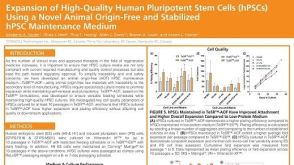 科学海报Expansion of High-Quality Human Pluripotent Stem Cells (hPSCs) Using a Novel Animal Origin-Free and Stabilized hPSC Maintenance Medium
 沪公网安备31010102008431号