Toll-like receptor 7 protects against intestinal inflammation and restricts the development of colonic tissue-resident memory CD8+ T cells
Introduction: The maintenance of intestinal homeostasis depends on a complex interaction between the immune system,intestinal epithelial barrier,and microbiota. Alteration in one of these components could lead to the development of inflammatory bowel diseases (IBD). Variants within the autophagy gene ATG16L1 have been implicated in susceptibility and severity of Crohn's disease (CD). Individuals carrying the risk ATG16L1 T300A variant have higher caspase 3-dependent degradation of ATG16L1 resulting in impaired autophagy and increased cellular stress. ATG16L1-deficiency induces enhanced IL-1β secretion in dendritic cells in response to bacterial infection. Infection of ATG16L1-deficient mice with a persistent strain of murine norovirus renders these mice highly susceptible to dextran sulfate sodium colitis. Moreover,persistent norovirus infection leads to intestinal virus specific CD8+ T cells responses. Both Toll-like receptor 7 (TLR7),which recognizes single-stranded RNA viruses,and ATG16L1,which facilitates the delivery of viral nucleic acids to the autolysosome endosome,are required for anti-viral immune responses. Results and discussion: However,the role of the enteric virome in IBD is still poorly understood. Here,we investigate the role of TLR7 and ATG16L1 in intestinal homeostasis and inflammation. At steady state,Tlr7-/- mice have a significant increase in large intestinal lamina propria (LP) granzyme B+ tissue-resident memory CD8+ T (TRM) cells compared to WT mice,reminiscent of persistent norovirus infection. Deletion of Atg16l1 in myeloid (Atg16l1ΔLyz2 ) or dendritic cells (Atg16l1ΔCd11c ) leads to a similar increase of LP TRM. Furthermore,Tlr7-/- and Atg16l1ΔCd11c mice were more susceptible to dextran sulfate sodium colitis with an increase in disease activity index,histoscore,and increased secretion of IFN-γ and TNF-α. Treatment of Atg16l1ΔCd11c mice with the TLR7 agonist Imiquimod attenuated colonic inflammation in these mice. Our data demonstrate that ATG16L1-deficiency in myeloid and dendritic cells leads to an increase in LP TRM and consequently to increased susceptibility to colitis by impairing the recognition of enteric viruses by TLR7. Conclusion: In conclusion,the convergence of ATG16L1 and TLR7 signaling pathways plays an important role in the immune response to intestinal viruses. Our data suggest that activation of the TLR7 signaling pathway could be an attractive therapeutic target for CD patients with ATG16L1 risk variants.
View Publication
产品类型:
产品号#:
19764
19764RF
产品名:
EasySep™小鼠浆细胞样DC分选试剂盒
RoboSep™ 小鼠浆细胞样DC分选试剂盒
Dorion et al. (Apr 2024)
Molecular Neurodegeneration 19 1
An adapted protocol to derive microglia from stem cells and its application in the study of CSF1R-related disorders
Induced pluripotent stem cell-derived microglia (iMGL) represent an excellent tool in studying microglial function in health and disease. Yet,since differentiation and survival of iMGL are highly reliant on colony-stimulating factor 1 receptor (CSF1R) signaling,it is difficult to use iMGL to study microglial dysfunction associated with pathogenic defects in CSF1R. Serial modifications to an existing iMGL protocol were made,including but not limited to changes in growth factor combination to drive microglial differentiation,until successful derivation of microglia-like cells from an adult-onset leukoencephalopathy with axonal spheroids and pigmented glia (ALSP) patient carrying a c.2350G > A (p.V784M) CSF1R variant. Using healthy control lines,the quality of the new iMGL protocol was validated through cell yield assessment,measurement of microglia marker expression,transcriptomic comparison to primary microglia,and evaluation of inflammatory and phagocytic activities. Similarly,molecular and functional characterization of the ALSP patient-derived iMGL was carried out in comparison to healthy control iMGL. The newly devised protocol allowed the generation of iMGL with enhanced transcriptomic similarity to cultured primary human microglia and with higher scavenging and inflammatory competence at ~ threefold greater yield compared to the original protocol. Using this protocol,decreased CSF1R autophosphorylation and cell surface expression was observed in iMGL derived from the ALSP patient compared to those derived from healthy controls. Additionally,ALSP patient-derived iMGL presented a migratory defect accompanying a temporal reduction in purinergic receptor P2Y12 ( P2RY12 ) expression,a heightened capacity to internalize myelin,as well as heightened inflammatory response to Pam 3 CSK 4 . Poor P2RY12 expression was confirmed to be a consequence of CSF1R haploinsufficiency,as this feature was also observed following CSF1R knockdown or inhibition in mature control iMGL,and in CSF1R WT/KO and CSF1R WT/E633K iMGL compared to their respective isogenic controls. We optimized a pre-existing iMGL protocol,generating a powerful tool to study microglial involvement in human neurological diseases. Using the optimized protocol,we have generated for the first time iMGL from an ALSP patient carrying a pathogenic CSF1R variant,with preliminary characterization pointing toward functional alterations in migratory,phagocytic and inflammatory activities. The online version contains supplementary material available at 10.1186/s13024-024-00723-x.
View Publication
产品类型:
产品号#:
05310
产品名:
STEMdiff™ 造血试剂盒
Y. Suzdaltseva et al. (Nov 2024)
Cells 13 21
Initial WNT/β-Catenin or BMP Activation Modulates Inflammatory Response of Mesodermal Progenitors Derived from Human Induced Pluripotent Stem Cells
Wound healing in adults largely depends on the functional state of multipotent mesenchymal stromal cells (MSCs). Human fetal tissues at the early stages of development are known to heal quickly with a full-quality restoration of the original structure. The differences in the molecular mechanisms that determine the functional activity of mesodermal cells in fetuses and adults remain virtually unknown. Using two independent human induced pluripotent stem cell (iPSC) lines,we examined the effects of the initial WNT and BMP activation on the differentiation of iPSCs via mesodermal progenitors into MSCs and highlighted the functions of these cells that are altered by the proinflammatory microenvironment. The WNT-induced mesoderm commitment of the iPSCs enhanced the expression of paraxial mesoderm (PM)-specific markers,while the BMP4-primed iPSCs exhibited increased levels of lateral mesoderm (LM)-specific genes. The inflammatory status and migration rate of the isogenic iPSC-derived mesoderm cells were assessed via gene expression analysis and scratch assay under the receptor-dependent activation of the proinflammatory IFN-γ or TNF-α signaling pathway. Reduced IDO1 and ICAM1 expression levels were detected in the WNT- and BMP-induced MSC progenitors compared to the isogenic MSCs in response to stimulation with IFN-γ and TNF-α. The WNT- and BMP-induced MSC progenitors exhibited a higher migration rate than isogenic MSCs upon IFN-γ exposure. The established isogenic cellular model will provide new opportunities to elucidate the mechanisms of regeneration and novel therapeutics for wound healing.
View Publication
产品类型:
产品号#:
100-0483
100-0484
产品名:
Hausser Scientificᵀᴹ 明线血球计数板
ReLeSR™
V. Rubino et al. (Nov 2024)
Cell Reports Medicine 5 11
IL-21/IL-21R signaling renders acute myeloid leukemia stem cells more susceptible to cytarabine treatment and CAR T cell therapy
Self-renewal programs in leukemia stem cells (LSCs) predict poor prognosis in patients with acute myeloid leukemia (AML). We identify CD4 + T cell-derived interleukin (IL)-21 as an important negative regulator of self-renewal of LSCs. IL-21/IL-21R signaling favors asymmetric cell division and differentiation in LSCs through the activation of p38-MAPK signaling,resulting in reduced LSC numbers and significantly prolonged survival in murine AML models. In human AML,serum IL-21 at diagnosis is identified as an independent positive prognostic biomarker for outcome and correlates with improved survival and higher complete remission rates in patients that underwent high-dose chemotherapy. IL-21 treatment inhibits primary LSC function and enhances the effect of cytarabine and CD70 CAR T cell treatment on LSCs in vitro . Low-dose IL-21 treatment prolongs the survival of AML mice in syngeneic and xenograft experiments. Therefore,promoting IL-21/IL-21R signaling on LSCs may be an approach to reduce stemness and increase differentiation in AML.
View Publication
产品类型:
产品号#:
03134
04435
04445
产品名:
MethoCult™ M3134
MethoCult™ H4435 Enriched
MethoCult™ H4435 Enriched
Wang et al. (Jul 2025)
Scientific Reports 15
Simvastatin inhibits the immunosuppressive effects of endometrial cancer-associated mesenchymal stem cells through TGF-β2/SMAD2/3 signaling and reduces tumor growth
Simvastatin,a 3-hydroxy-3-methyl-glutaryl-coenzyme A (HMG-CoA) reductase inhibitor,was used in cardiovascular diseases and could decrease low-density lipoprotein cholesterol,and may have a repurposed role in cancer therapy. However,the effects of simvastatin on endometrial cancer remain controversial. We aimed to elucidate the role and mechanisms of simvastatin in regulating previously identified endometrial cancer-associated mesenchymal stem cells (EmCaMSCs)-mediated immunosuppressive effects and anti-tumor progression. Coculture of EmCaMSCs and peripheral blood mononuclear cells (PBMC) was used to assay the population of CD8 + T cells,natural killer (NK) cells,and cytotoxicity of NK cells. The mechanisms were elucidated by applying recombinant proteins and inhibitors of candidate proteins,transforming growth factor-beta 2 (TGF-β2). Finally,the humanized mouse model was generated to study the effects of simvastatin-mediated immunotherapy in treating endometrial cancer. The protein expressions of TGF-β2,CD56,CD8,and PD-L1 in xenograft tumors were analyzed by Western blot or immunohistochemistry assay. In this study,simvastatin inhibited the proliferation of endometrial cancer cells (HEC-1 A and RL95-2) and EmCaMSCs,and the half-maximal inhibitory concentration (IC50) values of EmCaMSCs were much higher. Simvastatin rescued the proliferation and the population of CD8 + T cells and natural killer (NK) cells from PBMC coculturing with EmCaMSC. Simvastatin treatment reduced the expression of TGF-β2 in EmCaMSCs at both the gene and protein levels. TGF-β2 activated the downstream SMAD2/3 signaling,and their inhibition by simvastatin could enhance the cytotoxicity of NK cells against endometrial cancer cells in vitro. Additionally,a combination of simvastatin and NK cell therapy inhibited xenograft growth,potentially by reducing TGF-β2 expression. In conclusion,simvastatin could rescue the population of CD8 + T cells and NK cells from PBMC cocultured with EmCaMSCs. Furthermore,simvastatin could enhance the cytotoxicity of NK cells in vitro and inhibit tumor growth in vivo in a humanized mouse model. These results suggested that simvastatin may be considered as a repurposed and combination drug for treating endometrial cancer. The online version contains supplementary material available at 10.1038/s41598-025-08686-9.
View Publication
产品类型:
产品号#:
05150
产品名:
MyeloCult™ H5100
Hisatomi T et al. (MAR 2011)
Blood 117 13 3575--84
NK314 potentiates antitumor activity with adult T-cell leukemia-lymphoma cells by inhibition of dual targets on topoisomerase IIalpha and DNA-dependent protein kinase.
Adult T-cell leukemia-lymphoma (ATL) is an aggressive disease,incurable by standard chemotherapy. NK314,a new anticancer agent possessing inhibitory activity specific for topoisomerase IIα (Top2α),inhibited the growth of various ATL cell lines (50% inhibitory concentration: 23-70nM) with more potent activity than that of etoposide. In addition to the induction of DNA double-strand breaks by inhibition of Top2α,NK314 induced degradation of the catalytic subunit of DNA-dependent protein kinase (DNA-PKcs),resulting in impaired DNA double-strand break repair. The contribution of DNA-PK to inhibition of cell growth was affirmed by the following results: NK314 inhibited cell growth of M059J (a DNA-PKcs-deficient cell line) and M059K (a cell line with DNA-PKcs present) with the same potency,whereas etoposide exhibited weak inhibition of cell growth with M059K cells. A DNA-PK specific inhibitor,NU7026,enhanced inhibitory activity of etoposide on M059K as well as on ATL cells. These results suggest that NK314 is a dual inhibitor of Top2α and DNA-PK. Because ATL cells express a high amount of DNA-PKcs,NK314 as a dual molecular targeting anticancer agent is a potential therapeutic tool for treatment of ATL.
View Publication
产品类型:
产品号#:
04437
04447
产品名:
MethoCult™ Express
MethoCult™ Express
Donahue RE et al. (JAN 2000)
Blood 95 2 445--52
High levels of lymphoid expression of enhanced green fluorescent protein in nonhuman primates transplanted with cytokine-mobilized peripheral blood CD34(+) cells.
We have used a murine retrovirus vector containing an enhanced green fluorescent protein complimentary DNA (EGFP cDNA) to dynamically follow vector-expressing cells in the peripheral blood (PB) of transplanted rhesus macaques. Cytokine mobilized CD34(+) cells were transduced with an amphotropic vector that expressed EGFP and a dihydrofolate reductase cDNA under control of the murine stem cell virus promoter. The transduction protocol used the CH-296 recombinant human fibronectin fragment and relatively high concentrations of the flt-3 ligand and stem cell factor. Following transplantation of the transduced cells,up to 55% EGFP-expressing granulocytes were obtained in the peripheral circulation during the early posttransplant period. This level of myeloid marking,however,decreased to 0.1% or lower within 2 weeks. In contrast,EGFP expression in PB lymphocytes rose from 2%-5% shortly following transplantation to 10% or greater by week 5. After 10 weeks,the level of expression in PB lymphocytes continued to remain at 3%-5% as measured by both flow cytometry and Southern blot analysis,and EGFP expression was observed in CD4(+),CD8(+),CD20(+),and CD16/56(+) lymphocyte subsets. EGFP expression was only transiently detected in red blood cells and platelets soon after transplantation. Such sustained levels of lymphocyte marking may be therapeutic in a number of human gene therapy applications that require targeting of the lymphoid compartment. The transient appearance of EGFP(+) myeloid cells suggests that transduction of a lineage-restricted myeloid progenitor capable of short-term engraftment was obtained with this protocol. (Blood. 2000;95:445-452)
View Publication
Galat V et al. (MAY 2016)
Stem cells and development 25 14 1060--1072
Transgene Reactivation in Induced Pluripotent Stem Cell Derivatives and Reversion to Pluripotency of Induced Pluripotent Stem Cell-Derived Mesenchymal Cells.
Induced pluripotent stem cells (iPSCs) have enormous potential in regenerative medicine and disease modeling. It is now felt that clinical trials should be performed with iPSCs derived with non-integrative constructs. Numerous studies,however,including those describing disease models,are still being published using cells derived from iPSCs generated with integrative constructs. Our experimental work presents the first evidence of spontaneous transgene reactivation in vitro in several cellular types. Our results show that the transgenes were predominantly silent in parent iPSCs,but in mesenchymal and endothelial iPSC derivatives,the transgenes experienced random up-regulation of Nanog and c-Myc. Additionally,we provide evidence of spontaneous secondary reprogramming and reversion to pluripotency in mesenchymal stem cells derived from iPSCs. These findings strongly suggest that the studies,which utilize cellular products derived from iPSCs generated with retro- or lentiviruses,should be evaluated with consideration of the possibility of transgene reactivation. The in vitro model described here provides insight into the earliest events of culture transformation and suggests the hypothesis that reversion to pluripotency may be responsible for the development of tumors in cell replacement experiments. The main goal of this work,however,is to communicate the possibility of transgene reactivation in retro- or lenti- iPSC derivatives and the associated loss of cellular fidelity in vitro,which may impact the outcomes of disease modeling and related experimentation.
View Publication
产品类型:
产品号#:
05850
05857
05870
05875
85850
85857
85870
85875
产品名:
mTeSR™1
mTeSR™1
Kim Y et al. (OCT 2016)
Scientific reports 6 35145
Islet-like organoids derived from human pluripotent stem cells efficiently function in the glucose responsiveness in vitro and in vivo.
Insulin secretion is elaborately modulated in pancreatic ß cells within islets of three-dimensional (3D) structures. Using human pluripotent stem cells (hPSCs) to develop islet-like structures with insulin-producing ß cells for the treatment of diabetes is challenging. Here,we report that pancreatic islet-like clusters derived from hESCs are functionally capable of glucose-responsive insulin secretion as well as therapeutic effects. Pancreatic hormone-expressing endocrine cells (ECs) were differentiated from hESCs using a step-wise protocol. The hESC-derived ECs expressed pancreatic endocrine hormones,such as insulin,somatostatin,and pancreatic polypeptide. Notably,dissociated ECs autonomously aggregated to form islet-like,3D structures of consistent sizes (100-150 μm in diameter). These EC clusters (ECCs) enhanced insulin secretion in response to glucose stimulus and potassium channel inhibition in vitro. Furthermore,ß cell-deficient mice transplanted with ECCs survived for more than 40 d while retaining a normal blood glucose level to some extent. The expression of pancreatic endocrine hormones was observed in tissues transplanted with ECCs. In addition,ECCs could be generated from human induced pluripotent stem cells. These results suggest that hPSC-derived,islet-like clusters may be alternative therapeutic cell sources for treating diabetes.
View Publication
产品类型:
产品号#:
05850
05857
05870
05875
85850
85857
85870
85875
产品名:
mTeSR™1
mTeSR™1
Gianní et al. ( 1996)
Blood 87 4 1520--1531
AM580, a stable benzoic derivative of retinoic acid, has powerful and selective cyto-differentiating effects on acute promyelocytic leukemia cells.
All-trans retinoic acid (ATRA) is successfully used in the cyto-differentiating treatment of acute promyelocytic leukemia (APL). Paradoxically,APL cells express PML-RAR,an aberrant form of the retinoic acid receptor type alpha (RAR alpha) derived from the leukemia-specific t(15;17) chromosomal translocation. We show here that AM580,a stable retinobenzoic derivative originally synthesized as a RAR alpha agonist,is a powerful inducer of granulocytic maturation in NB4,an APL-derived cell line,and in freshly isolated APL blasts. After treatment of APL cells with AM580 either alone or in combination with granulocyte colony-stimulating factor (G-CSF),the compound induces granulocytic maturation,as assessed by determination of the levels of leukocyte alkaline phosphatase,CD11b,CD33,and G-CSF receptor mRNA,at concentrations that are 10- to 100-fold lower than those of ATRA necessary to produce similar effects. By contrast,AM580 is not effective as ATRA in modulating the expression of these differentiation markers in the HL-60 cell line and in freshly isolated granulocytes obtained from the peripheral blood of chronic myelogenous leukemia patients during the stable phase of the disease. In NB4 cells,two other synthetic nonselective RAR ligands are capable of inducing LAP as much as AM580,whereas RAR beta- or RAR gamma-specific ligands are totally ineffective. These results show that AM580 is more powerful than ATRA in modulating the expression of differentiation antigens only in cells in which PML-RAR is present. Binding experiments,using COS-7 cells transiently transfected with PML-RAR and the normal RAR alpha,show that AM580 has a lower affinity than ATRA for both receptors. However,in the presence of PML-RAR,the synthetic retinoid is a much better transactivator of retinoic acid-responsive element-containing promoters than the natural retinoid,whereas,in the presence of RAR alpha,AM580 and ATRA have similar activity. This may explain the strong cyto-differentiating potential of AM580 in PML-RAR-containing leukemic cells.
View Publication
产品类型:
产品号#:
72962
72964
产品名:
AM580, 1 mg
AM580
Wang H et al. (APR 2016)
The Journal of biological chemistry 291 16 8644--8652
Germ Cell Nuclear Factor (GCNF) Represses Oct4 Expression and Globally Modulates Gene Expression in Human Embryonic Stem (hES) Cells.
Oct4 is considered a key transcription factor for pluripotent stem cell self-renewal. It binds to specific regions within target genes to regulate their expression and is downregulated upon induction of differentiation of pluripotent stem cells; however,the mechanisms that regulate the levels of human Oct4 expression remain poorly understood. Here we show that expression of human Oct4 is directly repressed by germ cell nuclear factor (GCNF),an orphan nuclear receptor,in hES cells. Knockdown of GCNF by siRNA resulted in maintenance of Oct4 expression during RA-induced hES cell differentiation. While overexpression of GCNF promoted repression of Oct4 expression in both undifferentiated and differentiated hES cells. The level of Oct4 repression was dependent on the level of GCNF expression in a dose-dependent manner. mRNA microarray analysis demonstrated that overexpression of GCNF globally regulates gene expression in undifferentiated and differentiated hES cells. Within the group of altered genes,GCNF down-regulated 36% of the genes,and up-regulated 64% in undifferentiated hES cells. In addition,GCNF also showed a regulatory gene pattern that is different from RA treatment during hES cell differentiation. These findings increase our understanding of the mechanisms that maintain hES cell pluripotency and regulate gene expression during the differentiation process.
View Publication


 EasySep™小鼠TIL(CD45)正选试剂盒





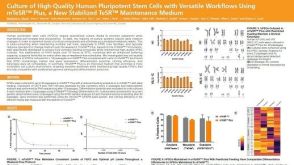 科学海报Culture of High-Quality Human Pluripotent Stem Cells with Versatile Workflows Using mTeSR™ Plus, a New Stabilized TeSR™ Maintenance Medium
 沪公网安备31010102008431号