A. K. Jaiswal et al. ( 2020)
Frontiers in immunology 11 363
Dendritic Cell-Restricted Progenitors Contribute to Obesity-Associated Airway Inflammation via Adam17-p38 MAPK-Dependent Pathway.
Proliferation of dendritic cell (DC)-restricted progenitor cells in bone marrow compartment is tightly regulated at steady state and responds to multiple tissue-specific triggers during disturbed homeostasis such as obesity. DCs in the lung stem from a rapidly dividing DC-restricted progenitor cells and are effective at generating adaptive immune responses in allergic airway inflammation. Precisely,how DC-restricted progenitor expansion and differentiation are influenced by airway inflammation to maintain constant supply of myeloid DCs is poorly understood. Here we show that a high fat diet (HFD) induces oxidative stress and accelerates the expansion of DC- restricted progenitor cells in bone marrow and correlates with persistent induction of p38 mitogen activated protein kinase (MAPK),which is blocked with a selective p38$\alpha$/$\beta$ MAPK inhibitor. Mice fed a HFD and sensitized to inhaled allergen house dust mite (HDM) led to alterations of DC- restricted progenitor cells that were characterized by increased expansion and seeding of lung DCs in airway inflammation. Mechanistically,we establish that the expansion induced by HFD dysregulates the expression of a disintegrin and metallopeptidase domain 17 (Adam17) and is required for p38 MAPK activation in DC-restricted progenitors. These results demonstrates that obesity produces persistent changes in DC precursors and that elevation of Adam17 expression is tightly coupled to p38 MAPK and is a key driver of proliferation. Altogether,these data provide phenotypic and mechanistic insight into dendritic cell supply chain in obesity-associated airway inflammation.
View Publication
产品类型:
产品号#:
19856
19856RF
产品名:
EasySep™小鼠造血祖细胞分选试剂盒
RoboSep™ 小鼠造血祖细胞分选试剂盒
H. Kim et al. ( 2019)
Stem cell reports 12 5 890--905
Pluripotent Stem Cell-Derived Cerebral Organoids Reveal Human Oligodendrogenesis with Dorsal and Ventral Origins.
The process of oligodendrogenesis has been relatively well delineated in the rodent brain. However,it remains unknown whether analogous developmental processes are manifested in the human brain. Here we report oligodendrogenesis in forebrain organoids,generated by using OLIG2-GFP knockin human pluripotent stem cell (hPSC) reporter lines. OLIG2/GFP exhibits distinct temporal expression patterns in ventral forebrain organoids (VFOs) versus dorsal forebrain organoids (DFOs). Interestingly,oligodendrogenesis can be induced in both VFOs and DFOs after neuronal maturation. Assembling VFOs and DFOs to generate fused forebrain organoids (FFOs) promotes oligodendroglia maturation. Furthermore,dorsally derived oligodendroglial cells outcompete ventrally derived oligodendroglia and become dominant in FFOs after long-term culture. Thus,our organoid models reveal human oligodendrogenesis with ventral and dorsal origins. These models will serve to study the phenotypic and functional differences between human ventrally and dorsally derived oligodendroglia and to reveal mechanisms of diseases associated with cortical myelin defects.
View Publication
产品类型:
产品号#:
05872
05873
100-0484
05790
05792
05793
05794
05795
85850
85857
85870
85875
100-0483
产品名:
ReLeSR™
BrainPhys™神经元培养基
BrainPhys™神经元培养基和SM1试剂盒
BrainPhys™ 神经元培养基N2-A和SM1试剂盒
BrainPhys™原代神经元试剂盒
BrainPhys™ hPSC 神经元试剂盒
mTeSR™1
mTeSR™1
Hausser Scientificᵀᴹ 明线血球计数板
X. Liu et al. ( 2017)
Nature Protocols 12 2 439--451
Conditional reprogramming and long-term expansion of normal and tumor cells from human biospecimens
Historically,it has been difficult to propagate cells in vitro that are derived directly from human tumors or healthy tissue. However,in vitro preclinical models are essential tools for both the study of basic cancer biology and the promotion of translational research,including drug discovery and drug target identification. This protocol describes conditional reprogramming (CR),which involves coculture of irradiated mouse fibroblast feeder cells with normal and tumor human epithelial cells in the presence of a Rho kinase inhibitor (Y-27632). CR cells can be used for various applications,including regenerative medicine,drug sensitivity testing,gene expression profiling and xenograft studies. The method requires a pathologist to differentiate healthy tissue from tumor tissue,and basic tissue culture skills. The protocol can be used with cells derived from both fresh and cryopreserved tissue samples. As approximately 1 million cells can be generated in 7 d,the technique is directly applicable to diagnostic and predictive medicine. Moreover,the epithelial cells can be propagated indefinitely in vitro,yet retain the capacity to become fully differentiated when placed into conditions that mimic their natural environment.
View Publication
产品类型:
产品号#:
100-0352
产品名:
条件性重编程(CR)培养基
S. N. Quayle et al. (apr 2020)
Clinical cancer research : an official journal of the American Association for Cancer Research 26 8 1953--1964
CUE-101, a Novel E7-pHLA-IL2-Fc Fusion Protein, Enhances Tumor Antigen-Specific T-Cell Activation for the Treatment of HPV16-Driven Malignancies.
PURPOSE To assess the potential for CUE-101,a novel therapeutic fusion protein,to selectively activate and expand HPV16 E711-20-specific CD8+ T cells as an off-the shelf therapy for the treatment of HPV16-driven tumors,including head and neck squamous cell carcinoma (HNSCC),cervical,and anal cancers. EXPERIMENTAL DESIGN CUE-101 is an Fc fusion protein composed of a human leukocyte antigen (HLA) complex,an HPV16 E7 peptide epitope,reduced affinity human IL2 molecules,and an effector attenuated human IgG1 Fc domain. Human E7-specific T cells and human peripheral blood mononuclear cells (PBMC) were tested to demonstrate cellular activity and specificity of CUE-101,whereas in vivo activity of CUE-101 was assessed in HLA-A2 transgenic mice. Antitumor efficacy with a murine surrogate (mCUE-101) was tested in the TC-1 syngeneic tumor model. RESULTS CUE-101 demonstrates selective binding,activation,and expansion of HPV16 E711-20-specific CD8+ T cells from PBMCs relative to nontarget cells. Intravenous administration of CUE-101 induced selective expansion of HPV16 E711-20-specific CD8+ T cells in HLA-A2 (AAD) transgenic mice,and anticancer efficacy and immunologic memory was demonstrated in TC-1 tumor-bearing mice treated with mCUE-101. Combination therapy with anti-PD-1 checkpoint blockade further enhanced the observed efficacy. CONCLUSIONS Consistent with its design,CUE-101 demonstrates selective expansion of an HPV16 E711-20-specific population of cytotoxic CD8+ T cells,a favorable safety profile,and in vitro and in vivo evidence supporting its potential for clinical efficacy in an ongoing phase I trial (NCT03978689).
View Publication
产品类型:
产品号#:
10981
产品名:
ImmunoCult™ XF 人T细胞扩增培养基,500 mL
L. Riggan et al. (may 2020)
Cell reports 31 7 107651
CRISPR-Cas9 Ribonucleoprotein-Mediated Genomic Editing in Mature Primary Innate Immune Cells.
CRISPR genome engineering has become a powerful tool to functionally investigate the complex mechanisms of immune system regulation. While decades of work have aimed to genetically reprogram innate immunity,the utility of current approaches is restricted by poor knockout efficiencies or limited specificity for mature cell lineages in vivo. Here,we describe an optimized strategy for non-viral CRISPR-Cas9 ribonucleoprotein (cRNP) genomic editing of mature primary mouse innate lymphocyte cells (ILCs) and myeloid lineage cells that results in an almost complete loss of single or double target gene expression from a single electroporation. Furthermore,we describe in vivo adoptive transfer mouse models that can be utilized to screen for gene function during viral infection using cRNP-edited naive natural killer (NK) cells and bone-marrow-derived conventional dendritic cell precursors (cDCPs). This resource will enhance target gene discovery and offer a specific and simplified approach to gene editing in the mouse innate immune system.
View Publication
产品类型:
产品号#:
20104
20124
19855
19855RF
产品名:
RoboSep™ 缓冲液
RoboSep™ 缓冲液 (5X浓缩液)
EasySep™小鼠NK细胞分选试剂盒
RoboSep™ 小鼠NK细胞分选试剂盒
Z. Sharifi et al. ( 2019)
Clinical cancer research : an official journal of the American Association for Cancer Research 25 24 7594--7608
Mechanisms and Antitumor Activity of a Binary EGFR/DNA-Targeting Strategy Overcomes Resistance of Glioblastoma Stem Cells to Temozolomide.
PURPOSE Glioblastoma (GBM) is a fatal primary malignant brain tumor. GBM stem cells (GSC) contribute to resistance to the DNA-damaging chemotherapy,temozolomide. The epidermal growth factor receptor (EGFR) displays genomic alterations enabling DNA repair mechanisms in half of GBMs. We aimed to investigate EGFR/DNA combi-targeting in GBM. EXPERIMENTAL DESIGN ZR2002 is a combi-molecule" designed to inflict DNA damage through its chlorethyl moiety and induce irreversible EGFR tyrosine kinase inhibition. We assessed its in vitro efficacy in temozolomide-resistant patient-derived GSCs mesenchymal temozolomide-sensitive and resistant in vivo-derived GSC sublines and U87/EGFR isogenic cell lines stably expressing EGFR/wild-type or variant III (EGFRvIII). We evaluated its antitumor activity in mice harboring orthotopic EGFRvIII or mesenchymal TMZ-resistant GSC tumors. RESULTS ZR2002 induced submicromolar antiproliferative effects and inhibited neurosphere formation of all GSCs with marginal effects on normal human astrocytes. ZR2002 inhibited EGF-induced autophosphorylation of EGFR downstream Erk1/2 phosphorylation increased DNA strand breaks and induced activation of wild-type p53; the latter was required for its cytotoxicity through p53-dependent mechanism. ZR2002 induced similar effects on U87/EGFR cell lines and its oral administration significantly increased survival in an orthotopic EGFRvIII mouse model. ZR2002 improved survival of mice harboring intracranial mesenchymal temozolomide-resistant GSC line decreased EGFR Erk1/2 and AKT phosphorylation and was detected in tumor brain tissue by MALDI imaging mass spectrometry. CONCLUSIONS These findings provide the molecular basis of binary EGFR/DNA targeting and uncover the oral bioavailability blood-brain barrier permeability and antitumor activity of ZR2002 supporting potential evaluation of this first-in-class drug in recurrent GBM."
View Publication
产品类型:
产品号#:
05750
05751
产品名:
NeuroCult™ NS-A 基础培养基(人)
NeuroCult™ NS-A 扩增试剂盒(人)
J. Xu et al. (oct 2020)
Cellular {\&} molecular immunology 17 10 1104--1106
Improved therapeutic consistency and efficacy of mesenchymal stem cells expanded with chemically defined medium for systemic lupus erythematosus.
J. Yao et al. ( 2020)
Stem cells international 2020 6489396
Human Supernumerary Teeth-Derived Apical Papillary Stem Cells Possess Preferable Characteristics and Efficacy on Hepatic Fibrosis in Mice.
Dental tissue has been acknowledged as an advantaged source for high-quality dental pulp stem cell (DPSC) preparation. However,despite the accomplishment of the separation of DPSCs from permanent teeth and supernumerary teeth,the deficiency of rigorous and systematic clarification on the signatures and efficacy will hinder their prospects in regenerative medicine. In this study,we primitively isolated permanent teeth-derived DPSCs and supernumerary teeth-derived apical papillary stem cells (SCAP-Ss) with parental consent. Immunophenotype of DPSCs and SCAP-Ss was determined by a flow cytometry assay,and the cell viability was verified by multidimensional detections including cell proliferation,cell cycle,apoptosis,and senescence. The migration and clonogenic capacity were examined by a wound healing test and crystal violet staining,respectively. The multilineage differentiation potential was quantitated by utilizing Oil Red O staining and Alizarin Red staining,together with real-time PCR analysis. The efficacy on a mouse hepatic fibrosis model was evaluated by using histologic sections and liver function tests. Herein,we showed that SCAP-Ss exhibited comparable immunophenotype and adipogenic differentiation capacity as DPSCs. However,different from DPSCs,SCAP-Ss exhibited superiority in cell viability and osteogenic differentiation. Simultaneously,injection of DPSCs and SCAP-Ss significantly reduced inflammatory infiltration,enhanced liver-associated gene expression,and finally relieved symptoms of hepatic fibrosis. In conclusion,SCAP-Ss possess preferable characteristics and efficacy on hepatic fibrosis in mice. Our findings suggest that SCAP-Ss are an easily accessible postnatal stem cell source with multifaceted characteristics for regenerative medicine.
View Publication
产品类型:
产品号#:
05412
05465
产品名:
MesenCult™ 脂肪分化试剂盒 (人)
MesenCult™ 成骨细胞分化试剂盒 (人)
H. Zhu et al. (jun 2020)
Cell stem cell
Metabolic Reprograming via Deletion of CISH in Human iPSC-Derived NK Cells Promotes In Vivo Persistence and Enhances Anti-tumor Activity.
Cytokine-inducible SH2-containing protein (CIS; encoded by the gene CISH) is a key negative regulator of interleukin-15 (IL-15) signaling in natural killer (NK) cells. Here,we develop human CISH-knockout (CISH-/-) NK cells using an induced pluripotent stem cell-derived NK cell (iPSC-NK cell) platform. CISH-/- iPSC-NK cells demonstrate increased IL-15-mediated JAK-STAT signaling activity. Consequently,CISH-/- iPSC-NK cells exhibit improved expansion and increased cytotoxic activity against multiple tumor cell lines when maintained at low cytokine concentrations. CISH-/- iPSC-NK cells display significantly increased in vivo persistence and inhibition of tumor progression in a leukemia xenograft model. Mechanistically,CISH-/- iPSC-NK cells display improved metabolic fitness characterized by increased basal glycolysis,glycolytic capacity,maximal mitochondrial respiration,ATP-linked respiration,and spare respiration capacity mediated by mammalian target of rapamycin (mTOR) signaling that directly contributes to enhanced NK cell function. Together,these studies demonstrate that CIS plays a key role to regulate human NK cell metabolic activity and thereby modulate anti-tumor activity.
View Publication
M. Asare-Werehene et al. (sep 2020)
Cancer research 80 18 3959--3971
Plasma Gelsolin Inhibits CD8+ T-cell Function and Regulates Glutathione Production to Confer Chemoresistance in Ovarian Cancer.
Although initial treatment of ovarian cancer is successful,tumors typically relapse and become resistant to treatment. Because of poor infiltration of effector T cells,patients are mostly unresponsive to immunotherapy. Plasma gelsolin (pGSN) is transported by exosomes (small extracellular vesicle,sEV) and plays a key role in ovarian cancer chemoresistance,yet little is known about its role in immunosurveillance. Here,we report the immunomodulatory roles of sEV-pGSN in ovarian cancer chemoresistance. In chemosensitive conditions,secretion of sEV-pGSN was low,allowing for optimal CD8+ T-cell function. This resulted in increased T-cell secretion of IFN$\gamma$,which reduced intracellular glutathione (GSH) production and sensitized chemosensitive cells to cis-diaminedichloroplatinum (CDDP)-induced apoptosis. In chemoresistant conditions,increased secretion of sEV-pGSN by ovarian cancer cells induced apoptosis in CD8+ T cells. IFN$\gamma$ secretion was therefore reduced,resulting in high GSH production and resistance to CDDP-induced death in ovarian cancer cells. These findings support our hypothesis that sEV-pGSN attenuates immunosurveillance and regulates GSH biosynthesis,a phenomenon that contributes to chemoresistance in ovarian cancer. SIGNIFICANCE: These findings provide new insight into pGSN-mediated immune cell dysfunction in ovarian cancer chemoresistance and demonstrate how this dysfunction can be exploited to enhance immunotherapy.
View Publication


 EasySep™小鼠TIL(CD45)正选试剂盒





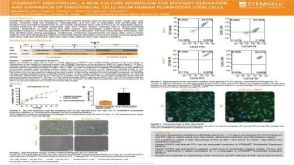 科学海报STEMdiff™ Endothelial: A New Culture Workflow for Efficient Derivation and Expansion of Endothelial Cells From Human Pluripotent Stem Cells
 实验方案How to Cryopreserve Human Pluripotent Stem Cells in CryoStor® CS10
 沪公网安备31010102008431号