TNF inhibitors affect the induction and maintenance of spike-specific B-cell responses after mRNA vaccination
AbstractObjectivesTumour necrosis factor inhibitors (TNFi) are widely used and effective as treatment for immune-mediated inflammatory diseases (IMIDs). However,TNFi therapy causes a faster waning of antibody responses following vaccination. The underlying cause by which TNFi affect humoral immunity remains to be elucidated. The formation of long-lasting,high-affinity antibodies after vaccination results from germinal centre (GC)-derived,T cell-dependent B-cell responses. Therefore,this study investigated how TNFi affect the formation and maintenance of antigen-specific B- and CD4+ T-cell responses following SARS-CoV-2 mRNA vaccination.MethodsSARS-CoV-2 spike-specific B-cell responses were characterised using spectral flow cytometry. Spike-specific CD4+ T cells were measured using an activation-induced marker assay. 15 patients with inflammatory bowel disease (IBD) treated with TNFi were compared with 9 IBD patients without systemic immunosuppression and 10 healthy controls.ResultsSpike-specific CD4+T-cell frequency and phenotype,including T follicular helper cells,were not affected by TNFi. Total spike-specific B-cell frequencies were reduced in TNFi-treated patients. Deep phenotyping revealed lower IgG+memory B-cell frequencies in TNFi-treated patients 3–6 months after vaccination. These data were confirmed in TNFi-treated rheumatoid arthritis patients. Interestingly,already at day 7 after the second vaccination,TNFi therapy reduced the induction of class-switched CD11c- CD71+activated B cells,which are believed to be GC-derived. Conversely,CD11c+B cells,associated with extrafollicular B-cell responses,were not affected by TNFi therapy.ConclusionsThese data suggest that TNFi therapy affects the differentiation of GC-derived B cells,which may explain its effect on humoral immune responses.
View Publication
产品类型:
产品号#:
17851
17851RF
100-0692
产品名:
EasySep™人CD3正选试剂盒II
RoboSep™ 人CD3正选试剂盒II
EasySep™人CD3正选试剂盒II
(Aug 2025)
Nature Communications 16
Integrative multi-omics reveals a regulatory and exhausted T-cell landscape in CLL and identifies galectin-9 as an immunotherapy target
T-cell exhaustion contributes to immunotherapy failure in chronic lymphocytic leukemia (CLL). Here,we analyze T cells from CLL patients’ blood,bone marrow,and lymph nodes,as well as from a CLL mouse model,using single-cell RNA sequencing,mass cytometry,and tissue imaging. T cells in CLL lymph nodes show the most distinct profiles,with accumulation of regulatory T cells and CD8+ T cells in various exhaustion states,including precursor (TPEX) and terminally exhausted (TEX) cells. Integration of T-cell receptor sequencing data and use of the predicTCR classifier suggest an enrichment of CLL-reactive T cells in lymph nodes. Interactome studies reveal potential immunotherapy targets,notably galectin-9,a TIM3 ligand. Inhibiting galectin-9 in mice reduces disease progression and TIM3+ T cells. Galectin-9 expression also correlates with worse survival in CLL and other cancers,suggesting its role in immune evasion and potential as a therapeutic target. Multi-omics can be used to characterise tumour and immune cell populations. Here the authors use multi-omics to characterise CLL blood and tissue samples and use prediction models for CLL TCR specificity and implicate interactions between galectin-9 and TIM3 as involved in CLL immune escape and propose galectin-9 as a possible immunotherapy target.
View Publication
D. Zheng et al. (Oct 2025)
Stem Cell Research & Therapy 16
Dynamic molecular and cellular characteristics of VSX2-positive retinal progenitor cells in human retinal organoids
The lack of understanding of the molecular and cellular characteristics of human retinal progenitor cells (RPCs) has hindered their application in cell therapy for retinal degenerative diseases. This study aims to employ retinal organoids (ROs) derived from a VSX2-enhanced green fluorescent protein (eGFP) reporter human induced pluripotent stem cell (hiPSC) line for positive selection of human RPCs,investigate their features,and facilitate their applications. Methods: hiPSCs were differentiated into three-dimensional ROs following established protocols. The fidelity of the VSX2-eGFP reporter was confirmed through immunostaining. Fluorescence-activated cell sorting was employed to select VSX2-eGFP-positive (+) cells at distinct developmental stages,followed by bulk RNA sequencing (RNA-seq) analysis to assess their transcriptome profile. Immunostaining and flow cytometry were utilized to validate the identity of VSX2-eGFP+ cells and potential cluster of differentiation (CD) biomarkers for identifying human RPCs. Results: hiPSCs were successfully differentiated into ROs containing abundant RPCs. The spatiotemporal activity of the VSX2-eGFP reporter recapitulated the dynamic expression of endogenous VSX2 protein. Compared to VSX2-eGFP-negative (-) cells,VSX2-eGFP+ cells mainly exhibited characteristics of RPCs at early stages of retinal development and of bipolar cells at late stages. RNA-seq analysis revealed transcriptional heterogeneity within VSX2-eGFP+ cells across four distinct developmental stages. Moreover,the dynamic expression of 394 known CD biomarkers in VSX2-eGFP+ cells at distinct developmental stages was analyzed herein for the first time. One CD biomarker,TNFRSF1B,which has never been reported to be expressed in RPCs,was found to be highly expressed in RPCs at the early stages and might serve as a candidate CD biomarker for sorting RPCs. Conclusions: This study provides valuable insights into the molecular and cellular characteristics of human RPCs,especially their expression profiles of CD biomarkers,laying a foundation for research on retinal development and the clinical translation of hiPSC-derived RPCs.
View Publication
产品类型:
产品号#:
85850
85857
产品名:
mTeSR™1
mTeSR™1
M. J. Hovde et al. (Nov 2025)
Alzheimer's & Dementia 21 11
Inhibition of Acyl‐CoenzymeA: Cholesterol Acyltransferase 1 promotes shedding of soluble triggering receptor on myeloid cells 2 (TREM2) and low‐density lipoprotein receptor 1 (LRP1)‐dependent phagocytosis of amyloid beta protein in microglia
Lipid regulation is crucial role in Alzheimer's disease (AD) pathogenesis. In AD,microglia show elevated sterol O‐acyltransferase 1/Acyl‐coenzymeA: Choleseterol Acyltransferase 1 (SOAT1) expression,encoding Acyl‐coenzymeA: Cholesterol Acyltransferase 1 (ACAT1),which produces cholesteryl esters (CEs) in lipid droplets. Inhibiting ACAT1 has been shown to reduce amyloid beta (Aβ) pathology,though the mechanism is unclear. Methods: We inhibited ACAT1 using avasimibe (AV) in wild‐type,triggering receptor expressed on myeloid cells 2 (TREM2) knockout (KO),and low‐density lipoprotein receptor related protein 1 (LRP1) KO mouse BV2 and human induced pluripotent stem cell‐derived microglia and measured the impact on Aβ uptake to determine the mechanism through which the inhibition of ACAT1 enhances Aβ uptake. Results: ACAT1 inhibition increased LRP1 levels and soluble TREM2 (sTREM2) release via enhanced TREM2 cleavage by ADAM metallopeptidase domain 10/17 (ADAM10/17). KO of TREM2 or blockade of sTREM2 release prevented AV‐enhanced Aβ uptake. This effect was rescued by recombinant sTREM2,but only when LRP1 was present. Discussion: ACAT1 inhibition promotes microglial Aβ uptake in a sTREM2‐ and LRP1‐dependent manner,offering insights into novel therapeutic strategies for AD. Highlights: Inhibition of ACAT1,the major enzyme that catalyzes cholesterol storage via esterification enhances microglia‐mediated Aβ uptake. Increased Aβ uptake is dependent on the presence of both TREM2 and LRP1. Inhibition of ACAT1 increases cleavage of TREM2 via ADAM10/17 to release sTREM2. Treatment of microglial cells with sTREM2 rescues Aβ uptake in TREM2 KO BV2 cells.Inhibition of ACAT1 promotes Aβ uptake through increased shedding of TREM2,which enhances Aβ uptake through a LRP1‐dependent mechanism.
View Publication
产品类型:
产品号#:
05310
100-0276
100-0483
100-0484
100-1130
产品名:
STEMdiff™ 造血试剂盒
mTeSR™ Plus
Hausser Scientificᵀᴹ 明线血球计数板
ReLeSR™
mTeSR™ Plus
S. Russo et al. (Nov 2025)
Journal for Immunotherapy of Cancer 13 11
Effect of extracellular vesicles in remodeling the tumor microenvironment by DNMT1 downregulation for enhanced cancer immunotherapy
The efficacy of immunotherapy is often hindered by the suppression of immune responses via the tumor microenvironment (TME). The presence of cancer cells forces other proximal non-cancerous cells to support tumor growth and persistence. A clear example of this cancerous-to-non-cancerous communication is represented by the accumulation of myeloid-derived suppressor cells (MDSCs) within the TME. Several studies have convergently shown that the overexpression of DNA-methyl-transferase-1 (DNMT1) in these cells results in protection from necroptosis and enhanced accumulation in vivo. Conversely,targeting DNMT1 through hypo-methylating agents has shown promising therapeutic potential by not only reducing the levels of MDSCs but also enhancing cancer immunogenicity and the efficacy of immune checkpoint inhibitors (ICI). Methods: Murine 4T1 (triple-negative breast cancer (TNBC)) and CT26 (colon carcinoma) cell lines were cultured under standard conditions and used to generate tumor models in BALB/c mice. An oncolytic adenovirus expressing a DNMT1-targeting short hairpin RNA (OAd.shDNMT1) was engineered and validated for DNMT1 knockdown and genome-wide methylation reduction. Small extracellular vesicles (sEVs) were isolated from virus-infected cancer cells and characterized for RNA content and uptake by MDSCs. MDSC differentiation and suppressive function were assessed in vitro using flow cytometry and co-culture assays with murine splenocytes. In vivo,tumor-bearing mice received intratumoral OAd.shDNMT1,systemic decitabine,or immune checkpoint inhibitors (anti-Programmed cell Death protein-1),and tumor growth,immune infiltration,and systemic MDSC levels were evaluated. Results: In this study,we report that,by using virally infected TNBC murine cells as a source for shDNMT1-loaded sEVs,OAd.shDNMT1 successfully reduced MDSC levels in vitro and in vivo. Furthermore,the co-administration with ICI resulted in a significant tumor growth reduction in mice bearing poorly immunogenic TNBC 4T1 cells. Also,our treatment promoted antitumor immunity,prolonged survival,and complete tumor eradication in modestly immunogenic colon CT26 cancer cells. Conclusions: This multifaceted strategy,based on OV-mediated immune stimulation and reduction of MDSC levels via sEVs,may improve clinical outcomes and the success of immuno-based regimens for patients facing MDSC-rich and highly aggressive cancer subtypes.
View Publication
产品类型:
产品号#:
19867
产品名:
EasySep™小鼠MDSC(CD11b+Gr1+)分选试剂盒
S. Wendt et al. (Nov 2025)
Bio-protocol 15 21
Generation of 3D Human iPSC-Derived Multi-Cell Type Neurospheres for Studying Neuron, Astrocyte, and Microglia Crosstalk
Three-dimensional (3D) human brain tissue models derived from induced pluripotent stem cells (iPSCs) have transformed the study of neural development and disease in vitro. While cerebral organoids offer high structural complexity,their large size often leads to necrotic core formation,limiting reproducibility and challenging the integration of microglia. Here,we present a detailed,reproducible protocol for generating multi-cell type 3D neurospheres that incorporate neurons,astrocytes,and optionally microglia,all derived from the same iPSCs. While neurons and astrocytes differentiate spontaneously from neural precursor cells,generated by dual SMAD-inhibition (blocking BMP and TGF-b signaling),microglia are generated in parallel and can infiltrate the mature neurosphere tissue after plating neurospheres into 48-well plates. The system supports a range of downstream applications,including functional confocal live imaging of GCaMP6f after adeno-associated virus (AAV) transduction of neurospheres or immunofluorescence staining after fixation. Our approach has been successfully implemented across multiple laboratories,demonstrating its robustness and translational potential for studying neuron–glia interactions and modeling neurodegenerative processes.
View Publication
产品类型:
产品号#:
100-0483
100-0484
产品名:
Hausser Scientificᵀᴹ 明线血球计数板
ReLeSR™
H-S. Kim et al. (Nov 2025)
Journal of Hematology & Oncology 18 1
Directly reprogrammed NK cells driven by BCL11B depletion enhance targeted immunotherapy against pancreatic ductal adenocarcinoma
Pancreatic ductal adenocarcinoma (PDAC) is a lethal malignancy characterized by desmoplastic stroma,immunosuppressive tumor microenvironment (TME),and resistance to standard therapies. Natural killer (NK) cell-based immunotherapies have shown limited efficacy due to impaired persistence,infiltration,and function in PDAC. Methods: We established a direct reprogramming strategy to generate cytotoxic NK cells (1 F-NKs) by targeting BCL11B,a transcription factor essential for T cell lineage commitment,using shRNA or CRISPR/Cas9 in peripheral blood mononuclear cells (PBMCs). A genome-wide CRISPR/Cas9 screen identified tumor-intrinsic modulators of NK resistance. Functional and in vivo studies assesses the efficacy of 1 F-NKs alone and in combination with mesothelin (MSLN)-CAR engineering and PKMYT1 inhibition. Results: BCL11B depletion enabled the generation of CD56brightCD16bright 1 F-NKs with potent cytotoxicity and elevated NKG2D and CX3CR1 expression. Site-specific integration of a mesothelin (MSLN)-CAR into BCL11B locus generated MSLN-1 F-NKs with stable antigen specific activity. A genome-wide screen identified PKMYT1 as a modulator of tumor resistance to NK cell-mediated killing; its inhibition by RP6306 upregulated NKG2D ligands (MICA/B) and CX3CL1,sensitizing PDACs to 1 F-NK cytotoxicity. In PDAC xenograft models,1 F-NKs alone or combined with CAR engineering and RP6306 significantly reduced tumor growth and prolonged survival. Notably,this triple combination elicited a synergistic antitumor effect,outperforming each monotherapy or dual combination. Conclusions: This study presents a synergistic immunotherapy platform that integrates NK reprogramming,CAR engineering,and tumor sensitization. The combinatorial approach significantly enhances antitumor efficacy in PDAC and offers a promising strategy for overcoming immune resistance in solid tumors.
View Publication
产品类型:
产品号#:
05270
05275
09600
09605
09650
09655
85850
85857
产品名:
STEMdiff™ APEL™2 培养基
STEMdiff™ APEL™2 培养基
StemSpan™ SFEM
StemSpan™ SFEM II
StemSpan™ SFEM
StemSpan™ SFEM II
mTeSR™1
mTeSR™1
M. Macleod et al. (Oct 2025)
Frontiers in Immunology 16
Comprehensive real-time metabolic profiling of peripheral blood mononuclear cells reveals important methodological considerations for immunometabolism research
The utility of measuring real-time cellular bioenergetics of peripheral blood mononuclear cells (PBMCs) as biomarkers in disease monitoring,such as the bioenergetic health index,is of emerging interest. However,various experimental factors can impact the accuracy and reproducibility of these measurements. Methods: : PBMC bioenergetics were probed in real-time using extracellular flux analysis to identify optimal seeding density and injection protocol. Using a modified protocol,we assessed the extent to which blood processing time and isolation method (SepMate™ vs. EasySep™ Direct) influence PBMC bioenergetics under basal and stimulated conditions. Advanced metabolic control analysis including mitochondrial and glycolytic ATP supply flux,respiratory control ratio,bioenergetic health index,and mitochondrial toxicity index were used to identify and quantify PBMC bioenergetics. Results: Measures of metabolic profiling such as mitochondrial respiration,glycolytic activity,ATP supply flux,and respiratory control ratio were significantly diminished in PBMCs due to blood processing delay (48–72 hours) and were influenced by isolation method. Extended blood processing time significantly lowered T cell activation capacity in PBMCs,evidenced by decreased responses of mitochondrial and glycolytic ATP supply to CD3/CD28 activation. Discussion/Conclusion: This study demonstrates that key experimental variables including blood processing time and isolation method critically affect the reliability and biological relevance of PBMC metabolic assessments,highlighting the importance of protocol standardisation for accurate bioenergetic biomarker measurements.
View Publication
产品类型:
产品号#:
100-0785
10970
10990
产品名:
ImmunoCult™ 人CD3/CD28/CD2 T细胞激活剂
ImmunoCult™ 人CD3/CD28/CD2 T细胞激活剂
ImmunoCult™ 人CD3/CD28/CD2 T细胞激活剂
L. Garriga-Cerda et al. (Dec 2025)
Journal of Tissue Engineering 16 8
IPSC-derived organoid-sourced skin cells enable functional 3D skin modeling of recessive dystrophic epidermolysis bullosa
Recessive dystrophic epidermolysis bullosa (RDEB) is a severe inherited skin disorder caused by mutations in COL7A1. Patient-derived induced pluripotent stem cells (iPSCs) enable the personalized study of RDEB pathogenesis and potential therapies. However,current skin cell differentiation protocols via 2D culture perform suboptimally when applied to engineered 3D skin constructs (ESC). Here,we present an approach to source fibroblasts (iFBs) and keratinocytes (iKCs) from iPSC-derived skin organoids using an optimized differentiation protocol,and utilize them to engineer ESCs modeling wild-type and RDEB phenotypes. The resulting iPSC-derived skin cells display marker expression consistent with primary counterparts and produce ESCs exhibiting significant extracellular matrix remodeling,protein deposition,and epidermal differentiation. RDEB constructs recapitulated hallmark disease features,including absence of collagen VII and reduced iFB proliferation. This work establishes a robust and scalable strategy for generating physiologically-relevant,iPSC-derived skin constructs,offering a powerful model for studying RDEB mechanisms and advancing personalized regenerative medicine.
View Publication
In vivo imaging reveals exosome-mediated intercellular communication in lens development
Lens transparency relies on proper intercellular communication. Exosomes are crucial mediators of intercellular communication and play a key role in organ homeostasis and development. However,their presence and dynamics in the lens remain unclear. Here,we report endogenous exosomes in the zebrafish lens using cryaa-driven Cd63-AcGFP labeling. Live imaging revealed dynamic exosome movement within lens cells and their potential transfer to adjacent tissues. Additionally,we found that the biogenesis of Cd63+ exosomes in the lens is regulated by the Syntenin-a pathway. And Syntenin-a knockdown delayed lens development by impairing lens cell differentiation,highlighting the potential role of lens cell–derived exosomes. Furthermore,ROR1+ lens progenitor cell-derived extracellular vesicles promoted lentoid differentiation in vitro,with proteomic analysis suggesting underlying mechanisms. Overall,our study addresses the gap in direct observation of endogenous lens exosomes,providing foundational insights into lens pathophysiology and a potential strategy for modulating the lens microenvironment. Visualization of endogenous exosomes in the zebrafish lens reveals their dynamic roles in intercellular communication and development,with Syntenin-a–regulated exosome biogenesis influencing lens cell differentiation.
View Publication


 EasySep™小鼠TIL(CD45)正选试剂盒





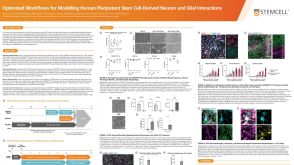 科学海报Optimized Workflows for Modelling Human Pluripotent Stem Cell-Derived Neuron and Glial Interactions

 沪公网安备31010102008431号