R. A. Woolaver et al. (OCT 2018)
Journal of immunology (Baltimore,Md. : 1950)
TRAF2 Deficiency in B Cells Impairs CD40-Induced Isotype Switching That Can Be Rescued by Restoring NF-$\kappa$B1 Activation.
Effective humoral immunity requires class switch recombination (CSR) catalyzed by activation-induced cytidine deaminase (AID). In response to T cell-dependent (TD) Ags,CSR can be induced by CD40 signaling in B cells. TNFR-associated factors 2 and 3 (TRAF2/TRAF3) function as adaptors of the CD40 signaling pathway. B cell-intrinsic TRAF2 or TRAF3 (B-TRAF2 or B-TRAF3) knockout mice were previously reported to have indistinguishable phenotypes in gene expression,B cell survival and development,and enlarged peripheral lymphoid organs. However,it remains unknown whether deficiency of B-TRAF2 or B-TRAF3 differentially affects TD humoral immune responses and CD40-induced CSR. In this article,we show that B-TRAF2 is essential for optimal isotype switching induced by in vivo TD Ag immunization or by engaging CD40 in vitro. Our data clarify the controversial role of B-TRAF3 and confirm its dispensability in CD40-induced CSR. Mechanistically,CD40-induced AID expression was markedly impaired by B-TRAF2,but not B-TRAF3,deficiency. Moreover,B-TRAF2 deficiency causes defective activation of the NF-$\kappa$B1 complex in a CD40-autonomous manner,and restoring CD40-induced NF-$\kappa$B1 activation in TRAF2-deficient B cells rescues AID expression and CSR. We conclude that TRAF2 is essential but TRAF3 is dispensable for TD humoral immunity and CD40-induced CSR. Our studies provide significant biological bases for optimizing treatment of B cell-associated immune disorders by targeting CD40 signaling.
View Publication
产品类型:
产品号#:
19854
19854RF
产品名:
EasySep™小鼠B细胞分选试剂盒
RoboSep™ 小鼠B细胞分选试剂盒
Guan Y et al. (APR 2003)
Blood 101 8 3142--9
Detection, isolation, and stimulation of quiescent primitive leukemic progenitor cells from patients with acute myeloid leukemia (AML).
Although many acute myeloid leukemia (AML) colony-forming cells (CFCs) and long-term culture-initiating cells (LTC-ICs) directly isolated from patients are actively cycling,quiescent progenitors are present in most samples. In the current study,(3)H-thymidine ((3)H-Tdr) suicide assays demonstrated that most NOD/SCID mouse leukemia-initiating cells (NOD/SL-ICs) are quiescent in 6 of 7 AML samples. AML cells in G(0),G(1),and S/G(2)+M were isolated from 4 of these samples using Hoechst 33342/pyroninY staining and cell sorting. The progenitor content of each subpopulation was consistent with the (3)H-Tdr suicide results,with NOD/SL-ICs found almost exclusively among G(0) cells while the cycling status of AML CFCs and LTC-ICs was more heterogeneous. Interestingly,after 72 hours in serum-free culture with or without Steel factor (SF),Flt-3 ligand (FL),and interleukin-3 (IL-3),most G(0) AML cells entered active cell cycle (percentage of AML cells remaining in G(0) at 72 hours,1.2% to 37%,and 0% to 7.6% in cultures without and with growth factors [GFs],respectively) while G(0) cells from normal lineage-depleted bone marrow remained quiescent in the absence of GF. All 4 AML samples showed evidence of autocrine production of 2 or more of SF,FL,IL-3,and granulocyte-macrophage colony-stimulating factor (GM-CSF). In addition,3 of 4 samples contained an internal tandem duplication of the FLT3 gene. In summary,quiescent leukemic cells,including NOD/SL-ICs,are present in most AML patients. Their spontaneous entry into active cell cycle in short-term culture might be explained by the deregulated GF signaling present in many AMLs.
View Publication
产品类型:
产品号#:
05150
09500
09600
09650
产品名:
MyeloCult™ H5100
BIT 9500血清替代物
StemSpan™ SFEM
StemSpan™ SFEM
Baumann BC et al. (MAY 2004)
Journal of immunology (Baltimore,Md. : 1950) 172 10 6460--7
Lack of galactose-alpha-1,3-galactose expression on porcine endothelial cells prevents complement-induced lysis but not direct xenogeneic NK cytotoxicity.
The galactose-alpha-1,3-galactose (alphaGal) carbohydrate epitope is expressed on porcine,but not human cells,and therefore represents a major target for preformed human anti-pig natural Abs (NAb). Based on results from pig-to-primate animal models,NAb binding to porcine endothelial cells will likely induce complement activation,lysis,and hyperacute rejection in pig-to-human xenotransplantation. Human NK cells may also contribute to innate immune responses against xenografts,either by direct recognition of activating molecules on target cells or by FcgammaRIII-mediated xenogeneic Ab-dependent cellular cytotoxicity (ADCC). The present study addressed the question as to whether the lack of alphaGal protects porcine endothelial cells from NAb/complement-induced lysis,direct xenogeneic NK lysis,NAb-dependent ADCC,and adhesion of human NK cells under shear stress. Homologous recombination,panning,and limiting dilution cloning were used to generate an alphaGal-negative porcine endothelial cell line,PED2*3.51. NAb/complement-induced xenogeneic lysis of PED2*3.51 was reduced by an average of 86% compared with the alphaGal-positive phenotype. PED2*3.51 resisted NK cell-mediated ADCC with a reduction of lysis ranging from 30 to 70%. However,direct xenogeneic lysis of PED2*3.51,mediated either by freshly isolated or IL-2-activated human NK cells or the NK cell line NK92,was not reduced. Furthermore,adhesion of IL-2-activated human NK cells did not rely on alphaGal expression. In conclusion,removal of alphaGal leads to a clear reduction in complement-induced lysis and ADCC,but does not resolve adhesion of NK cells and direct anti-porcine NK cytotoxicity,indicating that alphaGal is not a dominant target for direct human NK cytotoxicity against porcine cells.
View Publication
产品类型:
产品号#:
05150
产品名:
MyeloCult™ H5100
Magnifico A et al. (MAR 2009)
Clinical cancer research : an official journal of the American Association for Cancer Research 15 6 2010--21
Tumor-initiating cells of HER2-positive carcinoma cell lines express the highest oncoprotein levels and are sensitive to trastuzumab.
PURPOSE: The existence of tumor-initiating cells in breast cancer has profound implications for cancer therapy. In this study,we investigated the sensitivity of tumor-initiating cells isolated from human epidermal growth factor receptor type 2 (HER2)-overexpressing carcinoma cell lines to trastuzumab,a compound used for the targeted therapy of breast cancer. EXPERIMENTAL DESIGN: Spheres were analyzed by indirect immunofluorescence for HER2 cell surface expression and by real-time PCR for HER2 mRNA expression in the presence or absence of the Notch1 signaling inhibitor (GSI) or Notch1 small interfering RNA. Xenografts of HER2-overexpressing breast tumor cells were treated with trastuzumab or doxorubicin. The sphere-forming efficiency (SFE) and serial transplantability of tumors were assessed. RESULTS: In HER2-overexpressing carcinoma cell lines,cells with tumor-initiating cell properties presented increased HER2 levels compared with the bulk cell population without modification in HER2 gene amplification. HER2 levels were controlled by Notch1 signaling,as shown by the reduction of HER2 cell surface expression and lower SFE following gamma-secretase inhibition or Notch1 specific silencing. We also show that trastuzumab was able to effectively target tumor-initiating cells of HER2-positive carcinoma cell lines,as indicated by the significant decrease in SFE and the loss of serial transplantability,following treatment of HER2-overexpressing xenotransplants. CONCLUSIONS: Here,we provide evidence for the therapeutic efficacy of trastuzumab in debulking and in targeting tumor-initiating cells of HER2-overexpressing tumors. We also propose that Notch signaling regulates HER2 expression,thereby representing a critical survival pathway of tumor-initiating cells.
View Publication
产品类型:
产品号#:
01700
01705
01702
产品名:
ALDEFLUOR™ 试剂盒
ALDEFLUOR™ DEAB试剂, 1.5 mM, 1 mL
ALDEFLUOR™检测缓冲液
Wang X et al. ( 2012)
Journal of immunotherapy (Hagerstown,Md. : 1997) 35 9 689--701
Phenotypic and functional attributes of lentivirus-modified CD19-specific human CD8+ central memory T cells manufactured at clinical scale.
A key determinant of the therapeutic potency of adoptive T-cell transfer is the extent to which infused cells can persist and expand in vivo. Ex vivo propagated virus-specific and chimeric antigen receptor (CAR)-redirected antitumor CD8 effector T cells derived from CD45RA(-) CD62L(+) central memory (TCM) precursors engraft long-term and reconstitute functional memory after adoptive transfer. Here,we describe a clinical scale,closed system,immunomagnetic selection method to isolate CD8(+) T(CM) from peripheral blood mononuclear cells (PBMC). This method uses the CliniMACS device to first deplete CD14(+),CD45RA(+),and CD4(+) cells from PBMC,and then to positively select CD62L(+) cells. The average purity and yield of CD8(+) CD45RA(-) CD62L TCM obtained in full-scale qualification runs were 70% and 0.4% (of input PBMC),respectively. These CD8(+) T(CM) are responsive to anti-CD3/CD28 bead stimulation,and can be efficiently transduced with CAR encoding lentiviral vectors,and undergo sustained expansion in interleukin (IL)-2/IL-15 over 3-6 weeks. The resulting CD8(+) T(CM)-derived effectors are polyclonal,retain expression of CD62L and CD28,exhibit CAR-redirected antitumor effector function,and are capable of huIL-15-dependent in vivo homeostatic engraftment after transfer to immunodeficient NOD/Scid IL-2RgCnull mice. Adoptive therapy using purified T(CM) cells is now the subject of a Food and Drug Administration-authorized clinical trial for the treatment of CD19(+) B-cell malignancies,and 3 clinical cell products expressing a CD19-specific CAR for IND 14645 have already been successfully generated from lymphoma patients using this manufacturing platform.
View Publication
产品类型:
产品号#:
07933
07953
07949
产品名:
CryoStor®CS5
CryoStor®CS5
CryoStor®CS5
S. J. Priceman et al. ( 2018)
Oncoimmunology 7 2 e1380764
Co-stimulatory signaling determines tumor antigen sensitivity and persistence of CAR T cells targeting PSCA+ metastatic prostate cancer.
Advancing chimeric antigen receptor (CAR)-engineered adoptive T cells for the treatment of solid cancers is a major focus in the field of immunotherapy,given impressive recent clinical responses in hematological malignancies. Prostate cancer may be amenable to T cell-based immunotherapy since several tumor antigens,including prostate stem-cell antigen (PSCA),are widely over-expressed in metastatic disease. While antigen selectivity of CARs for solid cancers is crucial,it is problematic due to the absence of truly restricted tumor antigen expression and potential safety concerns with on-target off-tumor" activity. Here
View Publication
产品类型:
产品号#:
07933
07953
07949
17854
17854RF
产品名:
CryoStor®CS5
CryoStor®CS5
CryoStor®CS5
EasySep™人CD19正选试剂盒II
RoboSep™ 人CD19正选试剂盒II
Zhang S et al. (APR 2014)
Biomaterials 35 12 3786--3793
The influence of a spatiotemporal 3D environment on endothelial cell differentiation of human induced pluripotent stem cells.
Current EC differentiation protocols are inefficient,and the phenotypes of the differentiated ECs are only briefly stable,which significantly inhibits their utility for basic science research. Here,a remarkably more efficient hiPSC-EC differentiation protocol that incorporates a three-dimensional (3D) fibrin scaffold is presented. With this protocol,up to 45% of the differentiated hiPSCs assumed an EC phenotype,and after purification,greater than 95% of the cells displayed the EC phenotype (based on CD31 expression). The hiPSC-ECs continued to display EC characteristics for 4 weeks invitro. Gene and protein expression levels of CD31,CD144 and von Willebrand factor-8 (vWF-8) were significantly up-regulated in differentiated hiPSC-ECs. hiPSC-ECs also have biological function to up-take Dil-conjugated acetylated LDL (Dil-ac-LDL) and form tubular structures on Matrigel. Collectively,these data demonstrate that a 3D differentiation protocol can efficiently generate ECs from hiPSCs and,furthermore,the differentiated hiPSC-ECs are functional and can maintain EC fate up to 4 weeks invitro. ?? 2014 Elsevier Ltd.
View Publication
产品类型:
产品号#:
05850
05857
05870
05875
85850
85857
85870
85875
产品名:
mTeSR™1
mTeSR™1
Mehta A et al. (NOV 2014)
Biochimica et biophysica acta 1843 11 2394--2402
Phasic modulation of Wnt signaling enhances cardiac differentiation in human pluripotent stem cells by recapitulating developmental ontogeny.
Cardiomyocytes (CMs) derived from human pluripotent stem cells (hPSCs) offer immense value in studying cardiovascular regenerative medicine. However,intrinsic biases and differential responsiveness of hPSCs towards cardiac differentiation pose significant technical and logistic hurdles that hamper human cardiomyocyte studies. Tandem modulation of canonical and non-canonical Wnt signaling pathways may play a crucial role in cardiac development that can efficiently generate cardiomyocytes from pluripotent stem cells. Our Wnt signaling expression profiles revealed that phasic modulation of canonical/non-canonical axis enabled orderly recapitulation of cardiac developmental ontogeny. Moreover,evaluation of 8 hPSC lines showed marked commitment towards cardiac-mesoderm during the early phase of differentiation,with elevated levels of canonical Wnts (Wnt3 and 3a) and Mesp1. Whereas continued activation of canonical Wnts was counterproductive,its discrete inhibition during the later phase of cardiac differentiation was accompanied by significant up-regulation of non-canonical Wnt expression (Wnt5a and 11) and enhanced Nkx2.5(+) (up to 98%) populations. These Nkx2.5(+) populations transited to contracting cardiac troponin T-positive CMs with up to 80% efficiency. Our results suggest that timely modulation of Wnt pathways would transcend intrinsic differentiation biases of hPSCs to consistently generate functional CMs that could facilitate their scalable production for meaningful clinical translation towards personalized regenerative medicine.
View Publication
PDX1 binds and represses hepatic genes to ensure robust pancreatic commitment in differentiating human embryonic stem cells.
Inactivation of the Pancreatic and Duodenal Homeobox 1 (PDX1) gene causes pancreatic agenesis,which places PDX1 high atop the regulatory network controlling development of this indispensable organ. However,little is known about the identity of PDX1 transcriptional targets. We simulated pancreatic development by differentiating human embryonic stem cells (hESCs) into early pancreatic progenitors and subjected this cell population to PDX1 chromatin immunoprecipitation sequencing (ChIP-seq). We identified more than 350 genes bound by PDX1,whose expression was upregulated on day 17 of differentiation. This group included known PDX1 targets and many genes not previously linked to pancreatic development. ChIP-seq also revealed PDX1 occupancy at hepatic genes. We hypothesized that simultaneous PDX1-driven activation of pancreatic and repression of hepatic programs underlie early divergence between pancreas and liver. In HepG2 cells and differentiating hESCs,we found that PDX1 binds and suppresses expression of endogenous liver genes. These findings rebrand PDX1 as a context-dependent transcriptional repressor and activator within the same cell type.
View Publication
产品类型:
产品号#:
05850
05857
05870
05875
85850
85857
85870
85875
产品名:
mTeSR™1
mTeSR™1
J. Ingels et al. (Apr 2024)
Cell Reports Medicine 5 5
Neoantigen-targeted dendritic cell vaccination in lung cancer patients induces long-lived T cells exhibiting the full differentiation spectrum
Non-small cell lung cancer (NSCLC) is known for high relapse rates despite resection in early stages. Here,we present the results of a phase I clinical trial in which a dendritic cell (DC) vaccine targeting patient-individual neoantigens is evaluated in patients with resected NSCLC. Vaccine manufacturing is feasible in six of 10 enrolled patients. Toxicity is limited to grade 1–2 adverse events. Systemic T cell responses are observed in five out of six vaccinated patients,with T cell responses remaining detectable up to 19 months post vaccination. Single-cell analysis indicates that the responsive T cell population is polyclonal and exhibits the near-entire spectrum of T cell differentiation states,including a naive-like state,but excluding exhausted cell states. Three of six vaccinated patients experience disease recurrence during the follow-up period of 2 years. Collectively,these data support the feasibility,safety,and immunogenicity of this treatment in resected NSCLC.
View Publication
产品类型:
产品号#:
100-0785
10970
10990
产品名:
ImmunoCult™ 人CD3/CD28/CD2 T细胞激活剂
ImmunoCult™ 人CD3/CD28/CD2 T细胞激活剂
ImmunoCult™ 人CD3/CD28/CD2 T细胞激活剂
K. Butcher et al. (Dec 2024)
Biomolecules 14 12
PLGA-Nano-Encapsulated Disulfiram Inhibits Cancer Stem Cells and Targets Non-Small Cell Lung Cancer In Vitro and In Vivo
Cancer stem cells (CSCs) play a key role in non-small cell lung cancer (NSCLC) chemoresistance and metastasis. In this study,we used two NSCLC cell lines to investigate the regulating effect of hypoxia in the induction and maintenance of CSC traits. Our study demonstrated hypoxia-induced stemness and chemoresistance at levels comparable to those in typical CSC sphere culture. Activation of the NF-κB pathway (by transfection of NF-κB-p65) plays a key role in NSCLC CSCs and chemoresistance. Disulfiram (DS),an anti-alcoholism drug,showed a strong in vitro anti-CSC effect. It blocked cancer cell sphere reformation and clonogenicity,synergistically enhanced the cytotoxicity of four anti-NSCLC drugs (doxorubicin,gemcitabine,oxaliplatin and paclitaxel) and reversed hypoxia-induced resistance. The effect of DS on CSCs is copper-dependent. A very short half-life in the bloodstream is the major limitation for the translation of DS into a cancer treatment. Our team previously developed a poly lactic-co-glycolic acid (PLGA) nanoparticle encapsulated DS (DS-PLGA) with a long half-life in the bloodstream. Intra venous injection of DS-PLGA in combination with the oral application of copper gluconate has strong anticancer efficacy in a metastatic NSCLC mouse model. Further study may be able to translate DS-PLGA into cancer applications.
View Publication


 EasySep™小鼠TIL(CD45)正选试剂盒




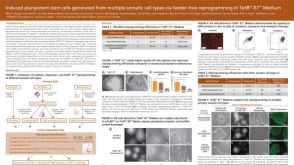 科学海报Induced Pluripotent Stem Cells Generated from Multiple Somatic Cell Types via Feeder Free Reprogramming in TeSR™-E7™ Medium

 沪公网安备31010102008431号