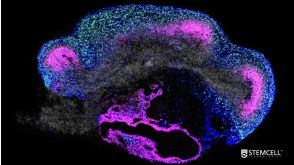
Examining the NEUROG2 lineage and associated gene expression in human cortical organoids
ABSTRACTProneural genes are conserved drivers of neurogenesis across the animal kingdom. How their functions have adapted to guide human-specific neurodevelopmental features is poorly understood. Here,we mined transcriptomic data from human fetal cortices and generated from human embryonic stem cell-derived cortical organoids (COs) to show that NEUROG1 and NEUROG2 are most highly expressed in basal neural progenitor cells,with pseudotime trajectory analyses indicating that NEUROG1-derived lineages predominate early and NEUROG2 lineages later. Using ChIP-qPCR,gene silencing and overexpression studies in COs,we show that NEUROG2 is necessary and sufficient to directly transactivate known target genes (NEUROD1,EOMES,RND2). To identify new targets,we engineered NEUROG2-mCherry knock-in human embryonic stem cells for CO generation. The mCherry-high CO cell transcriptome is enriched in extracellular matrix-associated genes,and two genes associated with human-accelerated regions: PPP1R17 and FZD8. We show that NEUROG2 binds COL1A1,COL3A1 and PPP1R17 regulatory elements,and induces their ectopic expression in COs,although NEUROG2 is not required for this expression. Neurog2 similarly induces Col3a1 and Ppp1r17 in murine P19 cells. These data are consistent with a conservation of NEUROG2 function across mammalian species. Summary: Analysis of human cortical organoids reveals that NEUROG1 lineages prevail early and NEUROG2 lineages later,and that NEUROG2 targets include COL genes and PPP1R17,a human-accelerated region-associated gene.
View Publication
产品类型:
产品号#:
08620
100-0276
100-1130
产品名:
STEMdiff™ 背侧前脑类器官分化试剂盒
mTeSR™ Plus
mTeSR™ Plus
(Jun 2025)
Methods and Protocols 8 3
Expression and Site-Specific Biotinylation of Human Cytosolic 5′-Nucleotidase 1A in Escherichia coli
Autoantibodies targeting cytosolic 5′-nucleotidase 1A (cN1A) are found in several autoimmune diseases,including inclusion body myositis (IBM),Sjögren’s syndrome,and systemic lupus erythematosus. While they have diagnostic relevance for IBM,little is known about the autoreactive B cells that produce these antibodies. To address this,we developed a robust protocol for the expression and site-specific biotinylation of recombinant human cN1A in Escherichia coli. The resulting antigen is suitable for generating double-labelled fluorescent baits for the isolation and characterisation of cN1A-specific B cells by flow cytometry. Site-specific biotinylation was achieved using the AviTag and BirA ligase,preserving the protein’s structure and immunoreactivity. Western blot analysis confirmed that the biotinylated cN1A was recognised by both human and rabbit anti-cN1A antibodies. Compared to conventional chemical biotinylation,this strategy minimises structural alterations that may affect antigen recognition. This approach provides a reliable method for producing biotinylated antigens for use in immunological assays. While demonstrated here for cN1A,the protocol can be adapted for other autoantigens to support studies of antigen-specific B cells in autoimmune diseases.
View Publication
产品类型:
产品号#:
19554
19554RF
产品名:
EasySep™人Pan-B细胞富集试剂盒
RoboSep™ 人Pan-B细胞富集试剂盒
M. Materna et al. (Mar 2024)
Science (New York,N.Y.) 383 6686
The immunopathological landscape of human pre-TCRα deficiency: from rare to common variants
We describe humans with rare biallelic loss-of-function PTCRA variants impairing pre-TCRα expression. Low circulating naïve αβ T cell counts at birth persisted over time,with normal memory αβ and high γδ T cell counts. Their TCRα repertoire was biased,suggesting that noncanonical thymic differentiation pathways can rescue αβ T cell development. Only a minority of these individuals were sick,with infection,lymphoproliferation,and/or autoimmunity. We also report that 1 in 4000 individuals from the Middle East and South Asia are homozygous for a common hypomorphic PTCRA variant. They had normal circulating naïve αβ T cell counts but high γδ T cell counts. Although residual pre-TCRα expression drove the differentiation of more αβ T cells,autoimmune conditions were more frequent in these patients than in the general population.
View Publication
产品类型:
产品号#:
100-0785
100-0956
10970
10981
10990
产品名:
ImmunoCult™ 人CD3/CD28/CD2 T细胞激活剂
ImmunoCult™ XF培养基
ImmunoCult™ 人CD3/CD28/CD2 T细胞激活剂
ImmunoCult™ XF 人T细胞扩增培养基,500 mL
ImmunoCult™ 人CD3/CD28/CD2 T细胞激活剂
B. Lendemeijer et al. (Sep 2024)
eNeuro 11 9
Human Pluripotent Stem Cell-Derived Astrocyte Functionality Compares Favorably with Primary Rat Astrocytes
Astrocytes are essential for the formation and maintenance of neural networks. However,a major technical challenge for investigating astrocyte function and disease-related pathophysiology has been the limited ability to obtain functional human astrocytes. Despite recent advances in human pluripotent stem cell (hPSC) techniques,primary rodent astrocytes remain the gold standard in coculture with human neurons. We demonstrate that a combination of leukemia inhibitory factor (LIF) and bone morphogenetic protein-4 (BMP4) directs hPSC-derived neural precursor cells to a highly pure population of astroglia in 28 d. Using single-cell RNA sequencing,we confirm the astroglial identity of these cells and highlight profound transcriptional adaptations in cocultured hPSC-derived astrocytes and neurons,consistent with their further maturation. In coculture with human neurons,multielectrode array recordings revealed robust network activity of human neurons in a coculture with hPSC-derived or rat astrocytes [3.63 ± 0.44 min −1 (hPSC-derived),2.86 ± 0.64 min −1 (rat); p = 0.19]. In comparison,we found increased spike frequency within network bursts of human neurons cocultured with hPSC-derived astrocytes [56.31 ± 8.56 Hz (hPSC-derived),24.77 ± 4.04 Hz (rat); p < 0.01],and whole-cell patch-clamp recordings revealed an increase of postsynaptic currents [2.76 ± 0.39 Hz (hPSC-derived),1.07 ± 0.14 Hz (rat); p < 0.001],consistent with a corresponding increase in synapse density [14.90 ± 1.27/100 μm 2 (hPSC-derived),8.39 ± 0.63/100 μm 2 (rat); p < 0.001]. Taken together,we show that hPSC-derived astrocytes compare favorably with rat astrocytes in supporting human neural network activity and maturation,providing a fully human platform for investigating astrocyte function and neuronal-glial interactions.
View Publication
产品类型:
产品号#:
05790
产品名:
BrainPhys™神经元培养基
K. E. McGrath et al. (Aug 2025)
Nature Communications 16
BMI1 regulates human erythroid self-renewal through both gene repression and gene activation
The limited proliferative capacity of erythroid precursors is a major obstacle to generate sufficient in vitro-derived red blood cells for clinical purposes. While BMI1,a Polycomb Repressive Complex 1 member,is both necessary and sufficient to drive extensive proliferation of self-renewing erythroblasts,its mechanism of action remains poorly understood. Here we report that BMI1 overexpression leads to 10 billion-fold increase in self-renewal of human erythroblasts,which can terminally mature and agglutinate with typing reagent monoclonal antibodies. BMI1 and RING1B occupancy,along with repressive histone marks,are present at known BMI1 target genes,including the INK-ARF locus,consistent with altered cell cycle kinetics following BMI1 inhibition. Upregulation of BMI1 target genes with low repressive histone modifications,including key regulators of cholesterol homeostasis,along with functional studies,suggest that both cholesterol import and synthesis are essential for BMI1-associated self-renewal. We conclude that BMI1 regulates erythroid self-renewal not only through gene repression but also through gene activation and offer a strategy to expand immature erythroid precursors for eventual clinical uses. Subject terms: Self-renewal,Cell growth,Stem-cell research
View Publication
产品类型:
产品号#:
09600
09650
产品名:
StemSpan™ SFEM
StemSpan™ SFEM
Z. Ao et al. ( 2020)
Analytical chemistry 92 6 4630--4638
One-Stop Microfluidic Assembly of Human Brain Organoids To Model Prenatal Cannabis Exposure.
Prenatal cannabis exposure (PCE) influences human brain development,but it is challenging to model PCE using animals and current cell culture techniques. Here,we developed a one-stop microfluidic platform to assemble and culture human cerebral organoids from human embryonic stem cells (hESC) to investigate the effect of PCE on early human brain development. By incorporating perfusable culture chambers,air-liquid interface,and one-stop protocol,this microfluidic platform can simplify the fabrication procedure and produce a large number of organoids (169 organoids per 3.5 cm × 3.5 cm device area) without fusion,as compared with conventional fabrication methods. These one-stop microfluidic assembled cerebral organoids not only recapitulate early human brain structure,biology,and electrophysiology but also have minimal size variation and hypoxia. Under on-chip exposure to the psychoactive cannabinoid,$\Delta$-9-tetrahydrocannabinol (THC),cerebral organoids exhibited reduced neuronal maturation,downregulation of cannabinoid receptor type 1 (CB1) receptors,and impaired neurite outgrowth. Moreover,transient on-chip THC treatment also decreased spontaneous firing in these organoids. This one-stop microfluidic technique enables a simple,scalable,and repeatable organoid culture method that can be used not only for human brain organoids but also for many other human organoids including liver,kidney,retina,and tumor organoids. This technology could be widely used in modeling brain and other organ development,developmental disorders,developmental pharmacology and toxicology,and drug screening.
View Publication
Schwarz A et al. (MAY 1995)
The Journal of biological chemistry 270 18 10990--8
A regulatory role for sphingolipids in neuronal growth. Inhibition of sphingolipid synthesis and degradation have opposite effects on axonal branching.
Sphingolipids,particularly gangliosides,are enriched in neuronal membranes where they have been implicated as mediators of various regulatory events. We recently provided evidence that sphingolipid synthesis is necessary to maintain neuronal growth by demonstrating that in hippocampal neurons,inhibition of ceramide synthesis by Fumonisin B1 (FB1) disrupted axonal outgrowth (Harel,R. and Futerman,A. H. (1993) J. Biol. Chem. 268,14476-14481). We now analyze further the relationship between neuronal growth and sphingolipid metabolism by examining the effect of an inhibitor of glucosylceramide synthesis,D-threo-1-phenyl-2-decanoylamino-3-morpholino-1- propanol (PDMP) and by examining the effects of both FB1 and PDMP at various stages of neuronal development. No effects of FB1 or PDMP were observed during the first 2 days in culture,but by day 3 axonal morphology was significantly altered,irrespective of the time of addition of the inhibitors to the cultures. Cells incubated with FB1 or PDMP had a shorter axon plexus and less axonal branches. FB1 appeared to cause a retraction of axonal branches between days 2 and 3,although long term incubation had no apparent effect on neuronal morphology or on the segregation of axonal or dendritic proteins. In contrast,incubation of neurons with conduritol B-epoxide,an inhibitor of glucosylceramide degradation,caused an increase in the number of axonal branches and a corresponding increase in the length of the axon plexus. A direct correlation was observed between the number of axonal branch points per cell and the extent of inhibition of either sphingolipid synthesis or degradation. These results suggest that sphingolipids play an important role in the formation or stabilization of axonal branches.
View Publication
产品类型:
产品号#:
73682
73684
产品名:
Fumonisin B1
Fumonisin B1
Smith GH (JAN 1996)
Breast cancer research and treatment 39 1 21--31
Experimental mammary epithelial morphogenesis in an in vivo model: evidence for distinct cellular progenitors of the ductal and lobular phenotype.
An in vivo transplantation system has been used to evaluate the developmental capacities of specific mouse mammary epithelial cell populations. Specifically,mouse mammary epithelial cells with distinctly limited developmental potentials have been identified using this procedure. Two distinct epithelial cell progenitors have been identified by experiments designed to determine whether basal lobular and ductal phenotypes could develop independently under conditions imposed by a limiting dilution. The prediction that these separate epithelial progenitors must exist was based upon the results from transplantation experiments carried out in epithelium-divested mammary fat pads of syngeneic mice with mammary epithelium from two different transgenic mouse models. The results presented here demonstrate the following points: 1) lobular,i.e. secretory,progenitor cells are present as distinct entities among the mammary epithelial cells found in immature virgin female mice; 2) similarly,ductal epithelial progenitors are present within the same population; 3) lobular progenitors are present in greater numbers,although both cell populations are extremely small; 4) as expected,some inocula produce outgrowths with simultaneous development of both lobular and ductal phenotypes--it is not known whether this indicates cooperative interaction between the two epithelial progenitors or signals the presence of a third progenitor type capable of producing both ductular and lobular committed daughters; 5) these findings have important consequences in the design of experiments aimed at testing the effects of known and putative mammary oncogenes and tumor suppressor genes,using techniques which include cellular transformation in vitro followed by in vivo cultivation and evaluation.
View Publication
产品类型:
产品号#:
01700
01705
05601
05610
05620
01702
产品名:
ALDEFLUOR™ 试剂盒
ALDEFLUOR™ DEAB试剂, 1.5 mM, 1 mL
EpiCult™-B 人培养基
EpiCult™-B 小鼠培养基
MammoCult™ 人源培养基套装
ALDEFLUOR™检测缓冲液
Reichert AJ et al. (DEC 2015)
Protein Engineering Design and Selection 28 12 553--65
Optimisation of a system for the co-translational incorporation of a keto amino acid and its application to a tumour-specific Anticalin
The bioorthogonal keto group has attracted interest for the site-specific chemical conjugation of recombinant proteins under mild conditions,e.g. with aminooxy-functionalised fluorescent probes,radiometal chelates,toxins or polymers. However,the cotranslational incorporation of the corresponding non-canonical amino acid p-acetyl-L-phenylalanine (Apa) into proteins expressed in Escherichia coli by means of amber suppression using a previously described system with a mutated tRNA and an engineered tyrosyl-tRNA synthetase from Methanococcus jannaschii shows limited efficiency and considerable promiscuity towards endogenous amino acids. Employing a one-plasmid system that encodes all three components required for selection,i.e. the modified aminoacyl-tRNA synthetase (aaRS),the cognate amber suppressor tRNA and the enhanced green fluorescent protein equipped with an amber stop codon and serving as reporter,we have generated an Apa-specific aaRS&tRNA pair with considerably improved efficiency (17-fold increased expression) and also fidelity (6-fold). To this end,both the aaRS and the tRNA were subjected to doped random mutagenesis and selection in altogether four evolutionary cycles using fluorescence-activated bacterial cell sorting as well as automated screening of microcultures. The resulting aaRS&tRNA pair was applied to the functionalisation of an Anticalin with specificity towards oncofetal fibronectin by introducing a keto group at a permissible site for subsequent conjugation with a fluorescent dye,thus allowing visualisation of this tumour target under the microscope.
View Publication


 EasySep™小鼠TIL(CD45)正选试剂盒




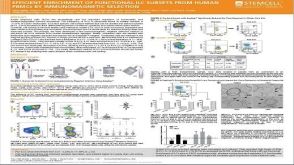 科学海报Efficient Enrichment of Functional ILC Subsets from Human PBMCs by Immunomagnetic Selection

 沪公网安备31010102008431号