Lee et al. (Aug 2025)
Journal of Translational Medicine 23
Optimizing T cell transduction: a novel transduction device for efficient and scalable gene delivery
Viral transduction is a critical step in the manufacturing of genetically modified T cells for immunotherapies,yet conventional transduction methods suffer from low to medium efficiency,high vector consumption,and limited scalability. To address these challenges,we introduce the Transduction Boosting Device (TransB),an innovative,automated,and closed-system platform designed to enable efficient and scalable gene delivery and overcome the limitations of conventional transduction methods. TransB improves cell-virus interactions by facilitating proximity between target cells and viral vectors. TransB demonstrated up to 1-fold decrease in processing time,3-fold reduction in viral vector consumption,and 0.7-fold increase in transduction efficiency compared to 24—well plate method for donor T cell transduction in studies evaluating its impact on transduction process. Comparison studies transducing T cells from three different donors with Lenti-GFP vectors showed that TransB achieved an average 0.5-fold improvement in transduction efficiencies while maintaining comparable post-transduction cell recovery,viability,growth,and phenotype compared to 24—well plate. Furthermore,TransB delivered consistent performance across two different input cell numbers demonstrating scalability of the process. These findings suggest that TransB could significantly shorten the transduction time,reduce the transduction cost and improve the transduction efficiency for manufacturing genetically modified T cell therapies. It shows strong potential as a robust,efficient,and scalable platform to enhance T cell therapy manufacturing and help overcome current manufacturing challenges in the field. The online version contains supplementary material available at 10.1186/s12967-025-06836-1.
View Publication
产品类型:
产品号#:
100-0785
10970
10990
产品名:
ImmunoCult™ 人CD3/CD28/CD2 T细胞激活剂
ImmunoCult™ 人CD3/CD28/CD2 T细胞激活剂
ImmunoCult™ 人CD3/CD28/CD2 T细胞激活剂
Harrington LE et al. (NOV 2005)
Nature immunology 6 11 1123--32
Interleukin 17-producing CD4+ effector T cells develop via a lineage distinct from the T helper type 1 and 2 lineages.
CD4(+) T cells producing interleukin 17 (IL-17) are associated with autoimmunity,although the precise mechanisms that control their development are undefined. Here we present data that challenge the idea of a shared developmental pathway with T helper type 1 (T(H)1) or T(H)2 lineages and instead favor the idea of a distinct effector lineage we call 'T(H)-17'. The development of T(H)-17 cells from naive precursor cells was potently inhibited by interferon-gamma (IFN-gamma) and IL-4,whereas committed T(H)-17 cells were resistant to suppression by T(H)1 or T(H)2 cytokines. In the absence of IFN-gamma and IL-4,IL-23 induced naive precursor cells to differentiate into T(H)-17 cells independently of the transcription factors STAT1,T-bet,STAT4 and STAT6. These findings provide a basis for understanding how inhibition of IFN-gamma signaling enhances development of pathogenic T(H)-17 effector cells that can exacerbate autoimmunity.
View Publication
产品类型:
产品号#:
73722
73724
产品名:
离子霉素(Ionomycin)
离子霉素(Ionomycin)
Rizzuto GA et al. (APR 2009)
The Journal of experimental medicine 206 4 849--66
Self-antigen-specific CD8+ T cell precursor frequency determines the quality of the antitumor immune response.
A primary goal of cancer immunotherapy is to improve the naturally occurring,but weak,immune response to tumors. Ineffective responses to cancer vaccines may be caused,in part,by low numbers of self-reactive lymphocytes surviving negative selection. Here,we estimated the frequency of CD8(+) T cells recognizing a self-antigen to be textless0.0001% ( approximately 1 in 1 million CD8(+) T cells),which is so low as to preclude a strong immune response in some mice. Supplementing this repertoire with naive antigen-specific cells increased vaccine-elicited tumor immunity and autoimmunity,but a threshold was reached whereby the transfer of increased numbers of antigen-specific cells impaired functional benefit,most likely because of intraclonal competition in the irradiated host. We show that cells primed at precursor frequencies below this competitive threshold proliferate more,acquire polyfunctionality,and eradicate tumors more effectively. This work demonstrates the functional relevance of CD8(+) T cell precursor frequency to tumor immunity and autoimmunity. Transferring optimized numbers of naive tumor-specific T cells,followed by in vivo activation,is a new approach that can be applied to human cancer immunotherapy. Further,precursor frequency as an isolated variable can be exploited to augment efficacy of clinical vaccine strategies designed to activate any antigen-specific CD8(+) T cells.
View Publication
产品类型:
产品号#:
19753
19753RF
产品名:
Muroski ME et al. (JUL 2017)
Scientific reports 7 1 5790
Fatty Acid Uptake in T Cell Subsets Using a Quantum Dot Fatty Acid Conjugate.
Fatty acid (FA) metabolism directly influences the functional capabilities of T cells in tumor microenvironments. Thus,developing tools to interrogate FA-uptake by T cell subsets is important for understanding tumor immunosuppression. Herein,we have generated a novel FA-Qdot 605 dye conjugate with superior sensitivity and flexibility to any of the previously commercially available alternatives. For the first time,we demonstrate that this nanoparticle can be used as a specific measure of fatty acid uptake by T cells both in-vitro and in-vivo. Flow cytometric analysis shows that both the location and activation status of T cells determines their FA uptake. Additionally,CD4+ Foxp3+ regulatory T cells (Tregs) uptake FA at a higher rate than effector T cell subsets,supporting the role of FA metabolism for Treg function. Furthermore,we are able to simultaneously detect glucose and fatty acid uptake directly within the tumor microenvironment. Cumulatively,our results suggest that this novel fluorescent probe is a powerful tool to understand FA utilization within the tumor,thereby providing an unprecedented opportunity to study T cell FA metabolism in-vivo.
View Publication
X. Liu et al. (oct 2022)
Journal for immunotherapy of cancer 10 10
Blockades of effector T cell senescence and exhaustion synergistically enhance antitumor immunity and immunotherapy.
BACKGROUND Current immunotherapies still have limited successful rates among cancers. It is now recognized that T cell functional state in the tumor microenvironment (TME) is a key determinant for effective antitumor immunity and immunotherapy. In addition to exhaustion,cellular senescence in tumor-infiltrating T cells (TILs) has recently been identified as an important T cell dysfunctional state induced by various malignant tumors. Therefore,a better understanding of the molecular mechanism responsible for T cell senescence in the TME and development of novel strategies to prevent effector T cell senescence are urgently needed for cancer immunotherapy. METHODS Senescent T cell populations in the TMEs in mouse lung cancer,breast cancer,and melanoma tumor models were evaluated. Furthermore,T cell senescence induced by mouse tumor and regulatory T (Treg) cells in vitro was determined with multiple markers and assays,including real-time PCR,flow cytometry,and histochemistry staining. Loss-of-function strategies with pharmacological inhibitors and the knockout mouse model were used to identify the potential molecules and pathways involved in T cell senescence. In addition,melanoma mouse tumor immunotherapy models were performed to explore the synergistical efficacy of antitumor immunity via prevention of tumor-specific T cell senescence combined with anti-programmed death-ligand 1 (anti-PD-L1) checkpoint blockade therapy. RESULTS We report that both mouse malignant tumor cells and Treg cells can induce responder T cell senescence,similar as shown in human Treg and tumor cells. Accumulated senescent T cells also exist in the TME in tumor models of lung cancer,breast cancer and melanoma. Induction of ataxia-telangiectasia mutated protein (ATM)-associated DNA damage is the cause for T cell senescence induced by both mouse tumor cells and Treg cells,which is also regulated by mitogen-activated protein kinase (MAPK) signaling. Furthermore,blockages of ATM-associated DNA damage and/or MAPK signaling pathways in T cells can prevent T cell senescence mediated by tumor cells and Treg cells in vitro and enhance antitumor immunity and immunotherapy in vivo in adoptive transfer T cell therapy melanoma models. Importantly,prevention of tumor-specific T cell senescence via ATM and/or MAPK signaling inhibition combined with anti-PD-L1 checkpoint blockade can synergistically enhance antitumor immunity and immunotherapy in vivo. CONCLUSIONS These studies prove the novel concept that targeting both effector T cell senescence and exhaustion is an effective strategy and can synergistically enhance cancer immunotherapy.
View Publication
产品类型:
产品号#:
18783
18783RF
产品名:
EasySep™小鼠CD4+CD25+调节性T细胞分选试剂盒II
RoboSep™ 小鼠CD4+CD25+调节性T细胞分选试剂盒II
M. J. Frank et al. (sep 2020)
The Journal of experimental medicine 217 9
Autologous tumor cell vaccine induces antitumor T cell immune responses in patients with mantle cell lymphoma: A phase I/II trial.
Here,we report on the results of a phase I/II trial (NCT00490529) for patients with mantle cell lymphoma who,having achieved remission after immunochemotherapy,were vaccinated with irradiated,CpG-activated tumor cells. Subsequently,vaccine-primed lymphocytes were collected and reinfused after a standard autologous stem cell transplantation (ASCT). The primary endpoint was detection of minimal residual disease (MRD) within 1 yr after ASCT at the previously validated threshold of ≥1 malignant cell per 10,000 leukocyte equivalents. Of 45 evaluable patients,40 (89{\%}) were found to be MRD negative,and the MRD-positive patients experienced early subsequent relapse. The vaccination induced antitumor CD8 T cell immune responses in 40{\%} of patients,and these were associated with favorable clinical outcomes. Patients with high tumor PD-L1 expression after in vitro exposure to CpG had inferior outcomes. Vaccination with CpG-stimulated autologous tumor cells followed by the adoptive transfer of vaccine-primed lymphocytes after ASCT is feasible and safe.
View Publication
产品类型:
产品号#:
17963
17963RF
产品名:
EasySep™人B细胞富集试剂盒II(不去除CD43)
RoboSep™ 人B细胞富集试剂盒II(不去除CD43)
L. V. Sinclair et al. (MAY 2018)
Nature communications 9 1 1981
Single cell analysis of kynurenine and System L amino acid transport in T cells.
The tryptophan metabolite kynurenine has critical immunomodulatory properties and can function as an aryl hydrocarbon receptor (AHR) ligand. Here we show that the ability of T cells to transport kynurenine is restricted to cells activated by the T-cell antigen receptor or proinflammatory cytokines. Kynurenine is transported across the T-cell membrane by the System L transporter SLC7A5. Accordingly,the ability of kynurenine to activate the AHR is restricted to T cells that express SLC7A5. We use the fluorescence spectral properties of kynurenine to develop a flow cytometry-based assay for rapid,sensitive and quantitative measurement of the kynurenine transport capacity in a single cell. Our findings provide a method to assess the susceptibility of T cells to kynurenine,and a sensitive single cell assay to monitor System L amino acid transport.
View Publication
M. H. B. A. Hamid et al. (Apr 2024)
Nature Immunology 25 5
Unconventional human CD61 pairing with CD103 promotes TCR signaling and antigen-specific T cell cytotoxicity
Cancer remains one of the leading causes of mortality worldwide,leading to increased interest in utilizing immunotherapy strategies for better cancer treatments. In the past decade,CD103 + T cells have been associated with better clinical prognosis in patients with cancer. However,the specific immune mechanisms contributing toward CD103-mediated protective immunity remain unclear. Here,we show an unexpected and transient CD61 expression,which is paired with CD103 at the synaptic microclusters of T cells. CD61 colocalization with the T cell antigen receptor further modulates downstream T cell antigen receptor signaling,improving antitumor cytotoxicity and promoting physiological control of tumor growth. Clinically,the presence of CD61 + tumor-infiltrating T lymphocytes is associated with improved clinical outcomes,mediated through enhanced effector functions and phenotype with limited evidence of cellular exhaustion. In conclusion,this study identified an unconventional and transient CD61 expression and pairing with CD103 on human immune cells,which potentiates a new target for immune-based cellular therapies. Subject terms: T cells,Tumour immunology,Lymphocyte activation
View Publication
产品类型:
产品号#:
100-0784
10971
10991
产品名:
ImmunoCult™ 人CD3/CD28 T细胞激活剂
ImmunoCult™ 人CD3/CD28 T细胞激活剂
ImmunoCult™ 人CD3/CD28 T细胞激活剂
Bao K et al. (OCT 2016)
Journal of immunology (Baltimore,Md. : 1950)
BATF Modulates the Th2 Locus Control Region and Regulates CD4+ T Cell Fate during Antihelminth Immunity.
The AP-1 factor basic leucine zipper transcription factor,ATF-like (BATF) is important for CD4(+) Th17,Th9,and follicular Th cell development. However,its precise role in Th2 differentiation and function remains unclear,and the requirement for BATF in nonallergic settings of type-2 immunity has not been explored. In this article,we show that,in response to parasitic helminths,Batf(-/-) mice are unable to generate follicular Th and Th2 cells. As a consequence,they fail to establish productive type-2 immunity during primary and secondary infection. Batf(-/-) CD4(+) T cells do not achieve type-2 cytokine competency,which implies that BATF plays a key role in the regulation of IL-4 and IL-13. In contrast to Th17 and Th9 cell subsets in which BATF binds directly to promoter and enhancer regions to regulate cytokine expression,our results show that BATF is significantly enriched at Rad50 hypersensitivity site (RHS)6 and RHS7 of the locus control region relative to AP-1 sites surrounding type-2 cytokine loci in Th2 cells. Indeed,Batf(-/-) CD4(+) T cells do not obtain permissive epigenetic modifications within the Th2 locus,which were linked to RHS6 and RHS7 function. In sum,these findings reveal BATF as a central modulator of peripheral and humoral hallmarks of type-2 immunity and begin to elucidate a novel mechanism by which it regulates type-2 cytokine production through its modification of the Th2 locus control region.
View Publication
产品类型:
产品号#:
19852
19852RF
产品名:
EasySep™小鼠CD4+ T细胞分选试剂盒
RoboSep™ 小鼠CD4+ T细胞分选试剂盒
N. Balneger et al. (jan 2022)
Cellular and molecular life sciences : CMLS 79 2 98
Sialic acid blockade in dendritic cells enhances CD8+ T cell responses by facilitating high-avidity interactions.
Sialic acids are negatively charged carbohydrates that cap the glycans of glycoproteins and glycolipids. Sialic acids are involved in various biological processes including cell-cell adhesion and immune recognition. In dendritic cells (DCs),the major antigen-presenting cells of the immune system,sialic acids emerge as important regulators of maturation and interaction with other lymphocytes including T cells. Many aspects of how sialic acids regulate DC functions are not well understood and tools and model systems to address these are limited. Here,we have established cultures of murine bone marrow-derived DCs (BMDCs) that lack sialic acid expression using a sialic acid-blocking mimetic Ac53FaxNeu5Ac. Ac53FaxNeu5Ac treatment potentiated BMDC activation via toll-like receptor (TLR) stimulation without affecting differentiation and viability. Sialic acid blockade further increased the capacity of BMDCs to induce antigen-specific CD8+ T cell proliferation. Transcriptome-wide gene expression analysis revealed that sialic acid mimetic treatment of BMDCs induces differential expression of genes involved in T cell activation,cell-adhesion,and cell-cell interactions. Subsequent cell clustering assays and single cell avidity measurements demonstrated that BMDCs with reduced sialylation form higher avidity interactions with CD8+ T cells. This increased avidity was detectable in the absence of antigens,but was especially pronounced in antigen-dependent interactions. Together,our data show that sialic acid blockade in BMDCs ameliorates maturation and enhances both cognate T cell receptor-MHC-dependent and independent T cell interactions that allow for more robust CD8+ T cell responses.
View Publication


 EasySep™小鼠TIL(CD45)正选试剂盒





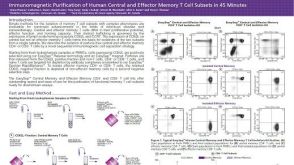 科学海报Immunomagnetic Purification of Human Central and Effector Memory T Cell Subsets in 45 Minutes

 沪公网安备31010102008431号