A. V. Jeyachandran et al. (Aug 2025)
PLOS Pathogens 21 8
Differential tropisms of old and new world hantaviruses influence virulence and developing host-directed antiviral candidates
Hantaviruses are zoonotically transmitted from rodents to humans through the respiratory route,with no currently approved antivirals or widely available vaccines. The recent discovery of interhuman-transmitted Andes virus (ANDV) necessitates the systematic identification of cell tropism,infective potential,and potent therapeutic agents. We utilized human primary lung endothelial cells,various pluripotent stem cell-derived heart and brain cell types,and established human lung organoid models to evaluate the tropisms of Old World Hantaan (HTNV) and New World ANDV and Sin Nombre (SNV) viruses. ANDV exhibited broad tropism for all cell types assessed. SNV readily infected pulmonary endothelial cells,while HTNV robustly amplified in endothelial cells,cardiomyocytes,and astrocytes. We also provide the first evidence of hantaviral infection in human 3D distal lung organoids,which effectively modeled these differential tropisms. ANDV infection transcriptionally promoted cell injury and inflammatory responses,and downregulated lipid metabolic pathways in lung epithelial cells. Evaluation of selected drug candidates and pharmacotranscriptomics revealed that the host-directed small molecule compound urolithin B inhibited ANDV infection and restored cellular metabolism with minimal changes in host transcription. Given the scarcity of academic BSL-4 facilities that enable in vivo hantaviral studies,this investigation presents advanced human cell-based model systems that closely recapitulate host cell tropism and responses to infection,thereby providing critical platforms to evaluate potential antiviral drug candidates. Author summaryHantaviruses are fatal human pathogens that cause hemorrhagic fevers and are classified into either Old World or New World groups. Though most hantaviruses utilize zoonotic transmission,the New World Andes virus (ANDV) is unique in its ability to spread between humans. This distinct transmission mode underscores the need to investigate its cell tropism,pathogenicity,and therapeutic targets. Thus,we performed a systems-level comparison of the Old World Hantaan virus (HTNV) and New World hantaviruses,ANDV and Sin Nombre virus (SNV),using human lung,heart,and brain cell models,alongside lipidomic and transcriptomic profiling. We observed that ANDV exhibits broad tropism,infecting all tested cell types,including lung epithelial cells. HTNV replicated in lung endothelial,heart,and brain cells,whereas SNV replication was largely confined to lung endothelial cells. Notably,ANDV infection induced stronger host transcriptional changes,promoted cell injury and inflammatory responses,and suppressed lipid metabolic pathways in lung epithelial cells. Further drug testing and pharmacotranscriptomic analysis identified effective inhibitors of ANDV infection,including urolithin B,that restored cellular metabolism with minimal transcriptional disruption. This study provides a comparative framework for understanding hantavirus cell tropism and host responses and highlights potential antiviral candidates for treating these severe viral infections.
View Publication
产品类型:
产品号#:
85850
85857
产品名:
mTeSR™1
mTeSR™1
C. Marsman et al. (Aug 2025)
Frontiers in Immunology 16 8
Immune counter-evolution: immortalized B cell clones can undergo ex vivo directed evolution to counteract viral escape
IntroductionAmid the persistent threat of future pandemics,the continuous evolution of SARS-CoV-2 exposed critical challenges for vaccine efficacy and therapeutic interventions,highlighting the need for rapid and adaptable approaches to respond to immune escape variants.MethodsHere,we report the use of immortalized B cell libraries from human peripheral blood mononuclear cells (PBMCs) and tonsil tissues to uncover B cell clones exhibiting cross-reactive neutralization against various SARS-CoV-2 variants and perform directed evolution of immortalized B cell clones to produce antibodies with improved binding and neutralization against emerging SARS-CoV-2 variants.ResultsImmortalization of PBMC and tonsil-derived human B cells was achieved through transduction with retroviral vectors encoding apoptosis inhibitors,yielding transduction efficiencies of 67.5% for PBMCs and 50.2% for tonsil-derived cells. Analysis revealed that immortalized B cell libraries produced with this method retain diverse immunoglobulin isotype representations. Through high-throughput functional screening of approximately 40,000 B cells per library,we identified 12 unique clones with neutralization activity for SARS-CoV-2,leading to selection of monoclonal antibodies with robust neutralization activity against Delta and BA.5 variants. We applied our directed evolution approach to libraries generated by ex vivo AID-induced somatic hypermutation (SHM) of immortalized B cell clones to enhance the affinity and cross-reactivity,resulting in improved binding and neutralization potency to escape variants such as EG.5.1 and JN.1. Furthermore,we engineered a bi-paratopic antibody combining KBA2401,a broadly neutralizing antibody binding to highly conserved epitope on Spike-RBD,and KBA2402,a broadly binding non-neutralizing antibody,resulting in enhanced potency against SARS-CoV-2 variant JN.1 and KP.3.DiscussionOur findings illustrate the use of immortalized B cell libraries for development of therapeutics that adapt to viral evolution and highlight the application of ex vivo directed evolution in refining antibody responses against emerging immune escape SARS-CoV-2 variants. The approach here described offers a promising pathway for rapid therapeutic development in the face of evolving viral threats.
View Publication
产品类型:
产品号#:
100-0971
17954
17954RF
产品名:
EasySep™人B细胞分离试剂盒
EasySep™人B细胞分选试剂盒
RoboSep™ 人B细胞分选试剂盒
F. Borot et al. (May 2025)
Nature Communications 16
Multiplex base editing to protect from CD33 directed drugs for immune and gene therapy
The selection of genetically engineered immune or hematopoietic cells in vivo after gene editing remains a clinical problem and requires a method to spare on-target toxicity to normal cells. Here,we develop a base editing approach exploiting a naturally occurring CD33 single nucleotide polymorphism leading to removal of full-length CD33 surface expression on edited cells. CD33 editing in human and nonhuman primate hematopoietic stem and progenitor cells protects myeloid progeny from CD33-targeted therapeutics without affecting normal hematopoiesis in vivo,thus demonstrating potential for improved immunotherapies with reduced off-leukemia toxicity. For broader application to gene therapies,we demonstrate highly efficient (>70%) multiplexed adenine base editing of the CD33 and gamma globin genes,resulting in long-term persistence of dual gene-edited cells with HbF reactivation in nonhuman primates. Using the CD33 antibody-drug conjugate Gemtuzumab Ozogamicin,we show resistance of engrafted,multiplex edited human cells in vivo,and a 2-fold enrichment for edited cells in vitro. Together,our results highlight the potential of adenine base editors for improved immune and gene therapies. Subject terms: Haematopoietic stem cells,Bone marrow transplantation,Cell biology
View Publication
产品类型:
产品号#:
09600
09605
09650
09655
产品名:
StemSpan™ SFEM
StemSpan™ SFEM II
StemSpan™ SFEM
StemSpan™ SFEM II
(Jul 2024)
Nature Communications 15
Tumor cell-directed STING agonist antibody-drug conjugates induce type III interferons and anti-tumor innate immune responses
Activating interferon responses with STING agonists (STINGa) is a current cancer immunotherapy strategy,and therapeutic modalities that enable tumor-targeted delivery via systemic administration could be beneficial. Here we demonstrate that tumor cell-directed STING agonist antibody-drug-conjugates (STINGa ADCs) activate STING in tumor cells and myeloid cells and induce anti-tumor innate immune responses in in vitro,in vivo (in female mice),and ex vivo tumor models. We show that the tumor cell-directed STINGa ADCs are internalized into myeloid cells by Fcγ-receptor-I in a tumor antigen-dependent manner. Systemic administration of STINGa ADCs in mice leads to STING activation in tumors,with increased anti-tumor activity and reduced serum cytokine elevations compared to a free STING agonist. Furthermore,STINGa ADCs induce type III interferons,which contribute to the anti-tumor activity by upregulating type I interferon and other key chemokines/cytokines. These findings reveal an important role for type III interferons in the anti-tumor activity elicited by STING agonism and provide rationale for the clinical development of tumor cell-directed STINGa ADCs. Activation of the STING pathway can promote anti-tumor immunity. Here the authors generate tumor cell-directed STING agonist antibody-drug conjugates that activate STING in tumor and myeloid cells,promoting anti-tumor innate immune responses in preclinical cancer models.
View Publication
产品类型:
产品号#:
17858
17858RF
100-0694
产品名:
EasySep™人CD14正选试剂盒II
RoboSep™ 人CD14正选试剂盒II
EasySep™人CD14正选试剂盒II
(Jan 2025)
Nature Immunology 26 1
Antigen experience history directs distinct functional states of CD8+ CAR T cells during the antileukemia response
Although chimeric antigen receptor (CAR) T cells are effective against B-lineage malignancies,post-CAR relapse is common,and efficacy in other tumors is limited. These challenges may be addressed through rational manipulations to control CAR T cell function. Here we examine the impact of cognate T cell antigen experience on subsequent CD8+ CAR T cell activity. Prior antigen encounter resulted in superior effector function against leukemia expressing low target antigen density at the expense of reduced proliferative capacity and susceptibility to dysfunction at limiting CAR doses. Distinctive temporal transcriptomic and epigenetic profiles in naive-derived and memory-derived CAR T cells identified RUNX family transcription factors as potential targets to augment the function of naive-derived CD8+ CAR T cells. RUNX2 overexpression enhanced antitumor efficacy of mouse CAR T cells,dependent on prior cell state,and heightened human CAR T cell functions. Our data demonstrate that prior antigen experience of CAR T cells determines functional attributes and amenability to transcription factor-mediated functional enhancement. Here,Fry and colleagues examine the impact of antigen experience on subsequent CD8+ CAR T cell activity during the antileukemia response and show that RUNX2 overexpression enhances antitumor activity of these cells.
View Publication
产品类型:
产品号#:
19051
19051RF
产品名:
EasySep™人T细胞富集试剂盒
RoboSep™ 人T细胞富集试剂盒含滤芯吸头
(Jul 2025)
Frontiers in Immunology 16
C-reactive protein induced T cell activation is an indirect monocyte-dependent mechanism involving the CD80/CD28 pathway
IntroductionT cells are major components of the immune system. Their activation requires interaction between the T cell receptor and co-stimulatory molecules,crucial during infection,inflammation,and allogeneic rejection. Monomeric CRP (mCRP) is a known modulator of inflammation and particularly the innate immune response,however its interaction with T cells as part of the adaptive immune response remains unclear.MethodsPeripheral blood mononuclear cells (PBMC) and T cells were isolated. Flow cytometric analysis was conducted to evaluate Fcγ receptor CD16 expression on T cells,the binding of CRP to T cells,and its impact on proliferation and apoptosis. T cell activation was assessed after 1,2,3,5 and 7 days by assessing CD69 and CD25 expression,and under various conditions including coculture with monocytes and several inhibitory factors.ResultsT cells express CD16 that binds mCRP in a concentration-dependent manner,and particularly on activated T cells. While mCRP reduces apoptosis and accelerates proliferation in T cells,it does not independently activate them. However,activation of monocytes by mCRP leads to T cell activation,indicating a direct cell to cell interaction during CRP-induced activation. This effect could be alleviated by inhibition of the CD80/CD28 pathway.ConclusionCRP does not activate T Cells directly but via PI3-kinase-dependent activation of monocytes and subsequent CD80/CD28 cell to cell contact. The findings suggest the effects of CRP on T cells depend on their environment and the presence of other proinflammatory agents.
View Publication
产品类型:
产品号#:
17951
100-0695
17951RF
产品名:
EasySep™人T细胞分选试剂盒
EasySep™人T细胞分选试剂盒
RoboSep™ 人T细胞分选试剂盒
H-S. Kim et al. (Nov 2025)
Journal of Hematology & Oncology 18 1
Directly reprogrammed NK cells driven by BCL11B depletion enhance targeted immunotherapy against pancreatic ductal adenocarcinoma
Pancreatic ductal adenocarcinoma (PDAC) is a lethal malignancy characterized by desmoplastic stroma,immunosuppressive tumor microenvironment (TME),and resistance to standard therapies. Natural killer (NK) cell-based immunotherapies have shown limited efficacy due to impaired persistence,infiltration,and function in PDAC. Methods: We established a direct reprogramming strategy to generate cytotoxic NK cells (1 F-NKs) by targeting BCL11B,a transcription factor essential for T cell lineage commitment,using shRNA or CRISPR/Cas9 in peripheral blood mononuclear cells (PBMCs). A genome-wide CRISPR/Cas9 screen identified tumor-intrinsic modulators of NK resistance. Functional and in vivo studies assesses the efficacy of 1 F-NKs alone and in combination with mesothelin (MSLN)-CAR engineering and PKMYT1 inhibition. Results: BCL11B depletion enabled the generation of CD56brightCD16bright 1 F-NKs with potent cytotoxicity and elevated NKG2D and CX3CR1 expression. Site-specific integration of a mesothelin (MSLN)-CAR into BCL11B locus generated MSLN-1 F-NKs with stable antigen specific activity. A genome-wide screen identified PKMYT1 as a modulator of tumor resistance to NK cell-mediated killing; its inhibition by RP6306 upregulated NKG2D ligands (MICA/B) and CX3CL1,sensitizing PDACs to 1 F-NK cytotoxicity. In PDAC xenograft models,1 F-NKs alone or combined with CAR engineering and RP6306 significantly reduced tumor growth and prolonged survival. Notably,this triple combination elicited a synergistic antitumor effect,outperforming each monotherapy or dual combination. Conclusions: This study presents a synergistic immunotherapy platform that integrates NK reprogramming,CAR engineering,and tumor sensitization. The combinatorial approach significantly enhances antitumor efficacy in PDAC and offers a promising strategy for overcoming immune resistance in solid tumors.
View Publication
Directed differentiation of embryonic stem cells into motor neurons.
Inductive signals and transcription factors involved in motor neuron generation have been identified,raising the question of whether these developmental insights can be used to direct stem cells to a motor neuron fate. We show that developmentally relevant signaling factors can induce mouse embryonic stem (ES) cells to differentiate into spinal progenitor cells,and subsequently into motor neurons,through a pathway recapitulating that used in vivo. ES cell-derived motor neurons can populate the embryonic spinal cord,extend axons,and form synapses with target muscles. Thus,inductive signals involved in normal pathways of neurogenesis can direct ES cells to form specific classes of CNS neurons.
View Publication
产品类型:
产品号#:
72262
72264
100-1045
产品名:
全反式视黄酸
全反式视黄酸
全反式视黄酸
Carotta S et al. (SEP 2004)
Blood 104 6 1873--80
Directed differentiation and mass cultivation of pure erythroid progenitors from mouse embryonic stem cells.
Differentiating embryonic stem (ES) cells are an increasingly important source of hematopoietic progenitors,useful for both basic research and clinical applications. Besides their characterization in colony assays,protocols exist for the cultivation of lymphoid,myeloid,and erythroid cells. With the possible exception of mast cells,however,long-term expansion of pure hematopoietic progenitors from ES cells has not been possible without immortalization caused by overexpression of exogenous genes. Here,we describe for the first time an efficient yet easy strategy to generate mass cultures of pure,immature erythroid progenitors from mouse ES cells (ES-EPs),using serum-free medium plus recombinant cytokines and hormones. ES-EPs represent long-lived,adult,definitive erythroid progenitors that resemble immature erythroid cells expanding in vivo during stress erythropoiesis. When exposed to terminal differentiation conditions,ES-EPs differentiated into mature,enucleated erythrocytes. Importantly,ES-EPs injected into mice did not exhibit tumorigenic potential but differentiated into normal erythrocytes. Both the virtually unlimited supply of cells and the defined culture conditions render our system a valuable tool for the analysis of factors influencing proliferation and maturation of erythroid progenitors. In addition,the system allows detailed characterization of processes during erythroid proliferation and differentiation using wild-type (wt) and genetically modified ES cells.
View Publication


 EasySep™小鼠TIL(CD45)正选试剂盒





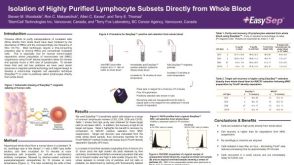 科学海报Isolation of Highly Purified Immune Cell Subsets Directly from Whole Blood
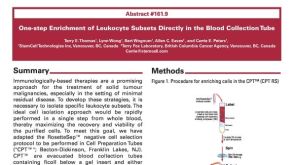 科学海报One-Step Enrichment of Leukocyte Subsets Directly in the Blood Collection Tube
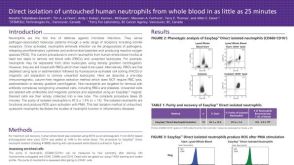 科学海报Isolation of Untouched Neutrophils Directly from Whole Blood in 20 Minutes
 沪公网安备31010102008431号