The miR-185/PAK6 Axis Predicts Therapy Response and Regulates Survival of Drug-Resistant Leukemic Stem Cells in CML.
Overcoming drug resistance and targeting cancer stem cells remain challenges for curative cancer treatment. To investigate the role of miRNAs in regulating drug resistance and leukemic stem cell (LSCs) fate,we performed global transcriptome profiling in treatment-na{\{i}}ve chronic myeloid leukemia (CML) stem/progenitor cells and identified that miR-185 levels anticipate their response to ABL tyrosine kinase inhibitors (TKIs). miR-185 functions as a tumor suppressor; its restored expression impaired survival of drug-resistant cells sensitized them to TKIs in vitro and markedly eliminated long-term repopulating LSCs and infiltrating blast cells conferring a survival advantage in pre-clinical xenotransplantation models. Integrative analysis with mRNA profiles uncovered PAK6 as a crucial target of miR-185 and pharmacological inhibition of PAK6 perturbed the RAS/MAPK pathway and mitochondrial activity sensitizing therapy-resistant cells to TKIs. Thus miR-185 presents as a potential predictive biomarker and dual targeting of miR-185-mediated PAK6 activity and BCR-ABL may provide a valuable strategy for overcoming drug resistance in patients."
View Publication
产品类型:
产品号#:
17936
17936RF
产品名:
EasySep™人祖细胞富集试剂盒II
RoboSep™ 人祖细胞富集试剂盒II
I. Miralda et al. ( 2020)
Frontiers in immunology 11 497
Whole Transcriptome Analysis Reveals That Filifactor alocis Modulates TNF$\alpha$-Stimulated MAPK Activation in Human Neutrophils.
Periodontitis is an irreversible,bacteria-induced,chronic inflammatory disease that compromises the integrity of tooth-supporting tissues and adversely affects systemic health. As the immune system's first line of defense against bacteria,neutrophils use their microbicidal functions in the oral cavity to protect the host against periodontal disease. However,periodontal pathogens have adapted to resist neutrophil microbicidal mechanisms while still propagating inflammation,which provides essential nutrients for the bacteria to proliferate and cause disease. Advances in sequencing technologies have recognized several newly appreciated bacteria associated with periodontal lesions such as the Gram-positive anaerobic rod,Filifactor alocis. With the discovery of these oral bacterial species,there is also a growing need to assess their pathogenic potential and determine their contribution to disease progression. Currently,few studies have addressed the pathogenic mechanisms used by oral bacteria to manipulate the neutrophil functional responses at the level of the transcriptome. Thus,this study aims to characterize the global changes at the gene expression level in human neutrophils during infection with F. alocis. Our results indicate that the challenge of human neutrophils with F. alocis results in the differential expression of genes involved in multiple neutrophil effector functions such as chemotaxis,cytokine and chemokine signaling pathways,and apoptosis. Moreover,F. alocis challenges affected the expression of components from the TNF and MAPK kinase signaling pathways. This resulted in transient,dampened p38 MAPK activation by secondary stimuli TNF$\alpha$ but not by fMLF. Functionally,the F. alocis-mediated inhibition of p38 activation by TNF$\alpha$ resulted in decreased cytokine production but had no effect on the priming of the respiratory burst response or the delay of apoptosis by TNF$\alpha$. Since the modulatory effect was characteristic of viable F. alocis only,we propose this as one of F. alocis' mechanisms to control neutrophils and their functional responses.
View Publication
产品类型:
产品号#:
18103
产品名:
EasyEights™EasySep™磁极
S. D. Moreno-Vel\'asquez et al. (jan 2020)
Cell reports 30 3 620--629.e6
The Regulatory Proteins Rtg1/3 Govern Sphingolipid Homeostasis in the Human-Associated Yeast Candida albicans.
Integrating nutrient sensing with the synthesis of complex molecules is a central feature of metabolism. Yet the regulatory mechanisms underlying such integration are often unknown. Here,we establish that the transcription regulators Rtg1/3 are key determinants of sphingolipid homeostasis in the human fungal pathogen Candida albicans. Quantitative analysis of the C. albicans lipidome reveals Rtg1/3-dependent alterations in all complex sphingolipids and their precursors,ceramides. Mutations in the regulators render the fungus susceptible to myriocin,a sphingolipid synthesis inhibitor. Rtg1/3 exert control on the expression of several enzymes involved in the synthesis of sphingolipids' building blocks,and the regulators are activated upon engulfment of C. albicans cells by human neutrophils. We demonstrate that Rtg1p and Rtg3p are regulated at two levels,one in response to sphingolipids and the other by the nutrient sensor TOR. Our findings,therefore,indicate that the Rtg1/3 system integrates nutrient sensing into the synthesis of complex lipids.
View Publication
产品类型:
产品号#:
19666
100-0404
产品名:
EasySep™ Direct人中性粒细胞分选试剂盒
RoboSep™ 人中性粒细胞分选试剂盒
C. Zhang et al. (jan 2020)
Cell metabolism 31 1 148--161.e5
STAT3 Activation-Induced Fatty Acid Oxidation in CD8+ T Effector Cells Is Critical for Obesity-Promoted Breast Tumor Growth.
Although obesity is known to be critical for cancer development,how obesity negatively impacts antitumor immune responses remains largely unknown. Here,we show that increased fatty acid oxidation (FAO) driven by activated STAT3 in CD8+ T effector cells is critical for obesity-associated breast tumor progression. Ablating T cell Stat3 or treatment with an FAO inhibitor in obese mice spontaneously developing breast tumor reduces FAO,increases glycolysis and CD8+ T effector cell functions,leading to inhibition of breast tumor development. Moreover,PD-1 ligation in CD8+ T cells activates STAT3 to increase FAO,inhibiting CD8+ T effector cell glycolysis and functions. Finally,leptin enriched in mammary adipocytes and fat tissues downregulates CD8+ T cell effector functions through activating STAT3-FAO and inhibiting glycolysis. We identify a critical role of increased oxidation of fatty acids driven by leptin and PD-1 through STAT3 in inhibiting CD8+ T effector cell glycolysis and in promoting obesity-associated breast tumorigenesis.
View Publication
产品类型:
产品号#:
19853
19853RF
产品名:
EasySep™小鼠CD8+ T细胞分选试剂盒
RoboSep™ 小鼠CD8+ T细胞分选试剂盒
S. J. Zost et al. (jul 2020)
Nature medicine
Rapid isolation and profiling of a diverse panel of human monoclonal antibodies targeting the SARS-CoV-2 spike protein.
Antibodies are a principal determinant of immunity for most RNA viruses and have promise to reduce infection or disease during major epidemics. The novel coronavirus SARS-CoV-2 has caused a global pandemic with millions of infections and hundreds of thousands of deaths to date1,2. In response,we used a rapid antibody discovery platform to isolate hundreds of human monoclonal antibodies (mAbs) against the SARS-CoV-2 spike (S) protein. We stratify these mAbs into five major classes on the basis of their reactivity to subdomains of S protein as well as their cross-reactivity to SARS-CoV. Many of these mAbs inhibit infection of authentic SARS-CoV-2 virus,with most neutralizing mAbs recognizing the receptor-binding domain (RBD) of S. This work defines sites of vulnerability on SARS-CoV-2 S and demonstrates the speed and robustness of advanced antibody discovery platforms.
View Publication
产品类型:
产品号#:
产品名:
K. E. Gomez et al. (oct 2020)
Cancer research 80 19 4185--4198
Cancer Cell CD44 Mediates Macrophage/Monocyte-Driven Regulation of Head and Neck Cancer Stem Cells.
Tumor-associated macrophages (TAM) in the tumor microenvironment (TME) cooperate with cancer stem cells (CSC) to maintain stemness. We recently identified cluster of differentiation 44 (CD44) as a surface marker defining head and neck squamous cell carcinoma (HNSCC) CSC. PI3K-4EBP1-SOX2 activation and signaling regulate CSC properties,yet the upstream molecular control of this pathway and the mechanisms underlying cross-talk between TAM and CSC in HNSCC remain largely unknown. Because CD44 is a molecular mediator in the TME,we propose here that TAM-influenced CD44 signaling could mediate stemness via the PI3K-4EBP1-SOX2 pathway,possibly by modulating availability of hyaluronic acid (HA),the main CD44 ligand. HNSCC IHC was used to identify TAM/CSC relationships,and in vitro coculture spheroid models and in vivo mouse models were used to identify the influence of TAMs on CSC function via CD44. Patient HNSCC-derived TAMs were positively and negatively associated with CSC marker expression at noninvasive and invasive edge regions,respectively. TAMs increased availability of HA and increased cancer cell invasion. HA binding to CD44 increased PI3K-4EBP1-SOX2 signaling and the CSC fraction,whereas CD44-VCAM-1 binding promoted invasive signaling by ezrin/PI3K. In vivo,targeting CD44 decreased PI3K-4EBP1-SOX2 signaling,tumor growth,and CSC. TAM depletion in syngeneic and humanized mouse models also diminished growth and CSC numbers. Finally,a CD44 isoform switch regulated epithelial-to-mesenchymal plasticity as standard form of CD44 and CD44v8-10 determined invasive and tumorigenic phenotypes,respectively. We have established a mechanistic link between TAMs and CSCs in HNSCC that is mediated by CD44 intracellular signaling in response to extracellular signals. SIGNIFICANCE: These findings establish a mechanistic link between tumor cell CD44,TAM,and CSC properties at the tumor-stroma interface that can serve as a vital area of focus for target and drug discovery.
View Publication
产品类型:
产品号#:
产品名:
A. Haddad et al. (oct 2019)
Respiratory research 20 1 234
Neutrophils from severe asthmatic patients induce epithelial to mesenchymal transition in healthy bronchial epithelial cells.
BACKGROUND Asthma is a heterogenous disease characterized by chronic inflammation and airway remodeling. An increase in the severity of airway remodeling is associated with a more severe form of asthma. There is increasing interest in the epithelial to mesenchymal transition process and mechanisms involved in the differentiation and repair of the airway epithelium,especially as they apply to severe asthma. Growing evidence suggests that Epithelial-Mesenchymal transition (EMT) could contribute to airway remodeling and fibrosis in asthma. Severe asthmatic patients with remodeled airways have a neutrophil driven inflammation. Neutrophils are an important source of TGF-$\beta$1,which plays a role in recruitment and activation of inflammatory cells,extracellular matrix (ECM) production and fibrosis development,and is a potent inducer of EMT. OBJECTIVE As there is little data examining the contribution of neutrophils and/or their mediators to the induction of EMT in airway epithelial cells,the objective of this study was to better understand the potential role of neutrophils in severe asthma in regards to EMT. METHODS We used an in vitro system to investigate the neutrophil-epithelial cell interaction. We obtained peripheral blood neutrophils from severe asthmatic patients and control subjects and examined for their ability to induce EMT in primary airway epithelial cells. RESULTS Our data indicate that neutrophils from severe asthmatic patients induce changes in morphology and EMT marker expression in bronchial epithelial cells consistent with the EMT process when co-cultured. TGF-$\beta$1 levels in the culture medium of severe asthmatic patients were increased compared to that from co-cultures of non-asthmatic neutrophils and epithelial cells. CONCLUSIONS AND CLINICAL RELEVANCE As an inducer of EMT and an important source of TGF-$\beta$1,neutrophils may play a significant role in the development of airway remodeling and fibrosis in severe asthmatic airways.
View Publication
产品类型:
产品号#:
05040
19656
产品名:
PneumaCult™-Ex Plus 培养基
EasySep™ Direct人嗜酸性粒细胞分选试剂盒
P. Monti et al. ( 2020)
Scientific reports 10 1 18427
Time to first treatment and P53 dysfunction in chronic lymphocytic leukaemia: results of the O-CLL1 study in early stage patients.
Chronic lymphocytic leukaemia (CLL) is characterised by a heterogeneous clinical course. Such heterogeneity is associated with a number of markers,including TP53 gene inactivation. While TP53 gene alterations determine resistance to chemotherapy,it is not clear whether they can influence early disease progression. To clarify this issue,TP53 mutations and deletions of the corresponding locus [del(17p)] were evaluated in 469 cases from the O-CLL1 observational study that recruited a cohort of clinically and molecularly characterised Binet stage A patients. Twenty-four cases harboured somatic TP53 mutations [accompanied by del(17p) in 9 cases],2 patients had del(17p) only,and 5 patients had TP53 germ-line variants. While del(17p) with or without TP53 mutations was capable of significantly predicting the time to first treatment,a reliable measure of disease progression,TP53 mutations were not. This was true for cases with high or low variant allele frequency. The lack of predictive ability was independent of the functional features of the mutant P53 protein in terms of transactivation and dominant negative potential. TP53 mutations alone were more frequent in patients with mutated IGHV genes,whereas del(17p) was associated with the presence of adverse prognostic factors,including CD38 positivity,unmutated-IGHV gene status,and NOTCH1 mutations.
View Publication
F. Stehle et al. ( 2013)
The Journal of Biological Chemistry 288 16334-16347
Reduced immunosuppressive properties of axitinib in comparison with other tyrosine kinase inhibitors
The multikinase inhibitors sunitinib,sorafenib,and axitinib have an impact not only on tumor growth and angiogenesis,but also on the activity and function of immune effector cells. In this study,a comparative analysis of the growth inhibitory properties and apoptosis induction potentials of tyrosine kinase inhibitors on T cells was performed. Tyrosine kinase inhibitor treatment resulted in a dramatic decrease in T cell proliferation along with distinct impacts on the cell cycle progression. This was at least partially associated with an enhanced induction of apoptosis although triggered by distinct apoptotic mechanisms. In contrast to sunitinib and sorafenib,axitinib did not affect the mitochondrial membrane potential but resulted in an induction or stabilization of the induced myeloid leukemia cell differentiation protein (Mcl-1),leading to an irreversible arrest in the G2/M cell cycle phase and delayed apoptosis. Furthermore,the sorafenib-mediated suppression of immune effector cells,in particular the reduction of the CD8(+) T cell subset along with the down-regulation of key immune cell markers such as chemokine CC motif receptor 7 (CCR7),CD26,CD69,CD25,and CXCR3,was not observed in axitinib-treated immune effector cells. Therefore,axitinib rather than sorafenib seems to be suitable for implementation in complex treatment regimens of cancer patients including immunotherapy.
View Publication


 EasySep™小鼠TIL(CD45)正选试剂盒





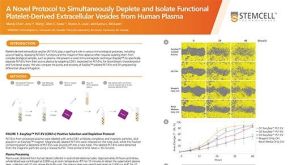 科学海报A Novel Protocol to Simultaneously Deplete and Isolate Functional Platelet-Derived Extracellular Vesicles from Human Plasma

 沪公网安备31010102008431号