V. Fang et al. ( 2017)
Nature immunology 18 1 15--25
Gradients of the signaling lipid S1P in lymph nodes position natural killer cells and regulate their interferon-$\gamma$ response.
The lymph node periphery is an important site for many immunological functions,from pathogen containment to the differentiation of helper T cells,yet the cues that position cells in this region are largely undefined. Here,through the use of a reporter for the signaling lipid S1P (sphingosine 1-phosphate),we found that cells sensed higher concentrations of S1P in the medullary cords than in the T cell zone and that the S1P transporter SPNS2 on lymphatic endothelial cells generated this gradient. Natural killer (NK) cells are located at the periphery of the lymph node,predominantly in the medulla,and we found that expression of SPNS2,expression of the S1P receptor S1PR5 on NK cells,and expression of the chemokine receptor CXCR4 were all required for NK cell localization during homeostasis and rapid production of interferon-$\gamma$ by NK cells after challenge. Our findings elucidate the spatial cues for NK cell organization and reveal a previously unknown role for S1P in positioning cells within the medulla.
View Publication
产品类型:
产品号#:
18556
18556RF
产品名:
Xue D et al. (NOV 2016)
Journal of immunology (Baltimore,Md. : 1950)
Semaphorin 4C Protects against Allergic Inflammation: Requirement of Regulatory CD138+ Plasma Cells.
The regulatory properties of B cells have been studied in autoimmune diseases; however,their role in allergic diseases is poorly understood. We demonstrate that Semaphorin 4C (Sema4C),an axonal guidance molecule,plays a crucial role in B cell regulatory function. Mice deficient in Sema4C exhibited increased airway inflammation after allergen exposure,with massive eosinophilic lung infiltrates and increased Th2 cytokines. This phenotype was reproduced by mixed bone marrow chimeric mice with Sema4C deficient only in B cells,indicating that B lymphocytes were the key cells affected by the absence of Sema4C expression in allergic inflammation. We determined that Sema4C-deficient CD19(+)CD138(+) cells exhibited decreased IL-10 and increased IL-4 expression in vivo and in vitro. Adoptive transfer of Sema4c(-/-) CD19(+)CD138(+) cells induced marked pulmonary inflammation,eosinophilia,and increased bronchoalveolar lavage fluid IL-4 and IL-5,whereas adoptive transfer of wild-type CD19(+)CD138(+)IL-10(+) cells dramatically decreased allergic airway inflammation in wild-type and Sema4c(-/-) mice. This study identifies a novel pathway by which Th2-mediated immune responses are regulated. It highlights the importance of plasma cells as regulatory cells in allergic inflammation and suggests that CD138(+) B cells contribute to cytokine balance and are important for maintenance of immune homeostasis in allergic airways disease. Furthermore,we demonstrate that Sema4C is critical for optimal regulatory cytokine production in CD138(+) B cells.
View Publication
产品类型:
产品号#:
19854
19854RF
产品名:
EasySep™小鼠B细胞分选试剂盒
RoboSep™ 小鼠B细胞分选试剂盒
Collins SM et al. (DEC 2013)
Cancer immunology,immunotherapy : CII 62 12 1841--9
Elotuzumab directly enhances NK cell cytotoxicity against myeloma via CS1 ligation: evidence for augmented NK cell function complementing ADCC.
Elotuzumab is a monoclonal antibody in development for multiple myeloma (MM) that targets CS1,a cell surface glycoprotein expressed on MM cells. In preclinical models,elotuzumab exerts anti-MM efficacy via natural killer (NK)-cell-mediated antibody-dependent cellular cytotoxicity (ADCC). CS1 is also expressed at lower levels on NK cells where it acts as an activating receptor. We hypothesized that elotuzumab may have additional mechanisms of action via ligation of CS1 on NK cells that complement ADCC activity. Herein,we show that elotuzumab appears to induce activation of NK cells by binding to NK cell CS1 which promotes cytotoxicity against CS1(+) MM cells but not against autologous CS1(+) NK cells. Elotuzumab may also promote CS1-CS1 interactions between NK cells and CS1(+) target cells to enhance cytotoxicity in a manner independent of ADCC. NK cell activation appears dependent on differential expression of the signaling intermediary EAT-2 which is present in NK cells but absent in primary,human MM cells. Taken together,these data suggest elotuzumab may enhance NK cell function directly and confer anti-MM efficacy by means beyond ADCC alone.
View Publication
产品类型:
产品号#:
18387
18387RF
产品名:
Jitprasertwong P et al. (FEB 2014)
Cytokine 65 2 222--30
Leptin enhances the secretion of interleukin (IL)-18, but not IL-1β, from human monocytes via activation of caspase-1.
Circulating levels of leptin are elevated in type-2 diabetes mellitus (T2DM) and leptin plays a role in immune responses. Elevated circulating IL-18 levels are associated with clinical complications of T2DM. IL-18 regulates cytokine secretion and the function of a number of immune cells including T-cells,neutrophils and macrophages and as such has a key role in immunity and inflammation. Pro-inflammatory monocytes exhibiting elevated cytokine secretion are closely associated with inflammation in T2DM,however,little is known about the role of leptin in modifying monocyte IL-18 secretion. We therefore aimed to investigate the effect of leptin on IL-18 secretion by monocytes. We report herein that leptin increases IL-18 secretion in THP-1 and primary human monocytes but has no effect on IL-18mRNA. Leptin and LPS signalling in monocytes occurs by overlapping but distinct pathways. Thus,in contrast to a strong stimulation by LPS,leptin has no effect on IL-1βmRNA levels or IL-1β secretion. In addition,LPS stimulates the secretion of IL-6 but leptin did not whereas both treatments up regulate IL-8 secretion from the same cells. Although leptin (and LPS) has a synergistic effect with exogenous ATP on IL-18 secretion in both THP-1 and primary monocytes,experiments involving ATP assays and pharmacological inhibition of ATP signalling failed to provide any evidence that endogenous ATP secreted by leptin-stimulated monocytes was responsible for enhancement of monocyte IL-18 secretion by leptin. Analysis of the action of caspase-1 revealed that leptin up regulates caspase-1 activity and the effect of leptin on IL-18 release is prevented by caspase-1 inhibitor (Ac-YVAD-cmk). These data suggest that leptin activates IL-18 processing rather than IL-18 transcription. In conclusion,leptin enhances IL-18 secretion via modulation of the caspase-1 inflammasome function and acts synergistically with ATP in this regard. This process may contribute to aberrant immune responses in T2DM and other conditions of hyperleptinemia.
View Publication
产品类型:
产品号#:
18058
18058RF
产品名:
Kubala SA et al. ( 2014)
Prostaglandins and Other Lipid Mediators 108 1--8
Pathogen induced chemo-attractant hepoxilin A3 drives neutrophils, but not eosinophils across epithelial barriers
Pathogen induced migration of neutrophils across mucosal epithelial barriers requires epithelial production of the chemotactic lipid mediator,hepoxilin A3 (HXA3). HXA3 is an eicosanoid derived from arachidonic acid. Although eosinophils are also capable of penetrating mucosal surfaces,eosinophilic infiltration occurs mainly during allergic processes whereas neutrophils dominate mucosal infection. Both neutrophils and eosinophils can respond to chemotactic gradients of certain eicosanoids,however,it is not known whether eosinophils respond to pathogen induced lipid mediators such as HXA3. In this study,neutrophils and eosinophils were isolated from human blood and placed on the basolateral side of polarized epithelial monolayers grown on permeable Transwell filters and challenged by various chemotactic gradients of distinct lipid mediators. We observed that both cell populations migrated across epithelial monolayers in response to a leukotriene B4 (LTB4) gradient,whereas only eosinophils migrated toward a prostaglandin D2 (PGD2) gradient. Interestingly,while pathogen induced neutrophil trans-epithelial migration was substantial,pathogen induced eosinophil trans-epithelial migration was not observed. Further,gradients of chemotactic lipids derived from pathogen infected epithelial cells known to be enriched for HXA3 as well as purified HXA3 drove significant numbers of neutrophils across epithelial barriers,whereas eosinophils failed to respond to these gradients. These data suggest that although the eicosanoid HXA3 serves as an important neutrophil chemo-attractant at mucosal surfaces during pathogenic infection,HXA3 does not appear to exhibit chemotactic activity toward eosinophils. ?? 2013 Elsevier Ltd. All rights reserved.
View Publication
产品类型:
产品号#:
19256
19256RF
产品名:
Long T et al. (MAR 2014)
Biomaterials 35 9 2752--9
The effect of mesenchymal stem cell sheets on structural allograft healing of critical sized femoral defects in mice.
Structural bone allografts are widely used in the clinic to treat critical sized bone defects,despite lacking the osteoinductive characteristics of live autografts. To address this,we generated revitalized structural allografts wrapped with mesenchymal stem/progenitor cell (MSC) sheets,which were produced by expanding primary syngenic bone marrow derived cells on temperature-responsive plates,as a tissue-engineered periosteum. In vitro assays demonstrated maintenance of the MSC phenotype in the sheets,suggesting that short-term culturing of MSC sheets is not detrimental. To test their efficacy in vivo,allografts wrapped with MSC sheets were transplanted into 4-mm murine femoral defects and compared to allografts with direct seeding of MSCs and allografts without cells. Evaluations consisted of X-ray plain radiography,3D microCT,histology,and biomechanical testing at 4- and 6-weeks post-surgery. Our findings demonstrate that MSC sheets induce prolonged cartilage formation at the graft-host junction and enhanced bone callus formation,as well as graft-host osteointegration. Moreover,a large periosteal callus was observed spanning the allografts with MSC sheets,which partially mimics live autograft healing. Finally,biomechanical testing showed a significant increase in the structural and functional properties of MSC sheet grafted femurs. Taken together,MSC sheets exhibit enhanced osteogenicity during critical sized bone defect repair,demonstrating the feasibility of this tissue engineering solution for massive allograft healing.
View Publication
产品类型:
产品号#:
19771
产品名:
EasySep™ 小鼠间充质干/祖细胞富集试剂盒
Lian X et al. (NOV 2014)
Stem cell reports 3 5 804--816
Efficient differentiation of human pluripotent stem cells to endothelial progenitors via small-molecule activation of WNT signaling.
Human pluripotent stem cell (hPSC)-derived endothelial cells and their progenitors may provide the means for vascularization of tissue-engineered constructs and can serve as models to study vascular development and disease. Here,we report a method to efficiently produce endothelial cells from hPSCs via GSK3 inhibition and culture in defined media to direct hPSC differentiation to CD34(+)CD31(+) endothelial progenitors. Exogenous vascular endothelial growth factor (VEGF) treatment was dispensable,and endothelial progenitor differentiation was β-catenin dependent. Furthermore,by clonal analysis,we showed that CD34(+)CD31(+)CD117(+)TIE-2(+) endothelial progenitors were multipotent,capable of differentiating into calponin-expressing smooth muscle cells and CD31(+)CD144(+)vWF(+)I-CAM1(+) endothelial cells. These endothelial cells were capable of 20 population doublings,formed tube-like structures,imported acetylated low-density lipoprotein,and maintained a dynamic barrier function. This study provides a rapid and efficient method for production of hPSC-derived endothelial progenitors and endothelial cells and identifies WNT/β-catenin signaling as a primary regulator for generating vascular cells from hPSCs.
View Publication
产品类型:
产品号#:
05850
05857
05870
05875
73042
73044
85850
85857
85870
85875
产品名:
CHIR98014
CHIR98014
mTeSR™1
mTeSR™1
Maricato JT et al. ( 2015)
PloS One 10 4 e0119234
Epigenetic Modulations in Activated Cells Early after HIV-1 Infection and Their Possible Functional Consequences
Epigenetic modifications refer to a number of biological processes which alter the structure of chromatin and its transcriptional activity such as DNA methylation and histone post-translational processing. Studies have tried to elucidate how the viral genome and its products are affected by epigenetic modifications imposed by cell machinery and how it affects the ability of the virus to either,replicate and produce a viable progeny or be driven to latency. The purpose of this study was to evaluate epigenetic modifications in PBMCs and CD4+ cells after HIV-1 infection analyzing three approaches: (i) global DNA- methylation; (ii) qPCR array and (iii) western blot. HIV-1 infection led to methylation increases in the cellular DNA regardless the activation status of PBMCs. The analysis of H3K9me3 and H3K27me3 suggested a trend towards transcriptional repression in activated cells after HIV-1 infection. Using a qPCR array,we detected genes related to epigenetic processes highly modulated in activated HIV-1 infected cells. SETDB2 and RSK2 transcripts showed highest up-regulation levels. SETDB2 signaling is related to transcriptional silencing while RSK2 is related to either silencing or activation of gene expression depending on the signaling pathway triggered down-stream. In addition,activated cells infected by HIV-1 showed lower CD69 expression and a decrease of IL-2,IFN-γ and metabolism-related factors transcripts indicating a possible functional consequence towards global transcriptional repression found in HIV-1 infected cells. Conversely,based on epigenetic markers studied here,non-stimulated cells infected by HIV-1,showed signs of global transcriptional activation. Our results suggest that HIV-1 infection exerts epigenetic modulations in activated cells that may lead these cells to transcriptional repression with important functional consequences. Moreover,non-stimulated cells seem to increase gene transcription after HIV-1 infection. Based on these observations,it is possible to speculate that the outcome of viral infections may be influenced by the cellular activation status at the moment of infection.
View Publication
产品类型:
产品号#:
18052
18052RF
21000
20119
20155
产品名:
RoboSep™- S
RoboSep™ 吸头组件抛光剂
RoboSep™分选管套装(9个塑料管)
Malhotra D et al. (FEB 2016)
Nature Immunology 17 2 187--95
Tolerance is established in polyclonal CD4(+) T cells by distinct mechanisms, according to self-peptide expression patterns.
Studies of repertoires of mouse monoclonal CD4(+) T cells have revealed several mechanisms of self-tolerance; however,which mechanisms operate in normal repertoires is unclear. Here we studied polyclonal CD4(+) T cells specific for green fluorescent protein expressed in various organs,which allowed us to determine the effects of specific expression patterns on the same epitope-specific T cells. Peptides presented uniformly by thymic antigen-presenting cells were tolerated by clonal deletion,whereas peptides excluded from the thymus were ignored. Peptides with limited thymic expression induced partial clonal deletion and impaired effector T cell potential but enhanced regulatory T cell potential. These mechanisms were also active for T cell populations specific for endogenously expressed self antigens. Thus,the immunotolerance of polyclonal CD4(+) T cells was maintained by distinct mechanisms,according to self-peptide expression patterns.
View Publication
产品类型:
产品号#:
18452
18452RF
18556
18556RF
产品名:
Xiao X et al. (JUL 2016)
mAbs 8 5 916--27
A novel antibody discovery platform identifies anti-influenza A broadly neutralizing antibodies from human memory B cells.
Monoclonal antibody isolation directly from circulating human B cells is a powerful tool to delineate humoral responses to pathological conditions and discover antibody therapeutics. We have developed a platform aimed at improving the efficiencies of B cell selection and V gene recovery. Here,memory B cells are activated and amplified using Epstein-Barr virus infection,co-cultured with CHO-muCD40L cells,and then assessed by functional screenings. An in vitro transcription and translation (IVTT) approach was used to analyze variable (V) genes recovered from each B cell sample and identify the relevant heavy/light chain pair(s). We achieved efficient amplification and activation of memory B cells,and eliminated the need to: 1) seed B cells at clonal level (≤1 cell/well) or perform limited dilution cloning; 2) immortalize B cells; or 3) assemble V genes into an IgG expression vector to confirm the relevant heavy/light chain pairing. Cross-reactive antibodies targeting a conserved epitope on influenza A hemagglutinin were successfully isolated from a healthy donor. In-depth analysis of the isolated antibodies suggested their potential uses as anti-influenza A antibody therapeutics and uncovered a distinct affinity maturation pathway. Importantly,our results showed that cognate heavy/light chain pairings contributed to both the expression level and binding abilities of our newly isolated VH1-69 family,influenza A neutralizing antibodies,contrasting with previous observations that light chains do not significantly contribute to the function of this group of antibodies. Our results further suggest the potential use of the IVTT as a powerful antibody developability assessment tool.
View Publication
产品类型:
产品号#:
19674
19674RF
产品名:
EasySep™ Direct人B细胞分选试剂盒
RoboSep™ Direct人B细胞分选试剂盒
Nudel I et al. (JAN 2011)
Journal of immunology (Baltimore,Md. : 1950) 186 2 891--900
Dendritic cells in distinct oral mucosal tissues engage different mechanisms to prime CD8+ T cells.
Although oral dendritic cells (DCs) were shown to induce cell-mediated immunity,the identity and function of the various oral DC subsets involved in this process is unclear. In this study,we examined the mechanisms used by DCs of the buccal mucosa and of the lining mucosa to elicit immunity. After plasmid DNA immunization,buccally immunized mice generated robust local and systemic CD8(+) T cell responses,whereas lower responses were seen by lining immunization. A delayed Ag presentation was monitored in vivo in both groups; yet,a more efficient presentation was mediated by buccal-derived DCs. Restricting transgene expression to CD11c(+) cells resulted in diminished CD8(+) T cell responses in both oral tissues,suggesting that immune induction is mediated mainly by cross-presentation. We then identified,in addition to the previously characterized Langerhans cells (LCs) and interstitial dendritic cells (iDCs),a third DC subset expressing the CD103(+) molecule,which represents an uncharacterized subset of oral iDCs expressing the langerin receptor (Ln(+)iDCs). Using Langerin-DTR mice,we demonstrated that whereas LCs and Ln(+)iDCs were dispensable for T cell induction in lining-immunized mice,LCs were essential for optimal CD8(+) T cell priming in the buccal mucosa. Buccal LCs,however,failed to directly present Ag to CD8(+) T cells,an activity that was mediated by buccal iDCs and Ln(+)iDCs. Taken together,our findings suggest that the mechanisms engaged by oral DCs to prime T cells vary between oral mucosal tissues,thus emphasizing the complexity of the oral immune network. Furthermore,we found a novel regulatory role for buccal LCs in potentiating CD8(+) T cell responses.
View Publication


 EasySep™小鼠TIL(CD45)正选试剂盒




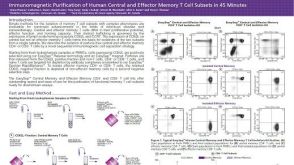 科学海报Immunomagnetic Purification of Human Central and Effector Memory T Cell Subsets in 45 Minutes

 沪公网安备31010102008431号