Clonal analysis of deletions on chromosome 20q and JAK2-V617F in MPD suggests that del20q acts independently and is not one of the predisposing mutations for JAK2-V617F.
We developed a real-time copy number polymerase chain reaction assay for deletions on chromosome 20q (del20q),screened peripheral blood granulocytes from 664 patients with myeloproliferative disorders,and identified 19 patients with del20q (2.9%),of which 14 (74%) were also positive for JAK2-V617F. To examine the temporal relationship between the occurrence of del20q and JAK2-V617F,we performed colony assays in methylcellulose,picked individual burst-forming units-erythroid (BFU-E) and colony-forming units-granulocyte (CFU-G) colonies,and genotyped each colony individually for del20q and JAK2-V617F. In 2 of 9 patients,we found that some colonies with del20q carried only wild-type JAK2,whereas other del20q colonies were JAK2-V617F positive,indicating that del20q occurred before the acquisition of JAK2-V617F. However,in colonies from 3 of 9 patients,we observed the opposite order of events. The lack of a strict temporal order of occurrence makes it doubtful that del20q represents a predisposing event for JAK2-V617F. In 2 patients with JAK2-V617F and 1 patient with MPL-W515L,microsatellite analysis revealed that del20q affected chromosomes of different parental origin and/or 9pLOH occurred at least twice. The fact that rare somatic events,such as del20q or 9pLOH,occurred more than once in subclones from the same patients suggests that the myeloproliferative disorder clone carries a predisposition to acquiring such genetic alterations.
View Publication
Jaiswal N et al. (FEB 1997)
Journal of cellular biochemistry 64 2 295--312
Osteogenic differentiation of purified, culture-expanded human mesenchymal stem cells in vitro.
Human bone marrow contains a population of cells capable of differentiating along multiple mesenchymal cell lineages. Recently,techniques for the purification and culture-expansion of these human marrow-derived Mesenchymal Stem Cells (MSCs) have been developed. The goals of the current study were to establish a reproducible system for the in vitro osteogenic differentiation of human MSCs,and to characterize the effect of changes in the microenvironment upon the process. MSCs derived from 2nd or 3rd passage were cultured for 16 days in various base media containing 1 to 1000 nM dexamethasone (Dex),0.01 to 4 mM L-ascorbic acid-2-phosphate (AsAP) or 0.25 mM ascorbic acid,and 1 to 10 mM beta-glycerophosphate (beta GP). Optimal osteogenic differentiation,as determined by osteoblastic morphology,expression of alkaline phosphatase (APase),reactivity with anti-osteogenic cell surface monoclonal antibodies,modulation of osteocalcin mRNA production,and the formation of a mineralized extracellular matrix containing hydroxyapatite was achieved with DMEM base medium plus 100 nM Dex,0.05 mM AsAP,and 10 mM beta GP. The formation of a continuously interconnected network of APase-positive cells and mineralized matrix supports the characterization of this progenitor population as homogeneous. While higher initial seeding densities did not affect cell number of APase activity,significantly more mineral was deposited in these cultures,suggesting that events which occur early in the differentiation process are linked to end-stage phenotypic expression. Furthermore,cultures allowed to concentrate their soluble products in the media produced more mineralized matrix,thereby implying a role for autocrine or paracrine factors synthesized by human MSCs undergoing osteoblastic lineage progression. This culture system is responsive to subtle manipulations including the basal nutrient medium,dose of physiologic supplements,cell seeding density,and volume of tissue culture medium. Cultured human MSCs provide a useful model for evaluating the multiple factors responsible for the step-wise progression of cells from undifferentiated precursors to secretory osteoblasts,and eventually terminally differentiated osteocytes.
View Publication
Ebstein F et al. (JUN 2004)
American journal of respiratory and critical care medicine 169 12 1322--30
Cytotoxic T cell responses against mesothelioma by apoptotic cell-pulsed dendritic cells.
Malignant pleural mesothelioma is an uncommon tumor largely confined to the thoracic cavity,which is resistant to conventional therapies,therefore prompting an intensive search for effective treatment alternatives. This study focuses on dendritic cell (DC) vaccination for malignant pleural mesothelioma and evaluates the in vitro efficacy of antigen-loaded DC-based vaccines for the induction of major histocompatibility complex Class I-restricted antimesothelioma cytotoxic T lymphocyte responses. The source of tumor-associated antigens for HLA-A2(+) DCs from healthy donors was apoptotic HLA-A2(-) mesothelioma cells either lacking or expressing heat shock protein 70 according to whether tumor cells were heat shocked or not before ultraviolet-mediated apoptosis. Our results show that both apoptotic preparations were equivalent regarding the responsiveness of DCs to combined treatment with tumor necrosis factor-alpha and poly(inosinic-cytidylic) acid,as determined by similar increased expression of costimulatory molecules and interleukin-12 production. However,only DCs loaded with apoptotic heat shock protein 70-expressing cells were found to be potent in vitro inducers of cytotoxic T lymphocyte activity against HLA-A2(+) mesothelioma cells. Such elicited cytotoxic T lymphocytes also exhibit cytotoxic activity against an HLA-A2(+) melanoma cell line,suggesting recognition of shared antigens. These findings therefore carry the potential of offering an alternative,promising approach for the therapy of patients with malignant pleural mesothelioma.
View Publication
产品类型:
产品号#:
15028
15068
产品名:
RosetteSep™人单核细胞富集抗体混合物
RosetteSep™人单核细胞富集抗体混合物
Houtenbos I et al. (MAR 2006)
Haematologica 91 3 348--55
Leukemia-derived dendritic cells: towards clinical vaccination protocols in acute myeloid leukemia.
The ability of acute myeloid leukemic (AML) blasts to differentiate into leukemic dendritic cells (DC) thus acquiring the potential to present known and unknown leukemic antigens efficiently,holds promise as a possible new treatment for AML patients with minimal residual disease. Recent advances in culture methods have made the clinical use of leukemic DC feasible. However,additional measures appear to be essential in order to potentiate vaccines and to overcome the intrinsic tolerant state of the patients immune system. This review describes ways to improve AML-DC vaccines and discusses critical aspects concerning the development of clinical vaccination protocols.
View Publication
产品类型:
产品号#:
09600
09650
产品名:
StemSpan™ SFEM
StemSpan™ SFEM
Mü et al. (JAN 2013)
Journal of visualized experiments : JoVE 80
Culturing of human nasal epithelial cells at the air liquid interface.
In vitro models using human primary epithelial cells are essential in understanding key functions of the respiratory epithelium in the context of microbial infections or inhaled agents. Direct comparisons of cells obtained from diseased populations allow us to characterize different phenotypes and dissect the underlying mechanisms mediating changes in epithelial cell function. Culturing epithelial cells from the human tracheobronchial region has been well documented,but is limited by the availability of human lung tissue or invasiveness associated with obtaining the bronchial brushes biopsies. Nasal epithelial cells are obtained through much less invasive superficial nasal scrape biopsies and subjects can be biopsied multiple times with no significant side effects. Additionally,the nose is the entry point to the respiratory system and therefore one of the first sites to be exposed to any kind of air-borne stressor,such as microbial agents,pollutants,or allergens. Briefly,nasal epithelial cells obtained from human volunteers are expanded on coated tissue culture plates,and then transferred onto cell culture inserts. Upon reaching confluency,cells continue to be cultured at the air-liquid interface (ALI),for several weeks,which creates more physiologically relevant conditions. The ALI culture condition uses defined media leading to a differentiated epithelium that exhibits morphological and functional characteristics similar to the human nasal epithelium,with both ciliated and mucus producing cells. Tissue culture inserts with differentiated nasal epithelial cells can be manipulated in a variety of ways depending on the research questions (treatment with pharmacological agents,transduction with lentiviral vectors,exposure to gases,or infection with microbial agents) and analyzed for numerous different endpoints ranging from cellular and molecular pathways,functional changes,morphology,etc. In vitro models of differentiated human nasal epithelial cells will enable investigators to address novel and important research questions by using organotypic experimental models that largely mimic the nasal epithelium in vivo.
View Publication
产品类型:
产品号#:
05001
05021
05022
产品名:
PneumaCult™-ALI 培养基
PneumaCult™-ALI 培养基含12 mm Transwell®插件
PneumaCult™-ALI 培养基含6.5 mm Transwell®插件
McIntyre BAS et al. (JAN 2014)
Stem cells translational medicine 3 1 7--17
Expansive generation of functional airway epithelium from human embryonic stem cells.
Production of human embryonic stem cell (hESC)-derived lung progenitors has broad applicability for drug screening and cell therapy; however,this is complicated by limitations in demarcating phenotypic changes with functional validation of airway cell types. In this paper,we reveal the potential of hESCs to produce multipotent lung progenitors using a combined growth factor and physical culture approach,guided by the use of novel markers LIFRα and NRP1. Lung specification of hESCs was achieved by priming differentiation via matrix-specific support,followed by air-liquid interface to allow generation of lung progenitors capable of in vitro maturation into airway epithelial cell types,resulting in functional characteristics such as secretion of pulmonary surfactant,ciliation,polarization,and acquisition of innate immune activity. This approach provided a robust expansion of lung progenitors,allowing in vivo assessment,which demonstrated that only fully differentiated hESC-derived airway cells were retained in the distal airway,where they aided in physiological recovery in immunocompromised mice receiving airway injury. Our study provides a basis for translational applications of hESCs for lung diseases.
View Publication
产品类型:
产品号#:
05850
05857
05870
05875
20110
20120
85850
85857
85870
85875
产品名:
EasySep™ 红细胞裂解缓冲液
EasySep™ 红细胞裂解缓冲液
mTeSR™1
mTeSR™1
Bouchi R et al. (JAN 2014)
Nature communications 5 4242
FOXO1 inhibition yields functional insulin-producing cells in human gut organoid cultures.
Generation of surrogate sources of insulin-producing β-cells remains a goal of diabetes therapy. While most efforts have been directed at differentiating embryonic or induced pluripotent stem (iPS) cells into β-like-cells through endodermal progenitors,we have shown that gut endocrine progenitor cells of mice can be differentiated into glucose-responsive,insulin-producing cells by ablation of transcription factor Foxo1. Here we show that FOXO1 is present in human gut endocrine progenitor and serotonin-producing cells. Using gut organoids derived from human iPS cells,we show that FOXO1 inhibition using a dominant-negative mutant or lentivirus-encoded small hairpin RNA promotes generation of insulin-positive cells that express all markers of mature pancreatic β-cells,release C-peptide in response to secretagogues and survive in vivo following transplantation into mice. The findings raise the possibility of using gut-targeted FOXO1 inhibition or gut organoids as a source of insulin-producing cells to treat human diabetes.
View Publication
产品类型:
产品号#:
05110
05850
05857
05870
05875
85850
85857
85870
85875
产品名:
STEMdiff™定型内胚层检测试剂盒
mTeSR™1
mTeSR™1
Badizadegan K et al. (NOV 2014)
AJP: Gastrointestinal and Liver Physiology 307 10 G1002--G1012
Presence of intramucosal neuroglial cells in normal and aganglionic human colon
The enteric nervous system (ENS) is composed of neural crest-derived neurons (also known as ganglion cells) the cell bodies of which are located in the submucosal and myenteric plexuses of the intestinal wall. Intramucosal ganglion cells are known to exist but are rare and often considered ectopic. Also derived from the neural crest are enteric glial cells that populate the ganglia and the associated nerves,as well as the lamina propria of the intestinal mucosa. In Hirschsprung disease (HSCR),ganglion cells are absent from the distal gut because of a failure of neural crest-derived progenitor cells to complete their rostrocaudal migration during embryogenesis. The fate of intramucosal glial cells in human HSCR is essentially unknown. We demonstrate a network of intramucosal cells that exhibit dendritic morphology typical of neurons and glial cells. These dendritic cells are present throughout the human gut and express Tuj1,S100,glial fibrillary acidic protein,CD56,synaptophysin,and calretinin,consistent with mixed or overlapping neuroglial differentiation. The cells are present in aganglionic colon from patients with HSCR,but with an altered immunophenotype. Coexpression of Tuj1 and HNK1 in this cell population supports a neural crest origin. These findings extend and challenge the current understanding of ENS microanatomy and suggest the existence of an intramucosal population of neural crest-derived cells,present in HSCR,with overlapping immunophenotype of neurons and glia. Intramucosal neuroglial cells have not been previously recognized,and their presence in HSCR poses new questions about ENS development and the pathobiology of HSCR that merit further investigation.
View Publication
产品类型:
产品号#:
05750
产品名:
NeuroCult™ NS-A 基础培养基(人)
Lee-Chang C et al. (APR 2016)
Journal of Immunology 196 8 3385--97
Aging Converts Innate B1a Cells into Potent CD8+ T Cell Inducers.
B cell dysregulation in aging is thought to mostly occur in conventional B2 cells without affecting innate B1 cells. Elderly humans and mice also accumulate 4-1BBL(+)MHC class-I(Hi)CD86(Hi)B cells of unknown origin. In this article,we report that these cells,termed 4BL cells,are activated murine and possibly human B1a cells. The activation is mediated by aging human monocytes and murine peritoneal macrophages. They induce expression and activation of 4-1BBL and IFN-γR1 on B1a cells to subsequently upregulate membrane TNF-α and CD86. As a result,activated B1a/4BL cells induce expression of granzyme B in CD8(+)T cells by targeting TNFR2 via membrane TNF-α and providing costimulation with CD86. Thus,for the first time,to our knowledge,these results indicate that aging affects the function of B1a cells. Upon aging,these cells lose their tumor-supporting activity and become inducers of potentially antitumor and autoimmune CD8(+)T cells.
View Publication


 EasySep™小鼠TIL(CD45)正选试剂盒





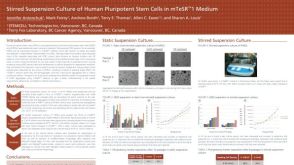 科学海报Stirred Suspension Culture of Human Pluripotent Stem Cells in mTeSR™1 Medium
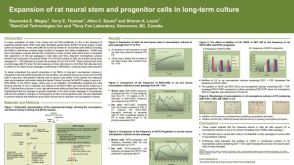 科学海报Expansion of Rat Neural Stem and Progenitor Cells in Long-Term Culture

 沪公网安备31010102008431号