Hagness M et al. ( 2012)
The Journal of Immunology 188 11 5459--66
Kinetics and activation requirements of contact-dependent immune suppression by human regulatory T cells
Naturally occurring regulatory T cells (Tregs) maintain self tolerance by dominant suppression of potentially self-reactive T cells in peripheral tissues. However,the activation requirements,the temporal aspects of the suppressive activity,and mode of action of human Tregs are subjects of controversy. In this study,we show that Tregs display significant variability in the suppressive activity ex vivo as 54% of healthy blood donors examined had fully suppressive Tregs spontaneously,whereas in the remaining donors,anti-CD3/CD2/CD28 stimulation was required for Treg suppressive activity. Furthermore,anti-CD3/CD2/CD28 stimulation for 6 h and subsequent fixation in paraformaldehyde rendered the Tregs fully suppressive in all donors. The fixation-resistant suppressive activity of Tregs operated in a contact-dependent manner that was not dependent on APCs,but could be fully obliterated by trypsin treatment,indicating that a cell surface protein is directly involved. By add-back of active,fixed Tregs at different time points after activation of responding T cells,the responder cells were susceptible to Treg-mediated immune suppression up to 24 h after stimulation. This defines a time window in which effector T cells are susceptible to Treg-mediated immune suppression. Lastly,we examined the effect of a set of signaling inhibitors that perturb effector T cell activation and found that none of the examined inhibitors affected Treg activation,indicating pathway redundancy or that Treg activation proceeds by signaling mechanisms distinct from those of effector T cells.
View Publication
产品类型:
产品号#:
07801
07811
07851
07861
15022
15062
18060
18061
产品名:
Lymphoprep™
Lymphoprep™
RosetteSep™人CD4+ T细胞富集抗体混合物
RosetteSep™人CD4+ T细胞富集抗体混合物
Lymphoprep™
Lymphoprep™
(Jul 2024)
Cell Reports Medicine 5 7
PARP11 inhibition inactivates tumor-infiltrating regulatory T cells and improves the efficacy of immunotherapies
SummaryTumor-infiltrating regulatory T cells (TI-Tregs) elicit immunosuppressive effects in the tumor microenvironment (TME) leading to accelerated tumor growth and resistance to immunotherapies against solid tumors. Here,we demonstrate that poly-(ADP-ribose)-polymerase-11 (PARP11) is an essential regulator of immunosuppressive activities of TI-Tregs. Expression of PARP11 correlates with TI-Treg cell numbers and poor responses to immune checkpoint blockade (ICB) in human patients with cancer. Tumor-derived factors including adenosine and prostaglandin E2 induce PARP11 in TI-Tregs. Knockout of PARP11 in the cells of the TME or treatment of tumor-bearing mice with selective PARP11 inhibitor ITK7 inactivates TI-Tregs and reinvigorates anti-tumor immune responses. Accordingly,ITK7 decelerates tumor growth and significantly increases the efficacy of anti-tumor immunotherapies including ICB and adoptive transfer of chimeric antigen receptor (CAR) T cells. These results characterize PARP11 as a key driver of TI-Treg activities and a major regulator of immunosuppressive TME and argue for targeting PARP11 to augment anti-cancer immunotherapies. Graphical abstract Highlights•Tumor-derived factors upregulate PARP11 in the tumor-infiltrating Treg cells•PARP11 supports the immunosuppressive properties of Treg cells•Pharmacologic inhibition of PARP11 inactivates intratumoral Treg cells•PARP11 inhibitor augments the efficacy of immunotherapies Basavaraja et al. demonstrate that induction of PARP11 in the intratumoral regulatory T (Treg) cells is required for their regulatory functions and contributes to the immunosuppressive tumor microenvironment. The selective inhibitor of PARP11 ITK7 inactivates tumor Treg cells and improves the efficacy of immunotherapies against tumors.
View Publication
产品类型:
产品号#:
10957
19851
19851RF
19852
19852RF
19853
19853RF
18780
18781
18781RF
18780RF
18783
18783RF
产品名:
ImmunoCult™ 小鼠Treg分化添加剂
EasySep™小鼠T细胞分选试剂盒
RoboSep™ 小鼠T细胞分选试剂盒
EasySep™小鼠CD4+ T细胞分选试剂盒
RoboSep™ 小鼠CD4+ T细胞分选试剂盒
EasySep™小鼠CD8+ T细胞分选试剂盒
RoboSep™ 小鼠CD8+ T细胞分选试剂盒
EasySep™小鼠CD11c正选试剂盒II
EasySep™小鼠CD11c正选试剂盒II及脾脏解离液
RoboSep™ 小鼠CD11c正选试剂盒II及脾脏解离液
RoboSep™ 小鼠CD11c正选试剂盒II
EasySep™小鼠CD4+CD25+调节性T细胞分选试剂盒II
RoboSep™ 小鼠CD4+CD25+调节性T细胞分选试剂盒II
(Nov 2024)
International Journal of Molecular Sciences 25 22
Galectin-1 Induces the Production of Immune-Suppressive Cytokines in Human and Mouse T Cells
Galectin-1 is implicated in several pro-tumourigenic mechanisms and is considered immune-suppressive. The pharmacological inhibition of galectin-1 may be beneficial in cancers in which galectin-1 is overexpressed and driving cancer progression. This study aimed to further characterise the immunosuppressive cytokines influenced by galectin-1 in in vitro immune cell cultures and an in vivo inflammatory model using a recently discovered selective inhibitor of galectin-1,GB1908. To enable a translational approach and link mouse and human pharmacology,anti-CD3/anti-CD28 stimulated T cells cultured from human whole blood and mouse spleens were compared. For in vivo studies of T cell-mediated inflammation,the concanavalin-A (Con-A) mouse model was used to induce a T lymphocyte-driven acute liver injury phenotype. The inhibition of galectin-1 with GB1908 reduced IL-17A,IFNγ and TNFα in a concentration-dependent manner in both mouse and human T cells in vitro. The immunosuppressive cytokines measured in Con-A-treated mice were all upregulated compared to naïve mice. Subsequently,mice treated with GB1908 demonstrated a significant reduction in IL-17A,IFNγ,IL-6 and TNFα compared to vehicle-treated mice. In conclusion,galectin-1 induced the production of several important immune-suppressive cytokines from T cells in vitro and in vivo. This result suggests that,in the context of cancer therapy,a selective galectin-1 could be a viable approach as a monotherapy,or in combination with chemotherapeutic agents and/or checkpoint inhibitors,to enhance the numbers and activity of cytotoxic T cells in the tumour microenvironment of high galectin-1 expressing cancers.
View Publication
产品类型:
产品号#:
19851
17951
100-0695
17951RF
19851RF
产品名:
EasySep™小鼠T细胞分选试剂盒
EasySep™人T细胞分选试剂盒
EasySep™人T细胞分选试剂盒
RoboSep™ 人T细胞分选试剂盒
RoboSep™ 小鼠T细胞分选试剂盒
Lin L et al. ( 2014)
The Journal of Immunology 193 2 940--949
Human NK Cells Licensed by Killer Ig Receptor Genes Have an Altered Cytokine Program That Modifies CD4+ T Cell Function
NK cells are innate immune cells known for their cytolytic activities toward tumors and infections. They are capable of expressing diverse killer Ig-like receptors (KIRs),and KIRs are implicated in susceptibility to Crohn's disease (CD),a chronic intestinal inflammatory disease. However,the cellular mechanism of this genetic contribution is unknown. In this study,we show that the licensing" of NK cells�
View Publication
产品类型:
产品号#:
18052
18052RF
19051
19051RF
19055
19055RF
18231
19854
19854RF
15025
15065
产品名:
EasySep™人T细胞富集试剂盒
RoboSep™ 人T细胞富集试剂盒含滤芯吸头
EasySep™人NK细胞富集试剂盒
RoboSep™ 人NK细胞富集试剂盒含滤芯吸头
EasySep™小鼠B细胞分选试剂盒
RoboSep™ 小鼠B细胞分选试剂盒
RosetteSep™人NK细胞富集抗体混合物
RosetteSep™人NK细胞富集抗体混合物
Bornancin F et al. ( 2015)
The Journal of Immunology 194 8 3723--3734
Deficiency of MALT1 Paracaspase Activity Results in Unbalanced Regulatory and Effector T and B Cell Responses Leading to Multiorgan Inflammation
The paracaspase MALT1 plays an important role in immune receptor-driven signaling pathways leading to NF-κB activation. MALT1 promotes signaling by acting as a scaffold,recruiting downstream signaling proteins,as well as by proteolytic cleavage of multiple substrates. However,the relative contributions of these two different activities to T and B cell function are not well understood. To investigate how MALT1 proteolytic activity contributes to overall immune cell regulation,we generated MALT1 protease-deficient mice (Malt1(PD/PD)) and compared their phenotype with that of MALT1 knockout animals (Malt1(-/-)). Malt1(PD/PD) mice displayed defects in multiple cell types including marginal zone B cells,B1 B cells,IL-10-producing B cells,regulatory T cells,and mature T and B cells. In general,immune defects were more pronounced in Malt1(-/-) animals. Both mouse lines showed abrogated B cell responses upon immunization with T-dependent and T-independent Ags. In vitro,inactivation of MALT1 protease activity caused reduced stimulation-induced T cell proliferation,impaired IL-2 and TNF-α production,as well as defective Th17 differentiation. Consequently,Malt1(PD/PD) mice were protected in a Th17-dependent experimental autoimmune encephalomyelitis model. Surprisingly,Malt1(PD/PD) animals developed a multiorgan inflammatory pathology,characterized by Th1 and Th2/0 responses and enhanced IgG1 and IgE levels,which was delayed by wild-type regulatory T cell reconstitution. We therefore propose that the pathology characterizing Malt1(PD/PD) animals arises from an immune imbalance featuring pathogenic Th1- and Th2/0-skewed effector responses and reduced immunosuppressive compartments. These data uncover a previously unappreciated key function of MALT1 protease activity in immune homeostasis and underline its relevance in human health and disease.
View Publication
产品类型:
产品号#:
19851
19851RF
19754
19754RF
19751
19751RF
产品名:
EasySep™小鼠T细胞分选试剂盒
RoboSep™ 小鼠T细胞分选试剂盒
A. K. Holbrook et al. (sep 2019)
Physiological reports 7 18 e14234
CD4+ T cell activation and associated susceptibility to HIV-1 infection in vitro increased following acute resistance exercise in human subjects.
Early studies in exercise immunology suggested acute bouts of exercise had an immunosuppressive effect in human subjects. However,recent data,show acute bouts of combined aerobic and resistance training increase both lymphocyte activation and proliferation. We quantified resistance exercise-induced changes in the activation state of CD4+ T lymphocytes via surface protein expression and using a medically relevant model of infection (HIV-1). Using a randomized cross-over design,10 untrained subjects completed a control and exercise session. The control session consisted of 30-min seated rest while the exercise session entailed 3 sets × 10 repetitions of back squat,leg press,and leg extensions at 70{\%} 1-RM with 2-min rest between each set. Venous blood samples were obtained pre/post each session. CD4+ T lymphocytes were isolated from whole blood by negative selection. Expression of activation markers (CD69 {\&} CD25) in both nonstimulated and stimulated (costimulation through CD3+ CD28) cells were assessed by flow cytometry. Resistance exercised-induced effects on intracellular activation was further evaluated via in vitro infection with HIV-1. Nonstimulated CD4+ T lymphocytes obtained postexercise exhibited elevated CD25 expression following 24 h in culture. Enhanced HIV-1 replication was observed in cells obtained postexercise. Our results demonstrate that an acute bout of resistance exercise increases the activation state of CD4+ T lymphocytes and results in a greater susceptibility to HIV-1 infection in vitro. These findings offer further evidence that exercise induces activation of T lymphocytes and provides a foundation for the use of medically relevant pathogens as indirect measures of intracellular activation.
View Publication
产品类型:
产品号#:
05835
05839
05980
05982
05983
产品名:
STEMdiff™ 神经诱导培养基
STEMdiff™ 神经诱导培养基
MyoCult™-SF 扩增添加物试剂盒 (人)
MyoCult™-SF 扩增10X添加物(人)
MyoCult™-SF 贴附基质
Crist SA et al. (APR 2008)
Blood 111 7 3553--61
Nuclear factor of activated T cells (NFAT) mediates CD154 expression in megakaryocytes.
Platelets are an abundant source of CD40 ligand (CD154),an immunomodulatory and proinflammatory molecule implicated in the onset and progression of several inflammatory diseases,including systemic lupus erythematosus (SLE),diabetes,and cardiovascular disease. Heretofore considered largely restricted to activated T cells,we initiated studies to investigate the source and regulation of platelet-associated CD154. We found that CD154 is abundantly expressed in platelet precursor cells,megakaryocytes. We show that CD154 is expressed in primary human CD34+ and murine hematopoietic precursor cells only after cytokine-driven megakaryocyte differentiation. Furthermore,using several established megakaryocyte-like cells lines,we performed promoter analysis of the CD154 gene and found that NFAT,a calcium-dependent transcriptional regulator associated with activated T cells,mediated both differentiation-dependent and inducible megakaryocyte-specific CD154 expression. Overall,these data represent the first investigation of the regulation of a novel source of CD154 and suggests that platelet-associated CD154 can be biochemically modulated.
View Publication
产品类型:
产品号#:
09600
09650
产品名:
StemSpan™ SFEM
StemSpan™ SFEM
Brown ME et al. (JAN 2010)
PLoS ONE 5 6 e11373
Derivation of induced pluripotent stem cells from human peripheral blood T lymphocytes
Induced pluripotent stem cells (iPSCs) hold enormous potential for the development of personalized in vitro disease models,genomic health analyses,and autologous cell therapy. Here we describe the generation of T lymphocyte-derived iPSCs from small,clinically advantageous volumes of non-mobilized peripheral blood. These T-cell derived iPSCs (TiPS") retain a normal karyotype and genetic identity to the donor. They share common characteristics with human embryonic stem cells (hESCs) with respect to morphology�
View Publication
产品类型:
产品号#:
05850
05857
05870
05875
85850
85857
85870
85875
产品名:
mTeSR™1
mTeSR™1
Pahwa R et al. (DEC 2010)
Journal of immunological methods 363 1 67--79
Isolation and expansion of human natural T regulatory cells for cellular therapy.
Natural T regulatory cells (nTregs) play a key role in inducing and maintaining immunological tolerance. Cell-based therapy using purified nTregs is under consideration for several conditions,but procedures employed to date have resulted in cell populations that are contaminated with cytokine secreting effector cells. We have established a method for isolation and ex vivo expansion of human nTregs from healthy blood donors for cellular therapy aimed at preventing allograft rejection in organ transplants. The Robosep instrument was used for initial nTreg isolation and rapamycin was included in the expansion phase of cell cultures. The resulting cell population exhibited a stable CD4(+)CD25(++bright)Foxp3(+) phenotype,had potent functional ability to suppress CD4(+)CD25(negative) T cells without evidence of conversion to effector T cells including TH17 cells,and manifested little to no production of pro-inflammatory cytokines upon in vitro stimulation. Boolean gating analysis of cytokine-expressing cells by flow cytometry for 32 possible profile end points revealed that 96% of expanded nTregs did not express any cytokine. From a single buffy coat,approximately 80 million pure nTregs were harvested after expansion under cGMP conditions; these cell numbers are adequate for infusion of approximately one million cells kg�?�¹ for cell therapy in clinical trials.
View Publication
产品类型:
产品号#:
21000
20119
20155
15862
15862RF
产品名:
RoboSep™- S
RoboSep™ 吸头组件抛光剂
RoboSep™分选管套装(9个塑料管)
Roybal KT et al. (SEP 2016)
Cell 167 2 419--432.e16
Engineering T Cells with Customized Therapeutic Response Programs Using Synthetic Notch Receptors
Redirecting T cells to attack cancer using engineered chimeric receptors provides powerful new therapeutic capabilities. However,the effectiveness of therapeutic T cells is constrained by the endogenous T cell response: certain facets of natural response programs can be toxic,whereas other responses,such as the ability to overcome tumor immunosuppression,are absent. Thus,the efficacy and safety of therapeutic cells could be improved if we could custom sculpt immune cell responses. Synthetic Notch (synNotch) receptors induce transcriptional activation in response to recognition of user-specified antigens. We show that synNotch receptors can be used to sculpt custom response programs in primary T cells: they can drive a la carte cytokine secretion profiles,biased T cell differentiation,and local delivery of non-native therapeutic payloads,such as antibodies,in response to antigen. SynNotch T cells can thus be used as a general platform to recognize and remodel local microenvironments associated with diverse diseases.
View Publication
Pereira RC et al. ( 2016)
Frontiers in immunology 7 415
Human Articular Chondrocytes Regulate Immune Response by Affecting Directly T Cell Proliferation and Indirectly Inhibiting Monocyte Differentiation to Professional Antigen-Presenting Cells.
Autologous chondrocyte implantation is the current gold standard cell therapy for cartilage lesions. However,in some instances,the heavily compromised health of the patient can either impair or limit the recovery of the autologous chondrocytes and a satisfactory outcome of the implant. Allogeneic human articular chondrocytes (hAC) could be a good alternative,but the possible immunological incompatibility between recipient and hAC donor should be considered. Herein,we report that allogeneic hAC inhibited T lymphocyte response to antigen-dependent and -independent proliferative stimuli. This effect was maximal when T cells and hAC were in contact and it was not relieved by the addition of exogenous lymphocyte growth factor interleukin (IL)-2. More important,hAC impaired the differentiation of peripheral blood monocytes induced with granulocyte monocyte colony-stimulating factor and IL-4 (Mo) to professional antigen-presenting cells,such as dendritic cells (DC). Indeed,a marked inhibition of the onset of the CD1a expression and an ineffective downregulation of CD14 antigens was observed in Mo-hAC co-cultures. Furthermore,compared to immature or mature DC,Mo from Mo-hAC co-cultures did not trigger an efficacious allo-response. The prostaglandin (PG) E2 present in the Mo-hAC co-culture conditioned media is a putative candidate of the hAC-mediated inhibition of Mo maturation. Altogether,these findings indicate that allogeneic hAC inhibit,rather than trigger,immune response and strongly suggest that an efficient chondrocyte implantation could be possible also in an allogeneic setting.
View Publication


 EasySep™小鼠TIL(CD45)正选试剂盒





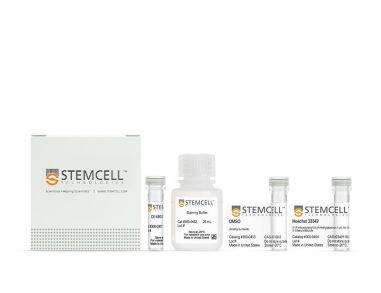 Cell Navigator™ 高尔基体染色试剂盒, 绿色 试剂盒中含有C6 NBD神经酰胺,用于在活细胞或醛固定的细胞中选择性染色高尔基体
 沪公网安备31010102008431号