Binda E et al. (DEC 2012)
Cancer cell 22 6 765--80
The EphA2 receptor drives self-renewal and tumorigenicity in stem-like tumor-propagating cells from human glioblastomas.
In human glioblastomas (hGBMs),tumor-propagating cells with stem-like characteristics (TPCs) represent a key therapeutic target. We found that the EphA2 receptor tyrosine kinase is overexpressed in hGBM TPCs. Cytofluorimetric sorting into EphA2(High) and EphA2(Low) populations demonstrated that EphA2 expression correlates with the size and tumor-propagating ability of the TPC pool in hGBMs. Both ephrinA1-Fc,which caused EphA2 downregulation in TPCs,and siRNA-mediated knockdown of EPHA2 expression suppressed TPCs self-renewal ex vivo and intracranial tumorigenicity,pointing to EphA2 downregulation as a causal event in the loss of TPCs tumorigenicity. Infusion of ephrinA1-Fc into intracranial xenografts elicited strong tumor-suppressing effects,suggestive of therapeutic applications.
View Publication
产品类型:
产品号#:
05751
产品名:
NeuroCult™ NS-A 扩增试剂盒(人)
Conte D et al. (JAN 2012)
PloS one 7 12 e52167
Loss of Atrx sensitizes cells to DNA damaging agents through p53-mediated death pathways.
Prevalent cell death in forebrain- and Sertoli cell-specific Atrx knockout mice suggest that Atrx is important for cell survival. However,conditional ablation in other tissues is not associated with increased death indicating that diverse cell types respond differently to the loss of this chromatin remodeling protein. Here,primary macrophages isolated from Atrx(f/f) mice were infected with adenovirus expressing Cre recombinase or β-galactosidase,and assayed for cell survival under different experimental conditions. Macrophages survive without Atrx but undergo rapid apoptosis upon lipopolysaccharide (LPS) activation suggesting that chromatin reorganization in response to external stimuli is compromised. Using this system we next tested the effect of different apoptotic stimuli on cell survival. We observed that survival of Atrx-null cells were similar to wild type cells in response to serum withdrawal,anti-Fas antibody,C2 ceramide or dexamethasone treatment but were more sensitive to 5-fluorouracil (5-FU). Cell survival could be rescued by re-introducing Atrx or by removal of p53 demonstrating the cell autonomous nature of the effect and its p53-dependence. Finally,we demonstrate that multiple primary cell types (myoblasts,embryonic fibroblasts and neurospheres) were sensitive to 5-FU,cisplatin,and UV light treatment. Together,our results suggest that cells lacking Atrx are more sensitive to DNA damaging agents and that this may result in enhanced death during development when cells are at their proliferative peak. Moreover,it identifies potential treatment options for cancers associated with ATRX mutations,including glioblastoma and pancreatic neuroendocrine tumors.
View Publication
产品类型:
产品号#:
05700
05701
05702
产品名:
NeuroCult™ 基础培养基(小鼠和大鼠)
NeuroCult™ 扩增添加物(小鼠和大鼠)
NeuroCult™扩增试剂盒(小鼠和大鼠)
Morrison BJ et al. (JAN 2012)
PloS one 7 12 e52692
Proteomic comparison of mcf-7 tumoursphere and monolayer cultures.
Breast cancer is a heterogenous disease,composed of tumour cells with differing gene expressions and phenotypes. Very few antigens have been identified and a better understanding of tumour initiating-cells as targets for therapy is critically needed. Recently,a rare subpopulation of cells within tumours has been described with the ability to: (i) initiate and sustain tumour growth; (ii) resist traditional therapies and allow for secondary tumour dissemination; and (iii) display some of the characteristics of stem cells such as self-renewal. These cells are termed tumour-initiating cells or cancer stem cells,or alternatively,in the case of breast cancer,breast cancer stem cells. Previous studies have demonstrated that breast cancer stem cells can be enriched for in tumoursphere" culture. Proteomics represents a novel way to investigate protein expression between cells. We hypothesise that characterisation of the proteome of the breast cancer line MCF-7 tumourspheres compared to adherent/differentiated cells identifies proteins of novel interest for further isolating or targeting breast cancer stem cells. We present evidence that: (i) the proteome of adherent cells is different to the proteome of cells grown in sphere medium from either early passage (passage 2) or late passage (passage 5) spheres; (ii) that spheres are enriched in expression of a variety of tumour-relevant proteins (including MUC1 and Galectin-3); and (iii) that targeting of one of these identified proteins (galectin-3) using an inhibitor (N-acetyllactosamine) decreases sphere formation/self-renewal of MCF-7 cancer stem cells in vitro and tumourigenicity in vivo. Hence�
View Publication
产品类型:
产品号#:
05751
产品名:
NeuroCult™ NS-A 扩增试剂盒(人)
M. \vCan\vcer et al. (dec 2019)
Cell Stem Cell 25 6 855--870.e11
Humanized Stem Cell Models of Pediatric Medulloblastoma Reveal an Oct4/mTOR Axis that Promotes Malignancy
Medulloblastoma (MB),the most frequent malignant childhood brain tumor,can arise from cellular malfunctions during hindbrain development. Here we generate humanized models for Sonic Hedgehog (SHH)-subgroup MB via MYCN overexpression in primary human hindbrain-derived neuroepithelial stem (hbNES) cells or iPSC-derived NES cells,which display a range of aggressive phenotypes upon xenografting. iPSC-derived NES tumors develop quickly with leptomeningeal dissemination,whereas hbNES-derived cells exhibit delayed tumor formation with less dissemination. Methylation and expression profiling show that tumors from both origins recapitulate hallmarks of infant SHH MB and reveal that mTOR activation,as a result of increased Oct4,promotes aggressiveness of human SHH tumors. Targeting mTOR decreases cell viability and prolongs survival,showing the utility of these varied models for dissecting mechanisms mediating tumor aggression and demonstrating the value of humanized models for a better understanding of pediatric cancers.
View Publication
产品类型:
产品号#:
05752
产品名:
NeuroCult™ NS-A 分化试剂盒(人)
J. M. Crook and E. Tomaskovic-Crook ( 2017)
Methods in molecular biology (Clifton,N.J.) 1590 199--206
Culturing and Cryobanking Human Neural Stem Cells.
The discovery and study of human neural stem cells has advanced our understanding of human neurogenesis,and the development of novel therapeutics based on neural cell replacement. Here,we describe methods to culture and cryopreserve human neural stem cells (hNSCs) for expansion and banking. Importantly,the protocols ensure that the multipotency of hNSCs is preserved to enable differentiation to neurons and supporting neuroglia.
View Publication
产品类型:
产品号#:
05750
05751
产品名:
NeuroCult™ NS-A 基础培养基(人)
NeuroCult™ NS-A 扩增试剂盒(人)
K. M. Wilson et al. ( 2019)
SLAS technology 24 1 28--40
Mutation Profiles in Glioblastoma 3D Oncospheres Modulate Drug Efficacy.
Glioblastoma (GBM) is a lethal brain cancer with a median survival time of approximately 15 months following treatment. Common in vitro GBM models for drug screening are adherent and do not recapitulate the features of human GBM in vivo. Here we report the genomic characterization of nine patient-derived,spheroid GBM cell lines that recapitulate human GBM characteristics in orthotopic xenograft models. Genomic sequencing revealed that the spheroid lines contain alterations in GBM driver genes such as PTEN,CDKN2A,and NF1. Two spheroid cell lines,JHH-136 and JHH-520,were utilized in a high-throughput drug screen for cell viability using a 1912-member compound library. Drug mechanisms that were cytotoxic in both cell lines were Hsp90 and proteasome inhibitors. JHH-136 was uniquely sensitive to topoisomerase 1 inhibitors,while JHH-520 was uniquely sensitive to Mek inhibitors. Drug combination screening revealed that PI3 kinase inhibitors combined with Mek or proteasome inhibitors were synergistic. However,animal studies to test these drug combinations in vivo revealed that Mek inhibition alone was superior to the combination treatments. These data show that these GBM spheroid lines are amenable to high-throughput drug screening and that this dataset may deliver promising therapeutic leads for future GBM preclinical studies.
View Publication
El-Helou V et al. (NOV 2005)
Hypertension 46 5 1219--25
Resident nestin+ neural-like cells and fibers are detected in normal and damaged rat myocardium.
The present study examined whether nestin+ neural-like stem cells detected in the scar tissue of rats 1 week after myocardial infarction (MI) were derived from bone marrow and/or were resident cells of the normal myocardium. Irradiated male Wistar rats transplanted with beta-actin promoter-driven,green fluorescent protein (GFP)-labeled,unfractionated bone marrow cells were subjected to coronary artery ligation. Three weeks after MI,GFP-labeled bone marrow cells were detected in the infarct region,and a modest number were associated with nestin immunoreactivity. The paucity of GFP+/nestin+ cells in the scar tissue provided the impetus to explore whether neural-like stem cells were derived from cardiac tissue. Nestin mRNA and immunoreactivity were detected in normal rat myocardium,and transcript levels were increased in the damaged heart after MI. In primary-passage,cardiac tissue-derived neural cells,filamentous nestin staining was associated with a diffuse,cytoplasmic glial fibrillary acidic protein signal. Unexpectedly,in viable myocardium,numerous nestin+/glial fibrillary acidic protein+ fiberlike structures of varying length were detected and observed in close proximity to neurofilament-M+ fibers. The infarct region was likewise innervated,and the preponderance of neurofilament-M+ fibers appeared to be physically associated with nestin+ fiberlike structures. These data highlight the novel observation that the normal rat heart contained resident nestin+/glial fibrillary acidic protein+ neural-like stem cells,fiberlike structures,and nestin mRNA levels that were increased in response to myocardial ischemia. Cardiac tissue-derived neural stem cell migration to the infarct region and concomitant nestin+ fiberlike innervation represent obligatory events of reparative fibrosis in the damaged rat myocardium.
View Publication
产品类型:
产品号#:
05700
05701
05702
产品名:
NeuroCult™ 基础培养基(小鼠和大鼠)
NeuroCult™ 扩增添加物(小鼠和大鼠)
NeuroCult™扩增试剂盒(小鼠和大鼠)
Udagawa J et al. (FEB 2006)
Endocrinology 147 2 647--58
The role of leptin in the development of the cerebral cortex in mouse embryos.
Leptin is detected in the sera,and leptin receptors are expressed in the cerebrum of mouse embryos,suggesting that leptin plays a role in cerebral development. Compared with the wild type,leptin-deficient (ob/ob) mice had fewer cells at embryonic day (E) 16 and E18 and had fewer 5-bromo-2'-deoxyuridine(+) cells at E14 and E16 in the neuroepithelium. Intracerebroventricular leptin injection in E14 ob/ob embryos increased the number of neuroepithelium cells at E16. In cultured neurosphere cells,leptin treatment increased Hes1 mRNA expression and maintained neural progenitors. Astrocyte differentiation was induced by low-dose (0.1 microg/ml) but not high-dose (1 microg/ml) leptin. High-dose leptin decreased Id mRNA and increased Ngn1 mRNA in neurosphere cells. The neuropeptide Y mRNA level in the cortical plate was lower in ob/ob than the wild type at E16 and E18. These results suggest that leptin maintains neural progenitors and is related to glial and neuronal development in embryos.
View Publication
产品类型:
产品号#:
05700
05701
05702
05703
05704
产品名:
NeuroCult™ 基础培养基(小鼠和大鼠)
NeuroCult™ 扩增添加物(小鼠和大鼠)
NeuroCult™扩增试剂盒(小鼠和大鼠)
NeuroCult™ 分化添加物(小鼠和大鼠)
NeuroCult™ 分化试剂盒(小鼠和大鼠)
Fitzgerald DP et al. (OCT 2006)
Neuroscience 142 3 703--16
Characterization of neogenin-expressing neural progenitor populations and migrating neuroblasts in the embryonic mouse forebrain.
Many studies have demonstrated a role for netrin-1-deleted in colorectal cancer (DCC) interactions in both axon guidance and neuronal migration. Neogenin,a member of the DCC receptor family,has recently been shown to be a chemorepulsive axon guidance receptor for the repulsive guidance molecule (RGM) family of guidance cues [Rajagopalan S,Deitinghoff L,Davis D,Conrad S,Skutella T,Chedotal A,Mueller B,Strittmatter S (2004) Neogenin mediates the action of repulsive guidance molecule. Nat Cell Biol 6:755-762]. Here we show that neogenin is present on neural progenitors,including neurogenic radial glia,in the embryonic mouse forebrain suggesting that neogenin expression is a hallmark of neural progenitor populations. Neogenin-positive progenitors were isolated from embryonic day 14.5 forebrain using flow cytometry and cultured as neurospheres. Neogenin-positive progenitors gave rise to neurospheres displaying a high proliferative and neurogenic potential. In contrast,neogenin-negative forebrain cells did not produce long-term neurosphere cultures and did not possess a significant neurogenic potential. These observations argue strongly for a role for neogenin in neural progenitor biology. In addition,we also observed neogenin on parvalbumin- and calbindin-positive interneuron neuroblasts that were migrating through the medial and lateral ganglionic eminences,suggesting a role for neogenin in tangential migration. Therefore,neogenin may be a multi-functional receptor regulating both progenitor activity and neuroblast migration in the embryonic forebrain.
View Publication
产品类型:
产品号#:
05701
产品名:
NeuroCult™ 扩增添加物(小鼠和大鼠)
Jenkins RB et al. (OCT 2006)
Cancer research 66 20 9852--61
A t(1;19)(q10;p10) mediates the combined deletions of 1p and 19q and predicts a better prognosis of patients with oligodendroglioma.
Combined deletion of chromosomes 1p and 19q is associated with improved prognosis and responsiveness to therapy in patients with anaplastic oligodendroglioma. The deletions usually involve whole chromosome arms,suggesting a t(1;19)(q10;p10). Using stem cell medium,we cultured a few tumors. Paraffin-embedded tissue was obtained from 21 Mayo Clinic patients and 98 patients enrolled in 2 North Central Cancer Treatment Group (NCCTG) low-grade glioma trials. Interphase fusion of CEP1 and 19p12 probes detected the t(1;19). 1p/19q deletions were evaluated by fluorescence in situ hybridization. Upon culture,one oligodendroglioma contained an unbalanced 45,XX,t(1;19)(q10;p10). CEP1/19p12 fusion was observed in all metaphases and 74% of interphase nuclei. Among Mayo Clinic oligodendrogliomas,the prevalence of fusion was 81%. Among NCCTG patients,CEP1/19p12 fusion prevalence was 55%,47%,and 0% among the oligodendrogliomas,mixed oligoastrocytomas,and astrocytomas,respectively. Ninety-one percent of NCCTG gliomas with 1p/19q deletion and 12% without 1p/19q deletion had CEP1/19p12 fusion (P textless 0.001,chi(2) test). The median overall survival (OS) for all patients was 8.1 years without fusion and 11.9 years with fusion (P = 0.003). The median OS for patients with low-grade oligodendroglioma was 9.1 years without fusion and 13.0 years with fusion (P = 0.01). Similar significant median OS differences were observed for patients with combined 1p/19q deletions. The absence of alterations was associated with a significantly shorter OS for patients who received higher doses of radiotherapy. Our results strongly suggest that a t(1;19)(q10;p10) mediates the combined 1p/19q deletion in human gliomas. Like combined 1p/19q deletion,the 1;19 translocation is associated with superior OS and progression-free survival in low-grade glioma patients.
View Publication


 EasySep™小鼠TIL(CD45)正选试剂盒





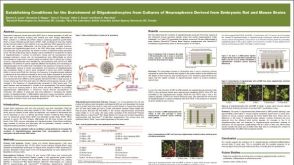 科学海报Establishing Conditions for the Enrichment of Oligodendrocytes from Cultures of Neurospheres Derived from Embryonic Rat and Mouse Brains

 沪公网安备31010102008431号