Bershteyn M et al. (APR 2017)
Cell stem cell 20 4 435--449.e4
Human iPSC-Derived Cerebral Organoids Model Cellular Features of Lissencephaly and Reveal Prolonged Mitosis of Outer Radial Glia.
Classical lissencephaly is a genetic neurological disorder associated with mental retardation and intractable epilepsy,and Miller-Dieker syndrome (MDS) is the most severe form of the disease. In this study,to investigate the effects of MDS on human progenitor subtypes that control neuronal output and influence brain topology,we analyzed cerebral organoids derived from control and MDS-induced pluripotent stem cells (iPSCs) using time-lapse imaging,immunostaining,and single-cell RNA sequencing. We saw a cell migration defect that was rescued when we corrected the MDS causative chromosomal deletion and severe apoptosis of the founder neuroepithelial stem cells,accompanied by increased horizontal cell divisions. We also identified a mitotic defect in outer radial glia,a progenitor subtype that is largely absent from lissencephalic rodents but critical for human neocortical expansion. Our study,therefore,deepens our understanding of MDS cellular pathogenesis and highlights the broad utility of cerebral organoids for modeling human neurodevelopmental disorders.
View Publication
产品类型:
产品号#:
05872
05873
07920
07922
85850
85857
85870
85875
100-0483
100-0484
产品名:
ACCUTASE™
ACCUTASE™
mTeSR™1
mTeSR™1
Hausser Scientificᵀᴹ 明线血球计数板
ReLeSR™
A. M. Tukker et al. (JUL 2018)
Neurotoxicology 67 215--225
Human iPSC-derived neuronal models for in vitro neurotoxicity assessment.
Neurotoxicity testing still relies on ethically debated,expensive and time consuming in vivo experiments,which are unsuitable for high-throughput toxicity screening. There is thus a clear need for a rapid in vitro screening strategy that is preferably based on human-derived neurons to circumvent interspecies translation. Recent availability of commercially obtainable human induced pluripotent stem cell (hiPSC)-derived neurons and astrocytes holds great promise in assisting the transition from the current standard of rat primary cortical cultures to an animal-free alternative. We therefore composed several hiPSC-derived neuronal models with different ratios of excitatory and inhibitory neurons in the presence or absence of astrocytes. Using immunofluorescent stainings and multi-well micro-electrode array (mwMEA) recordings we demonstrate that these models form functional neuronal networks that become spontaneously active. The differences in development of spontaneous neuronal activity and bursting behavior as well as spiking patterns between our models confirm the importance of the presence of astrocytes. Preliminary neurotoxicity assessment demonstrates that these cultures can be modulated with known seizurogenic compounds,such as picrotoxin (PTX) and endosulfan,and the neurotoxicant methylmercury (MeHg). However,the chemical-induced effects on different parameters for neuronal activity,such as mean spike rate (MSR) and mean burst rate (MBR),may depend on the ratio of inhibitory and excitatory neurons. Our results thus indicate that hiPSC-derived neuronal models must be carefully designed and characterized prior to large-scale use in neurotoxicity screening.
View Publication
产品类型:
产品号#:
05790
05792
05793
05794
05795
R1061
R1034
R1116
产品名:
BrainPhys™神经元培养基
BrainPhys™神经元培养基和SM1试剂盒
BrainPhys™ 神经元培养基N2-A和SM1试剂盒
BrainPhys™原代神经元试剂盒
BrainPhys™ hPSC 神经元试剂盒
Smith BW et al. ( 2016)
Stem Cells International 2016 2574152
Genome Editing of the CYP1A1 Locus in iPSCs as a Platform to Map AHR Expression throughout Human Development
The aryl hydrocarbon receptor (AHR) is a ligand activated transcription factor that increases the expression of detoxifying enzymes upon ligand stimulation. Recent studies now suggest that novel endogenous roles of the AHR exist throughout development. In an effort to create an optimized model system for the study of AHR signaling in several cellular lineages,we have employed a CRISPR/CAS9 genome editing strategy in induced pluripotent stem cells (iPSCs) to incorporate a reporter cassette at the transcription start site of one of its canonical targets,cytochrome P450 1A1 (CYP1A1). This cell line faithfully reports on CYP1A1 expression,with luciferase levels as its functional readout,when treated with an endogenous AHR ligand (FICZ) at escalating doses. iPSC-derived fibroblast-like cells respond to acute exposure to environmental and endogenous AHR ligands,and iPSC-derived hepatocytes increase CYP1A1 in a similar manner to primary hepatocytes. This cell line is an important innovation that can be used to map AHR activity in discrete cellular subsets throughout developmental ontogeny. As further endogenous ligands are proposed,this line can be used to screen for safety and efficacy and can report on the ability of small molecules to regulate critical cellular processes by modulating the activity of the AHR.
View Publication
产品类型:
产品号#:
05110
05850
05857
05870
05875
85850
85857
85870
85875
产品名:
STEMdiff™定型内胚层检测试剂盒
mTeSR™1
mTeSR™1
Perales-Clemente E et al. (JUL 2016)
The EMBO Journal e201694892
Natural underlying mtDNA heteroplasmy as a potential source of intra-person hiPSC variability
Functional variability among human clones of induced pluripotent stem cells (hiPSCs) remains a limitation in assembling high-quality biorepositories. Beyond inter-person variability,the root cause of intra-person variability remains unknown. Mitochondria guide the required transition from oxidative to glycolytic metabolism in nuclear reprogramming. Moreover,mitochondria have their own genome (mitochondrial DNA [mtDNA]). Herein,we performed mtDNA next-generation sequencing (NGS) on 84 hiPSC clones derived from a cohort of 19 individuals,including mitochondrial and non-mitochondrial patients. The analysis of mtDNA variants showed that low levels of potentially pathogenic mutations in the original fibroblasts are revealed through nuclear reprogramming,generating mutant hiPSCs with a detrimental effect in their differentiated progeny. Specifically,hiPSC-derived cardiomyocytes with expanded mtDNA mutations non-related with any described human disease,showed impaired mitochondrial respiration,being a potential cause of intra-person hiPSC variability. We propose mtDNA NGS as a new selection criterion to ensure hiPSC quality for drug discovery and regenerative medicine.
View Publication
Bizy A et al. (NOV 2013)
Stem Cell Research 11 3 1335--1347
Myosin light chain 2-based selection of human iPSC-derived early ventricular cardiac myocytes
Applications of human induced pluripotent stem cell derived-cardiac myocytes (hiPSC-CMs) would be strengthened by the ability to generate specific cardiac myocyte (CM) lineages. However,purification of lineage-specific hiPSC-CMs is limited by the lack of cell marking techniques. Here,we have developed an iPSC-CM marking system using recombinant adenoviral reporter constructs with atrial- or ventricular-specific myosin light chain-2 (MLC-2) promoters. MLC-2a and MLC-2v selected hiPSC-CMs were purified by fluorescence-activated cell sorting and their biochemical and electrophysiological phenotypes analyzed. We demonstrate that the phenotype of both populations remained stable in culture and they expressed the expected sarcomeric proteins,gap junction proteins and chamber-specific transcription factors. Compared to MLC-2a cells,MLC-2v selected CMs had larger action potential amplitudes and durations. In addition,by immunofluorescence,we showed that MLC-2 isoform expression can be used to enrich hiPSC-CM consistent with early atrial and ventricular myocyte lineages. However,only the ventricular myosin light chain-2 promoter was able to purify a highly homogeneous population of iPSC-CMs. Using this approach,it is now possible to develop ventricular-specific disease models using iPSC-CMs while atrial-specific iPSC-CM cultures may require additional chamber-specific markers. ?? 2013 Elsevier B.V.
View Publication
产品类型:
产品号#:
05850
05857
05870
05875
85850
85857
85870
85875
产品名:
mTeSR™1
mTeSR™1
Zhao Q et al. (JAN 2015)
Proceedings of the National Academy of Sciences of the United States of America 112 2 530--535
MSCs derived from iPSCs with a modified protocol are tumor-tropic but have much less potential to promote tumors than bone marrow MSCs.
Mesenchymal stem or stromal cells (MSCs) have many potential therapeutic applications including therapies for cancers and tissue damages caused by cancers or radical cancer treatments. However,tissue-derived MSCs such as bone marrow MSCs (BM-MSCs) may promote cancer progression and have considerable donor variations and limited expandability. These issues hinder the potential applications of MSCs,especially those in cancer patients. To circumvent these issues,we derived MSCs from transgene-free human induced pluripotent stem cells (iPSCs) efficiently with a modified protocol that eliminated the need of flow cytometric sorting. Our iPSC-derived MSCs were readily expandable,but still underwent senescence after prolonged culture and did not form teratomas. These iPSC-derived MSCs homed to cancers with efficiencies similar to BM-MSCs but were much less prone than BM-MSCs to promote the epithelial-mesenchymal transition,invasion,stemness,and growth of cancer cells. The observations were probably explained by the much lower expression of receptors for interleukin-1 and TGFβ,downstream protumor factors,and hyaluronan and its cofactor TSG6,which all contribute to the protumor effects of BM-MSCs. The data suggest that iPSC-derived MSCs prepared with the modified protocol are a safer and better alternative to BM-MSCs for therapeutic applications in cancer patients. The protocol is scalable and can be used to prepare the large number of cells required for off-the-shelf" therapies and bioengineering applications."
View Publication
产品类型:
产品号#:
01700
01705
05850
05857
05870
05875
85850
85857
85870
85875
01702
产品名:
ALDEFLUOR™ 试剂盒
ALDEFLUOR™ DEAB试剂, 1.5 mM, 1 mL
mTeSR™1
mTeSR™1
ALDEFLUOR™检测缓冲液
Patriarchi T et al. (JUN 2016)
European journal of human genetics : EJHG 24 6 871--880
Imbalance of excitatory/inhibitory synaptic protein expression in iPSC-derived neurons from FOXG1(+/-) patients and in foxg1(+/-) mice.
Rett syndrome (RTT) is a severe neurodevelopmental disorder associated with mutations in either MECP2,CDKL5 or FOXG1. The precise molecular mechanisms that lead to the pathogenesis of RTT have yet to be elucidated. We recently reported that expression of GluD1 (orphan glutamate receptor $\$-1 subunit) is increased in iPSC-derived neurons obtained from patients with mutations in either MECP2 or CDKL5. GluD1 controls synaptic differentiation and shifts the balance between excitatory and inhibitory synapses toward the latter. Thus,an increase in GluD1 might be a critical factor in the etiology of RTT by affecting the excitatory/inhibitory balance in the developing brain. To test this hypothesis,we generated iPSC-derived neurons from FOXG1(+/-) patients. We analyzed mRNA and protein levels of GluD1 together with key markers of excitatory and inhibitory synapses in these iPSC-derived neurons and in Foxg1(+/-) mouse fetal (E11.5) and adult (P70) brains. We found strong correlation between iPSC-derived neurons and fetal mouse brains,where GluD1 and inhibitory synaptic markers (GAD67 and GABA AR-$\$1) were increased,whereas the levels of a number of excitatory synaptic markers (VGLUT1,GluA1,GluN1 and PSD-95) were decreased. In adult mice,GluD1 was decreased along with all GABAergic and glutamatergic markers. Our findings further the understanding of the etiology of RTT by introducing a new pathological event occurring in the brain of FOXG1(+/-) patients during embryonic development and its time-dependent shift toward a general decrease in brain synapses.
View Publication
产品类型:
产品号#:
05850
05857
05870
05875
07923
85850
85857
85870
85875
产品名:
Dispase (1 U/mL)
mTeSR™1
mTeSR™1
Verheyen A et al. (DEC 2015)
PLoS ONE 10 12 e0146127
Using human iPSC-derived neurons to model TAU aggregation
Alzheimer's disease and frontotemporal dementia are amongst the most common forms of dementia characterized by the formation and deposition of abnormal TAU in the brain. In order to develop a translational human TAU aggregation model suitable for screening,we transduced TAU harboring the pro-aggregating P301L mutation into control hiPSC-derived neural progenitor cells followed by differentiation into cortical neurons. TAU aggregation and phosphorylation was quantified using AlphaLISA technology. Although no spontaneous aggregation was observed upon expressing TAU-P301L in neurons,seeding with preformed aggregates consisting of the TAU-microtubule binding repeat domain triggered robust TAU aggregation and hyperphosphorylation already after 2 weeks,without affecting general cell health. To validate our model,activity of two autophagy inducers was tested. Both rapamycin and trehalose significantly reduced TAU aggregation levels suggesting that iPSC-derived neurons allow for the generation of a biologically relevant human Tauopathy model,highly suitable to screen for compounds that modulate TAU aggregation.
View Publication
产品类型:
产品号#:
05850
05857
05870
05875
85850
85857
85870
85875
产品名:
mTeSR™1
mTeSR™1
Sancho-Martinez I et al. (FEB 2016)
Nature communications 7 10743
Establishment of human iPSC-based models for the study and targeting of glioma initiating cells.
Glioma tumour-initiating cells (GTICs) can originate upon the transformation of neural progenitor cells (NPCs). Studies on GTICs have focused on primary tumours from which GTICs could be isolated and the use of human embryonic material. Recently,the somatic genomic landscape of human gliomas has been reported. RTK (receptor tyrosine kinase) and p53 signalling were found dysregulated in ∼90% and 86% of all primary tumours analysed,respectively. Here we report on the use of human-induced pluripotent stem cells (hiPSCs) for modelling gliomagenesis. Dysregulation of RTK and p53 signalling in hiPSC-derived NPCs (iNPCs) recapitulates GTIC properties in vitro. In vivo transplantation of transformed iNPCs leads to highly aggressive tumours containing undifferentiated stem cells and their differentiated derivatives. Metabolic modulation compromises GTIC viability. Last,screening of 101 anti-cancer compounds identifies three molecules specifically targeting transformed iNPCs and primary GTICs. Together,our results highlight the potential of hiPSCs for studying human tumourigenesis.
View Publication
产品类型:
产品号#:
05850
05857
05870
05875
85850
85857
85870
85875
产品名:
mTeSR™1
mTeSR™1
Mou H et al. (APR 2012)
Cell stem cell 10 4 385--397
Generation of multipotent lung and airway progenitors from mouse ESCs and patient-specific cystic fibrosis iPSCs
Deriving lung progenitors from patient-specific pluripotent cells is a key step in producing differentiated lung epithelium for disease modeling and transplantation. By mimicking the signaling events that occur during mouse lung development,we generated murine lung progenitors in a series of discrete steps. Definitive endoderm derived from mouse embryonic stem cells (ESCs) was converted into foregut endoderm,then into replicating Nkx2.1+ lung endoderm,and finally into multipotent embryonic lung progenitor and airway progenitor cells. We demonstrated that precisely-timed BMP,FGF,and WNT signaling are required for NKX2.1 induction. Mouse ESC-derived Nkx2.1+ progenitor cells formed respiratory epithelium (tracheospheres) when transplanted subcutaneously into mice. We then adapted this strategy to produce disease-specific lung progenitor cells from human Cystic Fibrosis induced pluripotent stem cells (iPSCs),creating a platform for dissecting human lung disease. These disease-specific human lung progenitors formed respiratory epithelium when subcutaneously engrafted into immunodeficient mice.
View Publication


 EasySep™小鼠TIL(CD45)正选试剂盒





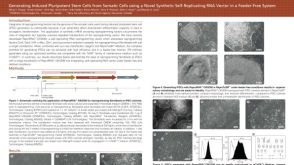 科学海报Generating iPSCs from Somatic Cells using a Novel Synthetic Self-Replicating RNA Vector in a Feeder-Free System

 沪公网安备31010102008431号