Human antigen-specific regulatory T cells generated by T cell receptor gene transfer.
BACKGROUND: Therapies directed at augmenting regulatory T cell (Treg) activities in vivo as a systemic treatment for autoimmune disorders and transplantation may be associated with significant off-target effects,including a generalized immunosuppression that may compromise beneficial immune responses to infections and cancer cells. Adoptive cellular therapies using purified expanded Tregs represents an attractive alternative to systemic treatments,with results from animal studies noting increased therapeutic potency of antigen-specific Tregs over polyclonal populations. However,current methodologies are limited in terms of the capacity to isolate and expand a sufficient quantity of endogenous antigen-specific Tregs for therapeutic intervention. Moreover,FOXP3+ Tregs fall largely within the CD4+ T cell subset and are thus routinely MHC class II-specific,whereas class I-specific Tregs may function optimally in vivo by facilitating direct tissue recognition. METHODOLOGY/PRINCIPAL FINDINGS: To overcome these limitations,we have developed a novel means for generating large numbers of antigen-specific Tregs involving lentiviral T cell receptor (TCR) gene transfer into in vitro expanded polyclonal natural Treg populations. Tregs redirected with a high-avidity class I-specific TCR were capable of recognizing the melanoma antigen tyrosinase in the context of HLA-A*0201 and could be further enriched during the expansion process by antigen-specific reactivation with peptide loaded artificial antigen presenting cells. These in vitro expanded Tregs continued to express FOXP3 and functional TCRs,and maintained the capacity to suppress conventional T cell responses directed against tyrosinase,as well as bystander T cell responses. Using this methodology in a model tumor system,murine Tregs designed to express the tyrosinase TCR effectively blocked antigen-specific effector T cell (Teff) activity as determined by tumor cell growth and luciferase reporter-based imaging. CONCLUSIONS/SIGNIFICANCE: These results support the feasibility of class I-restricted TCR transfer as a promising strategy to redirect the functional properties of Tregs and provide for a more efficacious adoptive cell therapy.
View Publication
Ayasoufi K et al. (APR 2016)
Journal of Immunology 196 7 3180--90
CD4 T Cell Help via B Cells Is Required for Lymphopenia-Induced CD8 T Cell Proliferation.
Ab-mediated lymphoablation is commonly used in solid organ and hematopoietic cell transplantation. However,these strategies fail to control pathogenic memory T cells efficiently and to improve long-term transplant outcomes significantly. Understanding the mechanisms of T cell reconstitution is critical for enhancing the efficacy of Ab-mediated depletion in sensitized recipients. Using a murine analog of anti-thymocyte globulin (mATG) in a mouse model of cardiac transplantation,we previously showed that peritransplant lymphocyte depletion induces rapid memory T cell proliferation and only modestly prolongs allograft survival. We now report that T cell repertoire following depletion is dominated by memory CD4 T cells. Additional depletion of these residual CD4 T cells severely impairs the recovery of memory CD8 T cells after mATG treatment. The CD4 T cell help during CD8 T cell recovery depends on the presence of B cells expressing CD40 and intact CD40/CD154 interactions. The requirement for CD4 T cell help is not limited to the use of mATG in heart allograft recipients,and it is observed in nontransplanted mice and after CD8 T cell depletion with mAb instead of mATG. Most importantly,limiting helper signals increases the efficacy of mATG in controlling memory T cell expansion and significantly extends heart allograft survival in sensitized recipients. Our findings uncover the novel role for helper memory CD4 T cells during homeostatic CD8 T cell proliferation and open new avenues for optimizing lymphoablative therapies in allosensitized patients.
View Publication
产品类型:
产品号#:
19851
19851RF
产品名:
EasySep™小鼠T细胞分选试剂盒
RoboSep™ 小鼠T细胞分选试剂盒
W. C. Lim et al. ( 2018)
Frontiers in immunology 9 565
Human Endothelial Cells Modulate CD4+ T Cell Populations and Enhance Regulatory T Cell Suppressive Capacity.
Endothelial cells (ECs) line the luminal surface of blood vessels and have an active role in the recruitment of leukocytes,including immune cell activation. Regulatory T cells (Tregs) are immune suppressor cells that maintain peripheral tolerance and must interact with the endothelium as they traffic into tissue. We hypothesized that human ECs could modulate Tregs and their suppressor function. Cocultures of CD4+ T cells with human umbilical vein ECs (HUVECs) or dermal microvascular ECs (HDMECs) were conducted and analyzed for activation and proliferation after 72 and 120 h using flow cytometry. In monocyte-depleted cultures,human ECs were found to support CD4+ T cell proliferation in the presence of external mitogens phytohemagglutinin or anti-CD3/28 antibodies (aCD3/28). Activation was shown by CD25 expression in these cells that also transiently expressed the Treg transcription factor FOXP3. HUVECs supported the specific concurrent proliferation of both effector T cells and Tregs when cocultured with aCD3/28. Purified Tregs were also functionally activated by prior coculture with EC to suppress effector T (Teff) cell proliferation. Both direct coculture and indirect coculture of EC and Treg showed activation of the Treg suppressive phenotype. However,whereas HUVEC showed enhancement of suppression by both mechanisms,HDMEC only supported Treg suppressive activity via the contact-independent mechanism. In the contact-independent cultures,the soluble mediators IL-6,GM-CSF,or G-CSF released from ECs following interferon-gamma$ activation were not responsible for the enhanced Treg suppressor function. Following direct coculture,Treg expression of inhibitory receptors PD-1 and OX40 was elevated while activated EC expressed the counter ligands programmed death ligand (PD-L)1 and PD-L2. Therefore,human ECs have a role in supporting T cell proliferation and increasing Treg suppressor function. This ability of EC to enhance Treg function could offer novel targets to boost Treg activity during inflammatory disorders.
View Publication
Construction and characterization of chimeric FcγR T cells for universal T cell therapy
BackgroundSeveral approaches are being explored for engineering off-the-shelf chimeric antigen receptor (CAR) T cells. In this study,we engineered chimeric Fcγ receptor (FcγR) T cells and tested their potential as a versatile platform for universal T cell therapy.MethodsChimeric FcγR (CFR) constructs were generated using three distinct forms of FcγR,namely CD16A,CD32A,and CD64. The functionality of CFR T cells was evaluated through degranulation assays,specific target lysis experiments,in vitro cytokine production analysis,and assessment of tumor xenograft destruction specificity in mouse models using different monoclonal antibodies (MoAbs).ResultsThree types of CFR T cells were engineered,16s3,32-8a,64-8a CFR T cells. In the presence of rituximab (RTX),cytotoxicity of all three types of CFR T cells against CD20+ Raji-wt,K562-CD20+,and primary tumor cells was significantly higher than that of the mock T cells (P < 0.001). When herceptin was used,all three types of CFR T cells exhibited significant cytotoxicity against HER2+ cell lines of SK-BR-3,SK-OV-3,and HCC1954 (P < 0.001). The cytotoxicity of 64-8a CFR T cells was significantly inhibited by free human IgG at a physiological dose (P < 0.001),which was not observed in 16s3,32-8a CFR T cells. Compared to 32-8a CFR T cells,16s3 CFR T cells exhibited more prolonged cytotoxicity than 32-8a CFR T cells (P < 0.01). In in vivo assays using xenograft models,16s3 CFR T cells significantly prolonged the survival of mice xenografted with Raji-wt cells in the presence of RTX (P < 0.001),and effectively reduced tumor burden in mice xenografted with SK-OV-3 cells in the presence of herceptin (P < 0.05). No significant non-specific cytotoxicity of CFR T cells was found in vivo.ConclusionThe anti-tumor effects of the CFR T cells in vitro and in xenograft mouse models are mediated by specific MoAbs such as RTX and herceptin. The CFR T cells therefore have the features of universal T cells with specificity directed by MoAbs. 16s3 CFR T cells are chosen for clinical trials.Supplementary InformationThe online version contains supplementary material available at 10.1186/s40164-025-00595-x.
View Publication
产品类型:
产品号#:
17954
17954RF
100-0971
产品名:
EasySep™人B细胞分选试剂盒
RoboSep™ 人B细胞分选试剂盒
EasySep™人B细胞分离试剂盒
(Feb 2024)
Immunity,Inflammation and Disease 12 2
Galectin‐9 alleviates acute graft‐versus‐host disease after haplo‐hematopoietic stem cell transplantation by regulating regulatory T cell/effector T cell imbalance
AbstractBackgroundAcute graft‐versus‐host disease (aGVHD) arises from the imbalance of host T cells. Galectin‐9 negatively regulates CD4 effector T cell (Th1 and Th17) function by binding to Tim‐3. However,the relationship between Galectin‐9/Tim‐3 and CD4+ T subsets in patients with aGVHD after Haplo‐HSCT (haploidentical peripheral blood hematopoietic stem cell transplantation) has not been fully elucidated. Here,we investigated the role of Galectin‐9 and CD4+T subsets in aGVHD after haplo‐HSCT.MethodsForty‐two patients underwent Haplo‐HSCT (26 without aGVHD and 16 with aGVHD),and 20 healthy controls were included. The concentrations of Galectin‐9,interferon‐gamma (IFN‐γ),interleukin (IL)‐4,transforming growth factor (TGF)‐β,and IL‐17 in the serum and culture supernatant were measured using enzyme‐linked immunosorbent assay or cytometric bead array. The expression levels of Galectin‐9,PI3K,p‐PI3K,and p‐mTOR protein were detected by western blot analysis. Flow cytometry was used to analyze the proportions of CD4+ T cell subsets. Bioinformatics analysis was performed.ResultsIn patients with aGVHD,regulatory T (Treg) cells and Galectin‐9 decreased,and the Th1,Th17,and Treg cells were significantly imbalanced. Moreover,Treg and Galectin‐9 were rapidly reconstituted in the early stage of patients without aGVHD after Haplo‐HSCT,but Th17 cells were reconstituted slowly. Furthermore,Tim‐3 upregulation on Th17 and Th1 cells was associated with excessive activation of the PI3K/AKT pathway in patients with aGVHD. Specifically,in vitro treatment with Galectin‐9 reduced IFN‐γ and IL‐17 production while augmenting TGF‐β secretion. Bioinformatics analysis suggested the potential involvement of the PI3K/AKT/mTOR pathway in aGVHD. Mechanistically,exogenous Galectin‐9 was found to mitigate aGVHD by restoring the Treg/Teffs (effector T cells) balance and suppressing PI3K.ConclusionGalectin‐9 may ameliorate aGVHD after haplo‐HSCT by modulating Treg/Teffs balance and regulating the PI3K/AKT/mTOR pathway. Targeting Galectin‐9 may hold potential value for the treatment of aGVHD. In patients with acute graft‐versus‐host disease (aGVHD),the expression of Tim‐3 is significantly increased. Galectin‐9 binding to Tim‐3 may inhibit the activation of the PI3K/AKT pathway and enhance the function of Treg cells. On the other hand,transforming growth factor (TGF)‐β promotes the differentiation of Treg cells through autocrine secretion,while TGF‐β induces the expression of Galectin‐9 in a paracrine manner. The increased Treg cells can inhibit the activation of Th1 and Th17 cells by secreting TGF‐β,thus alleviating aGVHD and inducing immune tolerance
View Publication
产品类型:
产品号#:
18000
产品名:
EasySep™磁极
Tsang JY-S et al. (JUL 2006)
Journal of leukocyte biology 80 1 145--51
Altered proximal T cell receptor (TCR) signaling in human CD4+CD25+ regulatory T cells.
CD4+CD25+ regulatory T cells play an important role in peripheral tolerance. Upon T cell receptor (TCR)-mediated activation,the cells fail to proliferate but are induced to have a suppressor function. The intracellular signaling events that lead to their responses have not been elucidated. In this study,we have examined the proximal TCR signaling events in freshly isolated human CD4+CD25+ regulatory T cells after TCR ligation. In contrast to CD4+CD25- T cells,TCR ligation of CD4+CD25+ regulatory T cells by anti-CD3 cross-linking resulted in a lower calcium influx and extracellular signal-regulated kinase 1/2 phosphorylation. Examination of the CD3zeta chain phosphorylation status indicated that CD4+CD25+ regulatory T cells have poor phosphorylation of the protein and consequently,reduced recruitment of zeta-associated protein-70 to the TCR immunoreceptor tyrosine motif. The adaptor protein,Src homology 2 domain-containing leukocyte phosphoprotein of 76 kDa,which relays signals to downstream signaling components,also showed reduced phosphorylation,which correlated with reduced VAV guanine nucleotide exchange factors association. Consistent with other findings,the defect is accompanied with impaired actin cap formation,implicating a failure of actin remodeling of the cells. Together,our results demonstrate that CD4+CD25+ regulatory T cells have altered TCR proximal signaling pathways,which could be critical for inducing the distinct behavior of these cells.
View Publication
产品类型:
产品号#:
15022
15062
产品名:
RosetteSep™人CD4+ T细胞富集抗体混合物
RosetteSep™人CD4+ T细胞富集抗体混合物
L. Bopp et al. (Apr 2024)
iScience 27 5
Glutamine promotes human CD8 + T cells and counteracts imiquimod-induced T cell hyporesponsiveness
T cells protect tissues from cancer. Although investigations in mice showed that amino acids (AA) critically regulate T cell immunity,this remains poorly understood in humans. Here,we describe the AA composition of interstitial fluids in keratinocyte-derived skin cancers (KDSCs) and study the effect of AA on T cells using models of primary human cells and tissues. Gln contributed to ∼15% of interstitial AAs and promoted interferon gamma (IFN-γ),but not granzyme B (GzB) expression,in CD8 + T cells. Furthermore,the Toll-like receptor 7 agonist imiquimod (IMQ),a common treatment for KDSCs,down-regulated the metabolic gatekeepers c-MYC and mTORC1,as well as the AA transporter ASCT2 and intracellular Gln,Asn,Ala,and Asp in T cells. Reduced proliferation and IFN-γ expression,yet increased GzB,paralleled IMQ effects on AA. Finally,Gln was sufficient to promote IFN-γ-production in IMQ-treated T cells. Our findings indicate that Gln metabolism can be harnessed for treating KDSCs. Subject areas: Dermatology,Immunology
View Publication
CD39 expression by regulatory T cells participates in CD8+ T cell suppression during experimental
An imbalance between suppressor and effector immune responses may preclude cure in chronic parasitic diseases. In the case of Trypanosoma cruzi infection,specialized regulatory Foxp3+ T (Treg) cells suppress protective type-1 effector responses. Herein,we investigated the kinetics and underlying mechanisms behind the regulation of protective parasite-specific CD8+ T cell immunity during acute T. cruzi infection. Using the DEREG mouse model,we found that Treg cells play a role during the initial stages after T. cruzi infection,restraining the magnitude of CD8+ T cell responses and parasite control. Early Treg cell depletion increased the frequencies of polyfunctional short-lived,effector T cell subsets,without affecting memory precursor cell formation or the expression of activation,exhaustion and functional markers. In addition,Treg cell depletion during early infection minimally affected the antigen-presenting cell response but it boosted CD4+ T cell responses before the development of anti-parasite effector CD8+ T cell immunity. Crucially,the absence of CD39 expression on Treg cells significantly bolstered effector parasite-specific CD8+ T cell responses,preventing increased parasite replication in T. cruzi infected mice adoptively transferred with Treg cells. Our work underscores the crucial role of Treg cells in regulating protective anti-parasite immunity and provides evidence that CD39 expression by Treg cells represents a key immunomodulatory mechanism in this infection model. Author summaryChagas disease,caused by Trypanosoma cruzi,can result in severe health complications. While the exact mechanisms underlying the disease’s pathogenesis remain incompletely understood,the host’s inflammatory immune response is believed to play a critical role. To shed light on disease mechanisms and potential treatments,we investigated the impact of regulatory T (Treg) cells on the development of effector immune responses against T. cruzi. Our findings reveal that Treg cells dampen parasite-specific CD8+ T cells,a crucial arm of the immune response in counteracting the parasite. Notably,this regulatory influence occurs primarily during the early stages of T. cruzi infection. Furthermore,we observed that while Treg cells have minimal effects on antigen-presenting cells,they modulate the magnitude and phenotype of conventional CD4+ T cells. Importantly,we identified CD39,a molecule involved in the purinergic pathway,as essential for the suppressive functions of Treg cells during T. cruzi infection. Our findings enhance the understanding of the regulatory response during the acute phase of T. cruzi infection and may have implications for the development of novel therapeutic strategies.
View Publication


 EasySep™小鼠TIL(CD45)正选试剂盒





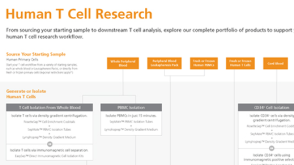 产品手册Human T Cell Research Product Workflow



 沪公网安备31010102008431号