C. Kropp et al. (Oct 2016)
Stem cells translational medicine 5 1289-1301
Impact of Feeding Strategies on the Scalable Expansion of Human Pluripotent Stem Cells in Single-Use Stirred Tank Bioreactors.
The routine application of human pluripotent stem cells (hPSCs) and their derivatives in biomedicine and drug discovery will require the constant supply of high-quality cells by defined processes. Culturing hPSCs as cell-only aggregates in (three-dimensional [3D]) suspension has the potential to overcome numerous limitations of conventional surface-adherent (two-dimensional [2D]) cultivation. Utilizing single-use instrumented stirred-tank bioreactors,we showed that perfusion resulted in a more homogeneous culture environment and enabled superior cell densities of 2.85 X 10(6) cells per milliliter and 47% higher cell yields compared with conventional repeated batch cultures. Flow cytometry,quantitative reverse-transcriptase polymerase chain reaction,and global gene expression analysis revealed a high similarity across 3D suspension and 2D precultures,underscoring that matrix-free hPSC culture efficiently supports maintenance of pluripotency. Interestingly,physiological data and gene expression assessment indicated distinct changes of the cells' energy metabolism,suggesting a culture-induced switch from glycolysis to oxidative phosphorylation in the absence of hPSC differentiation. Our data highlight the plasticity of hPSCs' energy metabolism and provide clear physiological and molecular targets for process monitoring and further development. This study paves the way toward more efficient GMP-compliant cell production and underscores the enormous process development potential of hPSCs in suspension culture. SIGNIFICANCE Human pluripotent stem cells (hPSCs) are a unique source for the,in principle,unlimited production of functional human cell types in vitro,which are of high value for therapeutic and industrial applications. This study applied single-use,clinically compliant bioreactor technology to develop advanced,matrix-free,and more efficient culture conditions for the mass production of hPSCs in scalable suspension culture. Using extensive analytical tools to compare established conditions with this novel culture strategy,unexpected physiological features of hPSCs were discovered. These data allow a more rational process development,providing significant progress in the field of translational stem cell research and medicine.
View Publication
产品类型:
产品号#:
85850
85857
产品名:
mTeSR™1
mTeSR™1
Seeger FH et al. (MAR 2007)
European heart journal 28 6 766--72
Cell isolation procedures matter: a comparison of different isolation protocols of bone marrow mononuclear cells used for cell therapy in patients with acute myocardial infarction.
AIM: The recently published REPAIR-AMI and ASTAMI trial showed differences in contractile recovery of left ventricular function after infusion of bone marrow-derived cells in acute myocardial infarction. Since the trials used different protocols for cell isolation and storage (REPAIR-AMI: Ficoll,storage in X-vivo 10 medium plus serum; ASTAMI: Lymphoprep,storage in NaCl plus plasma),we compared the functional activity of BMC isolated by the two different protocols. METHODS AND RESULTS: The recovery of total cell number,colony-forming units (CFU),and the number of mesenchymal stem cells were significantly reduced to 77 +/- 4%,83 +/- 16%,and 65 +/- 15%,respectively,when using the ASTAMI protocol compared with the REPAIR protocol. The capacity of the isolated BMC to migrate in response to stromal cell-derived factor 1 (SDF-1) was profoundly reduced when using the ASTAMI cell isolation procedure (42 +/- 8% and 78 +/- 3% reduction in healthy and CAD-patient cells,respectively). Finally,infusion of BMC into a hindlimb ischaemia model demonstrated a significantly blunted blood-flow-recovery by BMC isolated with the ASTAMI protocol (54 +/- 6% of the effect obtained by REPAIR cells). Comparison of the individual steps identified the use of NaCl and plasma for cell storage as major factors for functional impairment of the BMC. CONCLUSION: Cell isolation protocols have a major impact on the functional activity of bone marrow-derived progenitor cells. The assessment of cell number and viability may not entirely reflect the functional capacity of cells in vivo. Additional functional testing appears to be mandatory to assure proper cell function before embarking on clinical cell therapy trials.
View Publication
Zhang H et al. (AUG 2016)
Cell reports 16 6 1536--1547
Distinct Metabolic States Can Support Self-Renewal and Lipogenesis in Human Pluripotent Stem Cells under Different Culture Conditions.
Recent studies have suggested that human pluripotent stem cells (hPSCs) depend primarily on glycolysis and only increase oxidative metabolism during differentiation. Here,we demonstrate that both glycolytic and oxidative metabolism can support hPSC growth and that the metabolic phenotype of hPSCs is largely driven by nutrient availability. We comprehensively characterized hPSC metabolism by using 13C/2H stable isotope tracing and flux analysis to define the metabolic pathways supporting hPSC bioenergetics and biosynthesis. Although glycolytic flux consistently supported hPSC growth,chemically defined media strongly influenced the state of mitochondrial respiration and fatty acid metabolism. Lipid deficiency dramatically reprogramed pathways associated with fatty acid biosynthesis and NADPH regeneration,altering the mitochondrial function of cells and driving flux through the oxidative pentose phosphate pathway. Lipid supplementation mitigates this metabolic reprogramming and increases oxidative metabolism. These results demonstrate that self-renewing hPSCs can present distinct metabolic states and highlight the importance of medium nutrients on mitochondrial function and development. Zhang et al. apply metabolic flux analysis to comprehensively characterize the metabolism of human pluripotent stem cells cultured in different media. Cells maintained in chemically defined media significantly upregulate lipid biosynthesis and redox pathways to compensate for medium lipid deficiency while downregulating oxidative mitochondrial metabolism.
View Publication
产品类型:
产品号#:
05850
05857
05870
05875
85850
85857
85870
85875
产品名:
mTeSR™1
mTeSR™1
Figueroa G et al. (OCT 2016)
Journal of visualized experiments : JoVE 116
Characterization of Human Monocyte-derived Dendritic Cells by Imaging Flow Cytometry: A Comparison between Two Monocyte Isolation Protocols.
Dendritic cells (DCs) are antigen presenting cells of the immune system that play a crucial role in lymphocyte responses,host defense mechanisms,and pathogenesis of inflammation. Isolation and study of DCs have been important in biological research because of their distinctive features. Although they are essential key mediators of the immune system,DCs are very rare in blood,accounting for approximately 0.1 - 1% of total blood mononuclear cells. Therefore,alternatives for isolation methods rely on the differentiation of DCs from monocytes isolated from peripheral blood mononuclear cells (PBMCs). The utilization of proper isolation techniques that combine simplicity,affordability,high purity,and high yield of cells is imperative to consider. In the current study,two distinct methods for the generation of DCs will be compared. Monocytes were selected by adherence or negatively enriched using magnetic separation procedure followed by differentiation into DCs with IL-4 and GM-CSF. Monocyte and MDDC viability,proliferation,and phenotype were assessed using viability dyes,MTT assay,and CD11c/ CD14 surface marker analysis by imaging flow cytometry. Although the magnetic separation method yielded a significant higher percentage of monocytes with higher proliferative capacity when compared to the adhesion method,the findings have demonstrated the ability of both techniques to simultaneously generate monocytes that are capable of proliferating and differentiating into viable CD11c+ MDDCs after seven days in culture. Both methods yielded textgreater 70% CD11c+ MDDCs. Therefore,our results provide insights that contribute to the development of reliable methods for isolation and characterization of human DCs.
View Publication
产品类型:
产品号#:
19059
19059RF
产品名:
EasySep™人单核细胞富集试剂盒
RoboSep™ 人单核细胞富集试剂盒含滤芯吸头
Beltrami AP et al. (NOV 2007)
Blood 110 9 3438--46
Multipotent cells can be generated in vitro from several adult human organs (heart, liver, and bone marrow).
The aims of our study were to verify whether it was possible to generate in vitro,from different adult human tissues,a population of cells that behaved,in culture,as multipotent stem cells and if these latter shared common properties. To this purpose,we grew and cloned finite cell lines obtained from adult human liver,heart,and bone marrow and named them human multipotent adult stem cells (hMASCs). Cloned hMASCs,obtained from the 3 different tissues,expressed the pluripotent state-specific transcription factors Oct-4,NANOG,and REX1,displayed telomerase activity,and exhibited a wide range of differentiation potential,as shown both at a morphologic and functional level. hMASCs maintained a human diploid DNA content,and shared a common gene expression signature,compared with several somatic cell lines and irrespectively of the tissue of isolation. In particular,the pathways regulating stem cell self-renewal/maintenance,such as Wnt,Hedgehog,and Notch,were transcriptionally active. Our findings demonstrate that we have optimized an in vitro protocol to generate and expand cells from multiple organs that could be induced to acquire morphologic and functional features of mature cells even embryologically not related to the tissue of origin.
View Publication
产品类型:
产品号#:
05401
05402
05411
产品名:
MesenCult™ MSC 基础培养基(人)
MesenCult™ MSC刺激添加物(人)
MesenCult™ 增殖试剂盒(人)
Lou Y-R et al. (FEB 2014)
Stem Cells and Development 23 4 380--392
The Use of Nanofibrillar Cellulose Hydrogel As a Flexible Three-Dimensional Model to Culture Human Pluripotent Stem Cells
Human embryonic stem cells and induced pluripotent stem cells have great potential in research and thera-pies. The current in vitro culture systems for human pluripotent stem cells (hPSCs) do not mimic the three-dimensional (3D) in vivo stem cell niche that transiently supports stem cell proliferation and is subject to changes which facilitate subsequent differentiation during development. Here,we demonstrate,for the first time,that a novel plant-derived nanofibrillar cellulose (NFC) hydrogel creates a flexible 3D environment for hPSC culture. The pluripotency of hPSCs cultured in the NFC hydrogel was maintained for 26 days as evidenced by the expression of OCT4,NANOG,and SSEA-4,in vitro embryoid body formation and in vivo teratoma formation. The use of a cellulose enzyme,cellulase,enables easy cell propagation in 3D culture as well as a shift between 3D and two-dimensional cultures. More importantly,the removal of the NFC hydrogel facilitates differentiation while retaining 3D cell organization. Thus,the NFC hydrogel represents a flexible,xeno-free 3D culture system that supports pluripotency and will be useful in hPSC-based drug research and regenerative medicine.
View Publication
产品类型:
产品号#:
05850
05857
05870
05875
07923
85850
85857
85870
85875
产品名:
Dispase (1 U/mL)
mTeSR™1
mTeSR™1
Lian X et al. (MAR 2013)
PLoS ONE 8 3 e60016
A Small Molecule Inhibitor of Src Family Kinases Promotes Simple Epithelial Differentiation of Human Pluripotent Stem Cells
Human pluripotent stem cells (hPSCs) provide unprecedented opportunities to study the earliest stages of human development in vitro and have the potential to provide unlimited new sources of cells for regenerative medicine. Although previous studies have reported cytokeratin 14+/p63+ keratinocyte generation from hPSCs,the multipotent progenitors of epithelial lineages have not been described and the developmental pathways regulating epithelial commitment remain largely unknown. Here we report membrane localization of β-catenin during retinoic acid (RA)--induced epithelial differentiation. In addition hPSC treatment with the Src family kinase inhibitor SU6656 modulated β-catenin localization and produced an enriched population of simple epithelial cells under defined culture conditions. SU6656 strongly upregulated expression of cytokeratins 18 and 8 (K18/K8),which are expressed in simple epithelial cells,while repressing expression of the pluripotency gene Oct4. This homogeneous population of K18+K8+Oct4- simple epithelial precursor cells can further differentiate into cells expressing keratinocyte or corneal-specific markers. These enriched hPSC-derived simple epithelial cells may provide a ready source for development and toxicology cell models and may serve as a progenitor for epithelial cell transplantation applications.
View Publication
Pasquier J et al. (JUN 2017)
The Journal of heart and lung transplantation : the official publication of the International Society for Heart Transplantation 36 6 684--693
Coculturing with endothelial cells promotes in vitro maturation and electrical coupling of human embryonic stem cell-derived cardiomyocytes.
BACKGROUND Pluripotent human embryonic stem cells (hESC) are a promising source of repopulating cardiomyocytes. We hypothesized that we could improve maturation of cardiomyocytes and facilitate electrical interconnections by creating a model that more closely resembles heart tissue; that is,containing both endothelial cells (ECs) and cardiomyocytes. METHODS We induced cardiomyocyte differentiation in the coculture of an hESC line expressing the cardiac reporter NKX2.5-green fluorescent protein (GFP),and an Akt-activated EC line (E4(+)ECs). We quantified spontaneous beating rates,synchrony,and coordination between different cardiomyocyte clusters using confocal imaging of Fura Red-detected calcium transients and computer-assisted image analysis. RESULTS After 8 days in culture,94% ± 6% of the NKX2-5GFP(+) cells were beating when hESCs embryonic bodies were plated on E4(+)ECs compared with 34% ± 12.9% for controls consisting of hESCs cultured on BD Matrigel (BD Biosciences) without ECs at Day 11 in culture. The spatial organization of beating areas in cocultures was different. The GFP(+) cardiomyocytes were close to the E4(+)ECs. The average beats/min of the cardiomyocytes in coculture was faster and closer to physiologic heart rates compared with controls (50 ± 14 [n = 13] vs 25 ± 9 [n = 8]; p < 0.05). The coculture with ECs led to synchronized beating relying on the endothelial network,as illustrated by the loss of synchronization upon the disruption of endothelial bridges. CONCLUSIONS The coculturing of differentiating cardiomyocytes with Akt-activated ECs but not EC-conditioned media results in (1) improved efficiency of the cardiomyocyte differentiation protocol and (2) increased maturity leading to better intercellular coupling with improved chronotropy and synchrony.
View Publication
产品类型:
产品号#:
85850
85857
85870
85875
05271
产品名:
mTeSR™1
mTeSR™1
Fornara O et al. (FEB 2016)
Cell death and differentiation 23 2 261--9
Cytomegalovirus infection induces a stem cell phenotype in human primary glioblastoma cells: prognostic significance and biological impact.
Glioblastoma (GBM) is associated with poor prognosis despite aggressive surgical resection,chemotherapy,and radiation therapy. Unfortunately,this standard therapy does not target glioma cancer stem cells (GCSCs),a subpopulation of GBM cells that can give rise to recurrent tumors. GBMs express human cytomegalovirus (HCMV) proteins,and previously we found that the level of expression of HCMV immediate-early (IE) protein in GBMs is a prognostic factor for poor patient survival. In this study,we investigated the relation between HCMV infection of GBM cells and the presence of GCSCs. Primary GBMs were characterized by their expression of HCMV-IE and GCSCs marker CD133 and by patient survival. The extent to which HCMV infection of primary GBM cells induced a GCSC phenotype was evaluated in vitro. In primary GBMs,a large fraction of CD133-positive cells expressed HCMV-IE,and higher co-expression of these two proteins predicted poor patient survival. Infection of GBM cells with HCMV led to upregulation of CD133 and other GSCS markers (Notch1,Sox2,Oct4,Nestin). HCMV infection also promoted the growth of GBM cells as neurospheres,a behavior typically displayed by GCSCs,and this phenotype was prevented by either chemical inhibition of the Notch1 pathway or by treatment with the anti-viral drug ganciclovir. GBM cells that maintained expression of HCMV-IE failed to differentiate into neuronal or astrocytic phenotypes. Our findings imply that HCMV infection induces phenotypic plasticity of GBM cells to promote GCSC features and may thereby increase the aggressiveness of this tumor.
View Publication


 EasySep™小鼠TIL(CD45)正选试剂盒





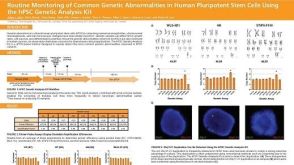 科学海报Routine Monitoring of Common Genetic Abnormalities in Human Pluripotent Stem Cells Using the hPSC Genetic Analysis Kit
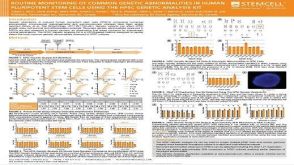 科学海报Routine Monitoring of Common Genetic Abnormalities in Human Pluripotent Stem Cells Using the hPSC Genetic Analysis Kit
 沪公网安备31010102008431号