Z. G. Chen et al. (jul 2019)
BMC infectious diseases 19 1 622
Upregulation of cell-surface mucin MUC15 in human nasal epithelial cells upon influenza A virus infection.
BACKGROUND Cell-surface mucins are expressed in apical epithelial cells of the respiratory tract,and contribute a crucial part of the innate immune system. Despite anti-inflammatory or antiviral functions being revealed for certain cell-surface mucins such as MUC1,the roles of other mucins are still poorly understood,especially in viral infections. METHODS To further identify mucins significant in influenza infection,we screened the expression of mucins in human nasal epithelial cells infected by H3N2 influenza A virus. RESULTS We found that the expression of MUC15 was significantly upregulated upon infection,and specific only to active infection. While MUC15 did not interact with virus particles or reduce viral replication directly,positive correlations were observed between MUC15 and inflammatory factors in response to viral infection. Given that the upregulation of MUC15 was only triggered late into infection when immune factors (including cytokines,chemokines,EGFR and phosphorylated ERK) started to peak and plateau,MUC15 may potentially serve an immunomodulatory function later during influenza viral infection. CONCLUSIONS Our study revealed that MUC15 was one of the few cell-surface mucins induced during influenza infection. While MUC15 did not interact directly with influenza virus,we showed that its increase coincides with the peak of immune activation and thus MUC15 may serve an immunomodulatory role during influenza infection.
View Publication
产品类型:
产品号#:
05001
05022
05021
产品名:
PneumaCult™-ALI 培养基
PneumaCult™-ALI 培养基含6.5 mm Transwell®插件
PneumaCult™-ALI 培养基含12 mm Transwell®插件
Caron G et al. (AUG 2005)
Journal of immunology (Baltimore,Md. : 1950) 175 3 1551--7
Direct stimulation of human T cells via TLR5 and TLR7/8: flagellin and R-848 up-regulate proliferation and IFN-gamma production by memory CD4+ T cells.
TLRs are involved in innate cell activation by conserved structures expressed by microorganisms. Human T cells express the mRNA encoding most of TLRs. Therefore,we tested whether some TLR ligands may modulate the function of highly purified human CD4+ T lymphocytes. We report that,in the absence of APCs,flagellin (a TLR5 ligand) and R-848 (a TLR7/8 ligand) synergized with suboptimal concentrations of TCR-dependent (anti-CD3 mAb) or -independent stimuli (anti-CD2 mAbs or IL-2) to up-regulate proliferation and IFN-gamma,IL-8,and IL-10 but not IL-4 production by human CD4+ T cells. No effect of poly(I:C) and LPS,ligands for TLR3 and TLR4,respectively,was detected. We also observed that CD4+CD45RO+ memory T cell responses to TLR ligands were more potent than those observed with CD4+CD45RA+ naive T cells. Moreover,among the memory T cells,CCR7- effector cells were more sensitive to TLR ligands than CCR7+ central memory cells. These data demonstrate for the first time a direct effect of TLR5 and TLR7/8 ligands on human T cells,and highlight an innate arm in T cell functions. They also suggest that some components from invading microorganisms may directly stimulate effector memory T cells located in tissues by up-regulating cytokine and chemokine production.
View Publication
产品类型:
产品号#:
73782
73784
产品名:
R848
R848
Croker AK et al. (AUG 2009)
Journal of cellular and molecular medicine 13 8B 2236--52
High aldehyde dehydrogenase and expression of cancer stem cell markers selects for breast cancer cells with enhanced malignant and metastatic ability.
Cancer stem cells (CSCs) have recently been identified in leukaemia and solid tumours; however,the role of CSCs in metastasis remains poorly understood. This dearth of knowledge about CSCs and metastasis is due largely to technical challenges associated with the use of primary human cancer cells in pre-clinical models of metastasis. Therefore,the objective of this study was to develop suitable pre-clinical model systems for studying stem-like cells in breast cancer metastasis,and to test the hypothesis that stem-like cells play a key role in metastatic behaviour. We assessed four different human breast cancer cell lines (MDA-MB-435,MDA-MB-231,MDA-MB-468,MCF-7) for expression of prospective CSC markers CD44/CD24 and CD133,and for functional activity of aldehyde dehydrogenase (ALDH),an enzyme involved in stem cell self-protection. We then used fluorescence-activated cell sorting and functional assays to characterize differences in malignant/metastatic behaviour in vitro (proliferation,colony-forming ability,adhesion,migration,invasion) and in vivo (tumorigenicity and metastasis). Sub-populations of cells demonstrating stem-cell-like characteristics (high expression of CSC markers and/or high ALDH) were identified in all cell lines except MCF-7. When isolated and compared to ALDH(low)CD44(low/-) cells,ALDH(hi)CD44(+)CD24(-) (MDA-MB-231) and ALDH(hi)CD44(+)CD133(+) (MDA-MB-468) cells demonstrated increased growth (P textless 0.05),colony formation (P textless 0.05),adhesion (P textless 0.001),migration (P textless 0.001) and invasion (P textless 0.001). Furthermore,following tail vein or mammary fat pad injection of NOD/SCID/IL2gamma receptor null mice,ALDH(hi)CD44(+)CD24(-) and ALDH(hi)CD44(+)CD133(+) cells showed enhanced tumorigenicity and metastasis relative to ALDH(low)CD44(low/-) cells (P textless 0.05). These novel results suggest that stem-like ALDH(hi)CD44(+)CD24(-) and ALDH(hi)CD44(+)CD133(+) cells may be important mediators of breast cancer metastasis.
View Publication
产品类型:
产品号#:
01700
01705
01702
产品名:
ALDEFLUOR™ 试剂盒
ALDEFLUOR™ DEAB试剂, 1.5 mM, 1 mL
ALDEFLUOR™检测缓冲液
Carvalho JL et al. (NOV 2012)
Journal of tissue science & engineering Suppl 11 002
Characterization of Decellularized Heart Matrices as Biomaterials for Regular and Whole Organ Tissue Engineering and Initial In-vitro Recellularization with Ips Cells.
Tissue engineering strategies,based on solid/porous scaffolds,suffer from several limitations,such as ineffective vascularization,poor cell distribution and organization within scaffold,in addition to low final cell density,among others. Therefore,the search for other tissue engineering approaches constitutes an active area of investigation. Decellularized matrices (DM) present major advantages compared to solid scaffolds,such as ideal chemical composition,the preservation of vascularization structure and perfect three-dimensional structure. In the present study,we aimed to characterize and investigate murine heart decellularized matrices as biomaterials for regular and whole organ tissue engineering. Heart decellularized matrices were characterized according to: 1. DNA content,through DNA quantificationo and PCR of isolated genomic DNA; 2. Histological structure,assessed after Hematoxylin and Eosin,as well as Masson's Trichrome stainings; 3. Surface nanostructure analysis,performed,using SEM. Those essays allowed us to conclude that DM was indeed decellularized,with preserved extracellular matrix structure. Following characterization,decellularized heart slices were seeded with induced Pluripotent Stem cells (iPS). As expected,but - to the best of our knowledge - never shown before,decellularization of murine heart matrices maintained matrix biocompatibility,as iPS cells rapidly attached to the surface of the material and proliferated. Strikingly though,heart DM presented a differentiation induction effect over those cells,which lost their pluripotency markers after 7 days of culture in the DM. Such loss of differentiation markers was observed,even though bFGF containing media mTSR was used during such period. Gene expression of iPS cells cultured on DM will be further analyzed,in order to assess the effects of culturing pluripotent stem cells in decellularized heart matrices.
View Publication
Differential expression of SHIP1 in CD56bright and CD56dim NK cells provides a molecular basis for distinct functional responses to monokine costimulation.
Monocyte cytokines (ie,monokines) induce natural killer (NK) cells to produce interferon-gamma (IFN-gamma),which is critical for monocyte clearance of infectious pathogens and tumor surveillance. Human CD56bright NK cells produce far more IFN-gamma in response to monokines than do CD56dim NK cells. The kinases and phosphatases involved in regulating IFN-gamma production by monokine-activated NK cells are not clearly identified. SHIP1 is a 5' inositol phosphatase that dephosphorylates the phosphatidylinositol-3 kinase (PI-3K) product PI3,4,5P3. Here,we show that constitutive expression of SHIP1 is distinctly lower in CD56bright NK cells compared with CD56dim NK cells,suggesting it could be an important negative regulator of IFN-gamma production in monokine-activated NK cells. Indeed,overexpression of SHIP1 in CD56bright NK cells followed by monokine activation substantially lowered IFN-gamma production. This effect was not seen when NK cells were infected with a SHIP1 mutant containing an inactive catalytic domain. Finally,NK cells in SHIP1-/- mice produced more IFN-gamma in response to monokines in vivo than did NK cells from wild-type mice. Collectively,these results demonstrate that SHIP1 negatively regulates monokine-induced NK cell IFN-gamma production in vitro and in vivo and provide the first molecular explanation for an important functional distinction observed between CD56bright and CD56dim human NK subsets.
View Publication
产品类型:
产品号#:
15025
15065
产品名:
RosetteSep™人NK细胞富集抗体混合物
RosetteSep™人NK细胞富集抗体混合物
Vanneaux V et al. (JAN 2010)
Cell transplantation 19 9 1143--55
In vitro and in vivo analysis of endothelial progenitor cells from cryopreserved umbilical cord blood: are we ready for clinical application?
Umbilical cord blood (CB) represents a main source of circulating endothelial progenitor cells (cEPCs). In view of their clinical use,in either the autologous or allogeneic setting,cEPCs should likely be expanded from CB kept frozen in CB banks. In this study,we compared the expansion,functional features,senescence pattern over culture,and in vivo angiogenic potential of cEPCs isolated from fresh or cryopreserved CB (cryoCB). cEPCs could be isolated in only 59% of cryoCB compared to 94% for fresh CB,while CB units were matched in terms of initial volume,nucleated and CD34(+) cell number. Moreover,the number of endothelial colony-forming cells was significantly decreased when using cryoCB. Once cEPCs culture was established,the proliferation,migration,tube formation,and acetylated-LDL uptake potentials were similar in both groups. In addition,cEPCs derived from cryoCB displayed the same senescence status and telomeres length as that of cEPCs derived from fresh CB. Karyotypic aberrations were found in cells obtained from both fresh and cryoCB. In vivo,in a hind limb ischemia murine model,cEPCs from fresh and cryoCB were equally efficient to induce neovascularization. Thus,cEPCs isolated from cryoCB exhibited similar properties to those of fresh CB in vitro and in vivo. However,the low frequency of cEPCs colony formation after cryopreservation shed light on the need for specific freezing conditions adapted to cEPCs in view of their future clinical use.
View Publication
产品类型:
产品号#:
15026
15066
产品名:
RosetteSep™人造血祖细胞富集抗体混合物
RosetteSep™人造血祖细胞富集抗体混合物
Zhang J et al. ( 2016)
International Journal of Biological Sciences 12 6 639--652
Dimethyloxaloylglycine promotes the angiogenic activity of mesenchymal stem cells derived from iPSCs via activation of the PI3K/Akt pathway for bone regeneration
The vascularization of tissue-engineered bone is a prerequisite step for the successful repair of bone defects. Hypoxia inducible factor-1$$ (HIF-1$$) plays an essential role in angiogenesis-osteogenesis coupling during bone regeneration and can activate the expression of angiogenic factors in mesenchymal stem cells (MSCs). Dimethyloxaloylglycine (DMOG) is an angiogenic small molecule that can inhibit prolyl hydroxylase (PHD) enzymes and thus regulate the stability of HIF-1$$ in cells at normal oxygen tension. Human induced pluripotent stem cell-derived MSCs (hiPSC-MSCs) are promising alternatives for stem cell therapy. In this study,we evaluated the effect of DMOG on promoting hiPSC-MSCs angiogenesis in tissue-engineered bone and simultaneously explored the underlying mechanisms in vitro. The effectiveness of DMOG in improving the expression of HIF-1$$ and its downstream angiogenic genes in hiPSC-MSCs demonstrated that DMOG significantly enhanced the gene and protein expression profiles of angiogenic-related factors in hiPSC-MSCs by sustaining the expression of HIF-1$$. Further analysis showed that DMOG-stimulated hiPSC-MSCs angiogenesis was associated with the phosphorylation of protein kinase B (Akt) and with an increase in VEGF production. The effects could be blocked by the addition of the phosphatidylinositol 3-kinase (PI3K) inhibitor LY294002. In a critical-sized calvarial defect model in rats,DMOG-treated hiPSC-MSCs showed markedly improved angiogenic capacity in the tissue-engineered bone,leading to bone regeneration. Collectively,the results indicate that DMOG,via activation of the PI3K/Akt pathway,promotes the angiogenesis of hiPSC-MSCs in tissue-engineered bone for bone defect repair and that DMOG-treated hiPSC-MSCs can be exploited as a potential therapeutic tool in bone regeneration.
View Publication
产品类型:
产品号#:
05850
05857
05870
05875
85850
85857
85870
85875
产品名:
mTeSR™1
mTeSR™1
Jeyanathan M et al. ( 2017)
Journal of immunology (Baltimore,Md. : 1950) 199 7 2555--2569
CXCR3 Signaling Is Required for Restricted Homing of Parenteral Tuberculosis Vaccine-Induced T Cells to Both the Lung Parenchyma and Airway.
Although most novel tuberculosis (TB) vaccines are designed for delivery via the muscle or skin for enhanced protection in the lung,it has remained poorly understood whether systemic vaccine-induced memory T cells can readily home to the lung mucosa prior to and shortly after pathogen exposure. We have investigated this issue by using a model of parenteral TB immunization and intravascular immunostaining. We find that systemically induced memory T cells are restricted to the blood vessels in the lung,unable to populate either the lung parenchymal tissue or the airway under homeostatic conditions. We further find that after pulmonary TB infection,it still takes many days before such T cells can enter the lung parenchymal tissue and airway. We have identified the acquisition of CXCR3 expression by circulating T cells to be critical for their entry to these lung mucosal compartments. Our findings offer new insights into mucosal T cell biology and have important implications in vaccine strategies against pulmonary TB and other intracellular infections in the lung.
View Publication
产品类型:
产品号#:
19853
19853RF
产品名:
EasySep™小鼠CD8+ T细胞分选试剂盒
RoboSep™ 小鼠CD8+ T细胞分选试剂盒
Kumar A et al. (JAN 2012)
Breast cancer research : BCR 14 1 R4
Evidence that GTP-binding domain but not catalytic domain of transglutaminase 2 is essential for epithelial-to-mesenchymal transition in mammary epithelial cells.
INTRODUCTION: The expression of proinflammatory protein tissue transglutaminase 2 (TG2) is frequently upregulated in multiple cancer cell types. However,the exact role of TG2 in cancer cells is not well-understood. We recently initiated studies to determine the significance of TG2 in cancer cells and observed that sustained expression of TG2 resulted in epithelial-to-mesenchymal transition (EMT) and promoted cancer stem cell (CSC) traits in mammary epithelial cells. These results suggested that TG2 could serve as a promising therapeutic target for overcoming chemoresistance and inhibiting metastatic spread of cancer cells. METHODS: Using various mutant constructs,we analyzed the activity of TG2 that is essential for promoting the EMT-CSC phenotype. RESULTS: Our results suggest that catalytically inactive TG2 (TG2-C277S) is as effective as wild-type TG2 (TG2-WT) in inducing the EMT-CSC in mammary epithelial cells. In contrast,overexpression of a GTP-binding-deficient mutant (TG2-R580A) was completely incompetent in this regard. Moreover,TG2-dependent activation of the proinflammatory transcription factor NF-κB is deemed essential for promoting the EMT-CSC phenotype in mammary epithelial cells. CONCLUSIONS: Our results suggest that the transamidation activity of TG2 is not essential for promoting its oncogenic functions and provide a strong rationale for developing small-molecule inhibitors to block GTP-binding pockets of TG2. Such inhibitors may have great potential for inhibiting the TG2-regulated pathways,reversing drug resistance and inhibiting the metastasis of cancer cells.
View Publication
产品类型:
产品号#:
05620
产品名:
MammoCult™ 人源培养基套装
Francis KR et al. (APR 2016)
Nature medicine 22 4 388--396
Modeling Smith-Lemli-Opitz syndrome with induced pluripotent stem cells reveals a causal role for Wnt/$$-catenin defects in neuronal cholesterol synthesis phenotypes.
Smith-Lemli-Opitz syndrome (SLOS) is a malformation disorder caused by mutations in DHCR7,which impair the reduction of 7-dehydrocholesterol (7DHC) to cholesterol. SLOS results in cognitive impairment,behavioral abnormalities and nervous system defects,though neither affected cell types nor impaired signaling pathways are fully understood. Whether 7DHC accumulation or cholesterol loss is primarily responsible for disease pathogenesis is also unclear. Using induced pluripotent stem cells (iPSCs) from subjects with SLOS,we identified cellular defects that lead to precocious neuronal specification within SLOS derived neural progenitors. We also demonstrated that 7DHC accumulation,not cholesterol deficiency,is critical for SLOS-associated defects. We further identified downregulation of Wnt/$$-catenin signaling as a key initiator of aberrant SLOS iPSC differentiation through the direct inhibitory effects of 7DHC on the formation of an active Wnt receptor complex. Activation of canonical Wnt signaling prevented the neural phenotypes observed in SLOS iPSCs,suggesting that Wnt signaling may be a promising therapeutic target for SLOS.
View Publication
产品类型:
产品号#:
05850
05857
05870
05875
07923
85850
85857
85870
85875
27845
27945
27840
27865
27940
27965
产品名:
Dispase (1 U/mL)
mTeSR™1
mTeSR™1
Wu X et al. (DEC 2008)
Blood 112 12 4675--82
Alternative splicing regulates activation-induced cytidine deaminase (AID): implications for suppression of AID mutagenic activity in normal and malignant B cells.
The mutagenic enzyme activation-induced cytidine deaminase (AID) is required for immunoglobulin class switch recombination (CSR) and somatic hypermutation (SHM) in germinal center (GC) B cells. Deregulated expression of AID is associated with various B-cell malignancies and,currently,it remains unclear how AID activity is extinguished to avoid illegitimate mutations. AID has also been shown to be alternatively spliced in malignant B cells,and there is limited evidence that this also occurs in normal blood B cells. The functional significance of these splice variants remains unknown. Here we show that normal GC human B cells and blood memory B cells similarly express AID splice variants and show for the first time that AID splicing variants are singly expressed in individual normal B cells as well as malignant B cells from chronic lymphocytic leukemia patients. We further demonstrate that the alternative AID splice variants display different activities ranging from inactivation of CSR to inactivation or heightened SHM activity. Our data therefore suggest that CSR and SHM are differentially switched off by varying the expression of splicing products of AID at the individual cell level. Most importantly,our findings suggest a novel tumor suppression mechanism by which unnecessary AID mutagenic activities are promptly contained for GC B cells.
View Publication


 EasySep™小鼠TIL(CD45)正选试剂盒





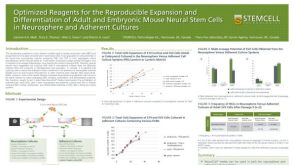 科学海报Optimized Reagents for the Reproducible Expansion and Differentiation of Adult and Embryonic Mouse Neural Stem Cells in Neurosphere and Adherent Cultures
 沪公网安备31010102008431号