Rutella S et al. (SEP 2003)
Journal of immunology (Baltimore,Md. : 1950) 171 6 2977--88
Identification of a novel subpopulation of human cord blood CD34-CD133-CD7-CD45+lineage- cells capable of lymphoid/NK cell differentiation after in vitro exposure to IL-15.
The hemopoietic stem cell (HSC) compartment encompasses cell subsets with heterogeneous proliferative and developmental potential. Numerous CD34(-) cell subsets that might reside at an earlier stage of differentiation than CD34(+) HSCs have been described and characterized within human umbilical cord blood (UCB). We identified a novel subpopulation of CD34(-)CD133(-)CD7(-)CD45(dim)lineage (lin)(-) HSCs contained within human UCB that were endowed with low but measurable extended long-term culture-initiating cell activity. Exposure of CD34(-)CD133(-)CD7(-)CD45(dim)lin(-) HSCs to stem cell factor preserved cell viability and was associated with the following: 1) concordant expression of the stem cell-associated Ags CD34 and CD133,2) generation of CFU-granulocyte-macrophage,burst-forming unit erythroid,and megakaryocytic aggregates,3) significant extended long-term culture-initiating cell activity,and 4) up-regulation of mRNA signals for myeloperoxidase. At variance with CD34(+)lin(-) cells,CD34(-)CD133(-)CD7(-)CD45(dim)lin(-) HSCs maintained with IL-15,but not with IL-2 or IL-7,proliferated vigorously and differentiated into a homogeneous population of CD7(+)CD45(bright)CD25(+)CD44(+) lymphoid progenitors with high expression of the T cell-associated transcription factor GATA-3. Although they harbored nonclonally rearranged TCRgamma genes,IL-15-primed CD34(-)CD133(-)CD7(-)CD45(dim)lin(-) HSCs failed to achieve full maturation,as manifested in their CD3(-)TCRalphabeta(-)gammadelta(-) phenotype. Conversely,culture on stromal cells supplemented with IL-15 was associated with the acquisition of phenotypic and functional features of NK cells. Collectively,CD34(-)CD133(-)CD7(-)CD45(dim)lin(-) HSCs from human UCB displayed an exquisite sensitivity to IL-15 and differentiated into lymphoid/NK cells. Whether the transplantation of CD34(-)lin(-) HSCs possessing T/NK cell differentiation potential may impact on immunological reconstitution and control of minimal residual disease after HSC transplantation for autoimmune or malignant diseases remains to be determined.
View Publication
产品类型:
产品号#:
09500
产品名:
BIT 9500血清替代物
Mahtouk K et al. (MAR 2004)
Blood 103 5 1829--37
An inhibitor of the EGF receptor family blocks myeloma cell growth factor activity of HB-EGF and potentiates dexamethasone or anti-IL-6 antibody-induced apoptosis.
We previously found that some myeloma cell lines express the heparin-binding epidermal growth factor-like growth factor (HB-EGF) gene. As the proteoglycan syndecan-1 is an HB-EGF coreceptor as well as a hallmark of plasma cell differentiation and a marker of myeloma cells,we studied the role of HB-EGF on myeloma cell growth. The HB-EGF gene was expressed by bone marrow mononuclear cells in 8 of 8 patients with myeloma,particularly by monocytes and stromal cells,but not by purified primary myeloma cells. Six of 9 myeloma cell lines and 9 of 9 purified primary myeloma cells expressed ErbB1 or ErbB4 genes coding for HB-EGF receptor. In the presence of a low interleukin-6 (IL-6) concentration,HB-EGF stimulated the proliferation of the 6 ErbB1+ or ErbB4+ cell lines,through the phosphatidylinositol 3-kinase/AKT (PI-3K/AKT) pathway. A pan-ErbB inhibitor blocked the myeloma cell growth factor activity and the signaling induced by HB-EGF. This inhibitor induced apoptosis of patients'myeloma cells cultured with their tumor environment. It also increased patients' myeloma cell apoptosis induced by an anti-IL-6 antibody or dexamethasone. The ErbB inhibitor had no effect on the interaction between multiple myeloma cells and stromal cells. It was not toxic for nonmyeloma cells present in patients' bone marrow cultures or for the growth of hematopoietic progenitors. Altogether,these data identify ErbB receptors as putative therapeutic targets in multiple myeloma.
View Publication
产品类型:
产品号#:
04434
04444
产品名:
MethoCult™ H4434 Classic
MethoCult™ H4434 Classic
Yang S-R et al. (FEB 2006)
Stem cells 24 2 292--8
NPC1 gene deficiency leads to lack of neural stem cell self-renewal and abnormal differentiation through activation of p38 mitogen-activated protein kinase signaling.
Neural stem cells (NSCs) are capable of giving rise to neurons,glia,and astrocytes. Although self-renewal and differentiation in NSCs are regulated by many genes,such as Notch and Numb,little is known about the role of defective genes on the self-renewal and differentiation of NSCs from developing brain. The Niemann-Pick type C1 (NPC1) disease is a neurodegenerative disease caused by a mutation of the NPC1 gene that affects the function of the NPC1 protein. The ability of NSC self-renewal and differentiation was investigated using a model of NPC1 disease. The NPC1 disorder significantly affected the self-renewal ability of NSCs,as well as the differentiation. NSCs from NPC1-/- mice showed impaired self-renewal ability compared with the NPC1+/+ mice. These alterations were accompanied by the enhanced activity of p38 mitogen-activated protein kinases (MAPKs). Further,the specific p38 MAPK inhibitor SB202190 improved the self-renewal ability of NSCs from NPC-/- mice. This indicated that the NPC1 deficiency can lead to lack of self-renewal and altered differentiation of NSCs mediated by the activation of p38 MAPK,impairing the generation of neurospheres from NPC1-/- Thus,the NPC1 gene may play a crucial role in NSC self-renewal associated with p38 MAPK.
View Publication
产品类型:
产品号#:
72632
72634
产品名:
SB202190
SB202190
Dumitriu B et al. (AUG 2006)
Blood 108 4 1198--207
Sox6 cell-autonomously stimulates erythroid cell survival, proliferation, and terminal maturation and is thereby an important enhancer of definitive erythropoiesis during mouse development.
Erythropoiesis,the essential process of hematopoietic stem cell development into erythrocytes,is controlled by lineage-specific transcription factors that determine cell fate and differentiation and by the hormone erythropoietin that stimulates cell survival and proliferation. Here we identify the Sry-related high-mobility-group (HMG) box transcription factor Sox6 as an important enhancer of definitive erythropoiesis. Sox6 is highly expressed in proerythroblasts and erythroblasts in the fetal liver,neonatal spleen,and bone marrow. Mouse fetuses and pups lacking Sox6 develop erythroid cells slowly and feature misshapen,short-lived erythrocytes. They compensate for anemia by elevating the serum level of erythropoietin and progressively enlarging their erythropoietic tissues. Erythroid-specific inactivation of Sox6 causes the same phenotype,demonstrating cell-autonomous roles for Sox6 in erythroid cells. Sox6 potentiates the ability of erythropoietin signaling to promote proerythroblast survival and has an effect additive to that of erythropoietin in stimulating proerythroblast and erythroblast proliferation. Sox6 also critically facilitates erythroblast and reticulocyte maturation,including hemoglobinization,cell condensation,and enucleation,and ensures erythrocyte cytoskeleton long-term stability. It does not control adult globin and erythrocyte cytoskeleton genes but acts by stabilizing filamentous actin (F-actin) levels. Sox6 thus enhances erythroid cell development at multiple levels and thereby ensures adequate production and quality of red blood cells.
View Publication
产品类型:
产品号#:
03334
产品名:
MethoCult™ M3334
Seebach C et al. (JUL 2010)
Injury 41 7 731--8
Comparison of six bone-graft substitutes regarding to cell seeding efficiency, metabolism and growth behaviour of human mesenchymal stem cells (MSC) in vitro.
INTRODUCTION: Various synthetic bone-graft substitutes are used commercially as osteoconductive scaffolds in the treatment of bone defects and fractures. The role of bone-graft substitutes is changing from osteoconductive conduits for growth to an delivery system for biologic fracture treatments. Achieving optimal bone regeneration requires biologics (e.g. MSC) and using the correct scaffold incorporated into a local environment for bone regeneration. The need for an unlimited supply with high quality bone-graft substitutes continue to find alternatives for bone replacement surgery. MATERIALS AND METHODS: This in vitro study investigates cell seeding efficiency,metabolism,gene expression and growth behaviour of MSC sown on six commercially clinical available bone-graft substitutes in order to define their biological properties: synthetic silicate-substituted porous hydroxyapatite (Actifuse ABX),synthetic alpha-TCP (Biobase),synthetic beta-TCP (Vitoss),synthetic beta-TCP (Chronos),processed human cancellous allograft (Tutoplast) and processed bovines hydroxyapatite ceramic (Cerabone). 250,000 MSC derived from human bone marrow (n=4) were seeded onto the scaffolds,respectively. On days 2,6 and 10 the adherence of MSC (fluorescence microscopy) and cellular activity (MTT assay) were analysed. Osteogenic gene expression (cbfa-1) was analysed by RT-PCR and scanning electron microscopy was performed. RESULTS: The highest number of adhering cells was found on Tutoplast (e.g. day 6: 110.0+/-24.0 cells/microscopic field; ptextless0.05) followed by Chronos (47.5+/-19.5,ptextless0.05),Actifuse ABX (19.1+/-4.4),Biobase (15.7+/-9.9),Vitoss (8.8+/-8.7) and Cerabone (8.1+/-2.2). MSC seeded onto Tutoplast showed highest metabolic activity and gene expression of cbfa-1. These data are confirmed by scanning electron microscopy. The cell shapes varied from round-shaped cells to wide spread cells and cell clusters,depending on the bone-graft substitutes. Processed human cancellous allograft is a well-structured and biocompatible scaffold for ingrowing MSC in vitro. Of all other synthetical scaffolds,beta-tricalcium phosphate (Chronos) have shown the best growth behaviour for MSC. DISCUSSION: Our results indicate that various bone-graft substitutes influence cell seeding efficiency,metabolic activity and growth behaviour of MSC in different manners. We detected a high variety of cellular integration of MSC in vitro,which may be important for bony integration in the clinical setting.
View Publication
Hunihan L et al. (APR 2017)
Stem cell research 20 67--69
Generation of a clonal induced pluripotent stem cell (iPSC) line expressing the mutant MECP2 allele from a Rett Syndrome patient fibroblast line.
Human fibroblast cells collected from a 3-year old,female Rett Syndrome patient with a 32bp deletion in the X-linked MECP2 gene were obtained from the Coriell Institute. Fibroblasts were reprogrammed to iPSC cells using a Sendai-virus delivery system expressing human KOSM transcription factors. Cell-line pluripotency was demonstrated by gene expression,immunocytochemistry,in-vitro differentiation trilineage capacity and was of normal karyotype. Interestingly,subsequent clones retained the epigenetic memory of the parent fibroblasts allowing for the segregation of wild-type and mutant expressing clones. This MECP2 mutant expressing clone may serve as a model for investigating MECP2 reactivation in Rett's Syndrome.
View Publication
产品类型:
产品号#:
05850
05857
05870
05875
85850
85857
85870
85875
产品名:
mTeSR™1
mTeSR™1
Lemieux ME et al. (AUG 1995)
Blood 86 4 1339--47
Characterization and purification of a primitive hematopoietic cell type in adult mouse marrow capable of lymphomyeloid differentiation in long-term marrow switch" cultures."
In this report,we describe a modification of the assay for long-term culture-initiating cells (LTC-IC) that allows a subset of murine LTC-IC (designated as LTC-ICML) to express both their myeloid (M) and lymphoid (L) differentiative potentials in vitro. The modified assay involves culturing test cells at limiting dilutions on irradiated mouse marrow feeder layers for an initial 4 weeks under conditions that support myelopoiesis and then for an additional week under conditions permissive for B-lymphopoiesis. All of the clonogenic pre-B progenitors (colony-forming unit [CFU] pre-B) detected in such postswitch LTC appear to be the progeny of uncommitted cells present in the original cell suspension because exposure of lymphoid-restricted progenitors to myeloid LTC conditions for textgreater or = 7 days was found to irreversibly terminate CFU-pre-B production and,in cultures initiated with limiting numbers of input cells (no progenitors of any type detected in textgreater 70% of cultures 1 week after the switch),the presence of CFU-pre-B was tightly associated with the presence of myeloid clonogenic cells,regardless of the purity of the input population. Limiting dilution analysis of the proportion of negative cultures measured for different numbers of input cells showed the frequency of LTC-ICML in normal adult mouse marrow to be 1 per 5 x 10(5) cells with an enrichment of approximately 500-fold in the Sca-1+ Lin-WGA+ fraction,as was also found for competitive in vivo repopulating units (CRU) and conventionally defined LTC-IC. LTC-ICML also exhibited the same resistance to treatment in vivo with 5-fluorouracil (5-FU) as CRU and LTC-IC,thereby distinguishing these three populations from the great majority of both in vitro clonogenic cells and day 12 CFU-S. The ability to quantitate cells with dual lymphoid and myeloid differentiation potentials in vitro,without the need for their prior purification,should facilitate studies of totipotent hematopoietic stem cell regulation.
View Publication
产品类型:
产品号#:
03534
03630
03134
03231
03234
03334
03434
03444
05350
03236
产品名:
MethoCult™ GF M3534
MethoCult™ M3630
MethoCult™ M3134
MethoCult™ M3231
MethoCult™ M3234
MethoCult™ M3334
MethoCult™ GF M3434
MethoCult™ GF M3434
MethoCult™ SF M3236
Alqahtani H et al. (FEB 2016)
Cellular signalling 28 2 42--50
DDX17 (P72), a Sox2 binding partner, promotes stem-like features conferred by Sox2 in a small cell population in estrogen receptor-positive breast cancer.
We have previously demonstrated the existence of two phenotypically distinct cell subsets in estrogen receptor (ER)-positive breast cancer (BC) based on their differential response to a Sox2 reporter (SRR2),with reporter responsive (RR) cells being more tumorigenic and stem-like than reporter unresponsive (RU) cells. To delineate the molecular mechanisms underlying this phenotypic dichotomy,we tested our hypothesis that Sox2,which is a key regulator of the RR phenotype,is under the control of its binding partners. In this study,we focused on DDX17,known to be a transcription co-activator and found to be a Sox2 binding partner by liquid chromatography-mass spectrometry. Using immunoprecipitation,we confirmed the binding between DDX17 and Sox2,although this interaction was largely restricted to RR cells. While DDX17 was found in both the cytoplasm and nuclei in RU cells,it is confined to the nuclei in RR cells. siRNA knockdown of DDX17 in RR cells substantially decreased the Sox2-SRR2 binding and significantly decreased the SRR2 reporter activity without affecting the protein level of Sox2. Using ChIP-PCR,DDX17 knockdown also significantly decreased the binding of Sox2 to genomic SRR2,as well as 3 of its specific gene targets including MUC15,CCND1 and CD133. Correlating with these findings,siRNA knockdown of DDX17 significantly reduced soft agar colony formation and mammosphere formation in RR cells but not RU cells. To conclude,DDX17 is a Sox2-binding protein in ER-positive BC. In RR but not RU cells,DDX17 enhances the tumorigenic and stem-like features of Sox2 by promoting its binding to its target genes.
View Publication
产品类型:
产品号#:
05620
产品名:
MammoCult™ 人源培养基套装
Bartscht T et al. ( 2012)
Cancer chemotherapy and pharmacology 70 2 221--230
The Src family kinase inhibitors PP2 and PP1 effectively block TGF-beta1-induced cell migration and invasion in both established and primary carcinoma cells.
PURPOSE: We have previously demonstrated that in pancreatic ductal adenocarcinoma (PDAC)-derived cell lines,the common Src family kinase inhibitors PP2 and PP1 effectively inhibited morphologic alterations associated with TGFβ1-mediated epithelial-to-mesenchymal transition (EMT) by blocking the kinase activity of the TGF-β type I receptor ALK5 rather than Src (Ungefroren et al. in Curr Cancer Drug Targets 11:524,2011). In this report,the ability of PP2 and PP1,the more specific Src inhibitor SU6656,and the ALK5 inhibitor SB431542 to functionally block TGF-β1-dependent EMT and cell motility in established PDAC (Panc-1,Colo 357) and primary NSCLC (Tu459) cell lines were investigated. METHODS: The effects of PP2,PP1,SU6656,and SB431542 on TGF-β1-dependent cell scattering/EMT,cell migration/invasion,and expression of invasion-associated genes were measured by using the real-time cell analysis assay on the xCELLigence system and quantitative real-time RT-PCR,respectively. RESULTS: In all three cell lines tested,PP1,PP2,and SB431542 effectively blocked TGF-β1-induced cell scattering/EMT,migration,and invasion and in Colo 357 cells inhibited the induction of the invasion-associated MMP2 and MMP9 genes. In contrast,SU6656 only blocked TGF-β1-induced invasion in Panc-1 and Tu459 but not Colo 357 cells. PP1,and to a greater extent PP2,also inhibited the high spontaneous migratory activity of Panc-1 cells expressing a kinase-active ALK5 mutant. CONCLUSIONS: These data provide evidence that PP2 and PP1 are powerful inhibitors of TGF-β-induced cell migration and invasion in vitro and directly target ALK5. Both agents may be useful as dual TGF-β/Src inhibitors in experimental therapeutics to prevent metastatic spread in late-stage PDAC and NSCLC.
View Publication
产品类型:
产品号#:
73112
73114
产品名:
PP1
PP1
H. Wen et al. (jul 2020)
Stem cells and development
Human Umbilical Cord Mesenchymal Stem Cells Attenuate Abdominal Aortic Aneurysm Progression in Sprague-Dawley Rats: Implication of Vascular Smooth Muscle Cell Phenotypic Modulation.
Abdominal aortic aneurysm (AAA) is life-threatening,for which efficient nonsurgical treatment strategy has not been available so far. Several previous studies investigating the therapeutic effect of mesenchymal stem cells (MSCs) in AAA indicated that MSCs could inhibit aneurysmal inflammatory responses and extracellular matrix destruction,and suppress aneurysm occurrence and expansion. Vascular smooth muscle cell (VSMC) phenotypic plasticity is reported to be predisposed in AAA initiation and progression. However,little is known about the effect of MSCs on VSMC phenotypic modulation in AAA. In this study,we investigate the therapeutic efficacy of umbilical cord mesenchymal stem cells (UC-MSCs) in elastase-induced AAA model and evaluate the effect of UC-MSC on VSMC phenotypic regulation. We demonstrate that the intravenous injection of UC-MSC attenuates elastase-induced aneurysmal expansion,reduces elastin degradation and fragmentation,inhibits MMPs and TNF-$\alpha$ expression,and preserves and/or restores VSMC contractile phenotype in AAA. Taken together,these results highlight the therapeutic and VSMC phenotypic modulation effects of UC-MSC in AAA progression,which further indicates the potential of applying UC-MSC as an alternative treatment candidate for AAA.
View Publication


 EasySep™小鼠TIL(CD45)正选试剂盒




 重组人 IL-2 (CHO表达) 白介素2
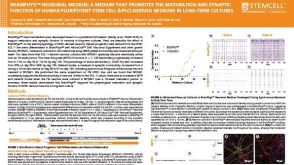 科学海报BrainPhys™ Neuronal Medium: A Medium That Promotes the Maturation and Synaptic Function of Human Pluripotent Stem Cell (hPSC)-Derived Neurons in Long-Term Cultures
 沪公网安备31010102008431号