Complete loss of PAX4 causes transient neonatal diabetes in humans
ObjectiveGene discovery studies in individuals with diabetes diagnosed within 6 months of life (neonatal diabetes,NDM) can provide unique insights into the development and function of human pancreatic beta-cells.MethodsWe performed genome sequencing in a cohort of 43 consanguineous individuals with NDM in whom all the known genetic causes had previously been excluded. We used quantitative PCR and RNA-sequencing in CRISPR-edited human induced pluripotent stem cells (iPSCs),and CUT&RUN-sequencing in EndoC-?H1 cells to investigate the effect of PAX4 loss on human pancreatic development.ResultsWe describe the identification of homozygous PAX4 loss-of-function variants in 2 individuals with transient NDM: a p.(Arg126?) stop-gain variant and a c.-352_104del deletion affecting the first 4 PAX4 exons. We confirmed the p.(Arg126?) variant causes nonsense mediated decay in CRISPR-edited iPSC-derived pancreatic endoderm cells. Integrated analysis of CUT&RUN-sequencing in EndoC-?H1 cells and RNA-sequencing in PAX4-depleted islet stem cell models identified genes directly regulated by PAX4 involved in both pancreatic islet development and glucose-stimulated insulin secretion.ConclusionWe report the first human cases of complete loss of PAX4,establishing it as a novel cause of NDM and highlighting its role in human beta cell development. Both probands had transient NDM which remitted in early infancy but relapsed at the ages of 2.4 and 6.7 years,demonstrating that in contrast to mouse models,PAX4 is not essential for the development of human pancreatic beta-cells. Highlights•Homozygous loss-of-function variants in PAX4 are a novel genetic cause of transient neonatal diabetes.•PAX4 directly regulates genes involved in pancreatic beta cell development and glucose-sensitive insulin secretion.•The role of PAX4 in humans differs to that observed in mouse and is not essential for beta cell development.
View Publication
产品类型:
产品号#:
85850
85857
产品名:
mTeSR™1
mTeSR™1
Amita M et al. (MAR 2013)
Proceedings of the National Academy of Sciences of the United States of America 110 13 E1212--E1221
Complete and unidirectional conversion of human embryonic stem cells to trophoblast by BMP4
Human ES cells (hESC) exposed to bone morphogenic protein 4 (BMP4) in the absence of FGF2 have become widely used for studying trophoblast development,but the soundness of this model has been challenged by others,who concluded that differentiation was primarily toward mesoderm rather than trophoblast. Here we confirm that hESC grown under the standard conditions on a medium conditioned by mouse embryonic fibroblasts in the presence of BMP4 and absence of FGF2 on a Matrigel substratum rapidly convert to an epithelium that is largely KRT7+ within 48 h,with minimal expression of mesoderm markers,including T (Brachyury). Instead,they begin to express a series of trophoblast markers,including HLA-G,demonstrate invasive properties that are independent of the continued presence of BMP4 in the medium,and,over time,produce extensive amounts of human chorionic gonadotropin,progesterone,placental growth factor,and placental lactogen. This process of differentiation is not dependent on conditioning of the medium by mouse embryonic fibroblasts and is accelerated in the presence of inhibitors of Activin and FGF2 signaling,which at day 2 provide colonies that are entirely KRT7+ and in which the majority of cells are transiently CDX2+. Colonies grown on two chemically defined media,including the one in which BMP4 was reported to drive mesoderm formation,also differentiate at least partially to trophoblast in response to BMP4. The experiments demonstrate that the in vitro BMP4/hESC model is valid for studying the emergence and differentiation of trophoblasts.
View Publication
产品类型:
产品号#:
05850
05857
05870
05875
07923
85850
85857
85870
85875
产品名:
Dispase (1 U/mL)
mTeSR™1
mTeSR™1
T. Xing et al. (Dec 2024)
Nature Communications 15
Bone Marrow Endothelial Progenitor Cells remodelling facilitates normal hematopoiesis during Acute Myeloid Leukemia Complete Remission
Although acute myeloid leukemia (AML) affects hematopoietic stem cell (HSC)-supportive microenvironment,it is largely unknown whether leukemia-modified bone marrow (BM) microenvironment can be remodeled to support normal hematopoiesis after complete remission (CR). As a key element of BM microenvironment,endothelial progenitor cells (EPCs) provide a feasible way to investigate BM microenvironment remodeling. Here,we find reduced and dysfunctional BM EPCs in AML patients,characterized by impaired angiogenesis and high ROS levels,could be partially remodeled after CR and improved by N-acetyl-L-cysteine (NAC). Importantly,HSC-supporting ability of BM EPCs is partially recovered,whereas leukemia-supporting ability is decreased in CR patients. Mechanistically,the transcriptome characteristics of leukemia-modified BM EPCs return to near-normal after CR. In a classic AML mouse and chemotherapy model,BM vasculature and normal hematopoiesis are reversed after CR. In summary,we provide further insights into how leukemia-modified BM microenvironment can be remodeled to support normal hematopoiesis after CR,which can be further improved by NAC. Subject terms: Translational research,Acute myeloid leukaemia
View Publication
K. Niss et al. (jun 2020)
Cell reports 31 11 107763
Complete Topological Mapping of a Cellular Protein Interactome Reveals Bow-Tie Motifs as Ubiquitous Connectors of Protein Complexes.
The network topology of a protein interactome is shaped by the function of each protein,making it a resource of functional knowledge in tissues and in single cells. Today,this resource is underused,as complete network topology characterization has proved difficult for large protein interactomes. We apply a matrix visualization and decoding approach to a physical protein interactome of a dendritic cell,thereby characterizing its topology with no prior assumptions of structure. We discover 294 proteins,each forming topological motifs called bow-ties" that tie together the majority of observed protein complexes. The central proteins of these bow-ties have unique network properties display multifunctional capabilities are enriched for essential proteins and are widely expressed in other cells and tissues. Collectively the bow-tie motifs are a pervasive and previously unnoted topological trend in cellular interactomes. As such these results provide fundamental knowledge on how intracellular protein connectivity is organized and operates."
View Publication
产品类型:
产品号#:
19860
19860RF
产品名:
EasySep™小鼠Streptavidin RapidSpheres™分选试剂盒
RoboSep™ 小鼠Streptavidin RapidSpheres™分选试剂盒
A. Mansurov et al. ( 2020)
Nature biomedical engineering 4 5 531--543
Collagen-binding IL-12 enhances tumour inflammation and drives the complete remission of established immunologically cold mouse tumours.
Checkpoint-inhibitor (CPI) immunotherapy has achieved remarkable clinical success,yet its efficacy in 'immunologically cold' tumours has been modest. Interleukin-12 (IL-12) is a powerful cytokine that activates the innate and adaptive arms of the immune system; however,the administration of IL-12 has been associated with immune-related adverse events. Here we show that,after intravenous administration of a collagen-binding domain fused to IL-12 (CBD-IL-12) in mice bearing aggressive mouse tumours,CBD-IL-12 accumulates in the tumour stroma due to exposed collagen in the disordered tumour vasculature. In comparison with the administration of unmodified IL-12,CBD-IL-12 induced sustained intratumoural levels of interferon-$\gamma$,substantially reduced its systemic levels as well as organ damage and provided superior anticancer efficacy,eliciting complete regression of CPI-unresponsive breast tumours. Furthermore,CBD-IL-12 potently synergized with CPI to eradicate large established melanomas,induced antigen-specific immunological memory and controlled tumour growth in a genetically engineered mouse model of melanoma. CBD-IL-12 may potentiate CPI immunotherapy for immunologically cold tumours.
View Publication


 EasySep™小鼠TIL(CD45)正选试剂盒




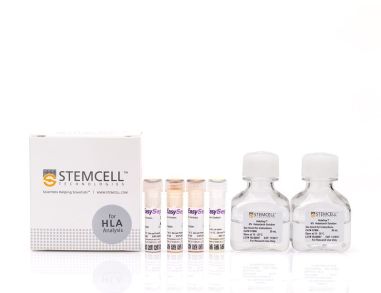 EasySep™ HLA总淋巴细胞富集: 用于处理全血的完整试剂盒
 EasySep™ HLA B细胞富集: 用于处理全血的全套试剂盒 从经HetaSep™处理的全血中通过免疫磁珠负选分选不带标记的人B细胞
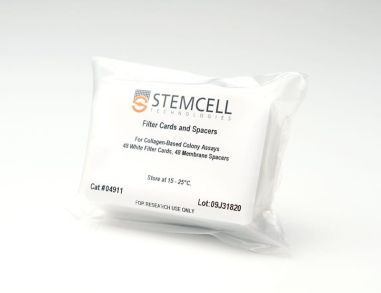 滤卡和垫片 用于胶原基培养物的培养、固定和染色
 双室载玻片套件 用于胶原基培养物的培养、固定和染色
 胶原蛋白溶液 用于制备胶原蛋白凝胶和涂覆细胞培养表面用于制备胶原蛋白凝胶和涂覆细胞培养表面
 技术手册ClonaCell™-HY: A Complete Workflow for Hybridoma Generation
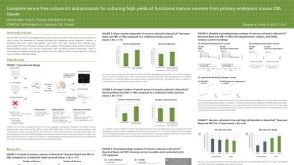 科学海报Complete Serum-Free Culture Kit and Protocols for Culturing High Yields of Functional Mature Neurons from Primary Embryonic Mouse CNS Tissues
 沪公网安备31010102008431号