Surmacz B et al. (SEP 2012)
Stem Cells 30 9 1875--84
Directing differentiation of human embryonic stem cells toward anterior neural ectoderm using small molecules
Based on knowledge of early embryo development,where anterior neural ectoderm (ANE) development is regulated by native inhibitors of bone morphogenic protein (BMP) and Nodal/Activin signaling,most published protocols of human embryonic stem cell differentiation to ANE have demonstrated a crucial role for Smad signaling in neural induction. The drawbacks of such protocols include the use of an embryoid body culture step and use of polypeptide secreted factors that are both expensive and,when considering clinical applications,have significant challenges in terms of good manufacturing practices compliancy. The use of small molecules to direct differentiation of pluripotent stem cells toward a specified lineage represents a powerful approach to generate specific cell types for further understanding of biological function,for understanding disease processes,for use in drug discovery,and finally for use in regenerative medicine. We therefore aimed to find controlled and reproducible animal-component-free differentiation conditions that would use only small molecules. Here,we demonstrate that pluripotent stem cells can be reproducibly and efficiently differentiated to PAX6(+) (a marker of neuroectoderm) and OCT4(-) (a marker of pluripotent stem cells) cells with the use of potent small inhibitors of the BMP and Activin/Nodal pathways,and in animal-component-free conditions,replacing the frequently used Noggin and SB431542. We also show by transcript analysis,both at the population level and for the first time at the single-cell level,that differentiated cells express genes characteristic for the development of ANE,in particular for the development of the future forebrain.
View Publication
产品类型:
产品号#:
05860
05880
05850
05857
05870
05875
85850
85857
85870
85875
产品名:
mTeSR™1
mTeSR™1
Kempf H et al. (DEC 2016)
Nature communications 7 13602
Bulk cell density and Wnt/TGFbeta signalling regulate mesendodermal patterning of human pluripotent stem cells.
In vitro differentiation of human pluripotent stem cells (hPSCs) recapitulates early aspects of human embryogenesis,but the underlying processes are poorly understood and controlled. Here we show that modulating the bulk cell density (BCD: cell number per culture volume) deterministically alters anteroposterior patterning of primitive streak (PS)-like priming. The BCD in conjunction with the chemical WNT pathway activator CHIR99021 results in distinct paracrine microenvironments codifying hPSCs towards definitive endoderm,precardiac or presomitic mesoderm within the first 24 h of differentiation,respectively. Global gene expression and secretome analysis reveals that TGFß superfamily members,antagonist of Nodal signalling LEFTY1 and CER1,are paracrine determinants restricting PS progression. These data result in a tangible model disclosing how hPSC-released factors deflect CHIR99021-induced lineage commitment over time. By demonstrating a decisive,functional role of the BCD,we show its utility as a method to control lineage-specific differentiation. Furthermore,these findings have profound consequences for inter-experimental comparability,reproducibility,bioprocess optimization and scale-up.
View Publication
Treating activated regulatory T cells with pramipexole protects human dopaminergic neurons from 6?OHDA?induced degeneration
AbstractBackgroundParkinson's disease (PD) is a chronic neurodegenerative disorder characterized by the loss of dopaminergic neurons in the substantia nigra,which promotes a sustained inflammatory environment in the central nervous system. Regulatory T cells (Tregs) play an important role in the control of inflammation and might play a neuroprotective role. Indeed,a decrease in Treg number and function has been reported in PD. In this context,pramipexole,a dopaminergic receptor agonist used to treat PD symptoms,has been shown to increase peripheral levels of Treg cells and improve their suppressive function. The aim of this work was to determine the effect of pramipexole on immunoregulatory Treg cells and its possible neuroprotective effect on human dopaminergic neurons differentiated from human embryonic stem cells.MethodsTreg cells were sorted from white blood cells of healthy human donors. Assays were performed with CD3/CD28?activated and non?activated Treg cells treated with pramipexole at concentrations of 2 or 200 ng/mL. These regulatory cells were co?cultured with in vitro?differentiated human dopaminergic neurons in a cytotoxicity assay with 6?hydroxydopamine (6?OHDA). The role of interleukin?10 (IL?10) was investigated by co?culturing activated IL?10?producing Treg cells with neurons. To further investigate the effect of treatment on Tregs,gene expression in pramipexole?treated,CD3/CD28?activated Treg cells was determined by Fluidigm analysis.ResultsPramipexole?treated CD3/CD28?activated Treg cells showed significant protective effects on dopaminergic neurons when challenged with 6?OHDA. Pramipexole?treated activated Treg cells showed neuroprotective capacity through mechanisms involving IL?10 release and the activation of genes associated with regulation and neuroprotection.ConclusionAnti?CD3/CD28?activated Treg cells protect dopaminergic neurons against 6?OHDA?induced damage. In addition,activated,IL?10?producing,pramipexole?treated Tregs also induced a neuroprotective effect,and the supernatants of these co?cultures promoted axonal growth. Pramipexole?treated,activated Tregs altered their gene expression in a concentration?dependent manner,and enhanced TGF??related dopamine receptor regulation and immune?related pathways. These findings open new perspectives for the development of immunomodulatory therapies for the treatment of PD. Pramipexole?treated,activated regulatory T cells protect dopaminergic neurons against 6 OHDA damage and promote primary neurite length. This could be due to the production of the regulatory cytokine IL?10 and an increased expression of genes related to regulation and neuroprotection.
View Publication
产品类型:
产品号#:
100-0784
10971
10991
15022
15062
85850
85857
产品名:
ImmunoCult™ 人CD3/CD28 T细胞激活剂
ImmunoCult™ 人CD3/CD28 T细胞激活剂
ImmunoCult™ 人CD3/CD28 T细胞激活剂
RosetteSep™人CD4+ T细胞富集抗体混合物
RosetteSep™人CD4+ T细胞富集抗体混合物
mTeSR™1
mTeSR™1
(Dec 2024)
Stem Cell Research & Therapy 15 15
Matrix-free human lung organoids derived from induced pluripotent stem cells to model lung injury
BackgroundOrganoids,as near-physiological 3D culture systems,offer new opportunities to study the pathogenesis of various organs in mimicking the cellular complexity and functionality of human organs.MethodHere we used a quite simple and very practicable method to successfully generate induced pluripotent stem cell (iPSC)-derived human lung organoids (LuOrg) in a matrix-free manner as an alternative to the widely used preclinical mouse models in order to investigate normal lung damage in detail and as close as possible to the patient. We performed detailed morphological and molecular analyses,including bulk and single cell RNA sequencing,of generated lung organoids and evaluated the quality and robustness of our model as a potential in vitro platform for lung diseases,namely radiation-induced lung injury.ResultsA matrix-free method for differentiation of iPSCs can be used to obtain lung organoids that morphologically reflect the target tissue of the human lung very well,especially with regard to the cellular composition. The different cellular fates were investigated following the genotoxic stress induced by radiation and revealed further insights in the radiation-sensitivity of the different lung cells. Finally,we provide cellular gene sets found to be induced in the different lung organoid cellular subsets after irradiation,which could be used as additional RT response and particularly senescence gene sets in future studies.ConclusionBy establishing these free-floating LuOrgs for the investigation of cancer therapeutic approaches as a new and patient-oriented in vitro platform particularly in experimental radiooncology,not only a reduction in the number of experimental animals,but also an adequately and meaningfully replacement of corresponding animal experiments can be achieved.
View Publication
产品类型:
产品号#:
85850
85857
产品名:
mTeSR™1
mTeSR™1
S. Peltonen et al. (Nov 2024)
Fluids and Barriers of the CNS 21 1
Mutated LRRK2 induces a reactive phenotype and alters migration in human iPSC-derived pericyte-like cells
Pericytes play a crucial role in controlling inflammation and vascular functions in the central nervous system,which are disrupted in Parkinson’s disease (PD). Still,there is a lack of studies on the impact of pericytes on neurodegenerative diseases,and their involvement in the pathology of PD is unclear. Our objective was to investigate the molecular and functional differences between healthy pericytes and pericytes with the LRRK2 G2019S mutation,which is one of the most common mutations associated with PD. Our study employed pericyte-like cells obtained from induced pluripotent stem cells produced from PD patients with the LRRK2 G2019S mutation as well as from healthy individuals. We examined the gene expression profiles of the cells and analyzed how the alterations reflect on their functionality. We have shown differences in the expression of genes related to inflammation and angiogenesis. Furthermore,we observe modified migration speed in PD pericyte-like cells as well as enhanced secretion of inflammatory mediators,such as soluble VCAM-1 and MCP-1,in these pericyte-like cells following exposure to proinflammatory stimuli. In summary,our findings support the notion that pericytes play a role in the inflammatory and vascular changes observed in PD. Further investigation of pericytes could provide valuable insight into understanding the pathogenesis of PD. The online version contains supplementary material available at 10.1186/s12987-024-00592-y.
View Publication
Cannabinoid receptor 2 and its agonists mediate hematopoiesis and hematopoietic stem and progenitor cell mobilization.
Endocannabinoids are arachidonic acid derivatives and part of a novel bioactive lipid signaling system,along with their G-coupled cannabinoid receptors (CB�? and CB₂) and the enzymes involved in their biosynthesis and degradation. However,their roles in hematopoiesis and hematopoietic stem and progenitor cell (HSPC) functions are not well characterized. Here,we show that bone marrow stromal cells express endocannabinoids (anandamide and 2-arachidonylglycerol),whereas CB₂ receptors are expressed in human and murine HSPCs. On ligand stimulation with CB₂ agonists,CB₂ receptors induced chemotaxis,migration,and enhanced colony formation of bone marrow cells,which were mediated via ERK,PI3-kinase,and Gαi-Rac1 pathways. In vivo,the CB₂ agonist AM1241 induced mobilization of murine HSPCs with short- and long-term repopulating abilities. In addition,granulocyte colony-stimulating factor -induced mobilization of HSPCs was significantly decreased by specific CB₂ antagonists and was impaired in Cnr2(-/-) cannabinoid type 2 receptor knockout mice. Taken together,these results demonstrate that the endocannabinoid system is involved in hematopoiesis and that CB₂/CB₂ agonist axis mediates repopulation of hematopoiesis and mobilization of HSPCs. Thus,CB₂ agonists may be therapeutically applied in clinical conditions,such as bone marrow transplantation.
View Publication
产品类型:
产品号#:
03434
03444
产品名:
MethoCult™ GF M3434
MethoCult™ GF M3434
Warren L et al. (NOV 2010)
Cell stem cell 7 5 618--630
Highly efficient reprogramming to pluripotency and directed differentiation of human cells with synthetic modified mRNA
Clinical application of induced pluripotent stem cells (iPSCs) is limited by the low efficiency of iPSC derivation and the fact that most protocols modify the genome to effect cellular reprogramming. Moreover,safe and effective means of directing the fate of patient-specific iPSCs toward clinically useful cell types are lacking. Here we describe a simple,nonintegrating strategy for reprogramming cell fate based on administration of synthetic mRNA modified to overcome innate antiviral responses. We show that this approach can reprogram multiple human cell types to pluripotency with efficiencies that greatly surpass established protocols. We further show that the same technology can be used to efficiently direct the differentiation of RNA-induced pluripotent stem cells (RiPSCs) into terminally differentiated myogenic cells. This technology represents a safe,efficient strategy for somatic cell reprogramming and directing cell fate that has broad applicability for basic research,disease modeling,and regenerative medicine. ?? 2010 Elsevier Inc.
View Publication
产品类型:
产品号#:
04434
04444
05850
05857
05870
05875
07913
27100
27150
85850
85857
85870
85875
产品名:
MethoCult™ H4434 Classic
MethoCult™ H4434 Classic
Dispase(5 U/mL)
35 mm培养皿
35 mm培养皿
mTeSR™1
mTeSR™1
Abuljadayel IS (JAN 2003)
Current medical research and opinion 19 5 355--75
Induction of stem cell-like plasticity in mononuclear cells derived from unmobilised adult human peripheral blood.
Undifferentiated pluripotent stem cells with flexible developmental potentials are not normally found in peripheral blood. However,such cells have recently been reported to reside in the bone marrow. Herein are reported methods of inducing pluripotency in cells derived from unmobilised adult human peripheral blood. In response to the inclusion of purified CR3/43 monoclonal antibody (mAb) to well-established culture conditions,mononuclear cells (MNC) obtained from a single blood donor are converted into pluripotent haematopoietic,neuronal and cardiomyogenic progenitor stem cells or undifferentiated stem cells. The haematopoietic stem cells are CD34+,clonogenic and have been shown to repopulate non-obese diabetic/severe combined immunodeficient (NOD/SCID) mice. The neuronal precursors transcribe the primitive stem cell markers OCT-4 and nestin,and on maturation,differentially stain positive for neuronal,glial or oligodendrocyte-specific antigens. The cardiomyogenic progenitor stem cells form large bodies of asynchronously beating cells and differentiate into mature cardiomyocytes which transcribe GATA-4. The undifferentiated stem cells do not express haematopoietic-associated markers,are negative for major histocompatibility complex (MHC) class I and II antigens,transcribe high levels of OCT-4 and form embryoid body (EB)-like structures. This induction of stem cell-like plasticity in MNC may have proceeded by a process of retrodifferentiation but,in any case,could have profound clinical and pharmacological implications. Finally,the flexibility and the speed by which a variety of stem cell classes can be generated ex vivo from donor blood could potentially transfer this novel process into a less invasive automated clinical procedure.
View Publication


 EasySep™小鼠TIL(CD45)正选试剂盒





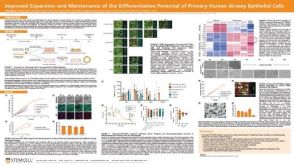 科学海报Improved Expansion and Maintenance of the Differentiation Potential of Primary Human Airway Epithelial Cells

 沪公网安备31010102008431号