Daynac M et al. (FEB 2016)
Scientific reports 6 21505
Age-related neurogenesis decline in the subventricular zone is associated with specific cell cycle regulation changes in activated neural stem cells.
Although neural stem cells (NSCs) sustain continuous neurogenesis throughout the adult lifespan of mammals,they progressively exhibit proliferation defects that contribute to a sharp reduction in subventricular neurogenesis during aging. However,little is known regarding the early age-related events in neurogenic niches. Using a fluorescence-activated cell sorting technique that allows for the prospective purification of the main neurogenic populations from the subventricular zone (SVZ),we demonstrated an early decline in adult neurogenesis with a dramatic loss of progenitor cells in 4 month-old young adult mice. Whereas the activated and quiescent NSC pools remained stable up to 12 months,the proliferative status of activated NSCs was already altered by 6 months,with an overall extension of the cell cycle resulting from a specific lengthening of G1. Whole genome analysis of activated NSCs from 2- and 6-month-old mice further revealed distinct transcriptomic and molecular signatures,as well as a modulation of the TGFβ signalling pathway. Our microarray study constitutes a cogent identification of new molecular players and signalling pathways regulating adult neurogenesis and its early modifications.
View Publication
Simon B et al. (APR 1990)
Proceedings of the National Academy of Sciences of the United States of America 87 7 2755--9
Epithelial glycoprotein is a member of a family of epithelial cell surface antigens homologous to nidogen, a matrix adhesion protein.
The cell surface antigen,epithelial glycoprotein,defined by the monoclonal antibody HEA 125,is expressed on virtually all epithelial cell membranes but not on mesodermal or neural cell membranes. The cDNA encoding epithelial glycoprotein was isolated by HEA 125 antibody enrichment of colon tumor cDNA expressed transiently in COS cells. The sequence of the epithelial glycoprotein antigen is identical to the cell membrane protein recognized by the monoclonal antibody KS 1/4 and is homologous to the tumor-associated antigen GA733. These proteins share sequence homology to nidogen,an extracellular matrix component that appears to participate in cell-matrix adhesion. These proteins also share a homologous domain found in the B1 chain of laminin,a matrix adhesion protein,and placental protein 12,an insulin-like growth factor I binding protein secreted during pregnancy that has been implicated in regulation of fetal growth. This common domain is also repeated multiple times within the thyroglobulin precursor. These findings suggest epithelial glycoprotein is a cell surface molecule involved in cell-cell or cell-matrix interaction.
View Publication
产品类型:
产品号#:
01420
01421
产品名:
Kim et al. (Oct 2025)
Scientific Reports 15
Attenuation of natural killer cell cytotoxicity by interaction between NKp30 of NK cells and dipeptidase 1 of colon cancer cells
Natural killer (NK) cells play a crucial role in immune surveillance by recognizing and eliminating tumor cells. However,tumors employ various mechanisms to evade NK cell-mediated immunity. NKp30 is a potent activating receptor on NK cells,but its function can be inhibited by specific ligands secreted by cancer cells. Here,we identified dipeptidase 1 (DPEP1) as a novel ligand for NKp30 in KM12C colon cancer cells,using co-immunoprecipitation,confocal microscopy,and flow cytometry. We examined how the DPEP1–NKp30 interaction affects NK cell activity and found that NK cytotoxicity increased in KM12C cells with DPEP1 knockdown but was significantly reduced in HCT116 cells overexpressing DPEP1. We further demonstrated that DPEP1 is secreted via extracellular vesicles and that its interaction with NKp30 suppressed the expression and secretion of perforin 1,granzyme B,CD107a,and interferon-γ in NK92 cells. In a xenograft mouse model treated with NK92 cells,tumors derived from HCT116/DPEP1 cells were significantly larger than those from HCT116/mock cells. Using peripheral blood-derived human NK cells,we confirmed that DPEP1 inhibited both cytotoxicity and granzyme B secretion. These findings suggest that disrupting the DPEP1–NKp30 interaction may enhance NK cell-mediated cytotoxicity and represent a novel therapeutic strategy for cancer immunotherapy. The online version contains supplementary material available at 10.1038/s41598-025-18475-z.
View Publication
产品类型:
产品号#:
100-0711
100-0712
100-0714
100-0715
产品名:
ImmunoCult™ 人NK扩增组套
ImmunoCult™ 人NK细胞基础培养基
ImmunoCult™ 人NK细胞扩增包被材料
ImmunoCult™ 人NK细胞扩增添加物
J. Liu et al. ( 2022)
Frontiers in immunology 13 835760
Combined Single Cell Transcriptome and Surface Epitope Profiling Identifies Potential Biomarkers of Psoriatic Arthritis and Facilitates Diagnosis via Machine Learning.
Early diagnosis of psoriatic arthritis (PSA) is important for successful therapeutic intervention but currently remains challenging due,in part,to the scarcity of non-invasive biomarkers. In this study,we performed single cell profiling of transcriptome and cell surface protein expression to compare the peripheral blood immunocyte populations of individuals with PSA,individuals with cutaneous psoriasis (PSO) alone,and healthy individuals. We identified genes and proteins differentially expressed between PSA,PSO,and healthy subjects across 30 immune cell types and observed that some cell types,as well as specific phenotypic subsets of cells,differed in abundance between these cohorts. Cell type-specific gene and protein expression differences between PSA,PSO,and healthy groups,along with 200 previously published genetic risk factors for PSA,were further used to perform machine learning classification,with the best models achieving AUROC ?? 0.87 when either classifying subjects among the three groups or specifically distinguishing PSA from PSO. Our findings thus expand the repertoire of gene,protein,and cellular biomarkers relevant to PSA and demonstrate the utility of machine learning-based diagnostics for this disease.
View Publication
Kassem M et al. (MAY 2000)
European journal of clinical investigation 30 5 429--37
Production and action of transforming growth factor-beta in human osteoblast cultures: dependence on cell differentiation and modulation by calcitriol.
BACKGROUND: Transforming growth factor beta (TGF-beta) plays an important role in skeletal remodelling. However,few studies have examined its effects on cultured human osteoblasts. Our aim is to characterise the biological effects of TGF-beta1 on human osteoblasts and to examine the interaction between TGF-beta1 and calcitriol. DESIGN: In vitro study employing two models of normal human osteoblasts: human bone marrow stromal cells [hMS/(OB)] containing osteoprogenitor cells and trabecular bone osteoblasts (hOB),which are mature osteoblasts. A reverse-transcriptase-polymerase-chain-reaction assay was employed to measure steady state mRNA levels of TGF-beta(s) isoforms and receptors. Effects of short-term treatment of TGF-beta1 on osteoblast proliferation and differentiation markers were assessed. The effect of cotreatment of calcitriol (10-8 M) and TGF-beta1 on osteoblast differentiation was also determined. RESULTS: Both hMS(OB) and hOB cells expressed mRNA transcripts of TGF-beta1,TGF-beta2,TGF-beta 3,TGF-beta type I and type II receptors. TGF-beta 1 stimulated osteoblast proliferation in hMS(OB) and in hOB cultures. In hOB cultures,TGF-beta1 stimulated AP production and cotreatment with calcitriol induced a synergistic increase in AP levels to 250 +/- 61% of calcitriol-treated controls. Effects of TGF-beta1 and calcitriol were less pronounced in hMS(OB) cultures. TGF-beta1 inhibited collagen type I production in hMS(OB) cells and these effects were abolished in presence of calcitriol. In presence of calcitriol,TGF-beta1 increased collagen type I production in hOB cells. In both hOB and hMS(OB) cultures,TGF-beta1 inhibited osteocalcin production. CONCLUSIONS: TGF-beta increases osteoblastic cell proliferation irrespective of the differentiation state. In presence of calcitriol,it initiates osteoblast cell differentiation and matrix formation. As TGF-beta inhibits osteocalcin production,other factors are necessary for inducing terminal differentiation of osteoblasts. The observed effects of TGF-beta on human osteoblasts in vitro may represent important regulatory steps in controlling osteoblast cell proliferation and differentiation in vivo.
View Publication
Galat V et al. (MAY 2016)
Stem cells and development 25 14 1060--1072
Transgene Reactivation in Induced Pluripotent Stem Cell Derivatives and Reversion to Pluripotency of Induced Pluripotent Stem Cell-Derived Mesenchymal Cells.
Induced pluripotent stem cells (iPSCs) have enormous potential in regenerative medicine and disease modeling. It is now felt that clinical trials should be performed with iPSCs derived with non-integrative constructs. Numerous studies,however,including those describing disease models,are still being published using cells derived from iPSCs generated with integrative constructs. Our experimental work presents the first evidence of spontaneous transgene reactivation in vitro in several cellular types. Our results show that the transgenes were predominantly silent in parent iPSCs,but in mesenchymal and endothelial iPSC derivatives,the transgenes experienced random up-regulation of Nanog and c-Myc. Additionally,we provide evidence of spontaneous secondary reprogramming and reversion to pluripotency in mesenchymal stem cells derived from iPSCs. These findings strongly suggest that the studies,which utilize cellular products derived from iPSCs generated with retro- or lentiviruses,should be evaluated with consideration of the possibility of transgene reactivation. The in vitro model described here provides insight into the earliest events of culture transformation and suggests the hypothesis that reversion to pluripotency may be responsible for the development of tumors in cell replacement experiments. The main goal of this work,however,is to communicate the possibility of transgene reactivation in retro- or lenti- iPSC derivatives and the associated loss of cellular fidelity in vitro,which may impact the outcomes of disease modeling and related experimentation.
View Publication
产品类型:
产品号#:
05850
05857
05870
05875
85850
85857
85870
85875
产品名:
mTeSR™1
mTeSR™1
Wang H et al. (APR 2016)
The Journal of biological chemistry 291 16 8644--8652
Germ Cell Nuclear Factor (GCNF) Represses Oct4 Expression and Globally Modulates Gene Expression in Human Embryonic Stem (hES) Cells.
Oct4 is considered a key transcription factor for pluripotent stem cell self-renewal. It binds to specific regions within target genes to regulate their expression and is downregulated upon induction of differentiation of pluripotent stem cells; however,the mechanisms that regulate the levels of human Oct4 expression remain poorly understood. Here we show that expression of human Oct4 is directly repressed by germ cell nuclear factor (GCNF),an orphan nuclear receptor,in hES cells. Knockdown of GCNF by siRNA resulted in maintenance of Oct4 expression during RA-induced hES cell differentiation. While overexpression of GCNF promoted repression of Oct4 expression in both undifferentiated and differentiated hES cells. The level of Oct4 repression was dependent on the level of GCNF expression in a dose-dependent manner. mRNA microarray analysis demonstrated that overexpression of GCNF globally regulates gene expression in undifferentiated and differentiated hES cells. Within the group of altered genes,GCNF down-regulated 36% of the genes,and up-regulated 64% in undifferentiated hES cells. In addition,GCNF also showed a regulatory gene pattern that is different from RA treatment during hES cell differentiation. These findings increase our understanding of the mechanisms that maintain hES cell pluripotency and regulate gene expression during the differentiation process.
View Publication


 EasySep™小鼠TIL(CD45)正选试剂盒




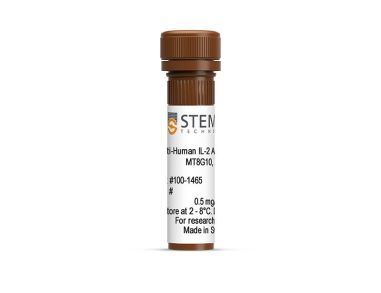 抗人IL-2抗体,clone MT8G10 小鼠Monoclonal IgG1抗体,抗人、食蟹猴IL-2
 重组人IL-3 (CHO表达) 白介素3
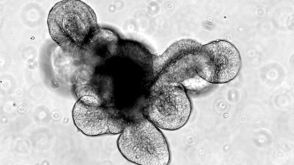 新闻The HUB Foundation for Organoid Technology and STEMCELL Technologies Sign Agreement on the Manufacturing of Cell Culture Media for Organoids
 科学海报It Takes Two—Or Three: Comparing Human Pluripotent Stem Cell Derived Glia-Neuron Co-Cultures to Neuron Monoculture Under Basal and Injury Conditions
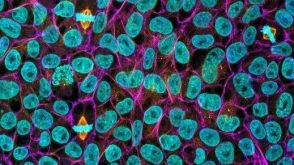 新闻STEMCELL Submits Drug Master File for mTeSR™1, the Most Widely Published Cell Culture Medium for Human Pluripotent Stem Cells
 沪公网安备31010102008431号