Sengupta A et al. (JUN 2011)
Proceedings of the National Academy of Sciences of the United States of America 108 24 9957--62
Atypical protein kinase C (aPKCzeta and aPKClambda) is dispensable for mammalian hematopoietic stem cell activity and blood formation.
The stem-cell pool is considered to be maintained by a balance between symmetric and asymmetric division of stem cells. The cell polarity model proposes that the facultative use of symmetric and asymmetric cell division is orchestrated by a polarity complex consisting of partitioning-defective proteins Par3 and Par6,and atypical protein kinase C (aPKCζ and aPKCλ),which regulates planar symmetry of dividing stem cells with respect to the signaling microenvironment. However,the role of the polarity complex is unexplored in mammalian adult stem-cell functions. Here we report that,in contrast to accepted paradigms,polarization and activity of adult hematopoietic stem cell (HSC) do not depend on either aPKCζ or aPKCλ or both in vivo. Mice,having constitutive and hematopoietic-specific (Vav1-Cre) deletion of aPKCζ and aPKCλ,respectively,have normal hematopoiesis,including normal HSC self-renewal,engraftment,differentiation,and interaction with the bone marrow microenvironment. Furthermore,inducible complete deletion of aPKCλ (Mx1-Cre) in aPKCζ(-/-) HSC does not affect HSC polarization,self-renewal,engraftment,or lineage repopulation. In addition,aPKCζ- and aPKCλ-deficient HSCs elicited a normal pattern of hematopoietic recovery secondary to myeloablative stress. Taken together,the expression of aPKCζ,aPKCλ,or both are dispensable for primitive and adult HSC fate determination in steady-state and stress hematopoiesis,contrary to the hypothesis of a unique,evolutionary conserved aPKCζ/λ-directed cell polarity signaling mechanism in mammalian HSC fate determination.
View Publication
产品类型:
产品号#:
03434
03444
产品名:
MethoCult™ GF M3434
MethoCult™ GF M3434
F. Oppel et al. (Oct 2024)
Cell Death & Disease 15 10
Mucosa-like differentiation of head and neck cancer cells is inducible and drives the epigenetic loss of cell malignancy
Head and neck squamous cell carcinoma (HNSCC) is a highly malignant disease with high death rates that have remained substantially unaltered for decades. Therefore,new treatment approaches are urgently needed. Human papillomavirus-negative tumors harbor areas of terminally differentiated tissue that are characterized by cornification. Dissecting this intrinsic ability of HNSCC cells to irreversibly differentiate into non-malignant cells may have tumor-targeting potential. We modeled the cornification of HNSCC cells in a primary spheroid model and analyzed the mechanisms underlying differentiation by ATAC-seq and RNA-seq. Results were verified by immunofluorescence using human HNSCC tissue of distinct anatomical locations. HNSCC cell differentiation was accompanied by cell adhesion,proliferation stop,diminished tumor-initiating potential in immunodeficient mice,and activation of a wound-healing-associated signaling program. Small promoter accessibility increased despite overall chromatin closure. Differentiating cells upregulated KRT17 and cornification markers. Although KRT17 represents a basal stem cell marker in normal mucosa,we confirm KRT17 to represent an early differentiation marker in HNSCC tissue. Cornification was frequently found surrounding necrotic areas in human tumors,indicating an involvement of pro-inflammatory stimuli. Indeed,inflammatory mediators activated the differentiation program in primary HNSCC cells. In HNSCC tissue,distinct cell differentiation states were found to create a common tissue architecture in normal mucosa and HNSCCs. Our data demonstrate a loss of cell malignancy upon faithful HNSCC cell differentiation,indicating that targeted differentiation approaches may be therapeutically valuable. Moreover,we describe KRT17 to be a candidate biomarker for HNSCC cell differentiation and early tumor detection. Subject terms: Cancer stem cells,Oral cancer
View Publication
产品类型:
产品号#:
05040
产品名:
PneumaCult™-Ex Plus 培养基
(Apr 2024)
iScience 27 5
Long noncoding RNAs heat shock RNA omega nucleates TBPH and promotes intestinal stem cell differentiation upon heat shock
SummaryIn Drosophila,long noncoding RNA Hsr? rapidly assembles membraneless organelle omega speckles under heat shock with unknown biological function. Here,we identified the distribution of omega speckles in multiple tissues of adult Drosophila melanogaster and found that they were selectively distributed in differentiated enterocytes but not in the intestinal stem cells of the midgut. We mimicked the high expression level of Hsr? via overexpression or intense heat shock and demonstrated that the assembly of omega speckles nucleates TBPH for the induction of ISC differentiation. Additionally,we found that heat shock stress promoted cell differentiation,which is conserved in mammalian cells through paraspeckles,resulting in large puncta of TDP-43 (a homolog of TBPH) with less mobility and the differentiation of human induced pluripotent stem cells. Overall,our findings confirm the role of Hsr? and omega speckles in the development of intestinal cells and provide new prospects for the establishment of stem cell differentiation strategies. Graphical abstract Highlights•LncRNA Hsr? is differentially expressed in different cell types of fly midguts•Omega speckles nucleate TPBH and promote the differentiation of ISCs to ECs•Heat shock treatment induces the assembly of omega speckles and paraspeckles•Heat shock treatment accelerates the differentiation of fly midguts and human iPSCs Molecular biology; Cell biology; Developmental biology
View Publication
产品类型:
产品号#:
85850
85857
产品名:
mTeSR™1
mTeSR™1
(Feb 2024)
Nature Communications 15
Heat shock protein gp96 drives natural killer cell maturation and anti-tumor immunity by counteracting Trim28 to stabilize Eomes
The maturation process of natural killer (NK) cells,which is regulated by multiple transcription factors,determines their functionality,but few checkpoints specifically targeting this process have been thoroughly studied. Here we show that NK-specific deficiency of glucose-regulated protein 94 (gp96) leads to decreased maturation of NK cells in mice. These gp96-deficient NK cells exhibit undermined activation,cytotoxicity and IFN-γ production upon stimulation,as well as weakened responses to IL-15 for NK cell maturation,in vitro. In vivo,NK-specific gp96-deficient mice show increased tumor growth. Mechanistically,we identify Eomes as the downstream transcription factor,with gp96 binding to Trim28 to prevent Trim28-mediated ubiquitination and degradation of Eomes. Our study thus suggests the gp96-Trim28-Eomes axis to be an important regulator for NK cell maturation and cancer surveillance in mice. Natural killer (NK) cell maturation and function are regulated by multiple transcription factors (TF),but detailed molecular insights are scarce. Here the authors show that a TF,Eomes,is important for NK cell responses and cancer surveillance,in which Eomes expression is regulated by gp96 and Trim28 via the ubiquitination and degradation pathways.
View Publication
产品类型:
产品号#:
19855
19855RF
产品名:
EasySep™小鼠NK细胞分选试剂盒
RoboSep™ 小鼠NK细胞分选试剂盒
(Nov 2024)
Molecular Medicine 30 1
Single cell RNA-seq reveals cellular and transcriptional heterogeneity in the splenic CD11b+Ly6Chigh monocyte population expanded in sepsis-surviving mice
BackgroundSepsis survivors exhibit immune dysregulation that contributes to poor long-term outcomes. Phenotypic and functional alterations within the myeloid compartment are believed to be a contributing factor. Here we dissect the cellular and transcriptional heterogeneity of splenic CD11b+Ly6Chigh myeloid cells that are expanded in mice that survive the cecal ligation and puncture (CLP) murine model of polymicrobial sepsis to better understand the basis of immune dysregulation in sepsis survivors.MethodsSham or CLP surgeries were performed on C57BL/6J and BALB/c mice. Four weeks later splenic CD11b+Ly6Chigh cells from both groups were isolated for phenotypic (flow cytometry) and functional (phagocytosis and glycolysis) characterization and RNA was obtained for single-cell RNA-seq (scRNA-seq) and subsequent analysis.ResultsCD11b+Ly6Chigh cells from sham and CLP surviving mice exhibit phenotypic and functional differences that relate to immune function,some of which are observed in both C57BL/6J and BALB/c strains and others that are not. To dissect disease-specific and strain-specific distinctions within the myeloid compartment,scRNA-seq analysis was performed on CD11b+Ly6Chigh cells from C57BL/6J and BALB/c sham and CLP mice. Uniform Manifold Approximation and Projection from both strains identified 13 distinct clusters of sorted CD11b+Ly6Chigh cells demonstrating significant transcriptional heterogeneity and expressing gene signatures corresponding to classical-monocytes,non-classical monocytes,M1- or M2-like macrophages,dendritic-like cells,monocyte-derived dendritic-like cells,and proliferating monocytic myeloid-derived suppressor cells (M-MDSCs). Frequency plots showed that the percentages of proliferating M-MDSCs (clusters 8,11 and 12) were increased in CLP mice compared to sham mice in both strains. Pathway and UCell score analysis in CLP mice revealed that cell cycle and glycolytic pathways were upregulated in proliferating M-MDSCs in both strains. Notably,granule protease genes were upregulated in M-MDSCs from CLP mice. ScRNA-seq analyses also showed that phagocytic pathways were upregulated in multiple clusters including the classical monocyte cluster,confirming the increased phagocytic capacity in CD11b+Ly6Chigh cells from CLP mice observed in ex vivo functional assays in C57BL/6J mice.ConclusionThe splenic CD11b+Ly6Chigh myeloid populations expanded in survivors of CLP sepsis correspond to proliferating cells that have an increased metabolic demand and gene signatures consistent with M-MDSCs,a population known to have immunosuppressive capacity.Supplementary InformationThe online version contains supplementary material available at 10.1186/s10020-024-00970-0.
View Publication
产品类型:
产品号#:
19861
19861RF
产品名:
EasySep™小鼠单核细胞分选试剂盒
RoboSep™ 小鼠单核细胞分选试剂盒
(May 2025)
Frontiers in Pharmacology 16 1
Enhanced resistance to Listeria infection in mice surviving sepsis: the role of lipid metabolism and myeloid cell reprogramming
IntroductionImmune resilience is the capacity of the immune system to recover from sepsis-induced organ injury and reestablish host defense. While sepsis survivors are often viewed as immunocompromised,recent studies suggest that some may acquire adaptive immune traits that enhance resistance to secondary infections.MethodsWe employed a murine cecal ligation and puncture (CLP) model to study polymicrobial sepsis and subsequent immune responses. Listeria monocytogenes was used as a model intracellular pathogen to assess immune protection. We analyzed myeloid cell phenotypes using single-cell RNA sequencing and evaluated lipid metabolic changes through quantitative RT-PCR,immunohistochemistry,serum cytokine assays,and plasma lipidomics.ResultsSepsis-surviving mice showed enhanced resistance to Listeria infection. Single-cell RNA sequencing revealed transcriptional reprogramming in splenic CD11b+Ly6Chigh myeloid cells,including downregulation of lipoprotein lipase and lipid efflux genes. CD11b+ myeloid cells exhibited increased lipid droplet accumulation,accompanied by elevated serum interferon-gamma (IFN-γ) levels. Plasma lipidomics identified systemic lipid remodeling,with increased phosphatidylserine and decreased phosphatidylinositol and phosphatidylglycerol levels.DiscussionOur findings suggest that sepsis survival induces lipid metabolic reprogramming in myeloid cells,contributing to enhanced immunity against intracellular pathogens. These insights reveal potential therapeutic targets within lipid metabolic pathways to improve host defense in sepsis survivors.
View Publication
产品类型:
产品号#:
19861
19861RF
产品名:
EasySep™小鼠单核细胞分选试剂盒
RoboSep™ 小鼠单核细胞分选试剂盒
A. Adebowale et al. (Nov 2025)
Molecular Neurodegeneration Advances 1 1
Adoptive NK cell transfer confers neuroprotection by attenuating neuroinflammation and alpha-synuclein pathology in a mouse model of synucleinopathy
Background: Natural killer (NK) cells are key effector lymphoid cells involved in both innate and adaptive immunity and are capable of clearing abnormally aggregated α-synuclein (αSyn). In preclinical Parkinson’s disease (PD) models,NK cell depletion worsens motor deficits and increases insoluble αSyn accumulation,suggesting a neuroprotective role. However,the therapeutic potential of NK cell transfer in modulating αSyn pathology and neurodegeneration remains unexplored. Methods: To assess the efficacy of NK cell therapy,we administered biweekly systemic injections of untouched NK cells isolated from B6C3H donor mice into 2-month-old presymptomatic homozygous M83 transgenic mice injected with human αSyn preformed fibrils. Neurological function was assessed via clasping behavior and clinical scoring. αSyn pathology and dopaminergic neurodegeneration were evaluated via immunohistochemistry. CyTOF-based immune profiling and multiplex ELISA were performed to characterize central and peripheral immune responses. Results: Adoptive NK cell transfers improved motor function and reduced αSyn pathology in a region- and dose-dependent manner,with significant reductions in phosphorylated-αSyn inclusions and tyrosine hydroxylase-positive neuronal loss in the substantia nigra. NK cell transfer modulated the CNS immune landscape by reducing CD11b+CD45high and MHCII+ activated microglial,CD4⁺ T cells,and neutrophil infiltration,while promoting CD19+ B and CD8+ T cells. Similar immunomodulatory effects were observed in the periphery,including restoration of follicular B cells and reduced neutrophil frequencies. Mechanistically,αSyn exposure downregulated activating NK ligands and upregulated inhibitory receptor ligand mQa1b,along with p21 induction in microglia,suggesting a senescence-associated,immune-evasive phenotype that may contribute to reduced therapeutic efficacy at later disease stages. Conclusions: Our study provides direct evidence of NK cells exerting neuroprotective and immunomodulatory effects in a preclinical model of synucleinopathy. These findings support NK cell transfer as a novel therapeutic strategy for PD and related neurodegenerative disorders.
View Publication
Boissier S et al. (JUN 2000)
Cancer research 60 11 2949--54
Bisphosphonates inhibit breast and prostate carcinoma cell invasion, an early event in the formation of bone metastases.
The molecular mechanisms by which tumor cells metastasize to bone are likely to involve invasion,cell adhesion to bone,and the release of soluble mediators from tumor cells that stimulate osteoclast-mediated bone resorption. Bisphosphonates (BPs) are powerful inhibitors of the osteoclast activity and are,therefore,used in the treatment of patients with osteolytic metastases. However,an added beneficial effect of BPs may be direct antitumor activity. We previously reported that BPs inhibit breast and prostate carcinoma cell adhesion to bone (Boissier et al.,Cancer Res.,57: 3890-3894,1997). Here,we provided evidence that BP pretreatment of breast and prostate carcinoma cells inhibited tumor cell invasion in a dose-dependent manner. The order of potency for four BPs in inhibiting tumor cell invasion was: zoledronate textgreater ibandronate textgreater NE-10244 (active pyridinium analogue of risedronate) textgreater clodronate. In addition,NE-58051 (the inactive pyridylpropylidene analogue of risedronate) had no inhibitory effect,whereas NE-10790 (a phosphonocarboxylate analogue of risedronate in which one of the phosphonate groups is substituted by a carboxyl group) inhibited tumor cell invasion to an extent similar to that observed with NE-10244,indicating that the inhibitory activity of BPs on tumor cells involved the R2 chain of the molecule. BPs did not induce apoptosis in tumor cells,nor did they inhibit tumor cell migration at concentrations that did inhibit tumor cell invasion. However,although BPs did not interfere with the production of matrix metalloproteinases (MMPs) by tumor cells,they inhibited their proteolytic activity. The inhibitory effect of BPs on MMP activity was completely reversed in the presence of an excess of zinc. In addition,NE-10790 did not inhibit MMP activity,suggesting that phosphonate groups of BPs are responsible for the chelation of zinc and the subsequent inhibition of MMP activity. In conclusion,our results provide evidence for a direct cellular effect of BPs in preventing tumor cell invasion and an inhibitory effect of BPs on the proteolytic activity of MMPs through zinc chelation. These results suggest,therefore,that BPs may be useful agents for the prophylactic treatment of patients with cancers that are known to preferentially metastasize to bone.
View Publication
产品类型:
产品号#:
73572
产品名:
唑来膦酸 (Hydrate)
Moreb JS et al. (JUL 2007)
Cytometry. Part B,Clinical cytometry 72 4 281--9
Heterogeneity of aldehyde dehydrogenase expression in lung cancer cell lines is revealed by Aldefluor flow cytometry-based assay.
BACKGROUND: We have been interested in studying the roles of two aldehyde dehydrogenases in the biology of lung cancer. In this study,we seek to apply Aldefluor flow cytometry-based assay for the measurement of aldehyde dehydrogenase (ALDH) activity in lung cancer cell lines,which may become a new tool that will facilitate our continued research in this field. EXPERIMENTAL DESIGN: Several established lung cancer cell lines were used,including A549 cell line expressing siRNA against aldehyde dehydrogenase class-1A1 (ALDH1A1). Western blot analysis,spectrophotometry assay,and Aldefluor staining were used to measure protein or enzyme activity in these cell lines. For the purpose of measurement of ALDH activity by Aldefluor in cells with known high ALDH levels,cells were mixed 1:10 with immortalized lung epithelial cell line (Beas-2B),which is known to lack ALDH activity. To delineate dead cells,double staining using Aldefluor and propidium iodide (PI) was done. Double staining was also used to detect changes in ALDH activity in two different cell lines after treatment with 4-hydroperoxycyclophosphamide (4-HC). RESULTS: Our results show a very good correlation between Aldefluor,Western blot,and spectrophotometry assays. Mixing experiments with Beas-2B cells allowed accurate assessment of ALDH activity in A549 cells at baseline and after siRNA expression,thus establishing an approach that facilitates the measurement of very high ALDH using the Aldefluor assay. Aldefluor staining was able to detect heterogeneity in ALDH expression among as well as within the same cell lines and better assess viability after 4-HC treatment when combined with PI. CONCLUSIONS: Aldefluor assay can be adapted successfully to measure ALDH activity in lung cancer cells and may have the advantage of providing real time changes in ALDH activity in viable cells treated with siRNA or chemotherapy.
View Publication


 EasySep™小鼠TIL(CD45)正选试剂盒





 重组人肿瘤抑制素M,ACF 抑瘤素 M,不含动物成分
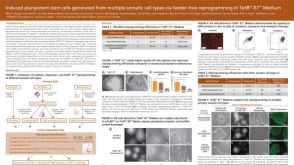 科学海报Induced Pluripotent Stem Cells Generated from Multiple Somatic Cell Types via Feeder Free Reprogramming in TeSR™-E7™ Medium

 沪公网安备31010102008431号