Hu C et al. ( 2008)
Bioorganic & medicinal chemistry 16 17 7888--7893
The efficacy and selectivity of tumor cell killing by Akt inhibitors are substantially increased by chloroquine.
This study was to evaluate the enhancement value of chloroquine (CQ) in cancer cell killing when used in combination with Akt inhibitors. The results showed that the combination of CQ and Akt inhibitors is much more effective than either one alone. Importantly,the CQ-mediated chemosensitization of cell killing effects by Akt inhibitors is cancer specific. In particular,when combined with 10 microM CQ,1,3-dihydro-1-(1-((4-(6-phenyl-1H-imidazo[4,5-g]quinoxalin-7-yl)phenyl)methyl)-4-piperidinyl)-2H-benzimidazol-2-one (an Akt1 and 2 inhibitor; compound 8) killed cancer cells 10-120 times more effectively than normal cells. Thus,CQ is a very effective and cancer-specific chemosensitizer when used in combination with Akt inhibitors.
View Publication
产品类型:
产品号#:
72952
产品名:
AKT抑制剂X (Hydrochloride)
Joseph EW et al. (AUG 2010)
Proceedings of the National Academy of Sciences of the United States of America 107 33 14903--8
The RAF inhibitor PLX4032 inhibits ERK signaling and tumor cell proliferation in a V600E BRAF-selective manner.
Tumors with mutant BRAF and some with mutant RAS are dependent upon ERK signaling for proliferation,and their growth is suppressed by MAPK/ERK kinase (MEK) inhibitors. In contrast,tumor cells with human EGF receptor (HER) kinase activation proliferate in a MEK-independent manner. These findings have led to the development of RAF and MEK inhibitors as anticancer agents. Like MEK inhibitors,the RAF inhibitor PLX4032 inhibits the proliferation of BRAF(V600E) tumor cells but not that of HER kinase-dependent tumors. However,tumors with RAS mutation that are sensitive to MEK inhibition are insensitive to PLX4032. MEK inhibitors inhibit ERK phosphorylation in all normal and tumor cells,whereas PLX4032 inhibits ERK signaling only in tumor cells expressing BRAF(V600E). In contrast,the drug activates MEK and ERK phosphorylation in cells with wild-type BRAF. In BRAF(V600E) tumor cells,MEK and RAF inhibitors affect the expression of a common set of genes. PLX4032 inhibits ERK signaling output in mutant BRAF cells,whereas it transiently activates the expression of these genes in tumor cells with wild-type RAF. Thus,PLX4032 inhibits ERK signaling output in a mutant BRAF-selective manner. These data explain why the drug selectively inhibits the growth of mutant BRAF tumors and suggest that it will not cause toxicity resulting from the inhibition of ERK signaling in normal cells. This selectivity may lead to a broader therapeutic index and help explain the greater antitumor activity observed with this drug than with MEK inhibitors.
View Publication
产品类型:
产品号#:
73332
73334
产品名:
Loh KMM et al. (JUL 2016)
Cell 166 2 451--468
Mapping the Pairwise Choices Leading from Pluripotency to Human Bone, Heart, and Other Mesoderm Cell Types
Stem-cell differentiation to desired lineages requires navigating alternating developmental paths that often lead to unwanted cell types. Hence,comprehensive developmental roadmaps are crucial to channel stem-cell differentiation toward desired fates. To this end,here,we map bifurcating lineage choices leading from pluripotency to 12 human mesodermal lineages,including bone,muscle,and heart. We defined the extrinsic signals controlling each binary lineage decision,enabling us to logically block differentiation toward unwanted fates and rapidly steer pluripotent stem cells toward 80%???99% pure human mesodermal lineages at most branchpoints. This strategy enabled the generation of human bone and heart progenitors that could engraft in respective in??vivo models. Mapping stepwise chromatin and single-cell gene expression changes in mesoderm development uncovered somite segmentation,a previously unobservable human embryonic event transiently marked by HOPX expression. Collectively,this roadmap enables navigation of mesodermal development to produce transplantable human tissue progenitors and uncover developmental processes. Video Abstract
View Publication
产品类型:
产品号#:
05850
05857
05870
05875
85850
85857
85870
85875
产品名:
mTeSR™1
mTeSR™1
Reynolds BA and Weiss S (APR 1996)
Developmental biology 175 1 1--13
Clonal and population analyses demonstrate that an EGF-responsive mammalian embryonic CNS precursor is a stem cell.
In cultures of embryonic striatum,we previously reported that EGF induces the proliferation of single precursor cells,which give rise to spheres of undifferentiated cells that can generate neurons and glia. We report here that,in vitro,these embryonic precursor cells exhibit properties and satisfy criteria representative of stem cells. The EGF-responsive cell was able to generate the three major phenotypes of the mammalian CNS--neurons,astrocytes,and oligodendrocytes. Approximately 90% of both primary spheres and secondary expanded clones,derived from the primary spheres,contained all three cell types. The increase in frequency of EGF-generated spheres,from 1% in primary culture to close to 20% in secondary culture,and the large number of clonally derived secondary spheres that could be generated from a single primary sphere indicate that EGF induces both renewal and expansion of the precursor cell itself. In population studies,the EGF-responsive cells were carried through 10 passages,resulting in a 10(7)-fold increase in cell number,without losing their proliferative and multilineage potential. Thus,this study describes the first demonstration,through clonal and population analyses in vitro,of a mammalian CNS stem cell that proliferates in response to an identified growth factor (EGF) and produces the three principal cell types of the CNS.
View Publication
产品类型:
产品号#:
05700
05701
05702
05703
05704
05740
00321
产品名:
NeuroCult™ 基础培养基(小鼠和大鼠)
NeuroCult™ 扩增添加物(小鼠和大鼠)
NeuroCult™扩增试剂盒(小鼠和大鼠)
NeuroCult™ 分化添加物(小鼠和大鼠)
NeuroCult™ 分化试剂盒(小鼠和大鼠)
Yu C et al. ( )
In vivo (Athens,Greece) 25 1 69--76
ALDH activity indicates increased tumorigenic cells, but not cancer stem cells, in prostate cancer cell lines.
BACKGROUND: Cancer stem cells (CSCs) have been shown to be a small stem cell-like cell population which appears to drive tumorigenesis,tumor recurrence and metastasis. Thus,identification and characterization of CSCs may be critical to defining effective anticancer therapies. In prostate cancer (PCa),the CD44(+) cell population appears to have stem cell-like properties including being tumorigenic. The enzyme aldehyde dehydrogenase (ALDH) has been found to identify hematopoietic stem cells and our aim was to determine the utility of ALDH activity and CD44 in identifying PCa stem cell-like cells in PCa cell lines. MATERIALS AND METHODS: LNCaP cells and PC-3 cells were sorted based on their expression of CD44 and ALDH activity. The cell populations were investigated using colony-forming assays,invasion assays,sphere formation experiments in a non-adherent environment and 3-D Matrigel matrix culture to observe the in vitro stem-cell like properties. Different sorted cell populations were injected subcutaneously into NOD/SCID mice to determine the corresponding tumorigenic capacities. RESULTS: ALDH(hi) CD44(+) cells exhibit a higher proliferative,clonogenic and metastatic capacity in vitro and demonstrate higher tumorigenicity capacity in vivo than did ALDH(lo) CD44(-) cells. The tumors recapitulated the population of the original cell line. However,ALDHlo CD44(-) cells were able to develop tumors,albeit with longer latency periods. CONCLUSION: ALDH activity and CD44 do not appear to identify PCa stem cells; however,they do indicate increased tumorigenic and metastatic potential,indicating their potential importance for further exploration.
View Publication
产品类型:
产品号#:
01700
01705
01702
产品名:
ALDEFLUOR™ 试剂盒
ALDEFLUOR™ DEAB试剂, 1.5 mM, 1 mL
ALDEFLUOR™检测缓冲液
Sood a et al. (DEC 2011)
Nature nanotechnology 6 12 824--33
Signalling of DNA damage and cytokines across cell barriers exposed to nanoparticles depends on barrier thickness.
The use of nanoparticles in medicine is ever increasing,and it is important to understand their targeted and non-targeted effects. We have previously shown that nanoparticles can cause DNA damage to cells cultured below a cellular barrier without crossing this barrier. Here,we show that this indirect DNA damage depends on the thickness of the cellular barrier,and it is mediated by signalling through gap junction proteins following the generation of mitochondrial free radicals. Indirect damage was seen across both trophoblast and corneal barriers. Signalling,including cytokine release,occurred only across bilayer and multilayer barriers,but not across monolayer barriers. Indirect toxicity was also observed in mice and using ex vivo explants of the human placenta. If the importance of barrier thickness in signalling is a general feature for all types of barriers,our results may offer a principle with which to limit the adverse effects of nanoparticle exposure and offer new therapeutic approaches.
View Publication
产品类型:
产品号#:
05850
05857
05870
05875
85850
85857
85870
85875
产品名:
mTeSR™1
mTeSR™1
Del Vecchio CA et al. (MAY 2012)
Cancer research 72 10 2657--71
Epidermal growth factor receptor variant III contributes to cancer stem cell phenotypes in invasive breast carcinoma.
EGFRvIII is a tumor-specific variant of the epidermal growth factor receptor (EGFR). Although EGFRvIII is most commonly found in glioblastoma,its expression in other tumor types remains controversial. In this study,we investigated EGFRvIII expression and amplification in primary breast carcinoma. Our analyses confirmed the presence of EGFRvIII,but in the absence of amplification or rearrangement of the EGFR locus. Nested reverse transcriptase PCR and flow cytometry were used to detect a higher percentage of positive cases. EGFRvIII-positive cells showed increased expression of genes associated with self-renewal and epithelial-mesenchymal transition along with a higher percentage of stem-like cells. EGFRvIII also increased in vitro sphere formation and in vivo tumor formation. Mechanistically,EGFRvIII mediated its effects through the Wnt/β-catenin pathway,leading to increased β-catenin target gene expression. Inhibition of this pathway reversed the observed effects on cancer stem cell (CSC) phenotypes. Together,our findings show that EGFRvIII is expressed in primary breast tumors and contributes to CSC phenotypes in breast cancer cell lines through the Wnt pathway. These data suggest a novel function for EGFRvIII in breast tumorigenesis.
View Publication
产品类型:
产品号#:
01700
01705
05620
01702
产品名:
ALDEFLUOR™ 试剂盒
ALDEFLUOR™ DEAB试剂, 1.5 mM, 1 mL
MammoCult™ 人源培养基套装
ALDEFLUOR™检测缓冲液
Hasegawa K et al. (DEC 2011)
Stem Cells Translational Medicine 1 1 18--28
Wnt Signaling Orchestration with a Small Molecule DYRK Inhibitor Provides Long-Term Xeno-Free Human Pluripotent Cell Expansion
An optimal culture system for human pluripotent stem cells should be fully defined and free of animal components. To date,most xeno-free culture systems require human feeder cells and/or highly complicated culture media that contain activators of the fibroblast growth factor (FGF) and transforming growth factor-β (TGFβ) signaling pathways,and none provide for replacement of FGF/TGFβ ligands with chemical compounds. The Wnt/β-catenin signaling pathway plays an important role in mouse embryonic stem cells in leukemia inhibitory factor-independent culture; however,the role of Wnt/β-catenin signaling in human pluripotent stem cell is still poorly understood and controversial because of the dual role of Wnts in proliferation and differentiation. Building on our previous investigations of small molecules modulating Wnt/β-catenin signaling in mouse embryonic stem cells,we identified a compound,ID-8,that could support Wnt-induced human embryonic stem cell proliferation and survival without differentiation. Dual-specificity tyrosine phosphorylation-regulated kinase (DYRK) is the target of the small molecule ID-8. Its role in human pluripotent cell renewal was confirmed by DYRK knockdown in human embryonic stem cells. Using Wnt and the DYRK inhibitor ID-8,we have developed a novel and simple chemically defined xeno-free culture system that allows for long-term expansion of human pluripotent stem cells without FGF or TGFβ activation. These culture conditions do not include xenobiotic supplements,serum,serum replacement,or albumin. Using this culture system,we have shown that several human pluripotent cell lines maintained pluripotency (textgreater20 passages) and a normal karyotype and still retained the ability to differentiate into derivatives of all three germ layers. This Wnt-dependent culture system should provide a platform for complete replacement of growth factors with chemical compounds.
View Publication
产品类型:
产品号#:
72502
产品名:
ID-8
Liu Y et al. (APR 2013)
Cellular reprogramming 15 2 107--116
$\$-1,3-Galactosyltransferase knockout pig induced pluripotent stem cells: a cell source for the production of xenotransplant pigs.
The shortage of human organs and tissues for transplant has led to significant interest in xenotransplantation of pig tissues for human patients. However,transplantation of pig organs results in an acute immune rejection,leading to death of the organ within minutes. The $\$-1,3-galactosyltransferase (GALT) gene has been knocked out in pigs to reduce rejection,yet additional genes need to be modified to ultimately make pig tissue immunocompatible with humans. The development of pig induced pluripotent stem cells (piPSCs) from GALT knockout (GALT-KO) tissue would provide an excellent cell source for complex genetic manipulations (e.g.,gene targeting) that often require highly robust and proliferative cells. In this report,we generated GALT-KO piPSCs by the overexpression of POU5F1,SOX2,NANOG,LIN28,KLF-4,and C-MYC reprogramming genes. piPSCs showed classical stem cell morphology and characteristics,expressing integrated reprogramming genes in addition to the pluripotent markers AP,SSEA1,and SSEA4. GALT-KO piPSCs were highly proliferative and possessed doubling times and telomerase activity similar to human embryonic stem cells. These results demonstrated successful reprogramming of GALT-KO fibroblasts into GALT-KO piPSCs. GALT-KO piPSCs are potentially an excellent immortal cell source for the generation of pigs with complex genetic modifications for xenotransplantation,somatic cell nuclear transfer,or chimera formation.
View Publication
产品类型:
产品号#:
05850
05857
05870
05875
85850
85857
85870
85875
产品名:
mTeSR™1
mTeSR™1
Z. N. G. Galofre et al. (Feb 2024)
Nature Communications 15
Runx1+ vascular smooth muscle cells are essential for hematopoietic stem and progenitor cell development in vivo
Hematopoietic stem cells (HSCs) produce all essential cellular components of the blood. Stromal cell lines supporting HSCs follow a vascular smooth muscle cell (vSMC) differentiation pathway,suggesting that some hematopoiesis-supporting cells originate from vSMC precursors. These pericyte-like precursors were recently identified in the aorta-gonad-mesonephros (AGM) region; however,their role in the hematopoietic development in vivo remains unknown. Here,we identify a subpopulation of NG2 + Runx1 + perivascular cells that display a sclerotome-derived vSMC transcriptomic profile. We show that deleting Runx1 in NG2 + cells impairs the hematopoietic development in vivo and causes transcriptional changes in pericytes/vSMCs,endothelial cells and hematopoietic cells in the murine AGM. Importantly,this deletion leads also to a significant reduction of HSC reconstitution potential in the bone marrow in vivo. This defect is developmental,as NG2 + Runx1 + cells were not detected in the adult bone marrow,demonstrating the existence of a specialised pericyte population in the HSC-generating niche,unique to the embryo. Subject terms: Cell biology,Haematopoiesis,Cardiovascular biology
View Publication
产品类型:
产品号#:
03434
03444
产品名:
MethoCult™ GF M3434
MethoCult™ GF M3434
M. Bittel et al. ( 2019)
Cell death {\&} disease 10 12 878
Modulation of the extrinsic cell death signaling pathway by viral Flip induces acute-death mediated liver failure.
During viral infections viruses express molecules that interfere with the host-cell death machinery and thus inhibit cell death responses. For example the viral FLIP (vFLIP) encoded by Kaposi's sarcoma-associated herpesvirus interacts and inhibits the central cell death effector,Caspase-8. In order to analyze the impact of anti-apoptotic viral proteins,like vFlip,on liver physiology in vivo,mice expressing vFlip constitutively in hepatocytes (vFlipAlbCre+) were generated. Transgenic expression of vFlip caused severe liver tissue injury accompanied by massive hepatocellular necrosis and inflammation that finally culminated in early postnatal death of mice. On a molecular level,hepatocellular death was mediated by RIPK1-MLKL necroptosis driven by an autocrine TNF production. The loss of hepatocytes was accompanied by impaired bile acid production and disruption of the bile duct structure with impact on the liver-gut axis. Notably,embryonic development and tissue homeostasis were unaffected by vFlip expression. In summary our data uncovered that transgenic expression of vFlip can cause severe liver injury in mice,culminating in multiple organ insufficiency and death. These results demonstrate that viral cell death regulatory molecules exhibit different facets of activities beyond the inhibition of cell death that may merit more sophisticated in vitro and in vivo analysis.
View Publication


 EasySep™小鼠TIL(CD45)正选试剂盒




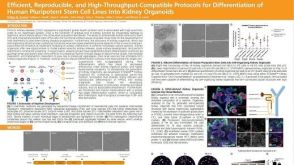 科学海报Efficient, Reproducible and High-Throughput-Compatible Protocols for Differentiation of Human Pluripotent Stem Cell Lines Into Kidney Organoids

 沪公网安备31010102008431号