Yang L et al. (MAY 2014)
Modern pathology : an official journal of the United States and Canadian Academy of Pathology,Inc 27 5 775--783
ALDH1A1 defines invasive cancer stem-like cells and predicts poor prognosis in patients with esophageal squamous cell carcinoma.
Invasion and metastasis are the major cause of deaths in patients with esophageal cancer. In this study,we isolated cancer stem-like cells from an esophageal squamous cell carcinoma cell line EC109 based on aldehyde dehydrogenase 1A1 (ALDH1A1),and found that ALDH1A1(high) cells possessed the capacities of self-renewal,differentiation and tumor initiation,indications of stem cell properties. To support their stemness,ALDH1A1(high) cells exhibited increased potential of invasion and metastasis as compared with ALDH1A1(low) cells. ALDH1A1(high) esophageal squamous cell carcinoma cells expressed increased levels of mRNA for vimentin,matrix metalloproteinase 2,7 and 9 (MMP2,MMP7 and MMP9),but decreased the level of E-cadherin mRNA,suggesting that epithelial-mesenchymal transition and secretary MMPs may be attributed to the high invasive and metastatic capabilities of ALDH1A1(high) cells. Furthermore,we examined esophageal squamous cell carcinoma specimens from 165 patients and found that ALDH1A1(high) cells were associated with esophageal squamous dysplasia and the grades,differentiation and invasion depth,lymph node metastasis and UICC stage of esophageal squamous cell carcinoma,as well as poor prognosis of patients. Our results provide the strong evidence that ALDH1A1(high) cancer stem-like cells contribute to the invasion,metastasis and poor outcome of human esophageal squamous cell carcinoma.
View Publication
产品类型:
产品号#:
01700
01705
01702
产品名:
ALDEFLUOR™ 试剂盒
ALDEFLUOR™ DEAB试剂, 1.5 mM, 1 mL
ALDEFLUOR™检测缓冲液
Nishimura K et al. (FEB 2011)
The Journal of biological chemistry 286 6 4760--71
Development of defective and persistent Sendai virus vector: a unique gene delivery/expression system ideal for cell reprogramming.
The ectopic expression of transcription factors can reprogram differentiated tissue cells into induced pluripotent stem cells. However,this is a slow and inefficient process,depending on the simultaneous delivery of multiple genes encoding essential reprogramming factors and on their sustained expression in target cells. Moreover,once cell reprogramming is accomplished,these exogenous reprogramming factors should be replaced with their endogenous counterparts for establishing autoregulated pluripotency. Complete and designed removal of the exogenous genes from the reprogrammed cells would be an ideal option for satisfying this latter requisite as well as for minimizing the risk of malignant cell transformation. However,no single gene delivery/expression system has ever been equipped with these contradictory characteristics. Here we report the development of a novel replication-defective and persistent Sendai virus (SeVdp) vector based on a noncytopathic variant virus,which fulfills all of these requirements for cell reprogramming. The SeVdp vector could accommodate up to four exogenous genes,deliver them efficiently into various mammalian cells (including primary tissue cells and human hematopoietic stem cells) and express them stably in the cytoplasm at a prefixed balance. Furthermore,interfering with viral transcription/replication using siRNA could erase the genomic RNA of SeVdp vector from the target cells quickly and thoroughly. A SeVdp vector installed with Oct4/Sox2/Klf4/c-Myc could reprogram mouse primary fibroblasts quite efficiently; ∼1% of the cells were reprogrammed to Nanog-positive induced pluripotent stem cells without chromosomal gene integration. Thus,this SeVdp vector has potential as a tool for advanced cell reprogramming and for stem cell research.
View Publication
产品类型:
产品号#:
产品名:
Fedele G et al. (MAY 2011)
Journal of immunology (Baltimore,Md. : 1950) 186 9 5388--96
Attenuated Bordetella pertussis vaccine candidate BPZE1 promotes human dendritic cell CCL21-induced migration and drives a Th1/Th17 response.
New vaccines against pertussis are needed to evoke full protection and long-lasting immunological memory starting from the first administration in neonates--the major target of the life-threatening pertussis infection. A novel live attenuated Bordetella pertussis vaccine strain,BPZE1,has been developed by eliminating or detoxifying three important B. pertussis virulence factors: pertussis toxin,dermonecrotic toxin,and tracheal cytotoxin. We used a human preclinical ex vivo model based on monocyte-derived dendritic cells (MDDCs) to evaluate BPZE1 immunogenicity. We studied the effects of BPZE1 on MDDC functions,focusing on the impact of Bordetella-primed dendritic cells in the regulation of Th and suppressor T cells (Ts). BPZE1 is able to activate human MDDCs and to promote the production of a broad spectrum of proinflammatory and regulatory cytokines. Moreover,conversely to its parental wild-type counterpart BPSM,BPZE1-primed MDDCs very efficiently migrate in vitro in response to the lymphatic chemokine CCL21,due to the inactivation of pertussis toxin enzymatic activity. BPZE1-primed MDDCs drove a mixed Th1/Th17 polarization and also induced functional Ts. Experiments performed in a Transwell system showed that cell contact rather than the production of soluble factors was required for suppression activity. Overall,our findings support the potential of BPZE1 as a novel live attenuated pertussis vaccine,as BPZE1-challenged dendritic cells might migrate from the site of infection to the lymph nodes,prime Th cells,mount an adaptive immune response,and orchestrate Th1/Th17 and Ts responses.
View Publication
产品类型:
产品号#:
09500
产品名:
BIT 9500血清替代物
Ratcliffe E et al. (JAN 2013)
Regenerative Medicine 8 1 39--48
Application of response surface methodology to maximize the productivity of scalable automated human embryonic stem cell manufacture.
AIM: Commercial regenerative medicine will require large quantities of clinical-specification human cells. The cost and quality of manufacture is notoriously difficult to control due to highly complex processes with poorly defined tolerances. As a step to overcome this,we aimed to demonstrate the use of 'quality-by-design' tools to define the operating space for economic passage of a scalable human embryonic stem cell production method with minimal cell loss. MATERIALS & METHODS: Design of experiments response surface methodology was applied to generate empirical models to predict optimal operating conditions for a unit of manufacture of a previously developed automatable and scalable human embryonic stem cell production method. RESULTS & CONCLUSION: Two models were defined to predict cell yield and cell recovery rate postpassage,in terms of the predictor variables of media volume,cell seeding density,media exchange and length of passage. Predicted operating conditions for maximized productivity were successfully validated. Such 'quality-by-design' type approaches to process design and optimization will be essential to reduce the risk of product failure and patient harm,and to build regulatory confidence in cell therapy manufacturing processes.
View Publication
产品类型:
产品号#:
05850
05857
05870
05875
85850
85857
85870
85875
产品名:
mTeSR™1
mTeSR™1
K. Wang et al. (Jan 2025)
Journal for Immunotherapy of Cancer 13 1
B7-H3 CAR-T cell therapy combined with irradiation is effective in targeting bulk and radiation-resistant chordoma cancer cells
Chordoma is a slow-growing,primary malignant bone tumor that arises from notochordal tissue in the midline of the axial skeleton. Surgical excision with negative margins is the mainstay of treatment,but high local recurrence rates are reported even with negative margins. High-dose radiation therapy (RT),such as with proton or carbon ions,has been used as an alternative to surgery,but late local failure remains a problem. B7-H3 is an immune checkpoint,transmembrane protein that is dysregulated in many cancers,including chordoma. This study explores the efficacy of B7-H3 chimeric antigen receptor T (CAR-T) therapy in vitro and in vivo. Chordoma cancer stem cells (CCSCs) were identified using flow cytometry,sphere formation,and western blot analysis. The expression of B7-H3 in paraffin-embedded chordoma tissue was determined by immunohistochemical staining,and the expression of B7-H3 in chordoma cells was measured by flow cytometry. Retroviral particles containing either B7-H3 or CD19 CAR-expressing virus were transduced into T cells derived from peripheral blood mononuclear cells isolated from healthy human donor blood to prepare CAR-T cells. Animal bioluminescent imaging was used to evaluate the killing effect of CAR-T cells on chordoma cells in vivo. An irradiator was used for all irradiation (IR) experiments. The combination of B7-H3 CAR-T cell therapy and IR has a greater killing effect on killing radiation-resistant CCSCs and bulk chordoma cells compared with CAR-T cell or IR monotherapy. Additionally,increased expression of B7-H3 antigens on CCSCs and bulk tumor cells is associated with enhanced CAR-T cell killing in vitro and in vivo xenograft mouse models. Upregulation of B7-H3 expression by IR increases CCSCs sensitivity to B7-H3 CAR-T cell-mediated killing. Our preliminary data show that IR and B7-H3 CAR-T cell therapy is synergistically more effective than either IR or CAR-T cell monotherapy in killing chordoma cells in vitro and in a xenograft mouse model. These results provide preclinical evidence for further developing this combinatorial RT and B7-H3 CAR-T cell therapy model in chordoma
View Publication
产品类型:
产品号#:
01702
产品名:
ALDEFLUOR™检测缓冲液
(Jun 2024)
PLOS ONE 19 6
Multielectrode array characterization of human induced pluripotent stem cell derived neurons in co-culture with primary human astrocytes
Human induced pluripotent stem cells (hiPSCs) derived into neurons offer a powerful in vitro model to study cellular processes. One method to characterize functional network properties of these cells is using multielectrode arrays (MEAs). MEAs can measure the electrophysiological activity of cellular cultures for extended periods of time without disruption. Here we used WTC11 hiPSCs with a doxycycline-inducible neurogenin 2 (NGN2) transgene differentiated into neurons co-cultured with primary human astrocytes. We achieved a synchrony index ?0.9 in as little as six-weeks with a mean firing rate of ?13 Hz. Previous reports show that derived 3D brain organoids can take several months to achieve similar strong network burst synchrony. We also used this co-culture to model aspects of blood-brain barrier breakdown by using human serum. Our fully human co-culture achieved strong network burst synchrony in a fraction of the time of previous reports,making it an excellent first pass,high-throughput method for studying network properties and neurodegenerative diseases.
View Publication
产品类型:
产品号#:
05790
100-0276
100-1130
产品名:
BrainPhys™神经元培养基
mTeSR™ Plus
mTeSR™ Plus
(Jul 2025)
Journal for Immunotherapy of Cancer 13 7
Novel trispecific killer engager targeting B7-H3 enhances natural killer cell antitumor activity against head and neck cancer
AbstractBackgroundPatients with head and neck squamous cell carcinoma (HNSCC),particularly the human papillomavirus negative (HPV−) subset,have a dismal prognosis. Furthermore,patients with Fanconi anemia (FA) have a genetic predisposition with a 500-fold to 700-fold higher incidence of HNSCC. Thus,novel and more efficacious therapies are needed. As current immunotherapies often fail due to suppressive elements in the tumor microenvironment (TME),we developed a trispecific killer engager (TriKE) to direct multiple signals to natural killer (NK) cells to overcome the hypoxic TME. This TriKE is comprised of a camelid nanobody that binds to CD16 on NK cells,an interleukin (IL)-15 moiety,and another novel camelid nanobody that binds to the B7-H3 antigen,which is highly and specifically expressed on the tumor cell surface.MethodsThe B7H3 TriKE was generated using a mammalian expression system. Its functionality was evaluated using flow cytometry-based NK cell degranulation,cytokine production,proliferation and live cell imaging cytotoxicity assays. Models of acute and prolonged hypoxia (1% oxygen) were carried out to assess tumor killing. Tumor progression,NK cell persistence,and survival differences between IL-15-treated and TriKE-treated mice were studied using NOD-scidIL2Rgnull (NSG) mice engrafted with human HNSCC.ResultsHigh B7-H3 expression was found in HPV− HNSCC cell lines,even when the FA gene was knocked out,and The Cancer Genome Atlas patient data showed that high B7-H3 expression predicted poor survival in patients with HPV− HNSCC. Similar to the NK cell activity seen with healthy donors,the B7H3 TriKE enhanced activation,expansion and cytotoxicity of NK cells from patients with HPV− HNSCC,a target population for this therapeutic. Additionally,the B7H3 TriKE improved NK cell cytotoxicity in a three-dimensional spheroid model of HNSCC. In both acute and prolonged hypoxia (1% oxygen),the B7H3 TriKE mediated enhanced tumor killing,mitigating impairment of NK cell cytotoxicity in hypoxia. In vivo,the B7H3 TriKE-treated mice demonstrated substantial antitumor activity and prolonged survival.ConclusionsThe B7H3 TriKE is a novel immunotherapeutic approach that can overcome hypoxic suppression of NK cells in the HNSCC TME. These highly translational studies present an innovative therapy for patients with HNSCC and will be developed further for clinical application.
View Publication
产品类型:
产品号#:
19055
19055RF
产品名:
EasySep™人NK细胞富集试剂盒
RoboSep™ 人NK细胞富集试剂盒含滤芯吸头
(Dec 2024)
bioRxiv 947
Modulatory Effects of Mdivi-1 on OxLDL-Induced Metabolic Alterations, Inflammatory Responses, and Foam Cell Formation in Human Monocytes
Atherosclerosis,a major contributor to cardiovascular disease,involves lipid accumulation and inflammatory processes in arterial walls,with oxidized low-density lipoprotein (OxLDL) playing a central role. OxLDL is increased during aging and stimulates monocyte transformation into foam cells and induces metabolic reprogramming and pro-inflammatory responses,accelerating atherosclerosis progression and contributing to other age-related diseases. This study investigated the effects of Mdivi-1,a mitochondrial fission inhibitor,and S1QEL,a selective complex I-associated reactive oxygen species (ROS) inhibitor,on OxLDL-induced responses in monocytes. Healthy monocytes isolated from participants were treated with OxLDL,with or without Mdivi-1 or S1QEL,and assessed for metabolic shifts,inflammatory cytokine expression,foam cell formation,and ROS production. OxLDL treatment elevated glycolytic activity (ECAR) and expression of pro-inflammatory cytokines IL1B and CXCL8,promoting foam cell formation and mitochondrial ROS (mtROS) production. Mdivi-1 and S1QEL effectively reduced OxLDL-induced glycolytic reprogramming,inflammatory cytokine levels,and foam cell formation while limiting mtROS. These findings suggest that both Mdivi-1 and S1QEL modulate key monocyte responses to OxLDL,providing insights into potential therapeutic approaches for age-related diseases.
View Publication
产品类型:
产品号#:
19669
19669RF
产品名:
EasySep™ Direct人单核细胞分选试剂盒
RoboSep™ Direct人单核细胞分选试剂盒
(Jun 2025)
Molecular Medicine 31
Effect of anti-CD4 mAb induced by inhibiting B cell disorder on immune reconstruction of HIV-infected immunological non-responders
BackgroundIn persons living with HIV,antiretroviral therapy (ART) reduces HIV RNA in their plasma and increases CD4 + T lymphocytes,thus restoring their immune function and reducing mortality rates.MethodsThe heavy and light chains of B cell receptor (BCR) were amplified,sequenced,analyzed,and determined to be anti-CD4 mAb. The cytotoxicity of NK cells mediated by the anti-CD4 mAb was assessed using CCK-8,flow cytometry,ELISA,and western blotting. Detecting the viability/regulation of CD4 cells involved inhibiting the attachment of autoantibodies against CD4 to crucial receptors and detecting the inhibition of key molecules in B cells to produce anti-CD4 mAb in patients with immune non-responders (INR). Furthermore,through Phage Random Peptide Library Screening,we discovered that the AAPMFHSSVQLP-CD4 peptide has an affinity for the anti-CD4 mAb.ResultsAdministering anti-CD4 mAb enhanced NK cytotoxicity. The simultaneous administration of anti-CD4 mAb alongside GST-CD4 alleviated the harmful impacts of anti-CD4 mAb on the CD3 + population in humanized mice,and HIV virus (p24). Individuals diagnosed with INR displayed abnormal B cell activity,particularly with elevated BAFFR expression and increased levels of anti-CD4 mAb. Nevertheless,suppression of BAFFR hindered B cell function and decreased the production of anti-CD4 mAb. In HIV-infected individuals,the dysregulation of B-cells led to the production of anti-CD4 mAb,which in turn facilitated NK cell cytotoxicity and the CD4 + T effect by upregulating the expression of BAFFR.ConclusionThe dysregulation of B-cells in person living with HIV increased the production of anti-CD4 mAb,which in turn promoted NK cell cytotoxicity and the CD4 + T effect.Supplementary InformationThe online version contains supplementary material available at 10.1186/s10020-025-01286-3. Highlights1) B-cell dysregulation increased anti-CD4 mAb levels.2) B cells are abnormally active in patients with INR.3) Knockdown of BAFFR obviously reduced the secretion of anti-CD4 mAb.Supplementary InformationThe online version contains supplementary material available at 10.1186/s10020-025-01286-3.
View Publication
产品类型:
产品号#:
19054
19054RF
产品名:
EasySep™人B细胞富集试剂盒
RoboSep™ 人B细胞富集试剂盒含滤芯吸头
M. Kishko et al. (nov 2020)
Virology 550 21--26
Evaluation of the respiratory syncytial virus G-directed neutralizing antibody response in the human airway epithelial cell model.
Human respiratory syncytial virus (RSV) is a major cause of serious respiratory tract infections in infants and the elderly. Recently it was shown that the RSV G glycoprotein mediates attachment to cells using CX3CR1 as a receptor,and that G-specific neutralizing antibodies can be detected using human airway epithelial (HAE) cell cultures. To investigate the contributions of G-specific antibodies to RSV neutralization,we performed HAE neutralization assays on sera from RSV G-immunized mice or RSV-infected infants. We confirmed that G-specific neutralization using serum from mice or humans could only be detected on HAE cultures. We also found that RSV G-specific antibodies in infants were either subgroup specific or cross-neutralizing. Altogether,our results suggest that G is an important target for generating neutralizing antibodies and would be beneficial to include in an RSV vaccine. Further,inclusion of G antigens from both RSV subgroups may enhance the vaccine cross protection potency.
View Publication


 EasySep™小鼠TIL(CD45)正选试剂盒





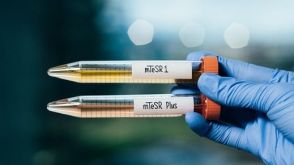 新闻STEMCELL Technologies Launches mTeSR™ Plus, a Next-Generation Culture System for Human ES and iPS Cell Maintenance

 沪公网安备31010102008431号