Reaching a cell monolayer at the end of hiPSC differentiation enhances neural crest lineage commitment
Neural crest stem cells (NCSCs) compose a highly migratory,multipotent,stem cell population arising from the neural plate border of the embryonic ectoderm. Investigating the development of NCSCs is critical in understanding both embryonic development and abnormal events that underlie neurocristopathies. Suggested seeding densities in in vitro human induced pluripotent stem cells (hiPSCs) differentiation protocols,varying between 10,000 cells/cm 2 and 200,000 cells/cm 2,demonstrate a lack of consensus on the optimal conditions to obtain NCSCs. Aiming to maximize the differentiation efficiency of hiPSCs towards the NCSCs lineage,we investigated the effect of the initial seeding density on NCSCs lineage commitment,both in fibroblast- and human peripheral blood mononuclear cell (PBMC)-derived hiPSCs. Cultures were characterized with gene and protein expression analysis assessing stemness ( OCT3/4 and NANOG ),neural crest identity ( SNAI2 and SOX10 ) and neuroectoderm identity ( PAX6 and SOX1 ). We demonstrate that reaching a confluent monolayer of cells by the end of the differentiating protocol is crucial to obtaining NCSCs from hiPSCs. To achieve this,our results indicated 17,000 cells/cm 2 is the optimal initial seeding density. Under this protocol,a confluent monolayer was reached after 8 days of differentiation and an average of 89% SOX10 positive cells were obtained. The fold change of SNAI2 and SOX10 expression was 11-fold and 17-fold higher,respectively,in cultures seeded with 17,000 cells/cm 2,compared to the highest tested density of 200,000 cells/cm 2 . In contrast,seeding 200,000 cells/cm 2 induced neuroectoderm-like cells,confirmed by an average of 45% of cells marking positive for PAX6. With this work,we demonstrate the importance of achieving cellular confluency during NCSCs differentiation.
View Publication
L. B. Crawford et al. (jan 2021)
Journal of virology 95 3
CD34+ Hematopoietic Progenitor Cell Subsets Exhibit Differential Ability To Maintain Human Cytomegalovirus Latency and Persistence.
In human cytomegalovirus (HCMV)-seropositive patients,CD34+ hematopoietic progenitor cells (HPCs) provide an important source of latent virus that reactivates following cellular differentiation into tissue macrophages. Multiple groups have used primary CD34+ HPCs to investigate mechanisms of viral latency. However,analyses of mechanisms of HCMV latency have been hampered by the genetic variability of CD34+ HPCs from different donors,availability of cells,and low frequency of reactivation. In addition,multiple progenitor cell types express surface CD34,and the frequencies of these populations differ depending on the tissue source of the cells and culture conditions in vitro In this study,we generated CD34+ progenitor cells from two different embryonic stem cell (ESC) lines,WA01 and WA09,to circumvent limitations associated with primary CD34+ HPCs. HCMV infection of CD34+ HPCs derived from either WA01 or WA09 ESCs supported HCMV latency and induced myelosuppression similar to infection of primary CD34+ HPCs. Analysis of HCMV-infected primary or ESC-derived CD34+ HPC subpopulations indicated that HCMV was able to establish latency and reactivate in CD38+ CD90+ and CD38+/low CD90- HPCs but persistently infected CD38- CD90+ cells to produce infectious virus. These results indicate that ESC-derived CD34+ HPCs can be used as a model for HCMV latency and that the virus either latently or persistently infects specific subpopulations of CD34+ cells.IMPORTANCE Human cytomegalovirus infection is associated with severe disease in transplant patients and understanding how latency and reactivation occur in stem cell populations is essential to understand disease. CD34+ hematopoietic progenitor cells (HPCs) are a critical viral reservoir; however,these cells are a heterogeneous pool with donor-to-donor variation in functional,genetic,and phenotypic characteristics. We generated a novel system using embryonic stem cell lines to model HCMV latency and reactivation in HPCs with a consistent cellular background. Our study defined three key stem cell subsets with differentially regulated latent and replicative states,which provide cellular candidates for isolation and treatment of transplant-mediated disease. This work provides a direction toward developing strategies to control the switch between latency and reactivation.
View Publication
产品类型:
产品号#:
05310
产品名:
STEMdiff™ 造血试剂盒
L. Sousa et al. (sep 2020)
International journal of molecular sciences 21 18 6717
Impact of KLF4 on Cell Proliferation and Epithelial Differentiation in the Context of Cystic Fibrosis.
Cystic fibrosis (CF) cells display a more cancer-like phenotype vs. non-CF cells. KLF4 overexpression has been described in CF and this transcriptional factor acts as a negative regulator of wt-CFTR. KLF4 is described as exerting its effects in a cell-context-dependent fashion,but it is generally considered a major regulator of proliferation,differentiation,and wound healing,all the processes that are also altered in CF. Therefore,it is relevant to characterize the differential role of KLF4 in these processes in CF vs. non-CF cells. To this end,we used wt- and F508del-CFTR CFBE cells and their respective KLF4 knockout (KO) counterparts to evaluate processes like cell proliferation,polarization,and wound healing,as well as to compare the expression of several epithelial differentiation markers. Our data indicate no major impact of KLF4 KO in proliferation and a differential impact of KLF4 KO in transepithelial electrical resistance (TEER) acquisition and wound healing in wt- vs. F508del-CFTR cells. In parallel,we also observed a differential impact on the levels of some differentiation markers and epithelial-mesencymal transition (EMT)-associated transcription factors. In conclusion,KLF4 impacts TEER acquisition,wound healing,and the expression of differentiation markers in a way that is partially dependent on the CFTR-status of the cell.
View Publication
Inhibition of sterol O-acyltransferase 1 blocks Zika virus infection in cell lines and cerebral organoids
Viruses depend on host metabolic pathways and flaviviruses are specifically linked to lipid metabolism. During dengue virus infection lipid droplets are degraded to fuel replication and Zika virus (ZIKV) infection depends on triglyceride biosynthesis. Here,we systematically investigated the neutral lipid–synthesizing enzymes diacylglycerol O-acyltransferases (DGAT) and the sterol O-acyltransferase (SOAT) 1 in orthoflavivirus infection. Downregulation of DGAT1 and SOAT1 compromises ZIKV infection in hepatoma cells but only SOAT1 and not DGAT inhibitor treatment reduces ZIKV infection. DGAT1 interacts with the ZIKV capsid protein,indicating that protein interaction might be required for ZIKV replication. Importantly,inhibition of SOAT1 severely impairs ZIKV infection in neural cell culture models and cerebral organoids. SOAT1 inhibitor treatment decreases extracellular viral RNA and E protein level and lowers the specific infectivity of virions,indicating that ZIKV morphogenesis is compromised,likely due to accumulation of free cholesterol. Our findings provide insights into the importance of cholesterol and cholesterol ester balance for efficient ZIKV replication and implicate SOAT1 as an antiviral target. Exploring the role of neutral lipid-synthesizing enzymes in Zika virus infection using different cell culture models,inhibition of cholesterol esterification is found to impair ZIKV morphogenesis.
View Publication
产品类型:
产品号#:
08570
100-0483
100-0484
100-0276
100-1130
产品名:
STEMdiff™ 脑类器官试剂盒
Hausser Scientificᵀᴹ 明线血球计数板
ReLeSR™
mTeSR™ Plus
mTeSR™ Plus
J. M. Cable et al. (Jul 2024)
PLOS Pathogens 20 7
Epstein-Barr virus protein EBNA-LP engages YY1 through leucine-rich motifs to promote naïve B cell transformation
Epstein-Barr Virus (EBV) is associated with numerous cancers including B cell lymphomas. In vitro,EBV transforms primary B cells into immortalized Lymphoblastoid Cell Lines (LCLs) which serves as a model to study the role of viral proteins in EBV malignancies. EBV induced cellular transformation is driven by viral proteins including EBV-Nuclear Antigens (EBNAs). EBNA-LP is important for the transformation of naïve but not memory B cells. While EBNA-LP was thought to promote gene activation by EBNA2,EBNA-LP Knockout (LPKO) virus-infected cells express EBNA2-activated cellular genes efficiently. Therefore,a gap in knowledge exists as to what roles EBNA-LP plays in naïve B cell transformation. We developed a trans-complementation assay wherein transfection with wild-type EBNA-LP rescues the transformation of peripheral blood- and cord blood-derived naïve B cells by LPKO virus. Despite EBNA-LP phosphorylation sites being important in EBNA2 co-activation; neither phospho-mutant nor phospho-mimetic EBNA-LP was defective in rescuing naïve B cell outgrowth. However,we identified conserved leucine-rich motifs in EBNA-LP that were required for transformation of adult naïve and cord blood B cells. Because cellular PPAR-g coactivator (PGC) proteins use leucine-rich motifs to engage transcription factors including YY1,a key regulator of DNA looping and metabolism,we examined the role of EBNA-LP in engaging transcription factors. We found a significant overlap between EBNA-LP and YY1 in ChIP-Seq data. By Cut&Run,YY1 peaks unique to WT compared to LPKO LCLs occur at more highly expressed genes. Moreover,Cas9 knockout of YY1 in primary B cells prior to EBV infection indicated YY1 to be important for EBV-mediated transformation. We confirmed EBNA-LP and YY1 biochemical association in LCLs by endogenous co-immunoprecipitation and found that the EBNA-LP leucine-rich motifs were required for YY1 interaction in LCLs. We propose that EBNA-LP engages YY1 through conserved leucine-rich motifs to promote EBV transformation of naïve B cells. Author summaryEpstein-Barr Virus (EBV) is associated with various B cell lymphomas,particularly in immunosuppressed individuals. In the absence of a functional immune system,viral latency proteins,including EBV Nuclear Antigens (EBNAs) act as oncoproteins to promote tumorigenesis. EBNA-LP is one of the first viral proteins produced after infection and is important for the transformation of naïve B cells. However,the roles of EBNA-LP during infection are largely undefined. In this study,developed an assay in which the role of wild type and mutant EBNA-LP could be investigated in the context of primary naïve B cells infected with an EBNA-LP Knockout virus. Using this assay,we identified highly conserved leucine-rich motifs within EBNA-LP that are important for transformation of EBV-infected naïve B cells. These conserved motifs associate with the cellular transcription factor YY1,an important transcriptional regulator in B cell development and in many cancers,that we now show is essential for outgrowth of EBV infected B cells. Our study provides further insights into the mechanisms by which EBV transforms naïve B cells.
View Publication
产品类型:
产品号#:
17864
产品名:
EasySep™人记忆B细胞分选试剂盒
(Jul 2024)
Frontiers in Immunology 15
Inhibition of B cell receptor signaling induced by the human adenovirus species D E3/49K protein
IntroductionThe early transcription unit 3 (E3) of human adenoviruses (HAdVs) encodes several immunoevasins,including the E3/49K protein,which is unique for species D of HAdVs. It is expressed as surface transmembrane protein and shed. E3/49K of HAdV-D64 binds to the protein tyrosine phosphatase surface receptor CD45,thereby modulating activation of T and NK cells.MethodsConsidering that E3/49K represents the most polymorphic viral protein among species D HAdVs,we demonstrate here that all tested E3/49K orthologs bind to the immunologically important regulator CD45. Thus,this feature is conserved regardless of the pathological associations of the respective HAdV types.ResultsIt appeared that modulation of CD45 is a unique property restricted to HAdVs of species D. Moreover,E3/49K treatment inhibited B cell receptor (BCR) signaling and impaired BCR signal phenotypes. The latter were highly comparable to B cells having defects in the expression of CD45,suggesting E3/49K as a potential tool to investigate CD45 specific functions.ConclusionWe identified B cells as new direct target of E3/49K-mediated immune modulation,representing a novel viral immunosubversive mechanism.
View Publication
产品类型:
产品号#:
17954
17954RF
100-0971
产品名:
EasySep™人B细胞分选试剂盒
RoboSep™ 人B细胞分选试剂盒
EasySep™人B细胞分离试剂盒
Nakagawa H et al. (MAR 2002)
Biochemical and biophysical research communications 292 1 94--101
Fenton reaction is primarily involved in a mechanism of (-)-epigallocatechin-3-gallate to induce osteoclastic cell death.
To propose candidates for the prevention or treatment of osteoporosis,we have screened compounds naturally in food for their ability to regulate the differentiation and function of osteoclasts. One of the major green tea flavonoids,(-)-epigallocatechin-3-gallate (EGCG),was found to induce apoptotic cell death of osteoclast-like multinucleated cells after 24 h treatment in a dose-dependent manner (25-100 microM),whereas osteoblasts were not affected. In the present study,we report for the first time a novel cell-death-inducing mechanism triggered by EGCG. The induction of apoptosis by EGCG was suppressed by pretreatment of catalase or calcitonin. It was also suppressed by Fe(III) and Fe(II) chelators. Furthermore,EGCG promoted the reduction of Fe(III) into Fe(II),and the combination of EGCG/Fe(III)/H(2)O(2) induced single-strand DNA breakage in a cell free system. These results indicate that the Fenton reaction is primarily involved in EGCG-induced osteoclastic cell death.
View Publication
产品类型:
产品号#:
73642
73644
产品名:
(-)-Epigallocatechin Gallate, 50 mg
(-)-Epigallocatechin Gallate
Kö et al. (JUL 2004)
The Journal of experimental medicine 200 2 123--35
A new human somatic stem cell from placental cord blood with intrinsic pluripotent differentiation potential.
Here a new,intrinsically pluripotent,CD45-negative population from human cord blood,termed unrestricted somatic stem cells (USSCs) is described. This rare population grows adherently and can be expanded to 10(15) cells without losing pluripotency. In vitro USSCs showed homogeneous differentiation into osteoblasts,chondroblasts,adipocytes,and hematopoietic and neural cells including astrocytes and neurons that express neurofilament,sodium channel protein,and various neurotransmitter phenotypes. Stereotactic implantation of USSCs into intact adult rat brain revealed that human Tau-positive cells persisted for up to 3 mo and showed migratory activity and a typical neuron-like morphology. In vivo differentiation of USSCs along mesodermal and endodermal pathways was demonstrated in animal models. Bony reconstitution was observed after transplantation of USSC-loaded calcium phosphate cylinders in nude rat femurs. Chondrogenesis occurred after transplanting cell-loaded gelfoam sponges into nude mice. Transplantation of USSCs in a noninjury model,the preimmune fetal sheep,resulted in up to 5% human hematopoietic engraftment. More than 20% albumin-producing human parenchymal hepatic cells with absence of cell fusion and substantial numbers of human cardiomyocytes in both atria and ventricles of the sheep heart were detected many months after USSC transplantation. No tumor formation was observed in any of these animals.
View Publication
产品类型:
产品号#:
05150
05350
72762
72764
产品名:
MyeloCult™ H5100
IBMX
IBMX
Maes C et al. (MAY 2006)
The Journal of clinical investigation 116 5 1230--42
Placental growth factor mediates mesenchymal cell development, cartilage turnover, and bone remodeling during fracture repair.
Current therapies for delayed- or nonunion bone fractures are still largely ineffective. Previous studies indicated that the VEGF homolog placental growth factor (PlGF) has a more significant role in disease than in health. Therefore we investigated the role of PlGF in a model of semi-stabilized bone fracture healing. Fracture repair in mice lacking PlGF was impaired and characterized by a massive accumulation of cartilage in the callus,reminiscent of delayed- or nonunion fractures. PlGF was required for the early recruitment of inflammatory cells and the vascularization of the fracture wound. Interestingly,however,PlGF also played a role in the subsequent stages of the repair process. Indeed in vivo and in vitro findings indicated that PlGF induced the proliferation and osteogenic differentiation of mesenchymal progenitors and stimulated cartilage turnover by particular MMPs. Later in the process,PlGF was required for the remodeling of the newly formed bone by stimulating osteoclast differentiation. As PlGF expression was increased throughout the process of bone repair and all the important cell types involved expressed its receptor VEGFR-1,the present data suggest that PlGF is required for mediating and coordinating the key aspects of fracture repair. Therefore PlGF may potentially offer therapeutic advantages for fracture repair.
View Publication
产品类型:
产品号#:
03534
03334
03434
03444
18753
18753RF
产品名:
MethoCult™ GF M3534
MethoCult™ M3334
MethoCult™ GF M3434
MethoCult™ GF M3434
Hervé et al. (JUL 2007)
The Journal of experimental medicine 204 7 1583--93
CD40 ligand and MHC class II expression are essential for human peripheral B cell tolerance.
Hyper-IgM (HIGM) syndromes are primary immunodeficiencies characterized by defects of class switch recombination and somatic hypermutation. HIGM patients who carry mutations in the CD40-ligand (CD40L) gene expressed by CD4(+) T cells suffer from recurrent infections and often develop autoimmune disorders. To investigate the impact of CD40L-CD40 interactions on human B cell tolerance,we tested by ELISA the reactivity of recombinant antibodies isolated from single B cells from three CD40L-deficient patients. Antibody characteristics and reactivity from CD40L-deficient new emigrant B cells were similar to those from healthy donors,suggesting that CD40L-CD40 interactions do not regulate central B cell tolerance. In contrast,mature naive B cells from CD40L-deficient patients expressed a high proportion of autoreactive antibodies,including antinuclear antibodies. Thus,CD40L-CD40 interactions are essential for peripheral B cell tolerance. In addition,a patient with the bare lymphocyte syndrome who could not express MHC class II molecules failed to counterselect autoreactive mature naive B cells,suggesting that peripheral B cell tolerance also depends on major histocompatibility complex (MHC) class II-T cell receptor (TCR) interactions. The decreased frequency of MHC class II-restricted CD4(+) regulatory T cells in CD40L-deficient patients suggests that these T cells may mediate peripheral B cell tolerance through CD40L-CD40 and MHC class II-TCR interactions.
View Publication


 EasySep™小鼠TIL(CD45)正选试剂盒





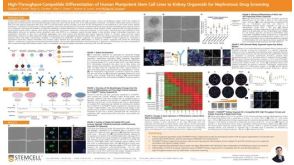 科学海报High-Throughput-Compatible Differentiation of Human Pluripotent Stem Cell Lines to Kidney Organoids for Nephrotoxic Drug Screening

 沪公网安备31010102008431号