P. Ritter et al. (Oct 2024)
Frontiers in Bioengineering and Biotechnology 12 3
A millifluidic bioreactor allows the long term culture of primary lymphocytes or CD34 + hematopoietic cells while allowing the detection of tumorigenic expansion
Long-term culture of primary lymphocytes and hematopoietic stem and progenitor cells (HSPCs) is pivotal to their expansion and study. Furthermore,genetic engineering of the above-mentioned primary human cells has several safety needs,including the requirement of efficient in vitro assays for unwanted tumorigenic events. In this work,we tested and optimized the Miniaturized Optically Accessible Bioreactor (MOAB) platform. The MOAB consists of a millifluidic cell culture device with three optically-accessible culture chambers. Inside the MOAB,we inserted a silk-based framework that resembles some properties of the bone marrow environment and cultivated in this device either CD4 + T lymphocytes isolated from healthy donor buffy coat or cord blood-derived hematopoietic CD34 + cells. A fraction of these cells is viable for up to 3 months. Next,we tested the capability of the MOAB to detect tumorigenic events. Serial dilutions of engineered fluorescent tumor cells were mixed with either CD4 + or CD34 + primary cells,and their growth was followed. By this approach,we successfully detected as little as 100 tumorigenic cells mixed with 100,000 primary cells. We found that non-tumorigenic primary cells colonized the silk environment,whereas tumor cells,after an adaptation phase,expanded and entered the circulation. We conclude that the millifluidic platform allows the detection of rare tumorigenic events in the long-term culture of human cells.
View Publication
产品类型:
产品号#:
09600
09650
产品名:
StemSpan™ SFEM
StemSpan™ SFEM
Cai J et al. (APR 2010)
Journal of Biological Chemistry 285 15 11227--34
Generation of human induced pluripotent stem cells from umbilical cord matrix and amniotic membrane mesenchymal cells
The umbilical cord and placenta are extra-embryonic tissues of particular interest for regenerative medicine. They share an early developmental origin and are a source of vast amounts of cells with multilineage differentiation potential that are poorly immunogenic and without controversy. Moreover,these cells are likely exempt from incorporated mutations when compared with juvenile or adult donor cells such as skin fibroblasts or keratinocytes. Here we report the efficient generation of induced pluripotent stem cells (iPSCs) from mesenchymal cells of the umbilical cord matrix (up to 0.4% of the cells became reprogrammed) and the placental amniotic membrane (up to 0.1%) using exogenous factors and a chemical mixture. iPSCs from these 2 tissues homogeneously showed human embryonic stem cell (hESC)-like characteristics including morphology,positive staining for alkaline phosphatase,normal karyotype,and expression of hESC-like markers including Nanog,Rex1,Oct4,TRA-1-60,TRA-1-80,SSEA-3,and SSEA-4. Selected clones also formed embryonic bodies and teratomas containing derivatives of the 3 germ layers,and could as well be readily differentiated into functional motor neurons. Among other things,our cell lines may prove useful for comparisons between iPSCs derived from multiple tissues regarding the extent of the epigenetic reprogramming,differentiation ability,stability of the resulting lineages,and the risk of associated abnormalities.
View Publication
产品类型:
产品号#:
05850
05857
05870
05875
85850
85857
85870
85875
产品名:
mTeSR™1
mTeSR™1
Brandl C et al. (SEP 2014)
NeuroMolecular Medicine 16 3 551--564
In-depth characterisation of Retinal Pigment Epithelium (RPE) cells derived from human induced pluripotent stem cells (hiPSC).
Induced pluripotent stem cell (iPSC)-derived retinal pigment epithelium (RPE) has widely been appreciated as a promising tool to model human ocular disease emanating from primary RPE pathology. Here,we describe the successful reprogramming of adult human dermal fibroblasts to iPSCs and their differentiation to pure expandable RPE cells with structural and functional features characteristic for native RPE. Fibroblast cultures were established from skin biopsy material and subsequently reprogrammed following polycistronic lentiviral transduction with OCT4,SOX2,KLF4 and L-Myc. Fibroblast-derived iPSCs showed typical morphology,chromosomal integrity and a distinctive stem cell marker profile. Subsequent differentiation resulted in expandable pigmented hexagonal RPE cells. The cells revealed stable RNA expression of mature RPE markers RPE65,RLBP and BEST1. Immunolabelling verified localisation of BEST1 at the basolateral plasma membrane,and scanning electron microscopy showed typical microvilli at the apical side of iPSC-derived RPE cells. Transepithelial resistance was maintained at high levels during cell culture indicating functional formation of tight junctions. Secretion capacity was demonstrated for VEGF-A. Feeding of porcine photoreceptor outer segments revealed the proper ability of these cells for phagocytosis. IPSC-derived RPE cells largely maintained these properties after cryopreservation. Together,our study underlines that adult dermal fibroblasts can serve as a valuable resource for iPSC-derived RPE with characteristics highly reminiscent of true RPE cells. This will allow its broad application to establish cellular models for RPE-related human diseases.
View Publication
产品类型:
产品号#:
05850
05857
05870
05875
07923
07930
07931
07940
07955
07956
07959
07954
85850
85857
85870
85875
100-1061
07952
产品名:
Dispase (1 U/mL)
CryoStor® CS10
CryoStor® CS10
CryoStor® CS10
CryoStor® CS10
CryoStor® CS10
mTeSR™1
mTeSR™1
CryoStor® CS10
CryoStor® CS10
Yang J et al. ( 2014)
BMC Biology 12 1 95
Suppression of histone deacetylation promotes the differentiation of human pluripotent stem cells towards neural progenitor cells
BACKGROUND:Emerging studies of human pluripotent stem cells (hPSCs) raise new prospects for neurodegenerative disease modeling and cell replacement therapies. Therefore,understanding the mechanisms underlying the commitment of neural progenitor cells (NPCs) is important for the application of hPSCs in neurodegenerative disease therapies. It has been reported that epigenetic modifications of histones play important roles in neural differentiation,but the exact mechanisms in regulating hPSC differentiation towards NPCs are not fully elucidated.RESULTS:We demonstrated that suppression of histone deacetylases (HDACs) promoted the differentiation of hPSCs towards NPCs. Application of HDAC inhibitors (HDACi) increased the expression of neuroectodermal markers and enhanced the neuroectodermal specification once neural differentiation was initiated,thereby leading to more NPC generation. Similarly,the transcriptome analysis showed that HDACi increased the expression levels of ectodermal markers and triggered the NPC differentiation related pathways,while decreasing the expression levels of endodermal and mesodermal markers. Furthermore,we documented that HDAC3 but not HDAC1 or HDAC2 was the critical regulator participating in NPC differentiation,and knockdown of HDAC3's cofactor SMRT exhibited a similar effect as HDAC3 on NPC generation.CONCLUSIONS:Our study reveals that HDACs,especially HDAC3,negatively regulate the differentiation of hPSCs towards NPCs at an earlier stage of neural differentiation. Moreover,HDAC3 might function by forming a repressor complex with its cofactor SMRT during this process. Thus,our findings uncover an important epigenetic mechanism of HDAC3 in the differentiation of hPSCs towards NPCs.
View Publication
产品类型:
产品号#:
05850
05857
05870
05875
07920
72302
72304
72307
72308
85850
85857
85870
85875
100-1044
07922
产品名:
ACCUTASE™
Y-27632(二盐酸盐)
Y-27632(二盐酸盐)
Y-27632(二盐酸盐)
Y-27632(二盐酸盐)
mTeSR™1
mTeSR™1
Y-27632(二盐酸盐)
ACCUTASE™
Song W et al. (OCT 2016)
Journal of Biomedical Materials Research - Part A 104 3 678--687
Efficient generation of endothelial cells from human pluripotent stem cells and characterization of their functional properties
Although endothelial cells (ECs) have been derived from human pluripotent stem cells (hPSCs),large-scale generation of hPSC-ECs remains challenging and their functions are not well characterized. Here we report a simple and efficient three-stage method that allows generation of approximately 98 and 9500 ECs on day 16 and day 34,respectively,from each human embryonic stem cell (hESC) input. The functional properties of hESC-ECs derived in the presence and absence of a TGF$$-inhibitory molecule SB431542 were characterized and compared with those of human umbilical vein endothelial cells (HUVECs). Confluent monolayers formed by SB431542(+) hESC-ECs,SB431542(-) hESC-ECs,and HUVECs showed similar permeability to 10,000 Da dextran,but these cells exhibited striking differences in forming tube-like structures in 3D fibrin gels. The SB431542(+) hESC-ECs were most potent in forming tube-like structures regardless of whether VEGF and bFGF were present in the medium; less potent SB431542(-) hESC-ECs and HUVECs responded differently to VEGF and bFGF,which significantly enhanced the ability of HUVECs to form tube-like structures but had little impact on SB431542(-) hESC-ECs. This study offers an efficient approach to large-scale hPSC-EC production and suggests that the phenotypes and functions of hPSC-ECs derived under different conditions need to be thoroughly examined before their use in technology development. This article is protected by copyright. All rights reserved.
View Publication
产品类型:
产品号#:
05850
05857
05870
05875
07923
27215
27250
27216
27217
27260
27270
36254
18098
18098RF
85850
85857
85870
85875
27845
27945
27840
27865
27940
27965
产品名:
Dispase (1 U/mL)
37µm可逆滤筛,小 (15 mL)
37µm可逆滤筛,大 (50 mL)
70µm可逆滤筛,小 (15 mL)
100µm可逆滤筛,小 (15 mL)
70µm可逆滤筛,大 (50 mL)
100µm可逆滤筛,大 (50 mL)
DMEM/F-12 with 15 mM HEPES
mTeSR™1
mTeSR™1
Tay FC et al. (OCT 2013)
Journal of Gene Medicine 15 10 384--395
Targeted transgene insertion into the AAVS1 locus driven by baculoviral vector-mediated zinc finger nuclease expression in human-induced pluripotent stem cells
Background The AAVS1 locus is viewed as a ‘safe harbor' for transgene insertion into human genome. In the present study,we report a new method for AAVS1 targeting in human-induced pluripotent stem cells (hiPSCs). Methods We have developed two baculoviral transduction systems: one to deliver zinc finger nuclease (ZFN) and a DNA donor template for site-specific gene insertion and another to mediate Cre recombinase-mediated cassette exchange system to replace the inserted transgene with a new transgene. Results Our ZFN system provided the targeted integration efficiency of a Neo-EGFP cassette of 93.8% in G418-selected,stable hiPSC colonies. Southern blotting analysis of 20 AASV1 targeted colonies revealed no random integration events. Among 24 colonies examined for mono- or biallelic AASV1 targeting,25% of them were biallelically modified. The selected hiPSCs displayed persistent enhanced green fluorescent protein expression and continued the expression of stem cell pluripotency markers. The hiPSCs maintained the ability to differentiate into three germ lineages in derived embryoid bodies and transgene expression was retained in the differentiated cells. After pre-including the loxP-docking sites into the Neo-EGFP cassette,we demonstrated that a baculovirus-Cre/loxP system could be used to facilitate the replacement of the Neo-EGFP cassette with another transgene cassette at the AAVS1 locus. Conclusions Given high targeting efficiency,stability in expression of inserted transgene and flexibility in transgene exchange,the approach reported in the present study holds potential for generating genetically-modified human pluripotent stem cells suitable for developmental biology research,drug development,regenerative medicine and gene therapy. Copyright textcopyright 2013 John Wiley & Sons,Ltd.
View Publication
产品类型:
产品号#:
05850
05857
05870
05875
07923
85850
85857
85870
85875
产品名:
Dispase (1 U/mL)
mTeSR™1
mTeSR™1
Foley JF et al. (APR 2005)
Journal of immunology (Baltimore,Md. : 1950) 174 8 4892--900
Roles for CXC chemokine ligands 10 and 11 in recruiting CD4+ T cells to HIV-1-infected monocyte-derived macrophages, dendritic cells, and lymph nodes.
We investigated roles for chemoattractants in dissemination of HIV-1 by examining the induction of T cell-active chemokines in HIV-1-infected human monocyte-derived macrophages and dendritic cells. Of the 12 chemokines analyzed,mRNAs for two,CXCL10 and CXCL11,ligands for the chemokine receptor CXCR3,were up-regulated in both cell types upon infection by HIV-1. Induction of these chemokine genes in infected cultures was dependent on both viral entry and reverse transcriptase activity,but not on the HIV-1 envelope glycoprotein. Conditioned medium from infected cells was chemotactic for freshly isolated human CD4+ T cells,and chemotaxis was abolished by pretreatment with an Ab against CXCR3. A lymph node from an HIV-1-infected individual expressed CXCL10 and CXCL11 mRNAs in the paracortex,including venules,as detected by in situ hybridization,whereas neither mRNA was detected after highly active antiretroviral therapy. Because CCR5 on CD4+ T cells is found predominantly on cells that also express CXCR3,these data implicate CXCL10 and CXCL11 in the recruitment of susceptible T cells to HIV-1-infected lymph nodes,macrophages,and dendritic cells. This recruitment might enhance the sequestration of T cells in infected lymphoid organs and the spread of infection between cells,contributing to the immunopathology of AIDS.
View Publication
Thomas RJ et al. (APR 2009)
Biotechnology and Bioengineering 102 6 1636--1644
Automated, scalable culture of human embryonic stem cells in feeder-free conditions.
Large-scale manufacture of human embryonic stem cells (hESCs) is prerequisite to their widespread use in biomedical applications. However,current hESC culture strategies are labor-intensive and employ highly variable processes,presenting challenges for scaled production and commercial development. Here we demonstrate that passaging of the hESC lines,HUES7,and NOTT1,with trypsin in feeder-free conditions,is compatible with complete automation on the CompacT SelecT,a commercially available and industrially relevant robotic platform. Pluripotency was successfully retained,as evidenced by consistent proliferation during serial passage,expression of stem cell markers (OCT4,NANOG,TRA1-81,and SSEA-4),stable karyotype,and multi-germlayer differentiation in vitro,including to pharmacologically responsive cardiomyocytes. Automation of hESC culture will expedite cell-use in clinical,scientific,and industrial applications.
View Publication
产品类型:
产品号#:
05850
05857
05870
05875
85850
85857
85870
85875
产品名:
mTeSR™1
mTeSR™1
Zhu X et al. (JUL 2010)
Molecular cancer therapeutics 9 7 2131--41
Identification of internalizing human single-chain antibodies targeting brain tumor sphere cells.
Glioblastoma multiforme (GBM) is the most common and aggressive form of primary brain tumor for which there is no curative treatment to date. Resistance to conventional therapies and tumor recurrence pose major challenges to treatment and management of this disease,and therefore new therapeutic strategies need to be developed. Previous studies by other investigators have shown that a subpopulation of GBM cells can grow as neurosphere-like cells when cultured in restrictive medium and exhibits enhanced tumor-initiating ability and resistance to therapy. We report here the identification of internalizing human single-chain antibodies (scFv) targeting GBM tumor sphere cells. We selected a large naive phage antibody display library on the glycosylation-dependent CD133 epitope-positive subpopulation of GBM cells grown as tumor spheres and identified internalizing scFvs that target tumor sphere cells broadly,as well as scFvs that target the CD133-positive subpopulation. These scFvs were found to be efficiently internalized by GBM tumor sphere cells. One scFv GC4 inhibited self-renewal of GBM tumor sphere cells in vitro. We have further developed a full-length human IgG1 based on this scFv,and found that it potently inhibits proliferation of GBM tumor sphere cells and GBM cells grown in regular nonselective medium. Taken together,these results show that internalizing human scFvs targeting brain tumor sphere cells can be readily identified from a phage antibody display library,which could be useful for further development of novel therapies that target subpopulations of GBM cells to combat recurrence and resistance to treatment.
View Publication
产品类型:
产品号#:
05751
产品名:
NeuroCult™ NS-A 扩增试剂盒(人)
Pei S et al. (NOV 2013)
The Journal of biological chemistry 288 47 33542--58
Targeting aberrant glutathione metabolism to eradicate human acute myelogenous leukemia cells.
The development of strategies to eradicate primary human acute myelogenous leukemia (AML) cells is a major challenge to the leukemia research field. In particular,primitive leukemia cells,often termed leukemia stem cells,are typically refractory to many forms of therapy. To investigate improved strategies for targeting of human AML cells we compared the molecular mechanisms regulating oxidative state in primitive (CD34(+)) leukemic versus normal specimens. Our data indicate that CD34(+) AML cells have elevated expression of multiple glutathione pathway regulatory proteins,presumably as a mechanism to compensate for increased oxidative stress in leukemic cells. Consistent with this observation,CD34(+) AML cells have lower levels of reduced glutathione and increased levels of oxidized glutathione compared with normal CD34(+) cells. These findings led us to hypothesize that AML cells will be hypersensitive to inhibition of glutathione metabolism. To test this premise,we identified compounds such as parthenolide (PTL) or piperlongumine that induce almost complete glutathione depletion and severe cell death in CD34(+) AML cells. Importantly,these compounds only induce limited and transient glutathione depletion as well as significantly less toxicity in normal CD34(+) cells. We further determined that PTL perturbs glutathione homeostasis by a multifactorial mechanism,which includes inhibiting key glutathione metabolic enzymes (GCLC and GPX1),as well as direct depletion of glutathione. These findings demonstrate that primitive leukemia cells are uniquely sensitive to agents that target aberrant glutathione metabolism,an intrinsic property of primary human AML cells.
View Publication


 EasySep™小鼠TIL(CD45)正选试剂盒





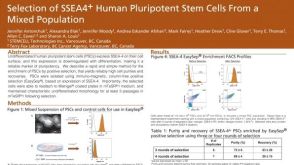 科学海报Selection of SSEA4+ Human Pluripotent Stem Cells from a Mixed Population
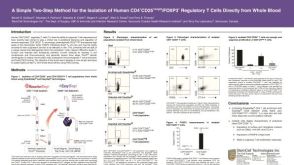 科学海报Isolation of Human CD4+CD25+Bright/Foxp3+ Regulatory T Cells Directly from Whole Blood
 沪公网安备31010102008431号