Mackay AM et al. (JAN 1998)
Tissue engineering 4 4 415--28
Chondrogenic differentiation of cultured human mesenchymal stem cells from marrow.
In the adult human,mesenchymal stem cells (MSCs) resident in bone marrow retain the capacity to proliferate and differentiate along multiple connective tissue lineages,including cartilage. In this study,culture-expanded human MSCs (hMSCs) of 60 human donors were induced to express the morphology and gene products of chondrocytes. Chondrogenesis was induced by culturing hMSCs in micromass pellets in the presence of a defined medium that included 100 nM dexamethasone and 10 ng/ml transforming growth factor-beta(3) (TGF-beta(3)). Within 14 days,cells secreted an extracellular matrix incorporating type II collagen,aggrecan,and anionic proteoglycans. hMSCs could be further differentiated to the hypertrophic state by the addition of 50 nM thyroxine,the withdrawal of TGF-beta(3),and the reduction of dexamethasone concentration to 1 nM. Increased understanding of the induction of chondrogenic differentiation should lead to further progress in defining the mechanisms responsible for the generation of cartilaginous tissues,their maintenance,and their regeneration.
View Publication
Generation of insulin-producing islet-like clusters from human embryonic stem cells.
Recent success in pancreatic islet transplantation has energized the field to discover an alternative source of stem cells with differentiation potential to beta cells. Generation of glucose-responsive,insulin-producing beta cells from self-renewing,pluripotent human ESCs (hESCs) has immense potential for diabetes treatment. We report here the development of a novel serum-free protocol to generate insulin-producing islet-like clusters (ILCs) from hESCs grown under feeder-free conditions. In this 36-day protocol,hESCs were treated with sodium butyrate and activin A to generate definitive endoderm coexpressing CXCR4 and Sox17,and CXCR4 and Foxa2. The endoderm population was then converted into cellular aggregates and further differentiated to Pdx1-expressing pancreatic endoderm in the presence of epidermal growth factor,basic fibroblast growth factor,and noggin. Soon thereafter,expression of Ptf1a and Ngn3 was detected,indicative of further pancreatic differentiation. The aggregates were finally matured in the presence of insulin-like growth factor II and nicotinamide. The temporal pattern of pancreas-specific gene expression in the hESC-derived ILCs showed considerable similarity to in vivo pancreas development,and the final population contained representatives of the ductal,exocrine,and endocrine pancreas. The hESC-derived ILCs contained 2%-8% human C-peptide-positive cells,as well as glucagon- and somatostatin-positive cells. Insulin content as high as 70 ng of insulin/mug of DNA was measured in the ILCs,representing levels higher than that of human fetal islets. In addition,the hESC-derived ILCs contained numerous secretory granules,as determined by electron microscopy,and secreted human C-peptide in a glucose-dependent manner. Disclosure of potential conflicts of interest is found at the end of this article.
View Publication
产品类型:
产品号#:
72242
产品名:
丁酸钠(Sodium Butyrate)
Schumann K et al. (AUG 2015)
Proceedings of the National Academy of Sciences of the United States of America 112 33 10437--42
Generation of knock-in primary human T cells using Cas9 ribonucleoproteins.
T-cell genome engineering holds great promise for cell-based therapies for cancer,HIV,primary immune deficiencies,and autoimmune diseases,but genetic manipulation of human T cells has been challenging. Improved tools are needed to efficiently knock out" genes and "knock in" targeted genome modifications to modulate T-cell function and correct disease-associated mutations. CRISPR/Cas9 technology is facilitating genome engineering in many cell types�
View Publication
产品类型:
产品号#:
17952
17952RF
100-0696
产品名:
EasySep™人CD4+ T细胞分选试剂盒
RoboSep™ 人CD4+ T细胞分选试剂盒
EasySep™人CD4+ T细胞分离试剂盒
Fontaine C et al. (APR 2008)
Stem cells (Dayton,Ohio) 26 4 1037--46
Hedgehog signaling alters adipocyte maturation of human mesenchymal stem cells.
Human stem cells are powerful tools by which to investigate molecular mechanisms of cell growth and differentiation under normal and pathological conditions. Hedgehog signaling,the dysregulation of which causes several pathologies,such as congenital defects and cancer,is involved in several cell differentiation processes and interferes with adipocyte differentiation of rodent cells. The present study was aimed at investigating the effect of Hedgehog pathway modulation on adipocyte phenotype using different sources of human mesenchymal cells,such as bone marrow stromal cells and human multipotent adipose-derived stem cells. We bring evidence that Hedgehog signaling decreases during human adipocyte differentiation. Inhibition of this pathway is not sufficient to trigger adipogenesis,but activation of Hedgehog pathway alters adipocyte morphology as well as insulin sensitivity. Analysis of glycerol-3-phosphate dehydrogenase activity and expression of adipocyte marker genes indicate that activation of Hedgehog signaling by purmorphamine impairs adipogenesis. In sharp contrast to reports in rodent cells,the maturation process,but not the early steps of human mesenchymal stem cell differentiation,is affected by Hedgehog activation. Hedgehog interferes with adipocyte differentiation by targeting CCAAT enhancer-binding protein alpha and peroxisome proliferator-activated receptor (PPAR) gamma2 expression,whereas PPARgamma1 level remains unaffected. Although Hedgehog pathway stimulation does not modify the total number of adipocytes,adipogenesis appears dramatically impaired,with reduced lipid accumulation,a decrease in adipocyte-specific markers,and acquisition of an insulin-resistant phenotype. This study indicates that a decrease in Hedgehog signaling is necessary but not sufficient to trigger adipocyte differentiation and unveils a striking difference in the adipocyte differentiation process between rodent and human mesenchymal stem cells.
View Publication
产品类型:
产品号#:
72202
72204
100-1049
产品名:
Purmorphamine
Purmorphamine
Purmorphamine
Watkins NA et al. (MAY 2009)
Blood 113 19 e1--9
A HaemAtlas: characterizing gene expression in differentiated human blood cells.
Hematopoiesis is a carefully controlled process that is regulated by complex networks of transcription factors that are,in part,controlled by signals resulting from ligand binding to cell-surface receptors. To further understand hematopoiesis,we have compared gene expression profiles of human erythroblasts,megakaryocytes,B cells,cytotoxic and helper T cells,natural killer cells,granulocytes,and monocytes using whole genome microarrays. A bioinformatics analysis of these data was performed focusing on transcription factors,immunoglobulin superfamily members,and lineage-specific transcripts. We observed that the numbers of lineage-specific genes varies by 2 orders of magnitude,ranging from 5 for cytotoxic T cells to 878 for granulocytes. In addition,we have identified novel coexpression patterns for key transcription factors involved in hematopoiesis (eg,GATA3-GFI1 and GATA2-KLF1). This study represents the most comprehensive analysis of gene expression in hematopoietic cells to date and has identified genes that play key roles in lineage commitment and cell function. The data,which are freely accessible,will be invaluable for future studies on hematopoiesis and the role of specific genes and will also aid the understanding of the recent genome-wide association studies.
View Publication
Generating human intestinal tissue from pluripotent stem cells in vitro.
Here we describe a protocol for generating 3D human intestinal tissues (called organoids) in vitro from human pluripotent stem cells (hPSCs). To generate intestinal organoids,pluripotent stem cells are first differentiated into FOXA2(+)SOX17(+) endoderm by treating the cells with activin A for 3 d. After endoderm induction,the pluripotent stem cells are patterned into CDX2(+) mid- and hindgut tissue using FGF4 and WNT3a. During this patterning step,3D mid- or hindgut spheroids bud from the monolayer epithelium attached to the tissue culture dish. The 3D spheroids are further cultured in Matrigel along with prointestinal growth factors,and they proliferate and expand over 1-3 months to give rise to intestinal tissue,complete with intestinal mesenchyme and epithelium comprising all of the major intestinal cell types. To date,this is the only method for efficiently directing the differentiation of hPSCs into 3D human intestinal tissue in vitro.
View Publication
产品类型:
产品号#:
05850
05857
05870
05875
85850
85857
85870
85875
产品名:
mTeSR™1
mTeSR™1
Zhou T et al. (DEC 2012)
Nature protocols 7 12 2080--9
Generation of human induced pluripotent stem cells from urine samples.
Human induced pluripotent stem cells (iPSCs) have been generated with varied efficiencies from multiple tissues. Yet,acquiring donor cells is,in most instances,an invasive procedure that requires laborious isolation. Here we present a detailed protocol for generating human iPSCs from exfoliated renal epithelial cells present in urine. This method is advantageous in many circumstances,as the isolation of urinary cells is simple (30 ml of urine are sufficient),cost-effective and universal (can be applied to any age,gender and race). Moreover,the entire procedure is reasonably quick--around 2 weeks for the urinary cell culture and 3-4 weeks for the reprogramming--and the yield of iPSC colonies is generally high--up to 4% using retroviral delivery of exogenous factors. Urinary iPSCs (UiPSCs) also show excellent differentiation potential,and thus represent a good choice for producing pluripotent cells from normal individuals or patients with genetic diseases,including those affecting the kidney.
View Publication
A. M\'endez-Mancilla et al. (feb 2022)
Cell chemical biology 29 2 321--327.e4
Chemically modified guide RNAs enhance CRISPR-Cas13 knockdown in human cells.
RNA-targeting CRISPR-Cas13 proteins have recently emerged as a powerful platform to modulate gene expression outcomes. However,protein and CRISPR RNA (crRNA) delivery in human cells can be challenging with rapid crRNA degradation yielding transient knockdown. Here we compare several chemical RNA modifications at different positions to identify synthetic crRNAs that improve RNA targeting efficiency and half-life in human cells. We show that co-delivery of modified crRNAs and recombinant Cas13 enzyme in ribonucleoprotein (RNP) complexes can alter gene expression in primary CD4+ and CD8+ T cells. This system represents a robust and efficient method to modulate transcripts without genetic manipulation.
View Publication
产品类型:
产品号#:
07801
17853
17952
18060
18061
07861
07811
17853RF
100-0699
17952RF
100-0696
产品名:
EasySep™人CD8正选试剂盒 II
EasySep™人CD4+ T细胞分选试剂盒
Lymphoprep™
Lymphoprep™
Lymphoprep™
Lymphoprep™
RoboSep™ 人CD8正选试剂盒 II
EasySep™人CD8阳性选择试剂盒II
RoboSep™ 人CD4+ T细胞分选试剂盒
EasySep™人CD4+ T细胞分离试剂盒
(Sep 2024)
International Journal of Biological Sciences 20 13
Chimerization of human ESC-derived extraembryonic cells with the mouse blastocyst
It has been reported that human embryonic stem cells (hESCs) treated with BMP4 and inhibitors of TGF? signaling (A83-01) and FGF signaling (PD173074),called BAP,can efficiently differentiate to extraembryonic (ExE) cells in vitro. Due to restricted access to human embryos,it is ethically impossible to test the developmental potential of ExE cells in vivo. Here,we demonstrate that most ExE cells expressed molecular markers for both trophoblasts (TBs) and amniotic cells (ACs). Following intra-uterine transplantation,ExE cells contributed to the mouse placenta. More interestingly,ExE cells could chimerize with the mouse blastocyst as,after injection into the blastocyst,they penetrated its trophectoderm. After implantation of the injected blastocysts into surrogate mice,human cells were found at E14 in placental labyrinth,junction zones,and even near the uterine decidua,expressed placental markers,and secreted human chorionic gonadotropin. Surprisingly,ExE cells also contributed to cartilages of the chimeric embryo with some expressing the chondrogenic marker SOX9,consistent with the mesodermal potential of TBs and ACs in the placenta. Deleting MSX2,a mesodermal determinant,restricted the contribution of ExE cells to the placenta. Thus,we conclude that hESC-derived ExE cells can chimerize with the mouse blastocyst and contribute to both the placenta and cartilages of the chimera consistent with their heteogenious nature. Intra-uterus and intra-blastocyst injections are novel and sensitive methods to study the developmental potential of ExE cells.
View Publication


 EasySep™小鼠TIL(CD45)正选试剂盒





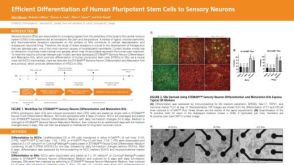 科学海报Efficient Differentiation of Human Pluripotent Stem Cells to Sensory Neurons
 57:26
线上讲座Consequences of Culture-Acquired Genetic Changes in Human Pluripotent Stem Cells发布日期: 02/20/2024
57:26
线上讲座Consequences of Culture-Acquired Genetic Changes in Human Pluripotent Stem Cells发布日期: 02/20/2024

 沪公网安备31010102008431号