Y. Nakashima et al. (Aug 2025)
Scientific Reports 15 19990101)254:1<135
Effect of iPS cell culture medium on the differentiation potential of induced cardiac tissues
The present study focused on the culture medium of induced pluripotent stem cells (iPSCs) prior to the use of cardiomyocytes differentiation induction medium (pre-culture medium). Seven types (Nos. 1-7) of StemFit AK03 medium (Ajinomoto) for clinical iPSCs with varying compositions were prepared as pre-culture medium. The cardiac muscle troponin T (cTnT) positivity of No. 1 (StemFit AK03 medium) was 84%,No. 3 (similar to E8 medium) was 89%,No. 2 (similar to E8 medium) was 91%,No. 5 (similar to EB Formation medium) was 95%,when using differentiation induction medium prepared with known components available for clinical cell production. The formation of cardiac tissues was assessed by evaluating the expression levels of specific markers,including cTnT,atrial natriuretic peptides (ANP),and pro-B-type natriuretic peptide (proBNP). The results demonstrated that cardiac tissue with high protein expression levels of cTnT and ANP was formed when similar to E8 medium as pre-culture medium. The online version contains supplementary material available at 10.1038/s41598-025-13259-x.
View Publication
产品类型:
产品号#:
05230
产品名:
STEMdiff™ 三胚层分化试剂盒
M. T. Georgescu et al. ( 2020)
Frontiers in immunology 11 138
Recombinant Factor VIII Fc Inhibits B Cell Activation via Engagement of the Fc$\gamma$RIIB Receptor.
The development of neutralizing antibodies (inhibitors) against factor VIII (FVIII) is a major complication of hemophilia A treatment. The sole clinical therapy to restore FVIII tolerance in patients with inhibitors remains immune tolerance induction (ITI) which is expensive,difficult to administer and not always successful. Although not fully understood,the mechanism of ITI is thought to rely on inhibition of FVIII-specific B cells (1). Its efficacy might therefore be improved through more aggressive B cell suppression. Fc$\gamma$RIIB is an inhibitory Fc receptor that down-regulates B cell signaling when cross-linked with the B cell receptor (BCR). We sought to investigate if recombinant FVIII Fc (rFVIIIFc),an Fc fusion molecule composed of FVIII and the Fc region of immunoglobulin G1 (IgG1) (2),is able to inhibit B cell activation more readily than FVIII. rFVIIIFc was able to bind FVIII-exposed and na{\{i}}ve B cells from hemophilia A mice as well as a FVIII-specific murine B cell hybridoma line (413 cells). An anti-Fc$\gamma$RIIB antibody and FVIII inhibited binding suggesting that rFVIIIFc is able to interact with both Fc$\gamma$RIIB and the BCR. Furthermore incubation of B cells from FVIII-exposed mice and 413 cells with rFVIIIFc resulted in increased phosphorylation of SH-2 containing inositol 5-phosphatase (SHIP) when compared to FVIII. B cells from FVIII-exposed hemophilia A mice also exhibited decreased extracellular signal-regulated kinase (ERK) phosphorylation when exposed to rFVIIIFc. These differences were absent in B cells from na{\"{i}}ve non-FVIII exposed hemophilic mice suggesting an antigen-dependent effect. Finally rFVIIIFc was able to inhibit B cell calcium flux induced by anti-Ig F(ab)2. Our results therefore indicate that rFVIIIFc is able to crosslink Fc$\gamma$RIIB and the BCR of FVIII-specific B cells causing inhibitory signaling in these cells."""
View Publication
产品类型:
产品号#:
19854
19854RF
产品名:
EasySep™小鼠B细胞分选试剂盒
RoboSep™ 小鼠B细胞分选试剂盒
Y. He et al. (jun 2020)
Scientific reports 10 1 10180
CD47 is a negative regulator of intestinal epithelial cell self-renewal following DSS-induced experimental colitis.
CD47 deficient mice are resistant to dextran sulfate sodium (DSS)-induced experimental colitis. The underlying mechanism,however,remains incompletely understood. In this study,we characterized the role of CD47 in modulating homeostasis of gastrointestinal tract. We found that CD47 expression in both human and mouse intestinal epithelium was upregulated in colitic condition compared to that under normal condition. In line with this,CD47 deficiency protected mice from DSS-induced colitis. Analysis based on both intestinal organoid and cultured cell assays showed that CD47 deficiency accelerated intestinal epithelial cell proliferation and migration. Mechanistically,western blot and functional assays indicated that CD47 deficiency promoting mouse intestinal epithelial cell proliferation and migration follow cell injury is likely through upregulating expression of four Yamanaka transcriptional factors Oct4,Sox2,Klf4 and c-Myc (OSKM in abbreviation). Our studies thus reveal CD47 as a negative regulator in intestinal epithelial cell renewal during colitis through downregulating OSKM transcriptional factors.
View Publication
产品类型:
产品号#:
06005
产品名:
IntestiCult™ 类器官生长培养基 (小鼠)
(Jun 2024)
Materials Today Bio 26 4
Nanofiber-microwell cell culture system for spatially patterned differentiation of pluripotent stem cells in 3D
The intricate interplay between biochemical and physical cues dictates pluripotent stem cell (PSC) differentiation to form various tissues. While biochemical modulation has been extensively studied,the role of biophysical microenvironments in early lineage commitment remains elusive. Here,we introduce a novel 3D cell culture system combining electrospun nanofibers with microfabricated polydimethylsiloxane (PDMS) patterns. This system enables the controlled formation of semispherical human induced pluripotent stem cell (hiPSC) colonies,facilitating the investigation of local mechanical stem cell niches on mechano-responsive signaling and lineage specification. Our system unveiled spatially organized RhoA activity coupled with actin-myosin cable formation,suggesting mechano-dependent hiPSC behaviors. Nodal network analysis of RNA-seq data revealed RhoA downstream regulation of YAP signaling,DNA histone modifications,and patterned germ layer specification. Notably,altering colony morphology through controlled PDMS microwell shaping effectively modulated the spatial distribution of mechano-sensitive mediators and subsequent differentiation. This study provides a cell culture platform to decipher the role of biophysical cues in early embryogenesis,offering valuable insights for material design in tissue engineering and regenerative medicine applications. Graphical abstractImage 1
View Publication
产品类型:
产品号#:
85850
85857
产品名:
mTeSR™1
mTeSR™1
(Feb 2024)
Nature Communications 15
Development of pathophysiologically relevant models of sickle cell disease and β-thalassemia for therapeutic studies
Ex vivo cellular system that accurately replicates sickle cell disease and β-thalassemia characteristics is a highly sought-after goal in the field of erythroid biology. In this study,we present the generation of erythroid progenitor lines with sickle cell disease and β-thalassemia mutation using CRISPR/Cas9. The disease cellular models exhibit similar differentiation profiles,globin expression and proteome dynamics as patient-derived hematopoietic stem/progenitor cells. Additionally,these cellular models recapitulate pathological conditions associated with both the diseases. Hydroxyurea and pomalidomide treatment enhanced fetal hemoglobin levels. Notably,we introduce a therapeutic strategy for the above diseases by recapitulating the HPFH3 genotype,which reactivates fetal hemoglobin levels and rescues the disease phenotypes,thus making these lines a valuable platform for studying and developing new therapeutic strategies. Altogether,we demonstrate our disease cellular systems are physiologically relevant and could prove to be indispensable tools for disease modeling,drug screenings and cell and gene therapy-based applications. Sickle cell disease (SCD) and β-thalassemia (BT) are globally prevalent inherited blood disorders but,despite extensive research,no ex vivo system exists for SCD and BT. Here,the authors generate pathophysiologically relevant erythroid progenitor models of SCD and BT.
View Publication
DeFeo-Jones D et al. (FEB 2005)
Molecular cancer therapeutics 4 2 271--9
Tumor cell sensitization to apoptotic stimuli by selective inhibition of specific Akt/PKB family members.
Recent studies indicate that dysregulation of the Akt/PKB family of serine/threonine kinases is a prominent feature of many human cancers. The Akt/PKB family is composed of three members termed Akt1/PKBalpha,Akt2/PKBbeta,and Akt3/PKBgamma. It is currently not known to what extent there is functional overlap between these family members. We have recently identified small molecule inhibitors of Akt. These compounds have pleckstrin homology domain-dependent,isozyme-specific activity. In this report,we present data showing the relative contribution that inhibition of the different isozymes has on the apoptotic response of tumor cells to a variety of chemotherapies. In multiple cell backgrounds,maximal induction of caspase-3 activity is achieved when both Akt1 and Akt2 are inhibited. This induction is not reversed by overexpression of functionally active Akt3. The level of caspase-3 activation achieved under these conditions is equivalent to that observed with the phosphatidylinositol-3-kinase inhibitor LY294002. We also show that in different tumor cell backgrounds inhibition of mammalian target of rapamycin,a downstream substrate of Akt,is less effective in inducing caspase-3 activity than inhibition of Akt1 and Akt2. This shows that the survival phenotype conferred by Akt can be mediated by signaling pathways independent of mammalian target of rapamycin in some tumor cell backgrounds. Finally,we show that inhibition of both Akt1 and Akt2 selectively sensitizes tumor cells,but not normal cells,to apoptotic stimuli.
View Publication
产品类型:
产品号#:
72942
72944
产品名:
AKT抑制剂VIII
AKT抑制剂VIII
Segal MS et al. (JAN 2006)
Diabetes 55 1 102--9
Nitric oxide cytoskeletal-induced alterations reverse the endothelial progenitor cell migratory defect associated with diabetes.
Stromal-derived factor-1 (SDF-1) is a critical chemokine for endothelial progenitor cell (EPC) recruitment to areas of ischemia,allowing these cells to participate in compensatory angiogenesis. The SDF-1 receptor,CXCR4,is expressed in developing blood vessels as well as on CD34+ EPCs. We describe that picomolar and nanomolar concentrations of SDF-1 differentially influence neovascularization,inducing CD34+ cell migration and EPC tube formation. CD34+ cells isolated from diabetic patients demonstrate a marked defect in migration to SDF-1. This defect is associated,in some but not all patients,with a cell surface activity of CD26/dipeptidyl peptidase IV,an enzyme that inactivates SDF-1. Diabetic CD34+ cells also do not migrate in response to vascular endothelial growth factor and are structurally rigid. However,incubating CD34+ cells with a nitric oxide (NO) donor corrects this migration defect and corrects the cell deformability. In addition,exogenous NO alters vasodilator-stimulated phosphoprotein and mammalian-enabled distribution in EPCs. These data support a common downstream cytoskeletal alteration in diabetic CD34+ cells that is independent of growth factor receptor activation and is correctable with exogenous NO. This inability of diabetic EPCs to respond to SDF-1 may contribute to aberrant tissue vascularization and endothelial repair in diabetic patients.
View Publication
产品类型:
产品号#:
05900
05950
产品名:
Weidanz Ja et al. (OCT 2006)
Journal of Immunology (Baltimore,Md. : 1950) 177 8 5088--97
Levels of specific peptide-HLA class I complex predicts tumor cell susceptibility to CTL killing.
Recognition of tumor-associated Ags (TAAs) on tumor cells by CTLs and the subsequent tumor cell death are assumed to be dependent on TAA protein expression and to correlate directly with the level of peptide displayed in the binding site of the HLA class I molecule. In this study we evaluated whether the levels of Her-2/neu protein expression on human tumor cell lines directly correlate with HLA-A*0201/Her2/neu peptide presentation and CTL recognition. We developed a TCR mimic (TCRm) mAb designated 1B8 that specifically recognizes the HLA-A2.1/Her2/neu peptide (369-377) (Her2(369)-A2) complex. TCRm mAb staining intensity varied for the five human tumor cell lines analyzed,suggesting quantitative differences in levels of the Her2(369)-A2 complex on these cells. Analysis of tumor cell lines pretreated with IFN-gamma and TNF-alpha for Her2/neu protein and HLA-A2 molecule expression did not reveal a direct correlation between the levels of Her2/neu Ag,HLA-A2 molecule,and Her2(369)-A2 complex expression. However,compared with untreated cells,cytokine-treated cell lines showed an increase in Her2(369)-A2 epitope density that directly correlated with enhanced tumor cell death (p = 0.05). Although a trend was observed between tumor cell lysis and the level of the Her2(369)-A2 complex for untreated cells,the association was not significant. These findings suggest that tumor cell susceptibility to CTL-mediated lysis may be predicted based on the level of specific peptide-MHC class I expression rather than on the total level of TAA expression. Further,these studies demonstrate the potential of the TCRm mAb for validation of endogenous HLA-peptide epitopes on tumor cells.
View Publication
产品类型:
产品号#:
03800
03801
03802
03803
03804
03805
03806
03831
产品名:
ClonaCell™-HY杂交瘤试剂盒
ClonaCell™-HY培养基A
ClonaCell™-HY 培养基 B
ClonaCell™-HY 培养基 C
ClonaCell™-HY 培养基 D
ClonaCell™-HY 培养基 E
ClonaCell™-HY PEG
ClonaCell™-HY 液体 HAT 筛选培养基
Sciaccaluga M et al. ( 2007)
Oncology reports 17 1 17--23
Constitutive phosphorylation of Janus kinase 2 in the GL15 glioblastoma derived human cell line.
The notion that gliomas could originate from mutated glial precursor cells highlights the possibility of modulating the proliferative and migratory behaviour of glioma cells by acting on the molecular mechanisms operative during the development of the Central Nervous System (CNS),but absent in the normal adult brain. We show that the GL15 glioblastoma derived human cell line displays a high expression of nestin which,combined with the previously demonstrated high expression of vimentin,constitutes a characteristic of astrocyte restricted precursors. We also show that,in analogy with some leukaemia cells,GL15 cells display the constitutively phosphorylated form of Janus kinase 2 (JAK2),a tyrosine kinase expressed during CNS development but undetectable in the normal adult brain. The constitutive activation of JAK2 does not result from chromosomal aberrations involving the JAK2 gene,but most probably from abnormally activated transduction systems operative in glioblastoma cells. We then investigated the effects of tyrphostin AG490,an inhibitor of JAK2 autophosphorylation,on GL15 cell growth. In the absence of exogenous growth factors and cytokines,10 microM tyrphostin AG490 induces an S phase arrest,combined with a partial impairment of the G2 phase of the cell cycle. The abnormally activated JAK2 could then potentially represent a target for a selective pharmacological approach in glioblastoma cells in which a combination of glial precursor characteristics and genetic alterations occurs.
View Publication
产品类型:
产品号#:
72932
72934
产品名:
AG - 490
Baptista S et al. (SEP 2014)
Stem cell research 13 2 329--41
Methamphetamine decreases dentate gyrus stem cell self-renewal and shifts the differentiation towards neuronal fate.
Methamphetamine (METH) is a highly addictive psychostimulant drug of abuse that negatively interferes with neurogenesis. In fact,we have previously shown that METH triggers stem/progenitor cell death and decreases neuronal differentiation in the dentate gyrus (DG). Still,little is known regarding its effect on DG stem cell properties. Herein,we investigate the impact of METH on mice DG stem/progenitor cell self-renewal functions. METH (10nM) decreased DG stem cell self-renewal,while 1nM delayed cell cycle in the G0/G1-to-S phase transition and increased the number of quiescent cells (G0 phase),which correlated with a decrease in cyclin E,pEGFR and pERK1/2 protein levels. Importantly,both drug concentrations (1 or 10nM) did not induce cell death. In accordance with the impairment of self-renewal capacity,METH (10nM) decreased Sox2(+)/Sox2(+) while increased Sox2(-)/Sox2(-) pairs of daughter cells. This effect relied on N-methyl-d-aspartate (NMDA) signaling,which was prevented by the NMDA receptor antagonist,MK-801 (10μM). Moreover,METH (10nM) increased doublecortin (DCX) protein levels consistent with neuronal differentiation. In conclusion,METH alters DG stem cell properties by delaying cell cycle and decreasing self-renewal capacities,mechanisms that may contribute to DG neurogenesis impairment followed by cognitive deficits verified in METH consumers.
View Publication


 EasySep™小鼠TIL(CD45)正选试剂盒





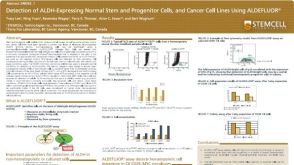 科学海报Detection of ALDH-Expressing Normal Stem and Progenitor Cells, and Cancer Cell Lines Using ALDEFLUOR™
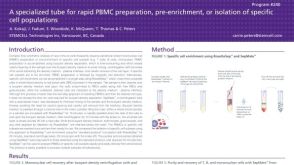 科学海报A Specialized Tube for Rapid PBMC Preparation, Pre-Enrichment, or Isolation of Specific Cell Populations
 沪公网安备31010102008431号