Lai W-H et al. (DEC 2010)
Cellular reprogramming 12 6 641--653
ROCK inhibition facilitates the generation of human-induced pluripotent stem cells in a defined, feeder-, and serum-free system.
Human-induced pluripotent stem cells (iPSCs) generated from human adult somatic cells through reprogramming hold great promises for future regenerative medicine. However,exposure of human iPSCs to animal feeder and serum in the process of their generation and maintenance imposes risk of transmitting animal pathogens to human subjects,thus hindering the potential therapeutic applications. Here,we report the successful generation of human iPSCs in a feeder-independent culture system with defined factors. Two stable human iPSC lines were established from primary human dermal fibroblasts of two healthy volunteers. These human iPSCs expressed a panel of pluripotency markers including stage-specific embryonic antigen (SSEA)-4,tumor-rejection antigen (TRA)-1-60,TRA-1-81,and alkaline phosphatase,while maintaining normal karyotypes and the exogenous reprogramming factors being silenced. In addition,these human iPSCs can differentiate along lineages representative of the three embryonic germ layers upon formation of embryoid bodies,indicating their pluripotency. Furthermore,subcutaneous transplantation of these cells into immunodeficient mice resulted in teratoma formation in 6 to 8 weeks. Our findings are an important step toward generating patient-specific iPSCs in a more clinically compliant manner by eliminating the need of animal feeder cells and animal serum.
View Publication
产品类型:
产品号#:
05850
05857
05870
05875
85850
85857
85870
85875
产品名:
mTeSR™1
mTeSR™1
Orelio C et al. (DEC 2008)
Blood 112 13 4895--904
Interleukin-1-mediated hematopoietic cell regulation in the aorta-gonad-mesonephros region of the mouse embryo.
Hematopoiesis during development is a dynamic process,with many factors involved in the emergence and regulation of hematopoietic stem cells (HSCs) and progenitor cells. Whereas previous studies have focused on developmental signaling and transcription factors in embryonic hematopoiesis,the role of well-known adult hematopoietic cytokines in the embryonic hematopoietic system has been largely unexplored. The cytokine interleukin-1 (IL-1),best known for its proinflammatory properties,has radioprotective effects on adult bone marrow HSCs,induces HSC mobilization,and increases HSC proliferation and/or differentiation. Here we examine IL-1 and its possible role in regulating hematopoiesis in the midgestation mouse embryo. We show that IL-1,IL-1 receptors (IL-1Rs),and signaling mediators are expressed in the aorta-gonad-mesonephros (AGM) region during the time when HSCs emerge in this site. IL-1 signaling is functional in the AGM,and the IL-1RI is expressed ventrally in the aortic subregion by some hematopoietic,endothelial,and mesenchymal cells. In vivo analyses of IL-1RI-deficient embryos show an increased myeloid differentiation,concomitant with a slight decrease in AGM HSC activity. Our results suggest that IL-1 is an important homeostatic regulator at the earliest time of HSC development,acting to limit the differentiation of some HSCs along the myeloid lineage.
View Publication
产品类型:
产品号#:
03434
03444
产品名:
MethoCult™ GF M3434
MethoCult™ GF M3434
(Sep 2024)
Nature Communications 15
Sequence variants influencing the regulation of serum IgG subclass levels
Immunoglobulin G (IgG) is the main isotype of antibody in human blood. IgG consists of four subclasses (IgG1 to IgG4),encoded by separate constant region genes within the Ig heavy chain locus (IGH). Here,we report a genome-wide association study on blood IgG subclass levels. Across 4334 adults and 4571 individuals under 18 years,we discover ten new and identify four known variants at five loci influencing IgG subclass levels. These variants also affect the risk of asthma,autoimmune diseases,and blood traits. Seven variants map to the IGH locus,three to the Fcγ receptor (FCGR) locus,and two to the human leukocyte antigen (HLA) region,affecting the levels of all IgG subclasses. The most significant associations are observed between the G1m (f),G2m(n) and G3m(b*) allotypes,and IgG1,IgG2 and IgG3,respectively. Additionally,we describe selective associations with IgG4 at 16p11.2 (ITGAX) and 17q21.1 (IKZF3,ZPBP2,GSDMB,ORMDL3). Interestingly,the latter coincides with a highly pleiotropic signal where the allele associated with lower IgG4 levels protects against childhood asthma but predisposes to inflammatory bowel disease. Our results provide insight into the regulation of antibody-mediated immunity that can potentially be useful in the development of antibody based therapeutics. Immunoglobulin G (IgG) is the main isotype of antibody in human blood. Here the authors describe 14 genetic variants that affect IgG levels in blood. The data provide new insight into the regulation of humoral immunity that could be useful in the development of antibody-based therapeutics.
View Publication
Lu S-J et al. (SEP 2008)
Regenerative medicine 3 5 693--704
Robust generation of hemangioblastic progenitors from human embryonic stem cells.
BACKGROUND: Human embryonic stem cells (hESCs) are a potentially inexhaustible source of cells for replacement therapy. However,successful preclinical and clinical progress requires efficient and controlled differentiation towards the specific differentiated cell fate. METHODS: We previously developed a strategy to generate blast cells (BCs) from hESCs that were capable of differentiating into vascular structures as well as into all hematopoietic cell lineages. Although the BCs were shown to repair damaged vasculature in multiple animal models,the large-scale generation of cells under these conditions was challenging. Here we report a simpler and more efficient method for robust generation of hemangioblastic progenitors. RESULTS: In addition to eliminating several expensive factors that are unnecessary,we demonstrate that bone morphogenetic protein (BMP)-4 and VEGF are necessary and sufficient to induce hemangioblastic commitment and development from hESCs during early stages of differentiation. BMP-4 and VEGF significantly upregulate T-brachyury,KDR,CD31 and Lmo2 gene expression,while dramatically downregulating Oct-4 expression. The addition of basic FGF during growth and expansion was found to further enhance BC development,consistently generating approximately 1 x 10(8) BCs from one six well plate of hESCs. CONCLUSION: This new method represents a significantly improved system for generating hemangioblasts from hESCs,and although simplified,results in an eightfold increase in cell yield.
View Publication
产品类型:
产品号#:
05850
05857
05870
05875
85850
85857
85870
85875
产品名:
mTeSR™1
mTeSR™1
Boxall SA et al. (APR 2009)
Bone marrow transplantation 43 8 627--35
Haematopoietic repopulating activity in human cord blood CD133+ quiescent cells.
We have demonstrated previously that cord blood CD133(+) cells isolated in the G(0) phase of the cell cycle are highly enriched for haematopoietic stem cell (HSC) activity,in contrast to CD133(+)G(1) cells. Here,we have analysed the phenotype and functional properties of this population in more detail. Our data demonstrate that a large proportion of the CD133(+)G(0) cells are CD38 negative (60.4%) and have high aldehyde dehydrogenase activity (75.1%) when compared with their CD133(+)G(1) counterparts (13.5 and 4.1%,respectively). This suggests that stem cell activity resides in the CD133(+)G(0) population. In long-term BM cultures,the CD133(+)G(0) cells generate significantly more progenitors than the CD34(+)G(0) population (Ptextless0.001) throughout the culture period. Furthermore,a comparison of CD133(+)G(0) versus CD133(+)G(1) cells revealed that multilineage reconstitution was obtained only in non-obese diabetic/SCID animals receiving G(0) cells. We conclude that CD133(+) cells in the quiescent phase of the cell cycle have a phenotype consistent with HSCs and are highly enriched for repopulating activity when compared with their G(1) counterparts. This cell population should prove useful for selection and manipulation in ex vivo expansion protocols.
View Publication
产品类型:
产品号#:
01700
01705
01701
01702
产品名:
ALDEFLUOR™ 试剂盒
ALDEFLUOR™ DEAB试剂, 1.5 mM, 1 mL
ALDEFLUOR™检测缓冲液
Jean E et al. (JAN 2011)
Journal of cellular and molecular medicine 15 1 119--33
Aldehyde dehydrogenase activity promotes survival of human muscle precursor cells.
Aldehyde dehydrogenases (ALDH) are a family of enzymes that efficiently detoxify aldehydic products generated by reactive oxygen species and might therefore participate in cell survival. Because ALDH activity has been used to identify normal and malignant cells with stem cell properties,we asked whether human myogenic precursor cells (myoblasts) could be identified and isolated based on their levels of ALDH activity. Human muscle explant-derived cells were incubated with ALDEFLUOR,a fluorescent substrate for ALDH,and we determined by flow cytometry the level of enzyme activity. We found that ALDH activity positively correlated with the myoblast-CD56(+) fraction in those cells,but,we also observed heterogeneity of ALDH activity levels within CD56-purified myoblasts. Using lentiviral mediated expression of shRNA we demonstrated that ALDH activity was associated with expression of Aldh1a1 protein. Surprisingly,ALDH activity and Aldh1a1 expression levels were very low in mouse,rat,rabbit and non-human primate myoblasts. Using different approaches,from pharmacological inhibition of ALDH activity by diethylaminobenzaldehyde,an inhibitor of class I ALDH,to cell fractionation by flow cytometry using the ALDEFLUOR assay,we characterized human myoblasts expressing low or high levels of ALDH. We correlated high ALDH activity ex vivo to resistance to hydrogen peroxide (H(2) O(2) )-induced cytotoxic effect and in vivo to improved cell viability when human myoblasts were transplanted into host muscle of immune deficient scid mice. Therefore detection of ALDH activity,as a purification strategy,could allow non-toxic and efficient isolation of a fraction of human myoblasts resistant to cytotoxic damage.
View Publication
产品类型:
产品号#:
01700
01705
01701
01702
产品名:
ALDEFLUOR™ 试剂盒
ALDEFLUOR™ DEAB试剂, 1.5 mM, 1 mL
ALDEFLUOR™检测缓冲液
Singh H et al. (MAY 2010)
Stem Cell Research 4 3 165--179
Up-scaling single cell-inoculated suspension culture of human embryonic stem cells.
We have systematically developed single cell-inoculated suspension cultures of human embryonic stem cells (hESC) in defined media. Cell survival was dependent on hESC re-aggregation. In the presence of the Rho kinase inhibitor Y-27632 (Ri) only ∼ 44% of the seeded cells were rescued,but an optimized heat shock treatment combined with Ri significantly increased cell survival to ∼ 60%. Mechanistically,our data suggest that E-cadherin plays a role in hESC aggregation and that dissociation and re-aggregation upon passaging functions as a purification step towards a pluripotency markers-enriched population. Mass expansion of hESC was readily achieved by up-scaling 2 ml cultures to serial passaging in 50 ml spinner flasks. A media comparison revealed that mTeSR was superior to KnockOut-SR in supporting cell proliferation and pluripotency. Persistent expression of pluripotency markers was achieved for two lines (hES2,hES3) that were used at higher passages (textgreater 86). In contrast,rapid down regulation of Oct4,Tra-1-60,and SSEA4 was observed for ESI049,a clinically compliant line,used at passages 20-36. The up-scaling strategy has significant potential to provide pluripotent cells on a clinical scale. Nevertheless,our data also highlights a significant line-to-line variability and the need for a critical assessment of novel methods with numerous relevant cell lines. textcopyright 2010 Elsevier B.V. All rights reserved.
View Publication
产品类型:
产品号#:
05850
05857
05870
05875
85850
85857
85870
85875
产品名:
mTeSR™1
mTeSR™1
Bauwens CL et al. (AUG 2011)
Tissue engineering. Part A 17 15-16 1901--9
Geometric control of cardiomyogenic induction in human pluripotent stem cells.
Although it has been observed that aggregate size affects cardiac development,an incomplete understanding of the cellular mechanisms underlying human pluripotent stem cell-derived cardiomyogenesis has limited the development of robust defined-condition cardiac cell generation protocols. Our objective was thus to elucidate cellular and molecular mechanisms underlying the endogenous control of human embryonic stem cell (hESC) cardiac tissue development,and to test the hypothesis that hESC aggregate size influences extraembryonic endoderm (ExE) commitment and cardiac inductive properties. hESC aggregates were generated with 100,1000,or 4000 cells per aggregate using microwells. The frequency of endoderm marker (FoxA2 and GATA6)-expressing cells decreased with increasing aggregate size during early differentiation. Cardiogenesis was maximized in aggregates initiated from 1000 cells,with frequencies of 0.49±0.06 cells exhibiting a cardiac progenitor phenotype (KDR(low)/C-KIT(neg)) on day 5 and 0.24±0.06 expressing cardiac Troponin T on day 16. A direct relationship between ExE and cardiac differentiation efficiency was established by forming aggregates with varying ratios of SOX7 (a transcription factor required for ExE development) overexpressing or knockdown hESCs to unmanipulated hESCs. We demonstrate,in a defined,serum-free cardiac induction system,that robust and efficient cardiac differentiation is a function of endogenous ExE cell concentration,a parameter that can be directly modulated by controlling hESC aggregate size.
View Publication
产品类型:
产品号#:
27845
27945
27840
27865
27940
27965
产品名:
Song L et al. (AUG 2016)
Colloids and surfaces. B,Biointerfaces 148 49--58
Nanotopography promoted neuronal differentiation of human induced pluripotent stem cells.
Inefficient neural differentiation of human induced pluripotent stem cells (hiPSCs) motivates recent investigation of the influence of biophysical characteristics of cellular microenvironment,in particular nanotopography,on hiPSC fate decision. However,the roles of geometry and dimensions of nanotopography in neural lineage commitment of hiPSCs have not been well understood. The objective of this study is to delineate the effects of geometry,feature size and height of nanotopography on neuronal differentiation of hiPSCs. HiPSCs were seeded on equally spaced nanogratings (500 and 1000nm in linewidth) and hexagonally arranged nanopillars (500nm in diameter),each having a height of 150 or 560nm,and induced for neuronal differentiation in concert with dual Smad inhibitors. The gratings of 560nm height reduced cell proliferation,enhanced cytoplasmic localization of Yes-associated protein,and promoted neuronal differentiation (up to 60% βIII-tubulin(+) cells) compared with the flat control. Nanograting-induced cell polarity and cytoplasmic YAP localization were shown to be critical to the induced neural differentiation of hiPSCs. The derived neuronal cells express MAP2,Tau,glutamate,GABA and Islet-1,indicating the existence of multiple neuronal subtypes. This study contributes to the delineation of cell-nanotopography interactions and provides the insights into the design of nanotopography configuration for pluripotent stem cell neural lineage commitment.
View Publication
产品类型:
产品号#:
05850
05857
05870
05875
85850
85857
85870
85875
产品名:
mTeSR™1
mTeSR™1
Garidou L et al. (SEP 2009)
Journal of virology 83 17 8905--15
Therapeutic memory T cells require costimulation for effective clearance of a persistent viral infection.
Persistent viral infections are a major health concern worldwide. During persistent infection,overwhelming viral replication and the rapid loss of antiviral T-cell function can prevent immune-mediated clearance of the infection,and therapies to reanimate the immune response and purge persistent viruses have been largely unsuccessful. Adoptive immunotherapy using memory T cells is a highly successful therapeutic approach to eradicate a persistent viral infection. Understanding precisely how therapeutically administered memory T cells achieve clearance should improve our ability to terminate states of viral persistence in humans. Mice persistently infected from birth with lymphocytic choriomeningitis virus are tolerant to the pathogen at the T-cell level and thus provide an excellent model to evaluate immunotherapeutic regimens. Previously,we demonstrated that adoptively transferred memory T cells require recipient dendritic cells to effectively purge an established persistent viral infection. However,the mechanisms that reactivate and sustain memory T-cell responses during clearance of such an infection remain unclear. Here we establish that therapeutic memory T cells require CD80 and CD86 costimulatory signals to efficiently clear an established persistent viral infection in vivo. Early blockade of costimulatory pathways with CTLA-4-Fc decreased the secondary expansion of virus-specific CD8(+) and CD4(+) memory T cells as well as their ability to produce antiviral cytokines and purge the persistent infection. Late costimulation blockade also reduced virus-specific T-cell numbers,illustrating that sustained interactions with costimulatory molecules is required for efficient T-cell expansion. These findings indicate that antiviral memory T cells require costimulation to efficiently clear a persistent viral infection and that costimulatory pathways can be targeted to modulate the magnitude of an adoptive immunotherapeutic regimen.
View Publication
产品类型:
产品号#:
18758
18758RF
18768
18768RF
产品名:
Safinia N et al. (FEB 2016)
Oncotarget 7 7 7563--77
Successful expansion of functional and stable regulatory T cells for immunotherapy in liver transplantation.
Strategies to prevent organ transplant rejection whilst minimizing long-term immunosuppression are currently under intense investigation with regulatory T cells (Tregs) nearing clinical application. The clinical trial,ThRIL,recently commenced at King's College London,proposes to use Treg cell therapy to induce tolerance in liver transplant recipients,the success of which has the potential to revolutionize the management of these patients and enable a future of drug-free transplants. This is the first report of the manufacture of clinical grade Tregs from prospective liver transplant recipients via a CliniMACS-based GMP isolation technique and expanded using anti-CD3/CD28 beads,IL-2 and rapamycin. We report the enrichment of a pure,stable population of Tregs (textgreater95% CD4(+)CD25(+)FOXP3(+)),reaching adequate numbers for their clinical application. Our protocol proved successful in,influencing the expansion of superior functional Tregs,as compared to freshly isolated cells,whilst also preventing their conversion to Th17 cells under pro-inflammatory conditions. We conclude with the manufacture of the final Treg product in the clinical research facility (CRF),a prerequisite for the clinical application of these cells. The data presented in this manuscript together with the much-anticipated clinical results from ThRIL,will undoubtedly inform the improved management of the liver transplant recipient.
View Publication


 EasySep™小鼠TIL(CD45)正选试剂盒





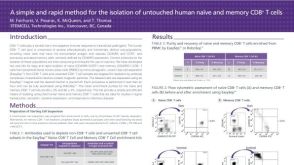 科学海报Isolation of Untouched Human Naive and Memory CD8 T Cells
 沪公网安备31010102008431号