Yu J et al. (DEC 2008)
Yearbook of Dermatology and Dermatologic Surgery 2008 5858 301--302
Induced Pluripotent Stem Cell Lines Derived from Human Somatic Cells
Somatic cell nuclear transfer allows trans-acting factors present in the mammalian oocyte to reprogram somatic cell nuclei to an undifferentiated state. We show that four factors (OCT4,SOX2,NANOG,and LIN28) are sufficient to reprogram human somatic cells to pluripotent stem cells that exhibit the essential characteristics of embryonic stem (ES) cells. These induced pluripotent human stem cells have normal karyotypes,express telomerase activity,express cell surface markers and genes that characterize human ES cells,and maintain the developmental potential to differentiate into advanced derivatives of all three primary germ layers. Such induced pluripotent human cell lines should be useful in the production of new disease models and in drug development,as well as for applications in transplantation medicine,once technical limitations (for example,mutation through viral integration) are eliminated.
View Publication
产品类型:
产品号#:
03120
05850
05857
05870
05875
05920
09500
27100
27150
85850
85857
85870
85875
产品名:
BIT 9500血清替代物
35 mm培养皿
35 mm培养皿
mTeSR™1
mTeSR™1
Eden JA (JUL 2010)
Menopause (New York,N.Y.) 17 4 801--10
Human breast cancer stem cells and sex hormones--a narrative review.
OBJECTIVE: The aim of this narrative review was to evaluate the role of cancer stem cells (CSCs) and sex steroids in the pathophysiology of human breast cancer. METHODS: A key-word search was performed using the Scopus database. Preference was given to studies using human cells and tissues. RESULTS: Long-term estrogen-progestin hormone therapy is known to increase breast cancer risk,although the mechanisms are poorly understood. In the last few years,it has become clear that many human breast cancers contain CSCs,which may be responsible for much of the tumor's malignant behavior. Very recently,the impact of estrogen,progesterone,and progestins on breast CSCs and their progeny has been studied and clarified. Most breast CSCs are estrogen receptor negative and progesterone receptor negative,although some intermediary progenitor forms have hormone receptors,especially progesterone receptor. Most mature human breast cancer cellsare estrogen receptor positive and can thus be stimulated by estrogen. Breast CSCs usually elaborate CD44+,CD24j/low and/or ALDEFLUOR+ cell markers and are lineage markers negative. One of the main roles of progesterone and progestin seems to be on certain breast cancer stem intermediate forms,inducing them to revert back to a more primitive breast CSC form. CONCLUSIONS: As the pathophysiology of human breast CSC is clarified,it is probable that this will lead to novel,effective breast cancer treatments and,perhaps,new breast cancer preventive agents. This research may also lead to safer hormone therapy regimens.
View Publication
产品类型:
产品号#:
01700
01705
01702
产品名:
ALDEFLUOR™ 试剂盒
ALDEFLUOR™ DEAB试剂, 1.5 mM, 1 mL
ALDEFLUOR™检测缓冲液
Todaro M et al. (NOV 2010)
Cancer research 70 21 8874--85
Tumorigenic and metastatic activity of human thyroid cancer stem cells.
Thyroid carcinoma is the most common endocrine malignancy and the first cause of death among endocrine cancers. We show that the tumorigenic capacity in thyroid cancer is confined in a small subpopulation of stem-like cells with high aldehyde dehydrogenase (ALDH(high)) activity and unlimited replication potential. ALDH(high) cells can be expanded indefinitely in vitro as tumor spheres,which retain the tumorigenic potential upon delivery in immunocompromised mice. Orthotopic injection of minute numbers of thyroid cancer stem cells recapitulates the behavior of the parental tumor,including the aggressive metastatic features of undifferentiated thyroid carcinomas,which are sustained by constitutive activation of cMet and Akt in thyroid cancer stem cells. The identification of tumorigenic and metastagenic thyroid cancer cells may provide unprecedented preclinical tools for development and preclinical validation of novel targeted therapies.
View Publication
产品类型:
产品号#:
01700
01705
01702
产品名:
ALDEFLUOR™ 试剂盒
ALDEFLUOR™ DEAB试剂, 1.5 mM, 1 mL
ALDEFLUOR™检测缓冲液
Lavasani M et al. (APR 2014)
The Journal of clinical investigation 124 4 1745--56
Human muscle-derived stem/progenitor cells promote functional murine peripheral nerve regeneration.
Peripheral nerve injuries and neuropathies lead to profound functional deficits. Here,we have demonstrated that muscle-derived stem/progenitor cells (MDSPCs) isolated from adult human skeletal muscle (hMDSPCs) can adopt neuronal and glial phenotypes in vitro and ameliorate a critical-sized sciatic nerve injury and its associated defects in a murine model. Transplanted hMDSPCs surrounded the axonal growth cone,while hMDSPCs infiltrating the regenerating nerve differentiated into myelinating Schwann cells. Engraftment of hMDSPCs into the area of the damaged nerve promoted axonal regeneration,which led to functional recovery as measured by sustained gait improvement. Furthermore,no adverse effects were observed in these animals up to 18 months after transplantation. Following hMDSPC therapy,gastrocnemius muscles from mice exhibited substantially less muscle atrophy,an increase in muscle mass after denervation,and reorganization of motor endplates at the postsynaptic sites compared with those from PBS-treated mice. Evaluation of nerve defects in animals transplanted with vehicle-only or myoblast-like cells did not reveal histological or functional recovery. These data demonstrate the efficacy of hMDSPC-based therapy for peripheral nerve injury and suggest that hMDSPC transplantation has potential to be translated for use in human neuropathies.
View Publication
产品类型:
产品号#:
05750
05751
产品名:
NeuroCult™ NS-A 基础培养基(人)
NeuroCult™ NS-A 扩增试剂盒(人)
Zhou F-W et al. ( 2015)
PloS one 10 3 e0120281
Functional integration of human neural precursor cells in mouse cortex.
This study investigates the electrophysiological properties and functional integration of different phenotypes of transplanted human neural precursor cells (hNPCs) in immunodeficient NSG mice. Postnatal day 2 mice received unilateral injections of 100,000 GFP+ hNPCs into the right parietal cortex. Eight weeks after transplantation,1.21% of transplanted hNPCs survived. In these hNPCs,parvalbumin (PV)-,calretinin (CR)-,somatostatin (SS)-positive inhibitory interneurons and excitatory pyramidal neurons were confirmed electrophysiologically and histologically. All GFP+ hNPCs were immunoreactive with anti-human specific nuclear protein. The proportions of PV-,CR-,and SS-positive cells among GFP+ cells were 35.5%,15.7%,and 17.1%,respectively; around 15% of GFP+ cells were identified as pyramidal neurons. Those electrophysiologically and histological identified GFP+ hNPCs were shown to fire action potentials with the appropriate firing patterns for different classes of neurons and to display spontaneous excitatory and inhibitory postsynaptic currents (sEPSCs and sIPSCs). The amplitude,frequency and kinetic properties of sEPSCs and sIPSCs in different types of hNPCs were comparable to host cells of the same type. In conclusion,GFP+ hNPCs produce neurons that are competent to integrate functionally into host neocortical neuronal networks. This provides promising data on the potential for hNPCs to serve as therapeutic agents in neurological diseases with abnormal neuronal circuitry such as epilepsy.
View Publication
产品类型:
产品号#:
05750
05751
产品名:
NeuroCult™ NS-A 基础培养基(人)
NeuroCult™ NS-A 扩增试剂盒(人)
Ciampi O et al. (JUN 2016)
Stem Cell Research 17 1 130--139
Generation of functional podocytes from human induced pluripotent stem cells
Generating human podocytes in vitro could offer a unique opportunity to study human diseases. Here,we describe a simple and efficient protocol for obtaining functional podocytes in vitro from human induced pluripotent stem cells. Cells were exposed to a three-step protocol,which induced their differentiation into intermediate mesoderm,then into nephron progenitors and,finally,into mature podocytes. After differentiation,cells expressed the main podocyte markers,such as synaptopodin,WT1,α-Actinin-4,P-cadherin and nephrin at the protein and mRNA level,and showed the low proliferation rate typical of mature podocytes. Exposure to Angiotensin II significantly decreased the expression of podocyte genes and cells underwent cytoskeleton rearrangement. Cells were able to internalize albumin and self-assembled into chimeric 3D structures in combination with dissociated embryonic mouse kidney cells. Overall,these findings demonstrate the establishment of a robust protocol that,mimicking developmental stages,makes it possible to derive functional podocytes in vitro.
View Publication
产品类型:
产品号#:
05850
05857
05870
05875
85850
85857
85870
85875
05270
05275
产品名:
mTeSR™1
mTeSR™1
STEMdiff™ APEL™2 培养基
STEMdiff™ APEL™2 培养基
Lund PJ et al. (SEP 2016)
Journal of immunology (Baltimore,Md. : 1950)
Global Analysis of O-GlcNAc Glycoproteins in Activated Human T Cells.
T cell activation in response to Ag is largely regulated by protein posttranslational modifications. Although phosphorylation has been extensively characterized in T cells,much less is known about the glycosylation of serine/threonine residues by O-linked N-acetylglucosamine (O-GlcNAc). Given that O-GlcNAc appears to regulate cell signaling pathways and protein activity similarly to phosphorylation,we performed a comprehensive analysis of O-GlcNAc during T cell activation to address the functional importance of this modification and to identify the modified proteins. Activation of T cells through the TCR resulted in a global elevation of O-GlcNAc levels and in the absence of O-GlcNAc,IL-2 production and proliferation were compromised. T cell activation also led to changes in the relative expression of O-GlcNAc transferase (OGT) isoforms and accumulation of OGT at the immunological synapse of murine T cells. Using a glycoproteomics approach,we identified textgreater200 O-GlcNAc proteins in human T cells. Many of the identified proteins had a functional relationship to RNA metabolism,and consistent with a connection between O-GlcNAc and RNA,inhibition of OGT impaired nascent RNA synthesis upon T cell activation. Overall,our studies provide a global analysis of O-GlcNAc dynamics during T cell activation and the first characterization,to our knowledge,of the O-GlcNAc glycoproteome in human T cells.
View Publication
产品类型:
产品号#:
15021
15061
产品名:
RosetteSep™人T细胞富集抗体混合物
RosetteSep™人T细胞富集抗体混合物
Cavalli RC et al. ( 2016)
PloS one 11 10 e0164353
Induced Human Decidual NK-Like Cells Improve Utero-Placental Perfusion in Mice.
Decidual NK (dNK) cells,a distinct type of NK cell,are thought to regulate uterine spiral artery remodeling,a process that allows for increased blood delivery to the fetal-placental unit. Impairment of uterine spiral artery remodeling is associated with decreased placental perfusion,increased uterine artery resistance,and obstetric complications such as preeclampsia and intrauterine growth restriction. Ex vivo manipulation of human peripheral blood NK (pNK) cells by a combination of hypoxia,TGFß-1 and 5-aza-2'-deoxycytidine yields cells with phenotypic and in vitro functional similarities to dNK cells,called idNK cells. Here,gene expression profiling shows that CD56Bright idNK cells derived ex vivo from human pNK cells,and to a lesser extent CD56Dim idNK cells,are enriched in the gene expression signature that distinguishes dNK cells from pNK cells. When injected into immunocompromised pregnant mice with elevated uterine artery resistance,idNK cells homed to the uterus and reduced the uterine artery resistance index,suggesting improved placental perfusion.
View Publication
产品类型:
产品号#:
15025
15065
产品名:
RosetteSep™人NK细胞富集抗体混合物
RosetteSep™人NK细胞富集抗体混合物
Baker D et al. (NOV 2016)
Stem cell reports 7 5 998--1012
Detecting Genetic Mosaicism in Cultures of Human Pluripotent Stem Cells.
Genetic changes in human pluripotent stem cells (hPSCs) gained during culture can confound experimental results and potentially jeopardize the outcome of clinical therapies. Particularly common changes in hPSCs are trisomies of chromosomes 1,12,17,and 20. Thus,hPSCs should be regularly screened for such aberrations. Although a number of methods are used to assess hPSC genotypes,there has been no systematic evaluation of the sensitivity of the commonly used techniques in detecting low-level mosaicism in hPSC cultures. We have performed mixing experiments to mimic the naturally occurring mosaicism and have assessed the sensitivity of chromosome banding,qPCR,fluorescence in situ hybridization,and digital droplet PCR in detecting variants. Our analysis highlights the limits of mosaicism detection by the commonly employed methods,a pivotal requirement for interpreting the genetic status of hPSCs and for setting standards for safe applications of hPSCs in regenerative medicine.
View Publication
产品类型:
产品号#:
05850
05857
05870
05875
85850
85857
85870
85875
产品名:
mTeSR™1
mTeSR™1
Tahamtani Y et al. (FEB 2014)
Cell journal 16 1 63--72
Stauprimide Priming of Human Embryonic Stem Cells toward Definitive Endoderm.
OBJECTIVE: In vitro production of a definitive endoderm (DE) is an important issue in stem cell-related differentiation studies and it can assist with the production of more efficient endoderm derivatives for therapeutic applications. Despite tremendous progress in DE differentiation of human embryonic stem cells (hESCs),researchers have yet to discover universal,efficient and cost-effective protocols. MATERIALS AND METHODS: In this experimental study,we have treated hESCs with 200 nM of Stauprimide (Spd) for one day followed by activin A (50 ng/ml; A50) for the next three days (Spd-A50). In the positive control group,hESCs were treated with Wnt3a (25 ng/ml) and activin A (100 ng/ml) for the first day followed by activin A for the next three days (100 ng/ml; W/A100-A100). RESULTS: Gene expression analysis showed up regulation of DE-specific marker genes (SOX17,FOXA2 and CXCR4) comparable to that observed in the positive control group. Expression of the other lineage specific markers did not significantly change (ptextless0.05). We also obtained the same gene expression results using another hESC line. The use of higher concentrations of Spd (400 and 800 nM) in the Spd-A50 protocol caused an increase in the expression SOX17 as well as a dramatic increase in mortality rate of the hESCs. A lower concentration of activin A (25 ng/ml) was not able to up regulate the DE-specific marker genes. Then,A50 was replaced by inducers of definitive endoderm; IDE1/2 (IDE1 and IDE2),two previously reported small molecule (SM) inducers of DE,in our protocol (Spd-IDE1/2). This replacement resulted in the up regulation of visceral endoderm (VE) marker (SOX7) but not DE-specific markers. Therefore,while the Spd-A50 protocol led to DE production,we have shown that IDE1/2 could not fully replace activin A in DE induction of hESCs. CONCLUSION: These findings can assist with the design of more efficient chemically-defined protocols for DE induction of hESCs and lead to a better understanding of the different signaling networks that are involved in DE differentiation of hESCs.
View Publication
产品类型:
产品号#:
72652
产品名:
Stauprimide
Howden SE and Thomson JA ( 2014)
1114 37--55
Gene targeting of human pluripotent stem cells by homologous recombination.
The ability of human embryonic stem cells and induced pluripotent stem cells to differentiate into all adult cell types greatly facilitates the study of human development,disease pathogenesis,and the generation of screening systems to identify novel therapeutic agents. Autologous cell therapies based on patient-derived induced pluripotent stem cells also hold great promise for the treatment and correction of many inherited and acquired diseases. The full potential of human pluripotent stem cells can be unleashed by genetically modifying a chosen locus with minimal impact on the remaining genome,which can be achieved by targeting genes by homologous recombination. This chapter will describe a protocol for gene modification of pluripotent stem cells by homologous recombination and several methods for the screening and identification of successfully modified clones.
View Publication


 EasySep™小鼠TIL(CD45)正选试剂盒




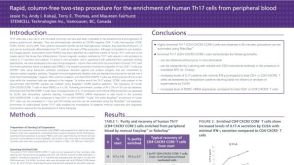 科学海报Column-Free Cell Enrichment of Human Th17 Cells from Peripheral Blood

 沪公网安备31010102008431号