E. Yamashita et al. (Sep 2025)
The FASEB Journal 39 17
Red Blood Cell‐Mediated Enhancement of Hematopoietic Stem Cell Functions via a Hes1‐Dependent Pathway
In bone marrow,cell numbers are balanced between production and loss. After chemotherapy,blood cell counts decrease initially but later recover as hematopoietic progenitor cells expand,although the mechanisms underlying this recovery are still unclear. We investigated the influence of red blood cells (RBCs) on hematopoietic stem cell (HSC) function during bone marrow recovery. Following chemotherapy,RBC concentrations in bone marrow peaked on day 5 posttreatment,coinciding with the recovery of hematopoiesis. Coculture of HSCs with RBCs resulted in a significant increase in hematopoiesis. Direct contact between RBCs and HSCs was essential for enhancement of hematopoiesis,and HSCs precultured with RBCs resulted in greater numbers of donor‐derived mature hematopoietic cells after transplantation. RNA‐sequencing analysis showed that Hes1 was the most significantly upregulated transcription factor in RBC coculture,and the response to RBC‐induced hematopoiesis of Hes1‐deficient HSCs was reduced. These findings imply a role of RBCs and Hes1 in the enhancement of hematopoietic recovery following bone marrow stress.
View Publication
产品类型:
产品号#:
03436
产品名:
MethoCult™ SF M3436
(Aug 2025)
Nature Communications 16
DDX41 resolves G-quadruplexes to maintain erythroid genome integrity and prevent cGAS-mediated cell death
Deleterious germline DDX41 variants constitute the most common inherited predisposition disorder linked to myeloid neoplasms (MNs),yet their role in MNs remains unclear. Here we show that DDX41 is essential for erythropoiesis but dispensable for other hematopoietic lineages. Ddx41 knockout in early erythropoiesis is embryonically lethal,while knockout in late-stage terminal erythropoiesis allows mice to survive with normal blood counts. DDX41 deficiency induces a significant upregulation of G-quadruplexes (G4),which co-distribute with DDX41 on the erythroid genome. DDX41 directly binds to and resolves G4,which is significantly compromised in MN-associated DDX41 mutants. G4 accumulation induces erythroid genome instability,ribosomal defects,and p53 upregulation. However,p53 deficiency does not rescue the embryonic death of Ddx41 hematopoietic-specific knockout mice. In parallel,genome instability also activates the cGas-Sting pathway,impairing survival,as cGas deficiency rescues the lethality of hematopoietic-specific Ddx41 knockout mice. This is supported by data from a DDX41-mutated MN patient and human iPSC-derived bone marrow organoids. Our study establishes DDX41 as a G4 resolvase,essential for erythroid genome stability and suppressing the cGAS-STING pathway. Germline DDX41 mutations are linked to myeloid neoplasms,but their roles in the disease is unclear. Here,the authors show that DDX41 resolves G-quadruplex structures to maintain erythroid genome stability and prevent cGAS-mediated cell death. These functions are lost in disease-associated variants.
View Publication
产品类型:
产品号#:
100-0276
100-1130
产品名:
mTeSR™ Plus
mTeSR™ Plus
(Mar 2024)
Research Square 12
Rag-GTPase-TFEB/TFE3 axis controls B cell mitochondrial fitness and humoral immunity independent of mTORC1
During the humoral immune response,B cells undergo rapid metabolic reprogramming with a high demand for nutrients,which are vital to sustain the formation of the germinal centers (GCs). Rag-GTPases sense amino acid availability to modulate the mechanistic target of rapamycin complex 1 (mTORC1) pathway and suppress transcription factor EB (TFEB) and transcription factor enhancer 3 (TFE3),members of the microphthalmia (MiT/TFE) family of HLH-leucine zipper transcription factors. However,how Rag-GTPases coordinate amino acid sensing,mTORC1 activation,and TFEB/TFE3 activity in humoral immunity remains undefined. Here,we show that B cell-intrinsic Rag-GTPases are critical for the development and activation of B cells. RagA/RagB deficient B cells fail to form GCs,produce antibodies,and generate plasmablasts in both T-dependent (TD) and T-independent (TI) humoral immune responses. Deletion of RagA/RagB in GC B cells leads to abnormal dark zone (DZ) to light zone (LZ) ratio and reduced affinity maturation. Mechanistically,the Rag-GTPase complex constrains TFEB/TFE3 activity to prevent mitophagy dysregulation and maintain mitochondrial fitness in B cells,which are independent of canonical mTORC1 activation. TFEB/TFE3 deletion restores B cell development,GC formation in Peyer’s patches and TI humoral immunity,but not TD humoral immunity in the absence of Rag-GTPases. Collectively,our data establish Rag-GTPase-TFEB/TFE3 axis as an mTORC1 independent mechanism to coordinating nutrient sensing and mitochondrial metabolism in B cells.
View Publication
产品类型:
产品号#:
19854
19854RF
产品名:
EasySep™小鼠B细胞分选试剂盒
RoboSep™ 小鼠B细胞分选试剂盒
(Jun 2025)
Journal of Neuroinflammation 22
B cells are not drivers of stromal cell activation during acute CNS infection
BackgroundCNS stromal cells,especially fibroblasts and endothelial cells,support leukocyte accumulation through upregulation of adhesion molecules and lymphoid chemokines. While chronically activated fibroblast networks can drive pathogenic immune cell aggregates known as tertiary lymphoid structures (TLS),early stromal cell activation during CNS infection can support anti-viral T cells. However,the cell types and factors driving early stromal cell activation is poorly explored.AimsA neurotropic murine coronavirus (mCoV) infection model was used to better characterize signals that promote fibroblast networks supporting accumulation of antiviral lymphocytes. Based on the early appearance of IgD+ B cells with unknown functions during several CNS infections,we probed their potential to activate stromal cells through lymphotoxin β (LTβ),a molecule critical in maintaining fibroblast-networks in lymphoid tissues as well as promoting TLS in autoimmunity and cancers.ResultsKinetic analysis of stromal cell activation in olfactory bulbs and brains revealed that upregulation of adhesion molecules and lymphoid chemokines Ccl19,Ccl21 and Cxcl13 closely tracked viral replication. Immunohistochemistry revealed that upregulation of the fibroblast marker podoplanin (PDPN) at meningeal and perivascular sites mirrored kinetics of RNA expression. Moreover,both B cells and T cells colocalized to areas of PDPN reactivity,supporting a potential role in regulating stromal cell activation. However,specific depletion of LTβ from B cells using Mb1-creERT2 x Ltβfl/fl mice had no effect on T or B cell recruitment or viral replication. B cell depletion by anti-CD20 antibody also had no adverse effects. Surprisingly,LTβR agonism reduced viral control and parenchymal T cell localization despite increasing stromal cell lymphoid chemokines and PDPN. Additional assessment of direct stromal cell activation by the viral RNA mimic poly I:C showed induction of Pdpn and Ccl19 preceding Ltb.ConclusionsNeither B cell-derived LTβ or B cells are primary drivers of stromal cell activation networks in the CNS following mCoV infection. Although supplementary agonist mediated LTβR engagement confirmed a role for LTβ in enhancing PDPN and lymphoid chemokine expression,it impeded T cell migration to the CNS parenchyma and viral control. Our data overall indicate that stromal cells can integrate LTβR signals to tune their activation,but that LTβ is not necessarily essential and can even dysregulate protective antiviral T cell functions.Supplementary InformationThe online version contains supplementary material available at 10.1186/s12974-025-03491-7.
View Publication
Herawati E et al. ( 2016)
Journal of Cell Biology 214 5 571--586
Multiciliated cell basal bodies align in stereotypical patterns coordinated by the apical cytoskeleton
Multiciliated cells (MCCs) promote fluid flow through coordinated ciliary beating,which requires properly organized basal bodies (BBs). Airway MCCs have large numbers of BBs,which are uniformly oriented and,as we show here,align linearly. The mechanism for BB alignment is unexplored. To study this mechanism,we developed a long-term and high-resolution live-imaging system and used it to observe green fluorescent protein"centrin2"labeled BBs in cultured mouse tracheal MCCs. During MCC differentiation,the BB array adopted four stereotypical patterns,from a clustering floret? pattern to the linear alignment.? This alignment process was correlated with BB orientations,revealed by double immunostaining for BBs and their asymmetrically associated basal feet (BF). The BB alignment was disrupted by disturbing apical microtubules with nocodazole and by a BF-depleting Odf2 mutation. We constructed a theoretical model,which indicated that the apical cytoskeleton,acting like a viscoelastic fluid,provides a self-organizing mechanism in tracheal MCCs to align BBs linearly for mucociliary transport.
View Publication
产品类型:
产品号#:
05001
05021
05022
05008
产品名:
PneumaCult™-ALI 培养基
PneumaCult™-ALI 培养基含12 mm Transwell®插件
PneumaCult™-ALI 培养基含6.5 mm Transwell®插件
PneumaCult™-Ex 培养基
Lippmann ES et al. (FEB 2014)
Scientific reports 4 February 2014 4160
A retinoic acid-enhanced, multicellular human blood-brain barrier model derived from stem cell sources.
Blood-brain barrier (BBB) models are often used to investigate BBB function and screen brain-penetrating therapeutics,but it has been difficult to construct a human model that possesses an optimal BBB phenotype and is readily scalable. To address this challenge,we developed a human in vitro BBB model comprising brain microvascular endothelial cells (BMECs),pericytes,astrocytes and neurons derived from renewable cell sources. First,retinoic acid (RA) was used to substantially enhance BBB phenotypes in human pluripotent stem cell (hPSC)-derived BMECs,particularly through adherens junction,tight junction,and multidrug resistance protein regulation. RA-treated hPSC-derived BMECs were subsequently co-cultured with primary human brain pericytes and human astrocytes and neurons derived from human neural progenitor cells (NPCs) to yield a fully human BBB model that possessed significant tightness as measured by transendothelial electrical resistance (˜5,000 $\$(2)). Overall,this scalable human BBB model may enable a wide range of neuroscience studies.
View Publication
产品类型:
产品号#:
05850
05857
05870
05875
85850
85857
85870
85875
产品名:
mTeSR™1
mTeSR™1
Tan H-K et al. (MAY 2014)
Stem cells translational medicine 3 5 586--98
Human finger-prick induced pluripotent stem cells facilitate the development of stem cell banking.
Induced pluripotent stem cells (iPSCs) derived from somatic cells of patients can be a good model for studying human diseases and for future therapeutic regenerative medicine. Current initiatives to establish human iPSC (hiPSC) banking face challenges in recruiting large numbers of donors with diverse diseased,genetic,and phenotypic representations. In this study,we describe the efficient derivation of transgene-free hiPSCs from human finger-prick blood. Finger-prick sample collection can be performed on a do-it-yourself" basis by donors and sent to the hiPSC facility for reprogramming. We show that single-drop volumes of finger-prick samples are sufficient for performing cellular reprogramming�
View Publication
产品类型:
产品号#:
05850
05857
05870
05875
09600
09650
85850
85857
85870
85875
产品名:
StemSpan™ SFEM
StemSpan™ SFEM
mTeSR™1
mTeSR™1
Yang Y et al. (MAY 2015)
Proceedings of the National Academy of Sciences of the United States of America 112 18 E2337--------46
Heightened potency of human pluripotent stem cell lines created by transient BMP4 exposure
Human pluripotent stem cells (PSCs) show epiblast-type pluripotency that is maintained with ACTIVIN/FGF2 signaling. Here,we report the acquisition of a unique stem cell phenotype by both human ES cells (hESCs) and induced pluripotent stem cells (iPSCs) in response to transient (24-36 h) exposure to bone morphogenetic protein 4 (BMP4) plus inhibitors of ACTIVIN signaling (A83-01) and FGF2 (PD173074),followed by trypsin dissociation and recovery of colonies capable of growing on a gelatin substratum in standard medium for human PSCs at low but not high FGF2 concentrations. The self-renewing cell lines stain weakly for CDX2 and strongly for NANOG,can be propagated clonally on either Matrigel or gelatin,and are morphologically distinct from human PSC progenitors on either substratum but still meet standard in vitro criteria for pluripotency. They form well-differentiated teratomas in immune-compromised mice that secrete human chorionic gonadotropin (hCG) into the host mouse and include small areas of trophoblast-like cells. The cells have a distinct transcriptome profile from the human PSCs from which they were derived (including higher expression of NANOG,LEFTY1,and LEFTY2). In nonconditioned medium lacking FGF2,the colonies spontaneously differentiated along multiple lineages,including trophoblast. They responded to PD173074 in the absence of both FGF2 and BMP4 by conversion to trophoblast,and especially syncytiotrophoblast,whereas an A83-01/PD173074 combination favored increased expression of HLA-G,a marker of extravillous trophoblast. Together,these data suggest that the cell lines exhibit totipotent potential and that BMP4 can prime human PSCs to a self-renewing alternative state permissive for trophoblast development. The results may have implications for regulation of lineage decisions in the early embryo.
View Publication


 EasySep™小鼠TIL(CD45)正选试剂盒





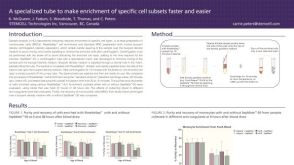 科学海报A Specialized Tube to Make Enrichment of Specific Cell Subsets Faster and Easier

 沪公网安备31010102008431号