Systematic characterization of the ovarian landscape across mouse menopause models
Menopause not only affects fertility but also has widespread impact on systemic health. Yet,the molecular mechanisms underlying this process are not fully understood,partly due to the absence of robust,age-relevant preclinical models with comprehensive molecular and phenotypic characterization. To address this,we systematically compared three candidate mouse models of menopause: (1) intact aging,(2) chemical ovarian follicle depletion using 4-vinylcyclohexene diepoxide (VCD) administered at multiple ages,and (3) Foxl2 haploinsufficiency,a genetic model based on a transcription factor linked to human premature ovarian failure. Through histology,serum hormone profiling,single-cell transcriptomics and machine-learning approaches,we uncovered both shared and model-specific features of follicle loss,endocrine disruption,and transcriptional remodeling. The VCD and Foxl2 haploinsufficiency models revealed distinct patterns of hormonal and immune alterations not captured by intact aging alone. This comparative framework enables informed selection of context-appropriate preclinical rodent models to study menopause and the broader physiological consequences of ovarian aging.
View Publication
S. Sakimoto et al. (JAN 2017)
JCI insight 2 2 e89906
CD44 expression in endothelial colony-forming cells regulates neurovascular trophic effect.
Vascular abnormalities are a common component of eye diseases that often lead to vision loss. Vaso-obliteration is associated with inherited retinal degenerations,since photoreceptor atrophy lowers local metabolic demands and vascular support to those regions is no longer required. Given the degree of neurovascular crosstalk in the retina,it may be possible to use one cell type to rescue another cell type in the face of severe stress,such as hypoxia or genetically encoded cell-specific degenerations. Here,we show that intravitreally injected human endothelial colony-forming cells (ECFCs) that can be isolated and differentiated from cord blood in xeno-free media collect in the vitreous cavity and rescue vaso-obliteration and neurodegeneration in animal models of retinal disease. Furthermore,we determined that a subset of the ECFCs was more effective at anatomically and functionally preventing retinopathy; these cells expressed high levels of CD44,the hyaluronic acid receptor,and IGFBPs (insulin-like growth factor-binding proteins). Injection of cultured media from ECFCs or only recombinant human IGFBPs also rescued the ischemia phenotype. These results help us to understand the mechanism of ECFC-based therapies for ischemic insults and retinal neurodegenerative diseases.
View Publication
产品类型:
产品号#:
08000
产品名:
Bertolini F et al. (OCT 1997)
Blood 90 8 3027--36
Multilineage long-term engraftment potential of drug-resistant hematopoietic progenitors.
Peripheral blood progenitor cells (PBPCs) are increasingly used instead of bone marrow for autologous or allogeneic transplantation. In this study PBPCs mobilized in cancer patients by chemotherapy and granulocyte-colony stimulating factor were collected by apheresis and first enriched by immunoaffinity removal of lineage positive cells. When these cells were exposed to both cyclophosphamide and taxol or cultured for 7 days in the presence of 5-fluorouracil,stem cell factor,and interleukin-3,88% to 93% of the enriched PBPCs were killed and short-term clonogenic capacity in methylcellulose assays was lost,but week-5 cobblestone area-forming cell (CAFC) enrichment was higher than 10-fold in comparison to enriched PBPCs and higher than 700-fold in comparison to unmanipulated apheresis cells. After drug exposure,most of the progenitors displayed a CD34+,CD38-,multidrug-resistance (MDR+),Rhodamine 123 low,Hoechst 33342 low phenotype,and as few as 180 of these drug-resistant cells were able to generate a stable multilineage human hematopoiesis in sublethally irradiated immunodeficient mice. In these animals,the level of human hematopoietic engraftment was significantly increased by cotransplantation of irradiated cells from the human L87/4 stromal cell line. These observations are consistent with the functional isolation of a population of very early hematopoietic progenitors and might help to design new protocols for the removal of neoplastic cells from autografts.
View Publication
Hisa T et al. (JAN 2004)
The EMBO journal 23 2 450--9
Hematopoietic, angiogenic and eye defects in Meis1 mutant animals.
Meis1 and Hoxa9 expression is upregulated by retroviral integration in murine myeloid leukemias and in human leukemias carrying MLL translocations. Both genes also cooperate to induce leukemia in a mouse leukemia acceleration assay,which can be explained,in part,by their physical interaction with each other as well as the PBX family of homeodomain proteins. Here we show that Meis1-deficient embryos have partially duplicated retinas and smaller lenses than normal. They also fail to produce megakaryocytes,display extensive hemorrhaging,and die by embryonic day 14.5. In addition,Meis1-deficient embryos lack well-formed capillaries,although larger blood vessels are normal. Definitive myeloerythroid lineages are present in the mutant embryos,but the total numbers of colony-forming cells are dramatically reduced. Mutant fetal liver cells also fail to radioprotect lethally irradiated animals and they compete poorly in repopulation assays even though they can repopulate all hematopoietic lineages. These and other studies showing that Meis1 is expressed at high levels in hematopoietic stem cells (HSCs) suggest that Meis1 may also be required for the proliferation/self-renewal of the HSC.
View Publication
产品类型:
产品号#:
04960
04902
04900
04961
04901
04963
04962
04970
04971
产品名:
MegaCult™-C胶原和无细胞因子培养基
胶原蛋白溶液
MegaCult™-C无细胞因子培养基
MegaCult™-C胶原和含细胞因子培养基
MegaCult™-C含细胞因子培养基
双室载玻片套件
MegaCult™-C CFU-Mk染色试剂盒
MegaCult™-C无细胞因子全套试剂盒
MegaCult™-C含细胞因子全套试剂盒
Bar EE et al. (OCT 2007)
Stem cells (Dayton,Ohio) 25 10 2524--33
Cyclopamine-mediated hedgehog pathway inhibition depletes stem-like cancer cells in glioblastoma.
Brain tumors can arise following deregulation of signaling pathways normally activated during brain development and may derive from neural stem cells. Given the requirement for Hedgehog in non-neoplastic stem cells,we investigated whether Hedgehog blockade could target the stem-like population in glioblastoma multiforme (GBM). We found that Gli1,a key Hedgehog pathway target,was highly expressed in 5 of 19 primary GBM and in 4 of 7 GBM cell lines. Shh ligand was expressed in some primary tumors,and in GBM-derived neurospheres,suggesting a potential mechanism for pathway activation. Hedgehog pathway blockade by cyclopamine caused a 40%-60% reduction in growth of adherent glioma lines highly expressing Gli1 but not in those lacking evidence of pathway activity. When GBM-derived neurospheres were treated with cyclopamine and then dissociated and seeded in media lacking the inhibitor,no new neurospheres formed,suggesting that the clonogenic cancer stem cells had been depleted. Consistent with this hypothesis,the stem-like fraction in gliomas marked by both aldehyde dehydrogenase activity and Hoechst dye excretion (side population) was significantly reduced or eliminated by cyclopamine. In contrast,we found that radiation treatment of our GBM neurospheres increased the percentage of these stem-like cells,suggesting that this standard therapy preferentially targets better-differentiated neoplastic cells. Most importantly,viable GBM cells injected intracranially following Hedgehog blockade were no longer able to form tumors in athymic mice,indicating that a cancer stem cell population critical for ongoing growth had been removed. Disclosure of potential conflicts of interest is found at the end of this article.
View Publication
产品类型:
产品号#:
01700
01705
01701
01702
72072
72074
产品名:
ALDEFLUOR™ 试剂盒
ALDEFLUOR™ DEAB试剂, 1.5 mM, 1 mL
ALDEFLUOR™检测缓冲液
环巴胺(Cyclopamine)
环巴胺(Cyclopamine)
Sundaram K et al. (FEB 2015)
Bone 71 3 137--44
STAT-6 mediates TRAIL induced RANK ligand expression in stromal/preosteoblast cells.
Receptor activator of nuclear factor kappa-B ligand (RANKL) is a critical osteoclastogenic factor expressed in bone marrow stromal/osteoblast lineage cells. Tumor necrosis factor (TNF) related apoptosis-inducing ligand (TRAIL) levels are elevated in pathologic conditions such as multiple myeloma and inflammatory arthritis,and have been positively correlated with osteolytic markers. Osteoprotegerin (OPG) which inhibits osteoclastogenesis is a decoy receptor for RANKL and also known to interact with TRAIL. Herein,we show that TRAIL increases DR5 and DcR1 receptors but no change in the levels of DR4 and DcR2 expression in human bone marrow derived stromal/preosteoblast (SAKA-T) cell line. We further demonstrated that TRAIL treatment significantly decreased OPG mRNA expression. Interestingly,TRAIL treatment induced RANKL mRNA expression in these cells. In addition,TRAIL significantly increased NF-kB and c-Jun N-terminal kinase (JNK) activity. Human transcription factor array screening by real-time RT-PCR identified TRAIL up-regulation of the signal transducers and activators of the transcription (STAT)-6 expression in SAKA-T cells. TRAIL stimulation induced p-STAT-6 expression in human bone marrow derived primary stromal/preosteoblast cells. Confocal microscopy analysis further revealed p-STAT-6 nuclear localization in SAKA-T cells. Chromatin immunoprecipitation (ChIP) assay confirmed p-STAT-6 binding to the hRANKL gene distal promoter region. In addition,siRNA suppression of STAT-6 expression inhibits TRAIL increased hRANKL gene promoter activity. Thus,our results suggest that TRAIL induces RANKL expression through a STAT-6 dependent transcriptional regulatory mechanism in bone marrow stromal/preosteoblast cells.
View Publication
产品类型:
产品号#:
70022
70071
产品名:
Shevde NK and Mael AA ( 2013)
Methods Mol Biol 946 535--546
Techniques in embryoid body formation from human pluripotent stem cells
Embryoid bodies (EBs) can be generated by culturing human pluripotent stem cells in ultra-low attachment culture vessels,under conditions that are adverse to pluripotency and proliferation. EBs generated in suspension cultures are capable of differentiating into cells of the ectoderm,mesoderm,and endoderm. In this chapter,we describe techniques for generation of EBs from human pluripotent stem cells. Once formed,the EBs can then be dissociated using specific enzymes to acquire a single cell population that has the potential to differentiate into cells of all three germ layers. This population can then be cultured in specialized conditions to obtain progenitor cells of specific lineages. Pure populations of progenitor cells generated on a large scale basis can be used for research,drug discovery/development,and cellular transplantation therapy.
View Publication
产品类型:
产品号#:
05850
05857
05870
05875
85850
85857
85870
85875
产品名:
mTeSR™1
mTeSR™1
Hsieh J et al. (NOV 2004)
Proceedings of the National Academy of Sciences of the United States of America 101 47 16659--64
It has become apparent that chromatin modification plays a critical role in the regulation of cell-type-specific gene expression. Here,we show that an inhibitor of histone deacetylase,valproic acid (VPA),induced neuronal differentiation of adult hippocampal neural progenitors. In addition,VPA inhibited astrocyte and oligodendrocyte differentiation,even in conditions that favored lineage-specific differentiation. Among the VPA-up-regulated,neuron-specific genes,a neurogenic basic helix-loop-helix transcription factor,NeuroD,was identified. Overexpression of NeuroD resulted in the induction and suppression of neuronal and glial differentiation,respectively. These results suggest that VPA promotes neuronal fate and inhibits glial fate simultaneously through the induction of neurogenic transcription factors including NeuroD.
View Publication
产品类型:
产品号#:
72112
72114
72292
100-0249
产品名:
Forskolin
Forskolin
丙戊酸(钠盐)
Forskolin
Beliveau A et al. (MAY 2016)
Scientific reports 6 26143
Aligned Nanotopography Promotes a Migratory State in Glioblastoma Multiforme Tumor Cells.
Glioblastoma multiforme (GBM) is an aggressive,Grade IV astrocytoma with a poor survival rate,primarily due to the GBM tumor cells migrating away from the primary tumor site along the nanotopography of white matter tracts and blood vessels. It is unclear whether this nanotopography influences the biomechanical properties (i.e. cytoskeletal stiffness) of GBM tumor cells. Although GBM tumor cells have an innate propensity to migrate,we believe this capability is enhanced due to the influence of nanotopography on the tumor cells' biomechanical properties. In this study,we used an aligned nanofiber film that mimics the nanotopography in the tumor microenvironment to investigate the mechanical properties of GBM tumor cells in vitro. The data demonstrate that the cytoskeletal stiffness,cell traction stress,and focal adhesion area were significantly lower in the GBM tumor cells compared to healthy astrocytes. Moreover,the cytoskeletal stiffness was significantly reduced when cultured on aligned nanofiber films compared to smooth and randomly aligned nanofiber films. Gene expression analysis showed that tumor cells cultured on the aligned nanotopography upregulated key migratory genes and downregulated key proliferative genes. Therefore,our data suggest that the migratory potential is elevated when GBM tumor cells are migrating along aligned nanotopographical substrates.
View Publication
产品类型:
产品号#:
05750
05751
产品名:
NeuroCult™ NS-A 基础培养基(人)
NeuroCult™ NS-A 扩增试剂盒(人)
Zeng S et al. (FEB 2014)
Journal of cell science 127 Pt 4 752--762
Telomerase-mediated telomere elongation from human blastocysts to embryonic stem cells.
High telomerase activity is a characteristic of human embryonic stem cells (hESCs),however,the regulation and maintenance of correct telomere length in hESCs is unclear. In this study we investigated telomere elongation in hESCs in vitro and found that telomeres lengthened from their derivation in blastocysts through early expansion,but stabilized at later passages. We report that the core unit of telomerase,hTERT,was highly expressed in hESCs in blastocysts and throughout long-term culture; furthermore,this was regulated in a Wnt-β-catenin-signaling-dependent manner. Our observations that the alternative lengthening of telomeres (ALT) pathway was suppressed in hESCs and that hTERT knockdown partially inhibited telomere elongation,demonstrated that high telomerase activity was required for telomere elongation. We observed that chromatin modification through trimethylation of H3K9 and H4K20 at telomeric regions decreased during early culture. This was concurrent with telomere elongation,suggesting that epigenetic regulation of telomeric chromatin may influence telomerase function. By measuring telomere length in 96 hESC lines,we were able to establish that telomere length remained relatively stable at 12.02±1.01 kb during later passages (15-95). In contrast,telomere length varied in hESCs with genomic instability and hESC-derived teratomas. In summary,we propose that correct,stable telomere length may serve as a potential biomarker for genetically stable hESCs.
View Publication


 EasySep™小鼠TIL(CD45)正选试剂盒





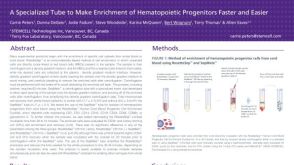 科学海报Fast and Easy Hematopoietic Progenitor Cell Enrichment With SepMate™

 沪公网安备31010102008431号