A. Arazi et al. ( 2019)
Nature immunology 20 7 902--914
The immune cell landscape in kidneys of patients with lupus nephritis.
Lupus nephritis is a potentially fatal autoimmune disease for which the current treatment is ineffective and often toxic. To develop mechanistic hypotheses of disease,we analyzed kidney samples from patients with lupus nephritis and from healthy control subjects using single-cell RNA sequencing. Our analysis revealed 21 subsets of leukocytes active in disease,including multiple populations of myeloid cells,T cells,natural killer cells and B cells that demonstrated both pro-inflammatory responses and inflammation-resolving responses. We found evidence of local activation of B cells correlated with an age-associated B-cell signature and evidence of progressive stages of monocyte differentiation within the kidney. A clear interferon response was observed in most cells. Two chemokine receptors,CXCR4 and CX3CR1,were broadly expressed,implying a potentially central role in cell trafficking. Gene expression of immune cells in urine and kidney was highly correlated,which would suggest that urine might serve as a surrogate for kidney biopsies.
View Publication
Differential outcomes of human cytomegalovirus infection in primitive hematopoietic cell subpopulations.
The cellular reservoir for latent human cytomegalovirus (HCMV) in the hematopoietic compartment,and the mechanisms governing a latent infection and reactivation from latency are unknown. Previous work has demonstrated that HCMV infects CD34+ progenitors and expresses a limited subset of viral genes. The outcome of HCMV infection may depend on the cell subpopulations infected within the heterogeneous CD34+ compartment. We compared HCMV infection in well-defined CD34+ cell subpopulations. HCMV infection inhibited hematopoietic colony formation from CD34+/CD38- but not CD34+/c-kit+ cells. CD34+/CD38- cells transiently expressed a large subset of HCMV genes that were not expressed in CD34+/c-kit+ cells or cells expressing more mature cell surface phenotypes. Although viral genomes were present in infected cells,viral gene expression was undetectable by 10 days after infection. Importantly,viral replication could be reactivated by coculture with permissive fibroblasts only from the CD34+/CD38- population. Strikingly,a subpopulation of CD34+/CD38- cells expressing a stem cell phenotype (lineage-/Thy-1+) supported a productive HCMV infection. These studies demonstrate that the outcome of HCMV infection in the hematopoietic compartment is dependent on the nature of the cell subpopulations infected and that CD34+/CD38- cells support an HCMV infection with the hallmarks of latency.
View Publication
产品类型:
产品号#:
09500
84435
84445
产品名:
BIT 9500血清替代物
Stresemann C et al. (MAR 2006)
Cancer research 66 5 2794--800
Functional diversity of DNA methyltransferase inhibitors in human cancer cell lines.
DNA methyltransferase inhibitors represent promising new drugs for cancer therapies. The first of these compounds (5-azacytidine,Vidaza) has recently been approved as an antitumor agent,and others are presently in various stages of their preclinical or clinical development. Most of the archetypal inhibitors have been established and characterized in different experimental systems,which has thus far precluded their direct comparison. We have now established defined experimental conditions that allowed a comparative analysis of the six most widely known DNA methyltransferase inhibitors: 5-azacytidine (5-aza-CR),5-aza-2'-deoxycytidine (5-aza-CdR),zebularine,procaine,(-)-epigallocatechin-3-gallate (EGCG),and RG108. Of these,5-aza-CR,5-aza-CdR,zebularine,and EGCG were found to exhibit significant cytotoxicity in human cancer cell lines. 5-aza-CdR and EGCG were also found to be genotoxic,as evidenced by the induction of micronuclei. In addition,5-aza-CR,5-aza-CdR,zebularine,and RG108 caused concentration-dependent demethylation of genomic DNA,whereas procaine and EGCG failed to induce significant effects. Finally,the experiments in cancer cell lines were complemented by a cell-free in vitro assay with purified recombinant DNA methyltransferase,which indicated that RG108 is the only drug capable of direct enzyme inhibition. These results show a substantial diversity in the molecular activities of DNA methyltransferase inhibitors and provide valuable insights into the developmental potential of individual drugs.
View Publication
产品类型:
产品号#:
72212
72214
72902
产品名:
RG108
Zebularine
Tomic J et al. (MAR 2006)
Journal of immunology (Baltimore,Md. : 1950) 176 6 3830--9
Sensitization of IL-2 signaling through TLR-7 enhances B lymphoma cell immunogenicity.
The innate ability of B lymphoma cells to escape control by tumor-reactive T cells must be overcome to develop effective immunotherapies for these diseases. Because signals from both the innate and adaptive immune systems direct the acquisition of strong immunogenicity by professional APCs,the effects of IL-2 and the TLR-7 agonist,S28690,on the immunogenic properties of chronic lymphocytic leukemia (CLL) B cells were studied. IL-2 with S28690 caused CLL cells to proliferate and increased their expression of B7-family members,production of TNF-alpha and IL-10,and levels of tyrosine-phosphorylated STAT-1 and STAT-3 proteins. S28690 increased CD25 expression on CLL cells and sensitized them to IL-2 signaling. However,IL-2 did not change TLR-7 expression or signaling in CLL cells. The ability to stimulate T cell proliferation required additional activation of protein kinase C,which inhibited tumor cell proliferation,switched off" IL-10 production�
View Publication
产品类型:
产品号#:
15021
15061
产品名:
RosetteSep™人T细胞富集抗体混合物
RosetteSep™人T细胞富集抗体混合物
Androutsellis-Theotokis A et al. (AUG 2006)
Nature 442 7104 823--6
Notch signalling regulates stem cell numbers in vitro and in vivo.
The hope of developing new transplantation therapies for degenerative diseases is limited by inefficient stem cell growth and immunological incompatibility with the host. Here we show that Notch receptor activation induces the expression of the specific target genes hairy and enhancer of split 3 (Hes3) and Sonic hedgehog (Shh) through rapid activation of cytoplasmic signals,including the serine/threonine kinase Akt,the transcription factor STAT3 and mammalian target of rapamycin,and thereby promotes the survival of neural stem cells. In both murine somatic and human embryonic stem cells,these positive signals are opposed by a control mechanism that involves the p38 mitogen-activated protein kinase. Transient administration of Notch ligands to the brain of adult rats increases the numbers of newly generated precursor cells and improves motor skills after ischaemic injury. These data indicate that stem cell expansion in vitro and in vivo,two central goals of regenerative medicine,may be achieved by Notch ligands through a pathway that is fundamental to development and cancer.
View Publication
产品类型:
产品号#:
72082
产品名:
DAPT
Isakovic A et al. ( 2007)
Cellular and Molecular Life Sciences 64 10 1290--1302
Dual antiglioma action of metformin: cell cycle arrest and mitochondria-dependent apoptosis
The present study reports for the first time a dual antiglioma effect of the well-known antidiabetic drug metformin. In low-density cultures of the C6 rat glioma cell line,metformin blocked the cell cycle progression in G(0)/G(1) phase without inducing significant cell death. In confluent C6 cultures,on the other hand,metformin caused massive induction of caspase-dependent apoptosis associated with c-Jun N-terminal kinase (JNK) activation,mitochondrial depolarization and oxidative stress. Metformin-triggered apoptosis was completely prevented by agents that block mitochondrial permeability transition (cyclosporin A) and oxygen radical production (N-acetylcisteine),while the inhibitors of JNK activation (SP600125) or glycolysis (sodium fluoride,iodoacetate) provided partial protection. The antiglioma effect of metformin was reduced by compound C,an inhibitor of AMP-activated protein kinase (AMPK),and was mimicked by the AMPK agonist AICAR. Similar effects were observed in the human glioma cell line U251,while rat primary astrocytes were completely resistant to the antiproliferative and proapoptotic action of metformin.
View Publication
产品类型:
产品号#:
73252
73254
产品名:
二甲双胍 (Hydrochloride)
二甲双胍 (Hydrochloride)
Swijnenburg R-JJ et al. (SEP 2008)
Proc Natl Acad Sci U S A 105 35 12991--6
Immunosuppressive therapy mitigates immunological rejection of human embryonic stem cell xenografts
Given their self-renewing and pluripotent capabilities,human embryonic stem cells (hESCs) are well poised as a cellular source for tissue regeneration therapy. However,the host immune response against transplanted hESCs is not well characterized. In fact,controversy remains as to whether hESCs have immune-privileged properties. To address this issue,we used in vivo bioluminescent imaging to track the fate of transplanted hESCs stably transduced with a double-fusion reporter gene consisting of firefly luciferase and enhanced GFP. We show that survival after transplant is significantly limited in immunocompetent as opposed to immunodeficient mice. Repeated transplantation of hESCs into immunocompetent hosts results in accelerated hESC death,suggesting an adaptive donor-specific immune response. Our data demonstrate that transplanted hESCs trigger robust cellular and humoral immune responses,resulting in intragraft infiltration of inflammatory cells and subsequent hESC rejection. Moreover,we have found CD4(+) T cells to be an important modulator of hESC immune-mediated rejection. Finally,we show that immunosuppressive drug regimens can mitigate the anti-hESC immune response and that a regimen of combined tacrolimus and sirolimus therapies significantly prolongs survival of hESCs for up to 28 days. Taken together,these data suggest that hESCs are immunogenic,trigger both cellular and humoral-mediated pathways,and,as a result,are rapidly rejected in xenogeneic hosts. This process can be mitigated by a combined immunosuppressive regimen as assessed by molecular imaging approaches.
View Publication
产品类型:
产品号#:
05850
05857
05870
05875
85850
85857
85870
85875
产品名:
mTeSR™1
mTeSR™1
Mace EM et al. (NOV 2016)
The Journal of clinical investigation
Biallelic mutations in IRF8 impair human NK cell maturation and function.
Human NK cell deficiencies are rare yet result in severe and often fatal disease,particularly as a result of viral susceptibility. NK cells develop from hematopoietic stem cells,and few monogenic errors that specifically interrupt NK cell development have been reported. Here we have described biallelic mutations in IRF8,which encodes an interferon regulatory factor,as a cause of familial NK cell deficiency that results in fatal and severe viral disease. Compound heterozygous or homozygous mutations in IRF8 in 3 unrelated families resulted in a paucity of mature CD56dim NK cells and an increase in the frequency of the immature CD56bright NK cells,and this impairment in terminal maturation was also observed in Irf8-/-,but not Irf8+/-,mice. We then determined that impaired maturation was NK cell intrinsic,and gene expression analysis of human NK cell developmental subsets showed that multiple genes were dysregulated by IRF8 mutation. The phenotype was accompanied by deficient NK cell function and was stable over time. Together,these data indicate that human NK cells require IRF8 for development and functional maturation and that dysregulation of this function results in severe human disease,thereby emphasizing a critical role for NK cells in human antiviral defense.
View Publication
Robust pluripotent stem cell expansion and cardiomyocyte differentiation via geometric patterning
Geometric factors including the size,shape,density,and spacing of pluripotent stem cell colonies play a significant role in the maintenance of pluripotency and in cell fate determination. These factors are impossible to control using standard tissue culture methods. As such,there can be substantial batch-to-batch variability in cell line maintenance and differentiation yield. Here,we demonstrate a simple,robust technique for pluripotent stem cell expansion and cardiomyocyte differentiation by patterning cell colonies with a silicone stencil. We have observed that patterning human induced pluripotent stem cell (hiPSC) colonies improves the uniformity and repeatability of their size,density,and shape. Uniformity of colony geometry leads to improved homogeneity in the expression of pluripotency markers SSEA4 and Nanog as compared with conventional clump passaging. Patterned cell colonies are capable of undergoing directed differentiation into spontaneously beating cardiomyocyte clusters with improved yield and repeatability over unpatterned cultures seeded either as cell clumps or uniform single cell suspensions. Circular patterns result in a highly repeatable 3D ring-shaped band of cardiomyocytes which electrically couple and lead to propagating contraction waves around the ring. Because of these advantages,geometrically patterning stem cells using stencils may offer greater repeatability from batch-to-batch and person-to-person,an increase in differentiation yield,a faster experimental workflow,and a simpler protocol to communicate and follow. Furthermore,the ability to control where cardiomyocytes arise across a culture well during differentiation could greatly aid the design of electrophysiological assays for drug-screening.
View Publication


 EasySep™小鼠TIL(CD45)正选试剂盒




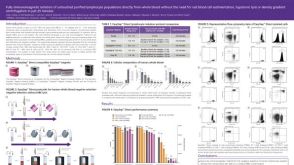 科学海报Immunomagnetic Cell Isolation of Untouched Lymphocyte Populations Directly from Whole Blood


 沪公网安备31010102008431号