Dhillon J et al. (NOV 2010)
Oncogene 29 47 6294--300
The expression of activated Y-box binding protein-1 serine 102 mediates trastuzumab resistance in breast cancer cells by increasing CD44+ cells.
The development of acquired resistance to trastuzumab remains a prevalent challenge in the treatment of patients whose tumors express human epidermal growth factor 2 (HER2). We previously reported that HER2 overexpressing breast cancers are dependent on Y-box binding protein-1 (YB-1) for growth and survival. As YB-1 is also linked to drug resistance in other types of cancer,we address its possible role in trastuzumab insensitivity. Employing an in vivo model of acquired resistance,we demonstrate that resistant cell lines have elevated levels of P-YB-1(S102) and its activating kinase P-RSK and these levels are sustained following trastuzumab treatment. Further,to demonstrate the importance of YB-1 in mediating drug resistance,the expression of the active mutant YB-1(S102D) rendered the BT474 cell line insensitive to trastuzumab. Questioning the role of tumor-initiating cells (TIC) and their ability to escape cancer therapies,we investigate YB-1's role in inducing the cancer stem cell marker CD44. Notably,the resistant cells express more CD44 mRNA and protein compared with BT474 cells,which correlated with increased mammosphere formation. Expression of YB-1(S102D) in the BT474 cells increase CD44 protein levels,resulting in enhanced mammosphere formation. Further,exposing BT474 cells to trastuzumab selected for a resistant sub-population enriched for CD44. Conversely,small intefering RNA inhibition of CD44 restored trastuzumab sensitivity in the resistant cell lines. Our findings provide insight on a novel mechanism employed by tumor cells to acquire the ability to escape the effects of trastuzumab and suggest that targeting YB-1 may overcome resistance by eliminating the unresponsive TIC population,rendering the cancer sensitive to therapy.
View Publication
产品类型:
产品号#:
72712
72714
产品名:
BI-D1870
Onyshchenko MI et al. (JAN 2012)
Stem Cells International 2012 634914
Stimulation of cultured h9 human embryonic stem cells with thyroid stimulating hormone does not lead to formation of thyroid-like cells.
The sodium-iodine symporter (NIS) is expressed on the cell membrane of many thyroid cancer cells,and is responsible for the radioactive iodine accumulation. However,treatment of anaplastic thyroid cancer is ineffective due to the low expression of NIS on cell membranes of these tumor cells. Human embryonic stem cells (ESCs) provide a potential vehicle to study the mechanisms of NIS expression regulation during differentiation. Human ESCs were maintained on feeder-independent culture conditions. RT-qPCR and immunocytochemistry were used to study differentiation marker expression,(125)I uptake to study NIS function. We designed a two-step protocol for human ESC differentiation into thyroid-like cells,as was previously done for mouse embryonic stem cells. First,we obtained definitive endoderm from human ESCs. Second,we directed differentiation of definitive endoderm cells into thyroid-like cells using various factors,with thyroid stimulating hormone (TSH) as the main differentiating factor. Expression of pluripotency,endoderm and thyroid markers and (125)I uptake were monitored throughout the differentiation steps. These approaches did not result in efficient induction of thyroid-like cells. We conclude that differentiation of human ESCs into thyroid cells cannot be induced by TSH media supplementation alone and most likely involves complicated developmental patterns that are yet to be understood.
View Publication
产品类型:
产品号#:
05850
05857
05870
05875
36254
78001
78001.1
78001.2
78001.3
85850
85857
85870
85875
产品名:
DMEM/F-12 with 15 mM HEPES
重组人/小鼠激活素A
重组人/小鼠激活素A
重组人/小鼠激活素A
重组人/小鼠激活素A
mTeSR™1
mTeSR™1
E. Giuliani et al. (mar 2019)
Scientific reports 9 1 4373
Hexamethylene bisacetamide impairs NK cell-mediated clearance of acute T lymphoblastic leukemia cells and HIV-1-infected T cells that exit viral latency.
The hexamethylene bisacetamide (HMBA) anticancer drug was dismissed due to limited efficacy in leukemic patients but it may re-enter into the clinics in HIV-1 eradication strategies because of its recently disclosed capacity to reactivate latent virus. Here,we investigated the impact of HMBA on the cytotoxicity of natural killer (NK) cells against acute T lymphoblastic leukemia (T-ALL) cells or HIV-1-infected T cells that exit from latency. We show that in T-ALL cells HMBA upmodulated MICB and ULBP2 ligands for the NKG2D activating receptor. In a primary CD4+ T cell-based latency model,HMBA did not reactivate HIV-1,yet enhanced ULBP2 expression on cells harboring virus reactivated by prostratin (PRO). However,HMBA reduced the expression of NKG2D and its DAP10 adaptor in NK cells,hence impairing NKG2D-mediated cytotoxicity and DAP10-dependent response to IL-15 stimulation. Alongside,HMBA dampened killing of T-ALL targets by IL-15-activated NK cells and impaired NK cell-mediated clearance of PRO-reactivated HIV-1+ cells. Overall,our results demonstrate a dominant detrimental effect of HMBA on the NKG2D pathway that crucially controls NK cell-mediated killing of tumors and virus-infected cells,providing one possible explanation for poor clinical outcome in HMBA-treated cancer patients and raising concerns for future therapeutic application of this drug.
View Publication
Li X et al. (AUG 2015)
Cell stem cell 17 2 195--203
Small-Molecule-Driven Direct Reprogramming of Mouse Fibroblasts into Functional Neurons.
Recently,direct reprogramming between divergent lineages has been achieved by the introduction of regulatory transcription factors. This approach may provide alternative cell resources for drug discovery and regenerative medicine,but applications could be limited by the genetic manipulation involved. Here,we show that mouse fibroblasts can be directly converted into neuronal cells using only a cocktail of small molecules,with a yield of up to textgreater90% being TUJ1-positive after 16 days of induction. After a further maturation stage,these chemically induced neurons (CiNs) possessed neuron-specific expression patterns,generated action potentials,and formed functional synapses. Mechanistically,we found that a BET family bromodomain inhibitor,I-BET151,disrupted the fibroblast-specific program,while the neurogenesis inducer ISX9 was necessary to activate neuron-specific genes. Overall,our findings provide a proof of principle" for chemically induced direct reprogramming of somatic cell fates across germ layers without genetic manipulation�
View Publication
产品类型:
产品号#:
72052
72054
72112
72114
72232
72234
73202
73712
73714
100-1042
100-0249
100-1051
产品名:
CHIR99021
CHIR99021
Forskolin
Forskolin
SB431542(水合物)
SB431542(水合物)
ISX-9
I-BET151
I-BET151
CHIR99021
Forskolin
SB431542(水合物)
J. C. Wagner et al. (sep 2022)
American journal of transplantation : official journal of the American Society of Transplantation and the American Society of Transplant Surgeons 22 9 2237--2245
Alloantigen-specific regulatory T cell (Treg) therapy is a promising approach for suppressing alloimmune responses and minimizing immunosuppression after solid organ transplantation. Chimeric antigen receptor (CAR) targeting donor alloantigens can confer donor reactivity to Tregs. However,CAR Treg therapy has not been evaluated in vascularized transplant or multi-MHC mismatched models. Here,we evaluated the ability of CAR Tregs targeting HLA-A2 (A2-CAR) to prolong the survival of heterotopic heart transplants in mice. After verifying the in vitro activation,proliferation,and enhanced suppressive function of A2-CAR Tregs in the presence of A2-antigen,we analyzed the in vivo function of Tregs in C57BL/6 (B6) mice receiving A2-expressing heart allografts. A2-CAR Treg infusion increased the median survival of grafts from B6.HLA-A2 transgenic donors from 23 to 99 days,whereas median survival with polyclonal Treg infusion was 35 days. In a more stringent model of haplo-mismatched hearts from BALB/cxB6.HLA-A2 F1 donors,A2-CAR Tregs slightly increased median graft survival from 11 to 14 days,which was further extended to >100 days when combined with a 9-day course of rapamycin treatment. These findings demonstrate the efficacy of CAR Tregs,alone or in combination with immunosuppressive agents,toward protecting vascularized grafts in fully immunocompetent recipients.
View Publication
产品类型:
产品号#:
19852
19852RF
产品名:
EasySep™小鼠CD4+ T细胞分选试剂盒
RoboSep™ 小鼠CD4+ T细胞分选试剂盒
S. Pankaew et al. (dec 2021)
STAR protocols 3 1 101041
Multiplexed single-cell RNA-sequencing of mouse thymic and splenic samples.
Multiplexed single-cell RNA-sequencing (scRNA-seq) enables investigating several biological samples in one scRNA-seq experiment. Here,we use antibodies tagged with a hashtag oligonucleotide (Ab-HTO) to label each sample,and 10?— Genomics technology to analyze single-cell gene expression. Advantages of sample multiplexing are to reduce the cost of scRNA-seq assay and to avoid batch effect. It may also facilitate cell-doublet removal and the merging of several scRNA-seq assays. Herein,we apply multiplexed scRNA-seq to investigate mouse thymocytes and splenic T lymphocytes development. For complete details on the use and execution of this protocol,please refer to Nozais et al. (2021).
View Publication
N. H. Overgaard et al. (JUN 2018)
Frontiers in immunology 9 1301
Genetically Induced Tumors in the Oncopig Model Invoke an Antitumor Immune Response Dominated by Cytotoxic CD8 T Cells and Differentiated T Cells Alongside a Regulatory Response Mediated by FOXP3+ T Cells and Immunoregulatory Molecules
In recent years,immunotherapy has shown considerable promise in the management of several malignancies. However,the majority of preclinical studies have been conducted in rodents,the results of which often translate poorly to patients given the substantial differences between murine and human immunology. As the porcine immune system is far more analogous to that of humans,pigs may serve as a supplementary preclinical model for future testing of such therapies. We have generated the genetically modified Oncopig with inducible tumor formation resulting from concomitant KRAS(G12D) and TP53(R167H) mutations under control of an adenoviral vector Cre-recombinase (AdCre). The objective of this study was to characterize the tumor microenvironment in this novel animal model with respect to T-cell responses in particular and to elucidate the potential use of Oncopigs for future preclinical testing of cancer immunotherapies. In this study,we observed pronounced intratumoral T-cell infiltration with a strong CD8$\beta$(+) predominance alongside a representation of highly differentiated $\gamma$$\delta$ T cells. The infiltrating CD8$\beta$(+) T cells displayed increased expression of the cytotoxic marker perforin when compared with the peripheral T-cell pool. Similarly,there was robust granzyme B staining localizing to the tumors; affirming the presence of cytotoxic immune cells within the tumor. In parallel with this antitumor immune response,the tumors displayed enrichment in FOXP3-expressing T cells and increased gene expression of indoleamine 2,3-dioxygenase 1 (IDO1),cytotoxic T-lymphocyte-associated protein 4 (CTLA4),and programmed death-ligand 1 (PDL1). Finally,we investigated the Oncopig immune system in mediating antitumor immunity. We observed pronounced killing of autologous tumor cells,which demonstrates the propensity of the Oncopig immune system to recognize and mount a cytotoxic response against tumor cells. Together,these findings suggest innate and adaptive recognition of the induced tumors with a concomitant in vivo suppression of T-cell effector functions. Combined,the data support that the Oncopig may serve as a valuable model for future preclinical testing of immunotherapies aimed at reactivating tumor-directed cytotoxicity in vivo.
View Publication
产品类型:
产品号#:
85415
85420
85450
85460
86415
86420
86450
86460
产品名:
SepMate™-15 (IVD)
SepMate™-15 (IVD)
SepMate™-50 (IVD)
SepMate™-50 (IVD)
SepMate™-15 (RUO)
SepMate™-15 (RUO)
SepMate™-50 (RUO)
SepMate™-50 (RUO)
Ragu C et al. (NOV 2010)
Blood 116 22 4464--73
The transcription factor Srf regulates hematopoietic stem cell adhesion.
Adhesion properties of hematopoietic stem cells (HSCs) in the bone marrow (BM) niches control their migration and affect their cell-cycle dynamics. The serum response factor (Srf) regulates growth factor-inducible genes and genes controlling cytoskeleton structures involved in cell spreading,adhesion,and migration. We identified a role for Srf in HSC adhesion and steady-state hematopoiesis. Conditional deletion of Srf in BM cells resulted in a 3-fold expansion of the long- and short-term HSCs and multipotent progenitors (MPPs),which occurs without long-term modification of cell-cycle dynamics. Early differentiation steps to myeloid and lymphoid lineages were normal,but Srf loss results in alterations in mature-cell production and severe thrombocytopenia. Srf-null BM cells also displayed compromised engraftment properties in transplantation assays. Gene expression analysis identified Srf target genes expressed in HSCs,including a network of genes associated with cell migration and adhesion. Srf-null stem cells and MPPs displayed impair expression of the integrin network and decreased adherence in vitro. In addition,Srf-null mice showed increase numbers of circulating stem and progenitor cells,which likely reflect their reduced retention in the BM. Altogether,our results demonstrate that Srf is an essential regulator of stem cells and MPP adhesion,and suggest that Srf acts mainly through cell-matrix interactions and integrin signaling.
View Publication
产品类型:
产品号#:
03434
03444
09600
09650
产品名:
MethoCult™ GF M3434
MethoCult™ GF M3434
StemSpan™ SFEM
StemSpan™ SFEM
Dichlberger A et al. (DEC 2011)
Journal of lipid research 52 12 2198--208
Lipid body formation during maturation of human mast cells.
Lipid droplets,also called lipid bodies (LB) in inflammatory cells,are important cytoplasmic organelles. However,little is known about the molecular characteristics and functions of LBs in human mast cells (MC). Here,we have analyzed the genesis and components of LBs during differentiation of human peripheral blood-derived CD34(+) progenitors into connective tissue-type MCs. In our serum-free culture system,the maturing MCs,derived from 18 different donors,invariably developed triacylglycerol (TG)-rich LBs. Not known heretofore,the MCs transcribe the genes for perilipins (PLIN)1-4,but not PLIN5,and PLIN2 and PLIN3 display different degrees of LB association. Upon MC activation and ensuing degranulation,the LBs were not cosecreted with the cytoplasmic secretory granules. Exogenous arachidonic acid (AA) enhanced LB genesis in Triacsin C-sensitive fashion,and it was found to be preferentially incorporated into the TGs of LBs. The large TG-associated pool of AA in LBs likely is a major precursor for eicosanoid production by MCs. In summary,we demonstrate that cultured human MCs derived from CD34(+) progenitors in peripheral blood provide a new tool to study regulatory mechanisms involving LB functions,with particular emphasis on AA metabolism,eicosanoid biosynthesis,and subsequent release of proinflammatory lipid mediators from these cells.
View Publication


 EasySep™小鼠TIL(CD45)正选试剂盒





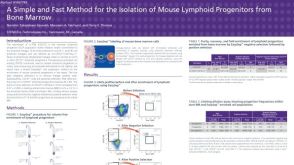 科学海报Cell Isolation of Mouse Lymphoid Progenitors from Bone Marrow

 沪公网安备31010102008431号