Huang EH et al. (APR 2009)
Cancer research 69 8 3382--9
Aldehyde dehydrogenase 1 is a marker for normal and malignant human colonic stem cells (SC) and tracks SC overpopulation during colon tumorigenesis.
Although the concept that cancers originate from stem cells (SC) is becoming scientifically accepted,mechanisms by which SC contribute to tumor initiation and progression are largely unknown. For colorectal cancer (CRC),investigation of this problem has been hindered by a paucity of specific markers for identification and isolation of SC from normal and malignant colon. Accordingly,aldehyde dehydrogenase 1 (ALDH1) was investigated as a possible marker for identifying colonic SC and for tracking them during cancer progression. Immunostaining showed that ALDH1(+) cells are sparse and limited to the normal crypt bottom,where SCs reside. During progression from normal epithelium to mutant (APC) epithelium to adenoma,ALDH1(+) cells increased in number and became distributed farther up the crypt. CD133(+) and CD44(+) cells,which are more numerous and broadly distributed in normal crypts,showed similar changes during tumorigenesis. Flow cytometric isolation of cancer cells based on enzymatic activity of ALDH (Aldefluor assay) and implantation of these cells in nonobese diabetic-severe combined immunodeficient mice (a) generated xenograft tumors (Aldefluor(-) cells did not),(b) generated them after implanting as few as 25 cells,and (c) generated them dose dependently. Further isolation of cancer cells using a second marker (CD44(+) or CD133(+) serially) only modestly increased enrichment based on tumor-initiating ability. Thus,ALDH1 seems to be a specific marker for identifying,isolating,and tracking human colonic SC during CRC development. These findings also support our original hypothesis,derived previously from mathematical modeling of crypt dynamics,that progressive colonic SC overpopulation occurs during colon tumorigenesis and drives CRC development.
View Publication
产品类型:
产品号#:
01700
01705
01702
产品名:
ALDEFLUOR™ 试剂盒
ALDEFLUOR™ DEAB试剂, 1.5 mM, 1 mL
ALDEFLUOR™检测缓冲液
Hu K et al. ( 2012)
Breast cancer research : BCR 14 1 R22
Small interfering RNA library screen identified polo-like kinase-1 (PLK1) as a potential therapeutic target for breast cancer that uniquely eliminates tumor-initiating cells.
INTRODUCTION Triple-negative breast cancer (TNBC) high rate of relapse is thought to be due to the presence of tumor-initiating cells (TICs),molecularly defined as being CD44high/CD24-/low. TICs are resilient to chemotherapy and radiation. However,no currently accepted molecular target exists against TNBC and,moreover,TICs. Therefore,we sought the identification of kinase targets that inhibit TNBC growth and eliminate TICs. METHODS A genome-wide human kinase small interfering RNA (siRNA) library (691 kinases) was screened against the TNBC cell line SUM149 for growth inhibition. Selected siRNAs were then tested on four different breast cancer cell lines to confirm the spectrum of activity. Their effect on the CD44high subpopulation and sorted CD44high/CD24-/low cells of SUM149 also was studied. Further studies were focused on polo-like kinase 1 (PLK1),including its expression in breast cancer cell lines,effect on the CD44high/CD24-/low TIC subpopulation,growth inhibition,mammosphere formation,and apoptosis,as well as the activity of the PLK1 inhibitor,BI 2536. RESULTS Of the 85 kinases identified in the screen,28 of them were further silenced by siRNAs on MDA-MB-231 (TNBC),BT474-M1 (ER+/HER2+,a metastatic variant),and HR5 (ER+/HER2+,a trastuzumab-resistant model) cells and showed a broad spectrum of growth inhibition. Importantly,12 of 28 kinases also reduced the CD44high subpopulation compared with control in SUM149. Further tests of these 12 kinases directly on a sorted CD44high/CD24-/low TIC subpopulation of SUM149 cells confirmed their effect. Blocking PLK1 had the greatest growth inhibition on breast cancer cells and TICs by about 80% to 90% after 72 hours. PLK1 was universally expressed in breast cancer cell lines,representing all of the breast cancer subtypes,and was positively correlated to CD44. The PLK1 inhibitor BI 2536 showed similar effects on growth,mammosphere formation,and apoptosis as did PLK1 siRNAs. Finally,whereas paclitaxel,doxorubicin,and 5-fluorouracil enriched the CD44high/CD24-/low population compared with control in SUM149,subsequent treatment with BI 2536 killed the emergent population,suggesting that it could potentially be used to prevent relapse. CONCLUSION Inhibiting PLK1 with siRNA or BI 2536 blocked growth of TNBCs including the CD44high/CD24-/low TIC subpopulation and mammosphere formation. Thus,PLK1 could be a potential therapeutic target for the treatment of TNBC as well as other subtypes of breast cancer.
View Publication
产品类型:
产品号#:
05620
产品名:
MammoCult™ 人源培养基套装
Rawat VPS et al. (JAN 2004)
Proceedings of the National Academy of Sciences of the United States of America 101 3 817--22
Ectopic expression of the homeobox gene Cdx2 is the transforming event in a mouse model of t(12;13)(p13;q12) acute myeloid leukemia.
Creation of fusion genes by balanced chromosomal translocations is one of the hallmarks of acute myeloid leukemia (AML) and is considered one of the key leukemogenic events in this disease. In t(12;13)(p13;q12) AML,ectopic expression of the homeobox gene CDX2 was detected in addition to expression of the ETV6-CDX2 fusion gene,generated by the chromosomal translocation. Here we show in a murine model of t(12;13)(p13;q12) AML that myeloid leukemogenesis is induced by the ectopic expression of CDX2 and not by the ETV6-CDX2 chimeric gene. Mice transplanted with bone marrow cells retrovirally engineered to express Cdx2 rapidly succumbed to fatal and transplantable AML. The transforming capacity of Cdx2 depended on an intact homeodomain and the N-terminal transactivation domain. Transplantation of bone marrow cells expressing ETV6-CDX2 failed to induce leukemia. Furthermore,coexpression of ETV6-CDX2 and Cdx2 in bone marrow cells did not accelerate the course of disease in transplanted mice compared to Cdx2 alone. These data demonstrate that activation of a protooncogene by a balanced chromosomal translocation can be the pivotal leukemogenic event in AML,characterized by the expression of a leukemia-specific fusion gene. Furthermore,these findings link protooncogene activation to myeloid leukemogenesis,an oncogenic mechanism so far associated mainly with lymphoid leukemias and lymphomas.
View Publication
产品类型:
产品号#:
03434
03444
产品名:
MethoCult™ GF M3434
MethoCult™ GF M3434
Jeselsohn R et al. (JAN 2010)
Cancer cell 17 1 65--76
Cyclin D1 kinase activity is required for the self-renewal of mammary stem and progenitor cells that are targets of MMTV-ErbB2 tumorigenesis.
Transplantation studies have demonstrated the existence of mammary progenitor cells with the ability to self-renew and regenerate a functional mammary gland. Although these progenitors are the likely targets for oncogenic transformation,correlating progenitor populations with certain oncogenic stimuli has been difficult. Cyclin D1 is required for lobuloalveolar development during pregnancy and lactation as well as MMTV-ErbB2- but not MMTV-Wnt1-mediated tumorigenesis. Using a kinase-deficient cyclin D1 mouse,we identified two functional mammary progenitor cell populations,one of which is the target of MMTV-ErbB2. Moreover,cyclin D1 activity is required for the self-renewal and differentiation of mammary progenitors because its abrogation leads to a failure to maintain the mammary epithelial regenerative potential and also results in defects in luminal lineage differentiation.
View Publication
AZD1152, a novel and selective aurora B kinase inhibitor, induces growth arrest, apoptosis, and sensitization for tubulin depolymerizing agent or topoisomerase II inhibitor in human acute leukemia cells in vitro and in vivo.
Aurora kinases play an important role in chromosome alignment,segregation,and cytokinesis during mitosis. We have recently shown that hematopoietic malignant cells including those from acute myeloid leukemia (AML) and acute lymphoblastic leukemia (ALL) aberrantly expressed Aurora A and B kinases,and ZM447439,a potent inhibitor of Aurora kinases,effectively induced growth arrest and apoptosis of a variety of leukemia cells. The present study explored the effect of AZD1152,a highly selective inhibitor of Aurora B kinase,on various types of human leukemia cells. AZD1152 inhibited the proliferation of AML lines (HL-60,NB4,MOLM13),ALL line (PALL-2),biphenotypic leukemia (MV4-11),acute eosinophilic leukemia (EOL-1),and the blast crisis of chronic myeloid leukemia K562 cells with an IC50 ranging from 3 nM to 40 nM,as measured by thymidine uptake on day 2 of culture. These cells had 4N/8N DNA content followed by apoptosis,as measured by cell-cycle analysis and annexin V staining,respectively. Of note,AZD1152 synergistically enhanced the antiproliferative activity of vincristine,a tubulin depolymerizing agent,and daunorubicin,a topoisomerase II inhibitor,against the MOLM13 and PALL-2 cells in vitro. Furthermore,AZD1152 potentiated the action of vincristine and daunorubicin in a MOLM13 murine xenograft model. Taken together,AZD1152 is a promising new agent for treatment of individuals with leukemia. The combined administration of AZD1152 and conventional chemotherapeutic agent to patients with leukemia warrants further investigation.
View Publication
产品类型:
产品号#:
04564
04534
04544
产品名:
MethoCult™ H4534 Classic 无 EPO 入门试剂盒
MethoCult™ H4534 Classic(不含 EPO)
MethoCult™ H4534 Classic(不含 EPO)
Coletta PL et al. (FEB 2004)
Blood 103 3 1050--8
Lymphodepletion in the ApcMin/+ mouse model of intestinal tumorigenesis.
Germ line mutations in the Adenomatous polyposis coli tumor suppressor gene cause a hereditary form of intestinal tumorigenesis in both mice and man. Here we show that in Apc(Min/+) mice,which carry a heterozygous germ line mutation at codon 850 of Apc,there is progressive loss of immature and mature thymocytes from approximately 80 days of age with complete regression of the thymus by 120 days. In addition,Apc(Min/+) mice show parallel depletion of splenic natural killer (NK) cells,immature B cells,and B progenitor cells in bone marrow due to complete loss of interleukin 7 (IL-7)-dependent B-cell progenitors. Using bone marrow transplantation experiments into wild-type recipients,we have shown that the capacity of transplanted Apc(Min/+) bone marrow cells for T- and B-cell development appears normal. In contrast,although the Apc(Min/+) bone marrow microenvironment supported short-term reconstitution with wild-type bone marrow,Apc(Min/+) animals that received transplants subsequently underwent lymphodepletion. Fibroblast colony-forming unit (CFU-F) colony assays revealed a significant reduction in colony-forming mesenchymal progenitor cells in the bone marrow of Apc(Min/+) mice compared with wild-type animals prior to the onset of lymphodepletion. This suggests that an altered bone marrow microenvironment may account for the selective lymphocyte depletion observed in this model of familial adenomatous polyposis.
View Publication
产品类型:
产品号#:
03630
03434
03444
05501
05502
产品名:
MethoCult™ M3630
MethoCult™ GF M3434
MethoCult™ GF M3434
Carella C et al. (FEB 2006)
Blood 107 3 1124--32
The ETS factor TEL2 is a hematopoietic oncoprotein.
TEL2/ETV7 is highly homologous to the ETS transcription factor TEL/ETV6,a frequent target of chromosome translocation in human leukemia. Although both proteins are transcriptional inhibitors binding similar DNA recognition sequences,they have opposite biologic effects: TEL inhibits proliferation while TEL2 promotes it. In addition,forced expression of TEL2 but not TEL blocks vitamin D3-induced differentiation of U937 and HL60 myeloid cells. TEL2 is expressed in the hematopoietic system,and its expression is up-regulated in bone marrow samples of some patients with leukemia,suggesting a role in oncogenesis. Recently we also showed that TEL2 cooperates with Myc in B lymphomagenesis in mice. Here we show that forced expression of TEL2 alone in mouse bone marrow causes a myeloproliferative disease with a long latency period but with high penetrance. This suggested that secondary mutations are necessary for disease development. Treating mice receiving transplants with TEL2-expressing bone marrow with the chemical carcinogen N-ethyl-N-nitrosourea (ENU) resulted in significantly accelerated disease onset. Although the mice developed a GFP-positive myeloid disease with 30% of the mice showing elevated white blood counts,they all died of T-cell lymphoma,which was GFP negative. Together our data identify TEL2 as a bona fide oncogene,but leukemic transformation is dependent on secondary mutations.
View Publication
产品类型:
产品号#:
03434
03444
05350
产品名:
MethoCult™ GF M3434
MethoCult™ GF M3434
Kharas MG et al. (JAN 2007)
Blood 109 2 747--55
KLF4 suppresses transformation of pre-B cells by ABL oncogenes.
Genes that are strongly repressed after B-cell activation are candidates for being inactivated,mutated,or repressed in B-cell malignancies. Krüppel-like factor 4 (Klf4),a gene down-regulated in activated murine B cells,is expressed at low levels in several types of human B-cell lineage lymphomas and leukemias. The human KLF4 gene has been identified as a tumor suppressor gene in colon and gastric cancer; in concordance with this,overexpression of KLF4 can suppress proliferation in several epithelial cell types. Here we investigate the effects of KLF4 on pro/pre-B-cell transformation by v-Abl and BCR-ABL,oncogenes that cause leukemia in mice and humans. We show that overexpression of KLF4 induces arrest and apoptosis in the G1 phase of the cell cycle. KLF4-mediated death,but not cell-cycle arrest,can be rescued by Bcl-XL overexpression. Transformed pro/pre-B cells expressing KLF4 display increased expression of p21CIP and decreased expression of c-Myc and cyclin D2. Tetracycline-inducible expression of KLF4 in B-cell progenitors of transgenic mice blocks transformation by BCR-ABL and depletes leukemic pre-B cells in vivo. Collectively,our work identifies KLF4 as a putative tumor suppressor in B-cell malignancies.
View Publication
产品类型:
产品号#:
03630
产品名:
MethoCult™ M3630
Wray J et al. (AUG 2009)
Blood 114 9 1852--8
Metnase mediates chromosome decatenation in acute leukemia cells.
After DNA replication,sister chromatids must be untangled,or decatenated,before mitosis so that chromatids do not tear during anaphase. Topoisomerase IIalpha (Topo IIalpha) is the major decatenating enzyme. Topo IIalpha inhibitors prevent decatenation,causing cells to arrest during mitosis. Here we report that acute myeloid leukemia cells fail to arrest at the mitotic decatenation checkpoint,and their progression through this checkpoint is regulated by the DNA repair component Metnase (also termed SETMAR). Metnase contains a SET histone methylase and transposase nuclease domain,and is a component of the nonhomologous end-joining DNA double-strand break repair pathway. Metnase interacts with Topo IIalpha and enhances its decatenation activity. Here we show that multiple types of acute leukemia cells have an attenuated mitotic arrest when decatenation is inhibited and that in an acute myeloid leukemia (AML) cell line this is mediated by Metnase. Of further importance,Metnase permits continued proliferation of these AML cells even in the presence of the clinical Topo IIalpha inhibitor VP-16. In vitro,purified Metnase prevents VP-16 inhibition of Topo IIalpha decatenation of tangled DNA. Thus,Metnase expression levels may predict AML resistance to Topo IIalpha inhibitors,and Metnase is a potential therapeutic target for small molecule interference.
View Publication
产品类型:
产品号#:
02690
09850
产品名:
StemSpan™ CC100
Kallifatidis G et al. (JUL 2009)
Gut 58 7 949--63
Sulforaphane targets pancreatic tumour-initiating cells by NF-kappaB-induced antiapoptotic signalling.
BACKGROUND AND AIMS: Emerging evidence suggests that highly treatment-resistant tumour-initiating cells (TICs) play a central role in the pathogenesis of pancreatic cancer. Tumour necrosis factor-related apoptosis-inducing ligand (TRAIL) is considered to be a novel anticancer agent; however,recent studies have shown that many pancreatic cancer cells are resistant to apoptosis induction by TRAIL due to TRAIL-activated nuclear factor-kappaB (NF-kappaB) signalling. Several chemopreventive agents are able to inhibit NF-kappaB,and favourable results have been obtained--for example,for the broccoli compound sulforaphane-in preventing metastasis in clinical studies. The aim of the study was to identify TICs in pancreatic carcinoma for analysis of resistance mechanisms and for definition of sensitising agents. METHODS: TICs were defined by expression patterns of a CD44(+)/CD24(-),CD44(+)/CD24(+) or CD44(+)/CD133(+) phenotype and correlation to growth in immunodeficient mice,differentiation grade,clonogenic growth,sphere formation,aldehyde dehydrogenase (ALDH) activity and therapy resistance. RESULTS: Mechanistically,specific binding of transcriptionally active cRel-containing NF-kappaB complexes in TICs was observed. Sulforaphane prevented NF-kappaB binding,downregulated apoptosis inhibitors and induced apoptosis,together with prevention of clonogenicity. Gemcitabine,the chemopreventive agents resveratrol and wogonin,and the death ligand TRAIL were less effective. In a xenograft model,sulforaphane strongly blocked tumour growth and angiogenesis,while combination with TRAIL had an additive effect without obvious cytotoxicity in normal cells. Freshly isolated patient tumour cells expressing markers for TICs could be sensitised by sulforaphane for TRAIL-induced cytotoxicity. CONCLUSION: The data provide new insights into resistance mechanisms of TICs and suggest the combination of sulforaphane with TRAIL as a promising strategy for targeting of pancreatic TICs.
View Publication


 EasySep™小鼠TIL(CD45)正选试剂盒






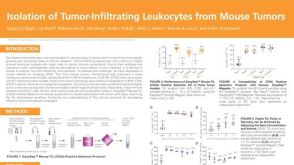 科学海报Isolation of Tumor-Infiltrating Leukocytes from Mouse Tumors
 沪公网安备31010102008431号