Chang M-J et al. (DEC 2010)
Cancer research 70 24 10234--42
Histone H3 lysine 79 methyltransferase Dot1 is required for immortalization by MLL oncogenes.
Chimeric oncoproteins resulting from fusion of MLL to a wide variety of partnering proteins cause biologically distinctive and clinically aggressive acute leukemias. However,the mechanism of MLL-mediated leukemic transformation is not fully understood. Dot1,the only known histone H3 lysine 79 (H3K79) methyltransferase,has been shown to interact with multiple MLL fusion partners including AF9,ENL,AF10,and AF17. In this study,we utilize a conditional Dot1l deletion model to investigate the role of Dot1 in hematopoietic progenitor cell immortalization by MLL fusion proteins. Western blot and mass spectrometry show that Dot1-deficient cells are depleted of the global H3K79 methylation mark. We find that loss of Dot1 activity attenuates cell viability and colony formation potential of cells immortalized by MLL oncoproteins but not by the leukemic oncoprotein E2a-Pbx1. Although this effect is most pronounced for MLL-AF9,we find that Dot1 contributes to the viability of cells immortalized by other MLL oncoproteins that are not known to directly recruit Dot1. Cells immortalized by MLL fusions also show increased apoptosis,suggesting the involvement of Dot1 in survival pathways. In summary,our data point to a pivotal requirement for Dot1 in MLL fusion protein-mediated leukemogenesis and implicate Dot1 as a potential therapeutic target.
View Publication
产品类型:
产品号#:
03234
18757
18757RF
产品名:
MethoCult™ M3234
EasySep™小鼠CD117(cKIT)正选试剂盒
RoboSep™ 小鼠CD117(cKIT)正选试剂盒含滤芯吸头
Bacher U et al. (DEC 2010)
Cancer genetics and cytogenetics 203 2 169--75
Correlation of cytomorphology, immunophenotyping, and interphase fluorescence in situ hybridization in 381 patients with monoclonal gammopathy of undetermined significance and 301 patients with plasma cell myeloma.
To further clarify the transformation from monoclonal gammopathy of undetermined significance (MGUS) to plasma cell myeloma (PCM),we compared interphase fluorescence in situ hybridization (FISH) patterns in 381 MGUS and 301 PCM patients. According to the World Health Organization and the International Myeloma Working Group,a threshold of 10% of bone marrow plasma cells separated MGUS from PCM. After magnetic activated cell sorting for CD138(+) cells,FISH succeeded in 272 of 301 (90.4%) PCM,but in only 302 of 381 (79.3%) MGUS cases (P textless 0.001). Cytogenetic alterations were more frequent in PCM (237 of 272; 87.1%) than MGUS (169 of 302; 56.0%; P = 0.0002). PCM showed a median of two cytogenetic alterations (range,0-9) and MGUS one (range,0-6). Considering only cases with a yield of plasma cells allowing five or more FISH probes,del(13)(q14) was found in 99 of 251 (39.3%) PCM but in only 59 of 267 (22.1%) MGUS (P = 0.0001),del(17p) in 15 PCM (6.0%) and in 6 MGUS (2.2%) patients (P = 0.029). A t(4;14)/IGH-FGFR3 was detected in 28 PCM (11.1%) and 5 MGUS (1.9%; P textless 0.001). The t(11;14)/IGH-CCND1 and the t(14;16)/IGH-MAF showed no significant differences. Cytomorphology detected higher numbers of plasma cells than multiparameter flow cytometry (median ratio 4.25). This study underlines the genetic heterogeneity of MGUS similar to PCM. Genetic analysis might contribute to more diversified monitoring strategies for MGUS patients.
View Publication
Kortylewski M et al. (MAR 2009)
Cancer research 69 6 2497--505
Toll-like receptor 9 activation of signal transducer and activator of transcription 3 constrains its agonist-based immunotherapy.
Although toll-like receptor (TLR) agonists,such as CpG,are used as immunotherapeutic agents in clinical trials for cancer and infectious diseases,their effects are limited and the underlying mechanism(s) that restrains CpG efficacy remains obscure. Here,we show that signal transducer and activator of transcription 3 (Stat3) plays a key role in down-modulating immunostimulatory effects of CpG. In the absence of interleukin-6 (IL-6) and IL-10 induction,CpG directly activates Stat3 within minutes through TLR9. Ablating Stat3 in hematopoietic cells results in rapid activation of innate immunity by CpG,with enhanced production of IFN-gamma,tumor necrosis factor-alpha,IL-12,and activation of macrophages,neutrophils,and natural killer cells marked with Stat1 activation. Innate immune responses induced by CpG in mice with a Stat3-ablated hematopoietic system cause potent antitumor effects,leading to eradication of large (textgreater1 cm) B16 melanoma tumors within 72 h. Moreover,ablating Stat3 in myeloid cells increases CpG-induced dendritic cell maturation,T-cell activation,generation of tumor antigen-specific T cells,and long-lasting antitumor immunity. A critical role of Stat3 in mediating immunosuppression by certain cytokines and growth factors in the tumor microenvironment has been recently documented. By demonstrating direct and rapid activation of Stat3 by TLR agonists,we identify a second level of Stat3-mediated immunosuppression. Our results further suggest that targeting Stat3 can drastically improve CpG-based immunotherapeutic approaches.
View Publication
产品类型:
产品号#:
18770
18770RF
18758
18758RF
18768
18768RF
产品名:
Wang W et al. (MAY 2016)
Cell 165 5 1092--105
Effector T Cells Abrogate Stroma-Mediated Chemoresistance in Ovarian Cancer.
Effector T cells and fibroblasts are major components in the tumor microenvironment. The means through which these cellular interactions affect chemoresistance is unclear. Here,we show that fibroblasts diminish nuclear accumulation of platinum in ovarian cancer cells,resulting in resistance to platinum-based chemotherapy. We demonstrate that glutathione and cysteine released by fibroblasts contribute to this resistance. CD8(+) T cells abolish the resistance by altering glutathione and cystine metabolism in fibroblasts. CD8(+) T-cell-derived interferon (IFN)γ controls fibroblast glutathione and cysteine through upregulation of gamma-glutamyltransferases and transcriptional repression of system xc(-) cystine and glutamate antiporter via the JAK/STAT1 pathway. The presence of stromal fibroblasts and CD8(+) T cells is negatively and positively associated with ovarian cancer patient survival,respectively. Thus,our work uncovers a mode of action for effector T cells: they abrogate stromal-mediated chemoresistance. Capitalizing upon the interplay between chemotherapy and immunotherapy holds high potential for cancer treatment.
View Publication
产品类型:
产品号#:
17953
17953RF
15022
15062
100-0710
产品名:
EasySep™人CD8+ T细胞分选试剂盒
RoboSep™ 人CD8+ T细胞分选试剂盒
RosetteSep™人CD4+ T细胞富集抗体混合物
RosetteSep™人CD4+ T细胞富集抗体混合物
EasySep™人CD8+ T细胞分选试剂盒
Brooks SE et al. ( 2015)
PloS one 10 10 e0140483
Application of the pMHC Array to Characterise Tumour Antigen Specific T Cell Populations in Leukaemia Patients at Disease Diagnosis.
Immunotherapy treatments for cancer are becoming increasingly successful,however to further improve our understanding of the T-cell recognition involved in effective responses and to encourage moves towards the development of personalised treatments for leukaemia immunotherapy,precise antigenic targets in individual patients have been identified. Cellular arrays using peptide-MHC (pMHC) tetramers allow the simultaneous detection of different antigen specific T-cell populations naturally circulating in patients and normal donors. We have developed the pMHC array to detect CD8+ T-cell populations in leukaemia patients that recognise epitopes within viral antigens (cytomegalovirus (CMV) and influenza (Flu)) and leukaemia antigens (including Per Arnt Sim domain 1 (PASD1),MelanA,Wilms' Tumour (WT1) and tyrosinase). We show that the pMHC array is at least as sensitive as flow cytometry and has the potential to rapidly identify more than 40 specific T-cell populations in a small sample of T-cells (0.8-1.4 x 10(6)). Fourteen of the twenty-six acute myeloid leukaemia (AML) patients analysed had T cells that recognised tumour antigen epitopes,and eight of these recognised PASD1 epitopes. Other tumour epitopes recognised were MelanA (n = 3),tyrosinase (n = 3) and WT1(126-134) (n = 1). One of the seven acute lymphocytic leukaemia (ALL) patients analysed had T cells that recognised the MUC1(950-958) epitope. In the future the pMHC array may be used provide point of care T-cell analyses,predict patient response to conventional therapy and direct personalised immunotherapy for patients.
View Publication
产品类型:
产品号#:
19053
19053RF
产品名:
EasySep™人CD8+ T细胞富集试剂盒
RoboSep™ 人CD8+ T细胞富集试剂盒含滤芯吸头
Ortega V et al. (MAR 2016)
Cancer genetics 209 3 82--6
Optimal strategy for obtaining routine chromosome analysis by using negative fractions of CD138 enriched plasma cells.
Fluorescence in situ hybridization (FISH) is superior to routine chromosome analysis (RCA) in detecting important prognostic genetic abnormalities in plasma cell dyscrasia (PCD); however,its sensitivity is hampered due to paucity of plasma cells (PC) in whole bone marrow (BM). Studies showed that the abnormality detection rate in enriched plasma cells (EPC) is greater than unselected plasma cells (UPC),but purification techniques are limiting to only FISH when sample volumes are inadequate. Not performing RCA may compromise patient care since RCA is equally important for detecting non-PC related abnormalities when the diagnosis is undefined. To resolve this critical issue,we designed a study where an immuno-magnetic CD138 enriched positive selection was used for FISH while the negative fraction (NF) was used to retrieve other myeloid elements for RCA. Parallel FISH studies were performed using UPC and CD138 EPC,while karyotyping was achieved using whole BM and discarded myeloid elements from the NF. Results showed that the abnormality rate of EPC was doubled compared to UPC for FISH,and CA displayed 100% success rate using the NF. PCD related chromosome abnormalities were confined to whole BM while non-PCD related abnormalities were found in both whole BM and NF. Our results demonstrate the feasibility of using the NF for RCA.
View Publication
Maes C et al. (MAY 2006)
The Journal of clinical investigation 116 5 1230--42
Placental growth factor mediates mesenchymal cell development, cartilage turnover, and bone remodeling during fracture repair.
Current therapies for delayed- or nonunion bone fractures are still largely ineffective. Previous studies indicated that the VEGF homolog placental growth factor (PlGF) has a more significant role in disease than in health. Therefore we investigated the role of PlGF in a model of semi-stabilized bone fracture healing. Fracture repair in mice lacking PlGF was impaired and characterized by a massive accumulation of cartilage in the callus,reminiscent of delayed- or nonunion fractures. PlGF was required for the early recruitment of inflammatory cells and the vascularization of the fracture wound. Interestingly,however,PlGF also played a role in the subsequent stages of the repair process. Indeed in vivo and in vitro findings indicated that PlGF induced the proliferation and osteogenic differentiation of mesenchymal progenitors and stimulated cartilage turnover by particular MMPs. Later in the process,PlGF was required for the remodeling of the newly formed bone by stimulating osteoclast differentiation. As PlGF expression was increased throughout the process of bone repair and all the important cell types involved expressed its receptor VEGFR-1,the present data suggest that PlGF is required for mediating and coordinating the key aspects of fracture repair. Therefore PlGF may potentially offer therapeutic advantages for fracture repair.
View Publication
产品类型:
产品号#:
03534
03334
03434
03444
18753
18753RF
产品名:
MethoCult™ GF M3534
MethoCult™ M3334
MethoCult™ GF M3434
MethoCult™ GF M3434
Wunderlich M et al. (SEP 2006)
Blood 108 5 1690--7
Human CD34+ cells expressing the inv(16) fusion protein exhibit a myelomonocytic phenotype with greatly enhanced proliferative ability.
The t(16:16) and inv(16) are associated with FAB M4Eo myeloid leukemias and result in fusion of the CBFB gene to the MYH11 gene (encoding smooth muscle myosin heavy chain [SMMHC]). Knockout of CBFbeta causes embryonic lethality due to lack of definitive hematopoiesis. Although knock-in of CBFB-MYH11 is not sufficient to cause disease,expression increases the incidence of leukemia when combined with cooperating events. Although mouse models are valuable tools in the study of leukemogenesis,little is known about the contribution of CBFbeta-SMMHC to human hematopoietic stem and progenitor cell self-renewal. We introduced the CBFbeta-MYH11 cDNA into human CD34+ cells via retroviral transduction. Transduced cells displayed an initial repression of progenitor activity but eventually dominated the culture,resulting in the proliferation of clonal populations for up to 7 months. Long-term cultures displayed a myelomonocytic morphology while retaining multilineage progenitor activity and engraftment in NOD/SCID-B2M-/- mice. Progenitor cells from long-term cultures showed altered expression of genes defining inv(16) identified in microarray studies of human patient samples. This system will be useful in examining the effects of CBFbeta-SMMHC on gene expression in the human preleukemic cell,in characterizing the effect of this oncogene on human stem cell biology,and in defining its contribution to the development of leukemia.
View Publication
产品类型:
产品号#:
04100
18056
18056RF
产品名:
MethoCult™ H4100
Carlsten M et al. (FEB 2007)
Cancer research 67 3 1317--25
DNAX accessory molecule-1 mediated recognition of freshly isolated ovarian carcinoma by resting natural killer cells.
Although natural killer (NK) cells are well known for their ability to kill tumors,few studies have addressed the interactions between resting (nonactivated) NK cells and freshly isolated human tumors. Here,we show that human leukocyte antigen class I(low) tumor cells isolated directly from patients with advanced ovarian carcinoma trigger degranulation by resting allogeneic NK cells. This was paralleled by induction of granzyme B and caspase-6 activities in the tumor cells and significant tumor cell lysis. Ovarian carcinoma cells displayed ubiquitous expression of the DNAX accessory molecule-1 (DNAM-1) ligand PVR and sparse/heterogeneous expression of the NKG2D ligands MICA/MICB and ULBP1,ULBP2,and ULBP3. In line with the NK receptor ligand expression profiles,antibody-mediated blockade of activating receptor pathways revealed a dominant role for DNAM-1 and a complementary contribution of NKG2D signaling in tumor cell recognition. These results show that resting NK cells are capable of directly recognizing freshly isolated human tumor cells and identify ovarian carcinoma as a potential target for adoptive NK cell-based immunotherapy.
View Publication


 EasySep™小鼠TIL(CD45)正选试剂盒





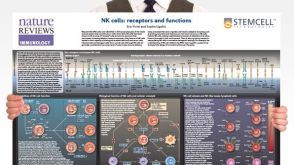 挂图Natural Killer Cells Overview of NK cell receptors, subsets, activation and function

 沪公网安备31010102008431号