Kortylewski M et al. (FEB 2009)
Cancer cell 15 2 114--23
Regulation of the IL-23 and IL-12 balance by Stat3 signaling in the tumor microenvironment.
Interactions between tumor and immune cells either enhance or inhibit cancer progression. We show here that Stat3 signaling within the tumor microenvironment induces a procarcinogenic cytokine,IL-23,while inhibiting a central anticarcinogenic cytokine,IL-12,thereby shifting the balance of tumor immunity toward carcinogenesis. Stat3 induces expression of IL-23,which is mainly produced by tumor-associated macrophages,via direct transcriptional activation of the IL-23/p19 gene. Furthermore,Stat3 inhibits NF-kappaB/c-Rel-dependent IL-12/p35 gene expression in tumor-associated dendritic cells. Tumor-associated regulatory T cells (Tregs) express IL-23 receptor,which activates Stat3 in this cell type,leading to upregulation of the Treg-specific transcription factor Foxp3 and the immunosuppressive cytokine IL-10. These results demonstrate that Stat3 promotes IL-23-mediated procarcinogenic immune responses while inhibiting IL-12-dependent antitumor immunity.
View Publication
Baksh D et al. (AUG 2003)
Experimental hematology 31 8 723--32
Adult human bone marrow-derived mesenchymal progenitor cells are capable of adhesion-independent survival and expansion.
OVERVIEW: We show the existence of adult human mesenchymal progenitor cells (hMPCs) that can proliferate,in a cytokine-dependent manner,as individual cells in stirred suspension cultures (SSC) while maintaining their ability to form functional differentiated mesenchymal cell types. MATERIALS AND METHODS: Ficolled human bone marrow (BM)-derived cells were grown in SSC (and adherent controls) in the presence and absence of exogenously added cytokines. Phenotypic,gene expression,and functional assays for hematopoietic and nonhematopoietic cell populations were used to kinetically track cell production. Limiting-dilution analysis was used to relate culture-produced cells to input cell populations. RESULTS: Cytokine cocktail influenced total and progenitor cell expansion,as well as the types of cells generated upon plating. Flow cytometric analysis of CD117,CD123,and CD45 expression showed that cytokine supplementation influenced SSC output. The concomitant growth of CD45(+) and CD45(-) cells in the cultures that exhibited the greatest hMPC expansions suggests that the growth of these cells may benefit from interactions with hematopoietic cells. Functional assays demonstrated that the SSC-derived cells (input CFU-O number: 1990+/-377) grown in the presence of SCF+IL-3 resulted,after 21 days,in the generation of a significantly greater number (ptextless0.05) of bone progenitors (33,700+/-8763 CFU-O) than similarly initiated adherent cultures (214+/-75 CFU-O). RT-PCR analysis confirmed that the SSC-derived cells grown in osteogenic conditions express bone-specific genes (Cbfa1/Runx2,bone sialoprotein,and osteocalcin). CONCLUSIONS: Our approach not only provides an alternative strategy to expand adult BM-derived nonhematopoietic progenitor cell numbers in a scalable and controllable bioprocess,but also questions established biological paradigms concerning the properties of connective-tissue stem and progenitor cells.
View Publication
产品类型:
产品号#:
05150
18259
18259RF
产品名:
MyeloCult™ H5100
Eksteen B et al. (DEC 2004)
The Journal of experimental medicine 200 11 1511--7
Hepatic endothelial CCL25 mediates the recruitment of CCR9+ gut-homing lymphocytes to the liver in primary sclerosing cholangitis.
Primary sclerosing cholangitis (PSC),a chronic inflammatory liver disease characterized by progressive bile duct destruction,develops as an extra-intestinal complication of inflammatory bowel disease (IBD) (Chapman,R.W. 1991. Gut. 32:1433-1435). However,the liver and bowel inflammation are rarely concomitant,and PSC can develop in patients whose colons have been removed previously. We hypothesized that PSC is mediated by long-lived memory T cells originally activated in the gut,but able to mediate extra-intestinal inflammation in the absence of active IBD (Grant,A.J.,P.F. Lalor,M. Salmi,S. Jalkanen,and D.H. Adams. 2002. Lancet. 359:150-157). In support of this,we show that liver-infiltrating lymphocytes in PSC include mucosal T cells recruited to the liver by aberrant expression of the gut-specific chemokine CCL25 that activates alpha4beta7 binding to mucosal addressin cell adhesion molecule 1 on the hepatic endothelium. This is the first demonstration in humans that T cells activated in the gut can be recruited to an extra-intestinal site of disease and provides a paradigm to explain the pathogenesis of extra-intestinal complications of IBD.
View Publication
产品类型:
产品号#:
18552
18552RF
18551
18551RF
18561
产品名:
McKenna KC and Kapp JA (AUG 2006)
Journal of immunology (Baltimore,Md. : 1950) 177 3 1599--608
Accumulation of immunosuppressive CD11b+ myeloid cells correlates with the failure to prevent tumor growth in the anterior chamber of the eye.
The purpose of these studies is to determine why an immunogenic tumor grows unchecked in the anterior chamber (a.c.) of the eye. The OVA-expressing EL4 tumor,E.G7-OVA,was injected into the a.c. or skin of immunocompetent and immunodeficient mice. Tumor growth and tumor-specific immune responses were monitored. Ocular tumor-infiltrating leukocytes were characterized phenotypically and functionally. Growth of E.G7-OVA was inhibited when limiting numbers of cells were injected in the skin but not in the a.c. of C57BL/6 mice,although both routes primed OVA-specific immune responses,which prevented the growth of a subsequent injection with E.G7-OVA in the skin or opposite eye. Tumor regression was OVA-specific because growth of the parental EL-4 tumor was not inhibited in primed mice. E.G7-OVA growth in the skin was not inhibited in immunodeficient Rag(-/-) or CD8 T cell-deficient mice,suggesting that CD8(+) CTLs mediate tumor elimination. CD8(+) T cell numbers were significantly increased in eyes of mice primed with E.G7-OVA,but few were detected in primary ocular tumors. Nevertheless,growth of E.G7-OVA was retarded in the a.c. of TCR-transgenic OT-I mice,and CD8(+) T cell numbers were increased within eyes,suggesting that tumor-specific CD8(+) CTLs migrated into and controlled primary ocular tumor growth. E.G7-OVA did not lose antigenicity or become immunosuppressive after 13 days of growth in the eye. However,CD11b(+) cells accumulated in primary ocular tumors and contained potent immunosuppressive activity when assayed in vitro. Thus,CD11b(+) cells that accumulate within the eye as tumors develop in the a.c. may contribute to immune evasion by primary ocular tumors by inhibiting CTLs within the eye.
View Publication
产品类型:
产品号#:
18770
18770RF
18554
18554RF
18564
18564RF
产品名:
Isham CR et al. (MAR 2007)
Blood 109 6 2579--88
Chaetocin: a promising new antimyeloma agent with in vitro and in vivo activity mediated via imposition of oxidative stress.
Chaetocin,a thiodioxopiperazine natural product previously unreported to have anticancer effects,was found to have potent antimyeloma activity in IL-6-dependent and -independent myeloma cell lines in freshly collected sorted and unsorted patient CD138(+) myeloma cells and in vivo. Chaetocin largely spares matched normal CD138(-) patient bone marrow leukocytes,normal B cells,and neoplastic B-CLL (chronic lymphocytic leukemia) cells,indicating a high degree of selectivity even in closely lineage-related B cells. Furthermore,chaetocin displays superior ex vivo antimyeloma activity and selectivity than doxorubicin and dexamethasone,and dexamethasone- or doxorubicin-resistant myeloma cell lines are largely non-cross-resistant to chaetocin. Mechanistically,chaetocin is dramatically accumulated in cancer cells via a process inhibited by glutathione and requiring intact/unreduced disulfides for uptake. Once inside the cell,its anticancer activity appears mediated primarily through the imposition of oxidative stress and consequent apoptosis induction. Moreover,the selective antimyeloma effects of chaetocin appear not to reflect differential intracellular accumulation of chaetocin but,instead,heightened sensitivity of myeloma cells to the cytotoxic effects of imposed oxidative stress. Considered collectively,chaetocin appears to represent a promising agent for further study as a potential antimyeloma therapeutic.
View Publication
产品类型:
产品号#:
18054
18054RF
21000
20119
20155
19154
19154RF
73592
产品名:
RoboSep™- S
RoboSep™ 吸头组件抛光剂
RoboSep™分选管套装(9个塑料管)
毛壳素
Oved K et al. (FEB 2007)
Journal of immunology (Baltimore,Md. : 1950) 178 4 2307--17
A novel postpriming regulatory check point of effector/memory T cells dictated through antigen density threshold-dependent anergy.
CTLs act as the effector arm of the cell-mediated immune system to kill undesirable cells. Two processes regulate these effector cells to prevent self reactivity: a thymic selection process that eliminates autoreactive clones and a multistage activation or priming process that endows them with a license to kill cognate target cells. Hitherto no subsequent regulatory restrictions have been ascribed for properly primed and activated CTLs that are licensed to kill. In this study we show that CTLs possess a novel postpriming regulatory mechanism(s) that influences the outcome of their encounter with cognate target cells. This mechanism gauges the degree of Ag density,whereupon reaching a certain threshold significant changes occur that induce anergy in the effector T cells. The biological consequences of this Ag-induced postpriming control includes alterations in the expression of cell surface molecules that control immunological synapse activity and cytokine profiles and induce retarded cell proliferation. Most profound is genome-wide microarray analysis that demonstrates changes in the expression of genes related to membrane potential,TCR signal transduction,energy metabolism,and cell cycle control. Thus,a discernible and unique gene expression signature for anergy as a response to high Ag density has been observed. Consequently,activated T cells possess properties of a self-referential sensory organ. These studies identify a new postpriming control mechanism of CTL with anergenic-like properties. This mechanism extends our understanding of the control of immune function and regulation such as peripheral tolerance,viral infections,antitumor immune responses,hypersensitivity,and autoimmunity.
View Publication
产品类型:
产品号#:
18054
18054RF
产品名:
Darce JR et al. (DEC 2007)
Journal of immunology (Baltimore,Md. : 1950) 179 11 7276--86
Regulated expression of BAFF-binding receptors during human B cell differentiation.
BAFF plays a central role in B-lineage cell biology; however,the regulation of BAFF-binding receptor (BBR) expression during B cell activation and differentiation is not completely understood. In this study,we provide a comprehensive ex vivo analysis of BBRs in human B-lineage cells at various stages of maturation,as well as describe the events that drive and regulate receptor expression. Our data reveal that B-lineage cells ranging from naive to plasma cells (PCs),excluding bone marrow PCs,express BAFF-R uniformly. In contrast,only tonsillar memory B cells (MB) and PCs,from both tonsil and bone marrow tissues,express BCMA. Furthermore,we show that TACI is expressed by MB cells and PCs,as well as a subpopulation of activated CD27(neg) B cells. In this regard,we demonstrate that TACI is inducible early upon B cell activation and this is independent of B cell turnover. In addition,we found that TACI expression requires activation of the ERK1/2 pathway,since its expression was blocked by ERK1/2-specific inhibitors. Expression of BAFF-R and B cell maturation Ag (BCMA) is also highly regulated and we demonstrate that BCMA expression is only acquired in MB cells and in a manner accompanied by loss of BAFF-R expression. This inverse expression coincides with MB cell differentiation into Ig-secreting cells (ISC),since blocking differentiation inhibited both induction of BCMA expression and loss of BAFF-R. Collectively,our data suggest that the BBR profile may serve as a footprint of the activation history and stage of differentiation of normal human B cells.
View Publication
产品类型:
产品号#:
18357
18357RF
产品名:
Medina EA et al. (OCT 2014)
Leukemia 28 10 2080--9
PKA/AMPK signaling in relation to adiponectin's antiproliferative effect on multiple myeloma cells.
Obesity increases the risk of developing multiple myeloma (MM). Adiponectin is a cytokine produced by adipocytes,but paradoxically decreased in obesity,that has been implicated in MM progression. Herein,we evaluated how prolonged exposure to adiponectin affected the survival of MM cells as well as putative signaling mechanisms. Adiponectin activates protein kinase A (PKA),which leads to decreased AKT activity and increased AMP-activated protein kinase (AMPK) activation. AMPK,in turn,induces cell cycle arrest and apoptosis. Adiponectin-induced apoptosis may be mediated,at least in part,by the PKA/AMPK-dependent decline in the expression of the enzyme acetyl-CoA-carboxylase (ACC),which is essential to lipogenesis. Supplementation with palmitic acid,the preliminary end product of fatty acid synthesis,rescues MM cells from adiponectin-induced apoptosis. Furthermore,5-(tetradecyloxy)-2-furancarboxylic acid (TOFA),an ACC inhibitor,exhibited potent antiproliferative effects on MM cells that could also be inhibited by fatty acid supplementation. Thus,adiponectin's ability to reduce survival of MM cells appears to be mediated through its ability to suppress lipogenesis. Our findings suggest that PKA/AMPK pathway activators,or inhibitors of ACC,may be useful adjuvants to treat MM. Moreover,the antimyeloma effect of adiponectin supports the concept that hypoadiponectinemia,as occurs in obesity,promotes MM tumor progression.
View Publication


 EasySep™小鼠TIL(CD45)正选试剂盒




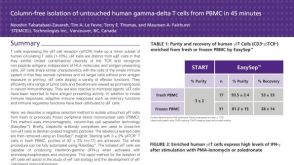 科学海报Immunomagnetic Cell Isolation of Human Gamma-Delta T Cells from PBMC
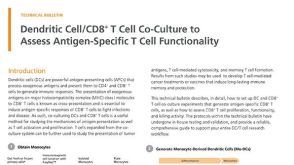 技术公告Dendritic Cell/CD8+ T Cell Co-Culture to Assess Antigen-Specific T Cell Functionality

 沪公网安备31010102008431号