Effector T Cells Abrogate Stroma-Mediated Chemoresistance in Ovarian Cancer.
Effector T cells and fibroblasts are major components in the tumor microenvironment. The means through which these cellular interactions affect chemoresistance is unclear. Here,we show that fibroblasts diminish nuclear accumulation of platinum in ovarian cancer cells,resulting in resistance to platinum-based chemotherapy. We demonstrate that glutathione and cysteine released by fibroblasts contribute to this resistance. CD8(+) T cells abolish the resistance by altering glutathione and cystine metabolism in fibroblasts. CD8(+) T-cell-derived interferon (IFN)γ controls fibroblast glutathione and cysteine through upregulation of gamma-glutamyltransferases and transcriptional repression of system xc(-) cystine and glutamate antiporter via the JAK/STAT1 pathway. The presence of stromal fibroblasts and CD8(+) T cells is negatively and positively associated with ovarian cancer patient survival,respectively. Thus,our work uncovers a mode of action for effector T cells: they abrogate stromal-mediated chemoresistance. Capitalizing upon the interplay between chemotherapy and immunotherapy holds high potential for cancer treatment.
View Publication
产品类型:
产品号#:
17953
17953RF
15022
15062
100-0710
产品名:
EasySep™人CD8+ T细胞分选试剂盒
RoboSep™ 人CD8+ T细胞分选试剂盒
RosetteSep™人CD4+ T细胞富集抗体混合物
RosetteSep™人CD4+ T细胞富集抗体混合物
EasySep™人CD8+ T细胞分选试剂盒
Ortiz-Lazareno PC et al. ( 2008)
Immunology 124 4 534--541
MG132 proteasome inhibitor modulates proinflammatory cytokines production and expression of their receptors in U937 cells: involvement of nuclear factor-kappaB and activator protein-1.
In response to inflammatory stimuli,monocytes/macrophages secrete greater quantities of the proinflammatory cytokines tumour necrosis factor-alpha (TNF-alpha),interleukin-1beta (IL-1beta) and IL-6. The inflammatory process and the innate immune response are related to the activation of several transcription factors,such as nuclear factor kappaB (NF-kappaB) and activator protein 1 (AP-1). The proteasome is a multimeric protease complex,which plays a vital role in several cellular functions,including the regulation of transcription factors like NF-kappaB. In this study,we used the human monocyte cell line U937 stimulated with lipopolysaccharide (LPS) and phorbol 12-myristate 13-acetate (PMA) as a model to investigate the in vitro effects of MG132,a proteasome inhibitor,on the release of TNF-alpha,IL-1beta and IL-6 and on the expression of their membrane and soluble receptors TNF-R1,IL-1R1 and IL-6R. We also analysed the effects of MG132 on the activation of NF-kappaB and AP-1 and on the IkappaB molecule. MG132 significantly inhibited the secretion of those proinflammatory cytokines. MG132 increased the release of the soluble receptors TNF-R1 and IL-1R1 from U937 cells and decreased their cell-surface expression. MG132 also increased IL-6R cell-surface expression and decreased its release. Proteasome inhibition also led to an increase in LPS+PMA-induced AP-1 activation and the attenuation of LPS+PMA-induced IkappaB degradation,resulting in the abolition of NF-kappaB activation. Our experiments strongly suggest that the proteasome is an important factor in the regulation of proinflammatory cytokines and their receptors.
View Publication
产品类型:
产品号#:
73262
73264
产品名:
(S) -MG132
(S) -MG132
Brooks SE et al. ( 2015)
PloS one 10 10 e0140483
Application of the pMHC Array to Characterise Tumour Antigen Specific T Cell Populations in Leukaemia Patients at Disease Diagnosis.
Immunotherapy treatments for cancer are becoming increasingly successful,however to further improve our understanding of the T-cell recognition involved in effective responses and to encourage moves towards the development of personalised treatments for leukaemia immunotherapy,precise antigenic targets in individual patients have been identified. Cellular arrays using peptide-MHC (pMHC) tetramers allow the simultaneous detection of different antigen specific T-cell populations naturally circulating in patients and normal donors. We have developed the pMHC array to detect CD8+ T-cell populations in leukaemia patients that recognise epitopes within viral antigens (cytomegalovirus (CMV) and influenza (Flu)) and leukaemia antigens (including Per Arnt Sim domain 1 (PASD1),MelanA,Wilms' Tumour (WT1) and tyrosinase). We show that the pMHC array is at least as sensitive as flow cytometry and has the potential to rapidly identify more than 40 specific T-cell populations in a small sample of T-cells (0.8-1.4 x 10(6)). Fourteen of the twenty-six acute myeloid leukaemia (AML) patients analysed had T cells that recognised tumour antigen epitopes,and eight of these recognised PASD1 epitopes. Other tumour epitopes recognised were MelanA (n = 3),tyrosinase (n = 3) and WT1(126-134) (n = 1). One of the seven acute lymphocytic leukaemia (ALL) patients analysed had T cells that recognised the MUC1(950-958) epitope. In the future the pMHC array may be used provide point of care T-cell analyses,predict patient response to conventional therapy and direct personalised immunotherapy for patients.
View Publication
产品类型:
产品号#:
19053
19053RF
产品名:
EasySep™人CD8+ T细胞富集试剂盒
RoboSep™ 人CD8+ T细胞富集试剂盒含滤芯吸头
Gao L et al. (APR 2000)
Blood 95 7 2198--203
Selective elimination of leukemic CD34(+) progenitor cells by cytotoxic T lymphocytes specific for WT1.
Hematologic malignancies such as acute and chronic myeloid leukemia are characterized by the malignant transformation of immature CD34(+) progenitor cells. Transformation is associated with elevated expression of the Wilm's tumor gene encoded transcription factor (WT1). Here we demonstrate that WT1 can serve as a target for cytotoxic T lymphocytes (CTL) with exquisite specificity for leukemic progenitor cells. HLA-A0201- restricted CTL specific for WT1 kill leukemia cell lines and inhibit colony formation by transformed CD34(+) progenitor cells isolated from patients with chronic myeloid leukemia (CML),whereas colony formation by normal CD34(+) progenitor cells is unaffected. Thus,the tissue-specific transcription factor WT1 is an ideal target for CTL-mediated purging of leukemic progenitor cells in vitro and for antigen-specific therapy of leukemia and other WT1-expressing malignancies in vivo.
View Publication
产品类型:
产品号#:
04535
04545
产品名:
MethoCult™ H4535 Enriched,不含EPO
MethoCult™ H4535 Enriched,不含EPO
Le Dieu R et al. (AUG 2009)
Journal of immunological methods 348 1-2 95--100
Negative immunomagnetic selection of T cells from peripheral blood of presentation AML specimens.
To date,studies on T cells in acute myeloid leukemia (AML) have been limited to flow cytometric analysis of whole peripheral blood mononuclear cell (PBMC) specimens or functional work looking at the impact of AML myeloblasts on normal or remission T cells. This lack of information on T cells at the time of presentation with disease is due in part to the difficulty in isolating sufficiently pure T cells from these specimens for further study. Negative immunomagnetic selection has been the method of choice for isolating immune cells for functional studies due to concerns that binding antibodies to the cell surface may induce cellular activation,block ligand-receptor interactions or result in immune clearance. In order specifically to study T cells in presentation AML specimens,we set out to develop a method of isolating highly pure CD4 and CD8 T cells by negative selection from the peripheral blood (PB) of newly diagnosed AML patients. This technique,unlike T cell selection from PB from normal individuals or from patients with chronic lymphocytic leukaemia,was extremely problematic due to properties of the leukaemic myeloblasts. A successful method was eventually optimized requiring the use of a custom antibody cocktail consisting of CD33,CD34,CD123,CD11c and CD36,to deplete myeloblasts.
View Publication
产品类型:
产品号#:
产品名:
Blanco J et al. (DEC 2004)
The Journal of biological chemistry 279 49 51305--14
High level of coreceptor-independent HIV transfer induced by contacts between primary CD4 T cells.
Cell-to-cell virus transmission is one of the most efficient mechanisms of human immunodeficiency virus (HIV) spread,requires CD4 and coreceptor expression in target cells,and may also lead to syncytium formation and cell death. Here,we show that in addition to this classical coreceptor-mediated transmission,the contact between HIV-producing cells and primary CD4 T cells lacking the appropriate coreceptor induced the uptake of HIV particles by target cells in the absence of membrane fusion or productive HIV replication. HIV uptake by CD4 T cells required cellular contacts mediated by the binding of gp120 to CD4 and intact actin cytoskeleton. HIV antigens taken up by CD4 T cells were rapidly endocytosed to trypsin-resistant compartments inducing a partial disappearance of CD4 molecules from the cell surface. Once the cellular contact was stopped,captured HIV were released as infectious particles. Electron microscopy revealed that HIV particles attached to the surface of target cells and accumulated in large (0.5-1.0 microm) intracellular vesicles containing 1-14 virions,without any evidence for massive clathrin-mediated HIV endocytosis. The capture of HIV particles into trypsin-resistant compartments required the availability of the gp120 binding site of CD4 but was independent of the intracytoplasmic tail of CD4. In conclusion,we describe a novel mechanism of HIV transmission,activated by the contact of infected and uninfected primary CD4 T cells,by which HIV could exploit CD4 T cells lacking the appropriate coreceptor as an itinerant virus reservoir.
View Publication
Oved K et al. (FEB 2007)
Journal of immunology (Baltimore,Md. : 1950) 178 4 2307--17
A novel postpriming regulatory check point of effector/memory T cells dictated through antigen density threshold-dependent anergy.
CTLs act as the effector arm of the cell-mediated immune system to kill undesirable cells. Two processes regulate these effector cells to prevent self reactivity: a thymic selection process that eliminates autoreactive clones and a multistage activation or priming process that endows them with a license to kill cognate target cells. Hitherto no subsequent regulatory restrictions have been ascribed for properly primed and activated CTLs that are licensed to kill. In this study we show that CTLs possess a novel postpriming regulatory mechanism(s) that influences the outcome of their encounter with cognate target cells. This mechanism gauges the degree of Ag density,whereupon reaching a certain threshold significant changes occur that induce anergy in the effector T cells. The biological consequences of this Ag-induced postpriming control includes alterations in the expression of cell surface molecules that control immunological synapse activity and cytokine profiles and induce retarded cell proliferation. Most profound is genome-wide microarray analysis that demonstrates changes in the expression of genes related to membrane potential,TCR signal transduction,energy metabolism,and cell cycle control. Thus,a discernible and unique gene expression signature for anergy as a response to high Ag density has been observed. Consequently,activated T cells possess properties of a self-referential sensory organ. These studies identify a new postpriming control mechanism of CTL with anergenic-like properties. This mechanism extends our understanding of the control of immune function and regulation such as peripheral tolerance,viral infections,antitumor immune responses,hypersensitivity,and autoimmunity.
View Publication
Quintarelli C et al. (MAR 2011)
Blood 117 12 3353--62
High-avidity cytotoxic T lymphocytes specific for a new PRAME-derived peptide can target leukemic and leukemic-precursor cells.
The cancer testis antigen (CTA) preferentially expressed antigen of melanoma (PRAME) is overexpressed by many hematologic malignancies,but is absent on normal tissues,including hematopoietic progenitor cells,and may therefore be an appropriate candidate for T cell-mediated immunotherapy. Because it is likely that an effective antitumor response will require high-avidity,PRAME-specific cytotoxic T lymphocytes (CTLs),we attempted to generate such CTLs using professional and artificial antigen-presenting cells loaded with a peptide library spanning the entire PRAME protein and consisting of 125 synthetic pentadecapeptides overlapping by 11 amino acids. We successfully generated polyclonal,PRAME-specific CTL lines and elicited high-avidity CTLs,with a high proportion of cells recognizing a previously uninvestigated HLA-A*02-restricted epitope,P435-9mer (NLTHVLYPV). These PRAME-CTLs could be generated both from normal donors and from subjects with PRAME(+) hematologic malignancies. The cytotoxic activity of our PRAME-specific CTLs was directed not only against leukemic blasts,but also against leukemic progenitor cells as assessed by colony-forming-inhibition assays,which have been implicated in leukemia relapse. These PRAME-directed CTLs did not affect normal hematopoietic progenitors,indicating that this approach may be of value for immunotherapy of PRAME(+) hematologic malignancies.
View Publication
产品类型:
产品号#:
产品名:
Kortylewski M et al. (MAR 2009)
Cancer research 69 6 2497--505
Toll-like receptor 9 activation of signal transducer and activator of transcription 3 constrains its agonist-based immunotherapy.
Although toll-like receptor (TLR) agonists,such as CpG,are used as immunotherapeutic agents in clinical trials for cancer and infectious diseases,their effects are limited and the underlying mechanism(s) that restrains CpG efficacy remains obscure. Here,we show that signal transducer and activator of transcription 3 (Stat3) plays a key role in down-modulating immunostimulatory effects of CpG. In the absence of interleukin-6 (IL-6) and IL-10 induction,CpG directly activates Stat3 within minutes through TLR9. Ablating Stat3 in hematopoietic cells results in rapid activation of innate immunity by CpG,with enhanced production of IFN-gamma,tumor necrosis factor-alpha,IL-12,and activation of macrophages,neutrophils,and natural killer cells marked with Stat1 activation. Innate immune responses induced by CpG in mice with a Stat3-ablated hematopoietic system cause potent antitumor effects,leading to eradication of large (textgreater1 cm) B16 melanoma tumors within 72 h. Moreover,ablating Stat3 in myeloid cells increases CpG-induced dendritic cell maturation,T-cell activation,generation of tumor antigen-specific T cells,and long-lasting antitumor immunity. A critical role of Stat3 in mediating immunosuppression by certain cytokines and growth factors in the tumor microenvironment has been recently documented. By demonstrating direct and rapid activation of Stat3 by TLR agonists,we identify a second level of Stat3-mediated immunosuppression. Our results further suggest that targeting Stat3 can drastically improve CpG-based immunotherapeutic approaches.
View Publication


 EasySep™小鼠TIL(CD45)正选试剂盒




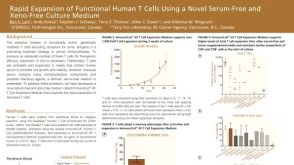 科学海报Rapid Expansion of Functional Human T Cells Using a Novel Serum-Free and Xeno-Free Culture Medium
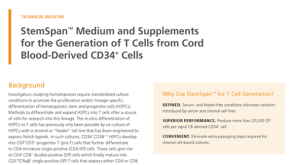 技术公告StemSpan™ Medium and Supplements for the Generation of T Cells from Cord Blood-Derived CD34+ Cells
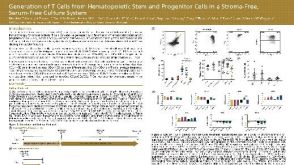 科学海报Generation of T Cells from Hematopoietic Stem and Progenitor Cells in a Stroma-Free, Serum-Free Culture System
 沪公网安备31010102008431号