Landry P et al. (SEP 2009)
Nature structural & molecular biology 16 9 961--6
Existence of a microRNA pathway in anucleate platelets.
Platelets have a crucial role in the maintenance of hemostasis as well as in thrombosis and vessel occlusion,which underlie stroke and acute coronary syndromes. Anucleate platelets contain mRNAs and are capable of protein synthesis,raising the issue of how these mRNAs are regulated. Here we show that human platelets harbor an abundant and diverse array of microRNAs (miRNAs),which are known as key regulators of mRNA translation in other cell types. Further analyses revealed that platelets contain the Dicer and Argonaute 2 (Ago2) complexes,which function in the processing of exogenous miRNA precursors and the control of specific reporter transcripts,respectively. Detection of the receptor P2Y(12) mRNA in Ago2 immunoprecipitates suggests that P2Y(12) expression may be subjected to miRNA control in human platelets. Our study lends an additional level of complexity to the control of gene expression in these anucleate elements of the cardiovascular system.
View Publication
产品类型:
产品号#:
18259
18259RF
产品名:
Yang L et al. (FEB 2009)
Biotechnology and bioengineering 102 2 521--34
Optimization of an enrichment process for circulating tumor cells from the blood of head and neck cancer patients through depletion of normal cells.
The optimization of a purely negative depletion,enrichment process for circulating tumor cells (CTCs) in the peripheral blood of head and neck cancer patients is presented. The enrichment process uses a red cell lysis step followed by immunomagnetic labeling,and subsequent depletion,of CD45 positive cells. A number of relevant variables are quantified,or attempted to be quantified,which control the performance of the enrichment process. Six different immunomagnetic labeling combinations were evaluated as well as the significant difference in performance with respect to the blood source: buffy coats purchased from the Red Cross,fresh,peripheral blood from normal donors,and fresh peripheral blood from human cancer patients. After optimization,the process is able to reduce the number of normal blood cells in a cancer patient's blood from 4.05 x 10(9) to 8.04 x 10(3) cells/mL and still recover,on average,2.32 CTC per mL of blood. For all of the cancer patient blood samples tested in which CTC were detected (20 out of 26 patients) the average recovery of CTCs was 21.7 per mL of blood,with a range of 282 to 0.53 CTC. Since the initial number of CTC in a patient's blood is unknown,and most probably varies from patient to patient,the recovery of the CTC is unknown. However,spiking studies of a cancer cell line into normal blood,and subsequent enrichment using the optimized protocol indicated an average recovery of approximately 83%. Unlike a majority of other published studies,this study focused on quantifying as many factors as possible to facilitate both the optimization of the process as well as provide information for current and future performance comparisons. The authors are not aware any other reported study which has achieved the performance reported here (a 5.66 log(10)) in a purely negative enrichment mode of operation. Such a mode of operation of an enrichment process provides significant flexibility in that it has no bias with respect to what attributes define a CTC; thereby allowing the researcher or clinician to use any maker they choose to define whether the final,enrich product contains CTCs or other cell type relevant to the specific question (i.e.,does the CTC have predominantly epithelial or mesenchymal characteristics?).
View Publication
产品类型:
产品号#:
18259
18259RF
产品名:
Collins SM et al. (DEC 2013)
Cancer immunology,immunotherapy : CII 62 12 1841--9
Elotuzumab directly enhances NK cell cytotoxicity against myeloma via CS1 ligation: evidence for augmented NK cell function complementing ADCC.
Elotuzumab is a monoclonal antibody in development for multiple myeloma (MM) that targets CS1,a cell surface glycoprotein expressed on MM cells. In preclinical models,elotuzumab exerts anti-MM efficacy via natural killer (NK)-cell-mediated antibody-dependent cellular cytotoxicity (ADCC). CS1 is also expressed at lower levels on NK cells where it acts as an activating receptor. We hypothesized that elotuzumab may have additional mechanisms of action via ligation of CS1 on NK cells that complement ADCC activity. Herein,we show that elotuzumab appears to induce activation of NK cells by binding to NK cell CS1 which promotes cytotoxicity against CS1(+) MM cells but not against autologous CS1(+) NK cells. Elotuzumab may also promote CS1-CS1 interactions between NK cells and CS1(+) target cells to enhance cytotoxicity in a manner independent of ADCC. NK cell activation appears dependent on differential expression of the signaling intermediary EAT-2 which is present in NK cells but absent in primary,human MM cells. Taken together,these data suggest elotuzumab may enhance NK cell function directly and confer anti-MM efficacy by means beyond ADCC alone.
View Publication
Baksh D et al. (AUG 2003)
Experimental hematology 31 8 723--32
Adult human bone marrow-derived mesenchymal progenitor cells are capable of adhesion-independent survival and expansion.
OVERVIEW: We show the existence of adult human mesenchymal progenitor cells (hMPCs) that can proliferate,in a cytokine-dependent manner,as individual cells in stirred suspension cultures (SSC) while maintaining their ability to form functional differentiated mesenchymal cell types. MATERIALS AND METHODS: Ficolled human bone marrow (BM)-derived cells were grown in SSC (and adherent controls) in the presence and absence of exogenously added cytokines. Phenotypic,gene expression,and functional assays for hematopoietic and nonhematopoietic cell populations were used to kinetically track cell production. Limiting-dilution analysis was used to relate culture-produced cells to input cell populations. RESULTS: Cytokine cocktail influenced total and progenitor cell expansion,as well as the types of cells generated upon plating. Flow cytometric analysis of CD117,CD123,and CD45 expression showed that cytokine supplementation influenced SSC output. The concomitant growth of CD45(+) and CD45(-) cells in the cultures that exhibited the greatest hMPC expansions suggests that the growth of these cells may benefit from interactions with hematopoietic cells. Functional assays demonstrated that the SSC-derived cells (input CFU-O number: 1990+/-377) grown in the presence of SCF+IL-3 resulted,after 21 days,in the generation of a significantly greater number (ptextless0.05) of bone progenitors (33,700+/-8763 CFU-O) than similarly initiated adherent cultures (214+/-75 CFU-O). RT-PCR analysis confirmed that the SSC-derived cells grown in osteogenic conditions express bone-specific genes (Cbfa1/Runx2,bone sialoprotein,and osteocalcin). CONCLUSIONS: Our approach not only provides an alternative strategy to expand adult BM-derived nonhematopoietic progenitor cell numbers in a scalable and controllable bioprocess,but also questions established biological paradigms concerning the properties of connective-tissue stem and progenitor cells.
View Publication
Chaetocin: a promising new antimyeloma agent with in vitro and in vivo activity mediated via imposition of oxidative stress.
Chaetocin,a thiodioxopiperazine natural product previously unreported to have anticancer effects,was found to have potent antimyeloma activity in IL-6-dependent and -independent myeloma cell lines in freshly collected sorted and unsorted patient CD138(+) myeloma cells and in vivo. Chaetocin largely spares matched normal CD138(-) patient bone marrow leukocytes,normal B cells,and neoplastic B-CLL (chronic lymphocytic leukemia) cells,indicating a high degree of selectivity even in closely lineage-related B cells. Furthermore,chaetocin displays superior ex vivo antimyeloma activity and selectivity than doxorubicin and dexamethasone,and dexamethasone- or doxorubicin-resistant myeloma cell lines are largely non-cross-resistant to chaetocin. Mechanistically,chaetocin is dramatically accumulated in cancer cells via a process inhibited by glutathione and requiring intact/unreduced disulfides for uptake. Once inside the cell,its anticancer activity appears mediated primarily through the imposition of oxidative stress and consequent apoptosis induction. Moreover,the selective antimyeloma effects of chaetocin appear not to reflect differential intracellular accumulation of chaetocin but,instead,heightened sensitivity of myeloma cells to the cytotoxic effects of imposed oxidative stress. Considered collectively,chaetocin appears to represent a promising agent for further study as a potential antimyeloma therapeutic.
View Publication
产品类型:
产品号#:
18054
18054RF
21000
20119
20155
19154
19154RF
73592
产品名:
RoboSep™- S
RoboSep™ 吸头组件抛光剂
RoboSep™分选管套装(9个塑料管)
毛壳素
Dunbar AJ et al. (DEC 2008)
Cancer research 68 24 10349--57
250K single nucleotide polymorphism array karyotyping identifies acquired uniparental disomy and homozygous mutations, including novel missense substitutions of c-Cbl, in myeloid malignancies.
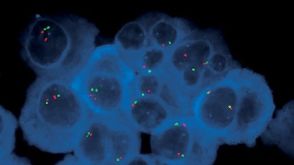
Two types of acquired loss of heterozygosity are possible in cancer: deletions and copy-neutral uniparental disomy (UPD). Conventionally,copy number losses are identified using metaphase cytogenetics,whereas detection of UPD is accomplished by microsatellite and copy number analysis and as such,is not often used clinically. Recently,introduction of single nucleotide polymorphism (SNP) microarrays has allowed for the systematic and sensitive detection of UPD in hematologic malignancies and other cancers. In this study,we have applied 250K SNP array technology to detect previously cryptic chromosomal changes,particularly UPD,in a cohort of 301 patients with myelodysplastic syndromes (MDS),overlap MDS/myeloproliferative disorders (MPD),MPD,and acute myeloid leukemia. We show that UPD is a common chromosomal defect in myeloid malignancies,particularly in chronic myelomonocytic leukemia (CMML; 48%) and MDS/MPD-unclassifiable (38%). Furthermore,we show that mapping minimally overlapping segmental UPD regions can help target the search for both known and unknown pathogenic mutations,including newly identified missense mutations in the proto-oncogene c-Cbl in 7 of 12 patients with UPD11q. Acquired mutations of c-Cbl E3 ubiquitin ligase may explain the pathogenesis of a clonal process in a subset of MDS/MPD,including CMML.
View Publication


 EasySep™小鼠TIL(CD45)正选试剂盒




 科学海报Centrifugation and RBC Lysis-Free Preparation of Blood Samples in Under 30 Minutes
 技术公告B Cell Isolation for More Sensitive Array-Based CLL Assays
 科学海报Immunomagnetic Cell Isolation of Human Gamma-Delta T Cells from PBMC


 沪公网安备31010102008431号