Jeselsohn R et al. (JAN 2010)
Cancer cell 17 1 65--76
Cyclin D1 kinase activity is required for the self-renewal of mammary stem and progenitor cells that are targets of MMTV-ErbB2 tumorigenesis.
Transplantation studies have demonstrated the existence of mammary progenitor cells with the ability to self-renew and regenerate a functional mammary gland. Although these progenitors are the likely targets for oncogenic transformation,correlating progenitor populations with certain oncogenic stimuli has been difficult. Cyclin D1 is required for lobuloalveolar development during pregnancy and lactation as well as MMTV-ErbB2- but not MMTV-Wnt1-mediated tumorigenesis. Using a kinase-deficient cyclin D1 mouse,we identified two functional mammary progenitor cell populations,one of which is the target of MMTV-ErbB2. Moreover,cyclin D1 activity is required for the self-renewal and differentiation of mammary progenitors because its abrogation leads to a failure to maintain the mammary epithelial regenerative potential and also results in defects in luminal lineage differentiation.
View Publication
产品类型:
产品号#:
19757
产品名:
Dunbar AJ et al. (DEC 2008)
Cancer research 68 24 10349--57
250K single nucleotide polymorphism array karyotyping identifies acquired uniparental disomy and homozygous mutations, including novel missense substitutions of c-Cbl, in myeloid malignancies.
Two types of acquired loss of heterozygosity are possible in cancer: deletions and copy-neutral uniparental disomy (UPD). Conventionally,copy number losses are identified using metaphase cytogenetics,whereas detection of UPD is accomplished by microsatellite and copy number analysis and as such,is not often used clinically. Recently,introduction of single nucleotide polymorphism (SNP) microarrays has allowed for the systematic and sensitive detection of UPD in hematologic malignancies and other cancers. In this study,we have applied 250K SNP array technology to detect previously cryptic chromosomal changes,particularly UPD,in a cohort of 301 patients with myelodysplastic syndromes (MDS),overlap MDS/myeloproliferative disorders (MPD),MPD,and acute myeloid leukemia. We show that UPD is a common chromosomal defect in myeloid malignancies,particularly in chronic myelomonocytic leukemia (CMML; 48%) and MDS/MPD-unclassifiable (38%). Furthermore,we show that mapping minimally overlapping segmental UPD regions can help target the search for both known and unknown pathogenic mutations,including newly identified missense mutations in the proto-oncogene c-Cbl in 7 of 12 patients with UPD11q. Acquired mutations of c-Cbl E3 ubiquitin ligase may explain the pathogenesis of a clonal process in a subset of MDS/MPD,including CMML.
View Publication
产品类型:
产品号#:
18053
18053RF
21000
20119
20155
产品名:
RoboSep™- S
RoboSep™ 吸头组件抛光剂
RoboSep™分选管套装(9个塑料管)
Jankowska AM et al. (JUN 2009)
Blood 113 25 6403--10
Loss of heterozygosity 4q24 and TET2 mutations associated with myelodysplastic/myeloproliferative neoplasms.
Chromosomal abnormalities are frequent in myeloid malignancies,but in most cases of myelodysplasia (MDS) and myeloproliferative neoplasms (MPN),underlying pathogenic molecular lesions are unknown. We identified recurrent areas of somatic copy number-neutral loss of heterozygosity (LOH) and deletions of chromosome 4q24 in a large cohort of patients with myeloid malignancies including MDS and related mixed MDS/MPN syndromes using single nucleotide polymorphism arrays. We then investigated genes in the commonly affected area for mutations. When we sequenced TET2,we found homozygous and hemizygous mutations. Heterozygous and compound heterozygous mutations were found in patients with similar clinical phenotypes without LOH4q24. Clinical analysis showed most TET2 mutations were present in patients with MDS/MPN (58%),including CMML (6/17) or sAML (32%) evolved from MDS/MPN and typical MDS (10%),suggesting they may play a ubiquitous role in malignant evolution. TET2 mutations affected conserved domains and the N terminus. TET2 is widely expressed in hematopoietic cells but its function is unknown,and it lacks homology to other known genes. The frequency of mutations in this candidate myeloid regulatory gene suggests an important role in the pathogenesis of poor prognosis MDS/MPN and sAML and may act as a disease gene marker for these often cytogenetically normal disorders.
View Publication
产品类型:
产品号#:
21000
20119
20155
19752
19752RF
产品名:
RoboSep™- S
RoboSep™ 吸头组件抛光剂
RoboSep™分选管套装(9个塑料管)
Clendening JW et al. (JUN 2010)
Blood 115 23 4787--97
Exploiting the mevalonate pathway to distinguish statin-sensitive multiple myeloma.
Statin inhibitors,used to control hypercholesterolemia,trigger apoptosis of hematologic tumor cells and therefore have immediate potential as anticancer agents. Evaluations of statins in acute myelogenous leukemia and multiple myeloma have shown that statin efficacy is mixed,with only a subset of tumor cells being highly responsive. Our goal was to distinguish molecular features of statin-sensitive and -insensitive myeloma cells and gain insight into potential predictive markers. We show that dysregulation of the mevalonate pathway is a key determinant of sensitivity to statin-induced apoptosis in multiple myeloma. In sensitive cells,the classic feedback response to statin exposure is lost. This results in deficient up-regulation of 2 isoforms of hydroxymethylglutaryl coenzyme A reductase: the rate-limiting enzyme of the mevalonate pathway and hydroxymethylglutaryl coenzyme A synthase 1. To ascertain the clinical utility of these findings,we demonstrate that a subset of primary myeloma cells is sensitive to statins and that monitoring dysregulation of the mevalonate pathway may distinguish these cancers. We also show statins are highly effective and well tolerated in an orthotopic model of myeloma using cells harboring this dysregulation. This determinant of sensitivity further provides molecular rationale for the significant therapeutic index of statins on these tumor cells.
View Publication
产品类型:
产品号#:
18357
18357RF
产品名:
Garg TK et al. (SEP 2012)
Haematologica 97 9 1348--56
Highly activated and expanded natural killer cells for multiple myeloma immunotherapy.
BACKGROUND Patients with gene expression profiling-defined high-risk myeloma in relapse have poor outcomes with current therapies. We tested whether natural killer cells expanded by co-culture with K562 cells transfected with 41BBL and membrane-bound interleukin-15 could kill myeloma cells with a high-risk gene expression profile in vitro and in a unique model which recapitulates human myeloma. DESIGN AND METHODS OPM2 and high-risk primary myeloma tumors were grown in human fetal bone implanted into non-obese diabetic severe combined immunodeficiency mice with a deficient interleukin-2 receptor gamma chain. These mice are devoid of endogenous natural killer and T-cell activity and were used to determine whether adoptively transferred expanded natural killer cells could inhibit myeloma growth and myeloma-associated bone destruction. RESULTS Natural killer cells from healthy donors and myeloma patients expanded a median of 804- and 351-fold,respectively,without significant T-cell expansion. Expanded natural killer cells killed both allogeneic and autologous primary myeloma cells avidly via a perforin-mediated mechanism in which the activating receptor NKG2D,natural cytotoxicity receptors,and DNAX-accessory molecule-1 played a central role. Adoptive transfer of expanded natural killer cells inhibited the growth of established OPM2 and high-risk primary myeloma tumors grown in the murine model. The transferred,expanded natural killer cells proliferated in vivo in an interleukin-2 dose-dependent fashion,persisted up to 4 weeks,were readily detectable in the human bone,inhibited myeloma growth and protected bone from myeloma-induced osteolysis. CONCLUSIONS These studies provide the rationale for testing expanded natural killer cells in humans.
View Publication
Dumont N et al. (APR 2009)
Immunology 126 4 588--95
Increased secretion of hyperimmune antibodies following lipopolysaccharide stimulation of CD40-activated human B cells in vitro.
Human B cells can be cultured ex vivo for a few weeks,following stimulation of the CD40 cell surface molecule in the presence of recombinant cytokines such as interleukin-4 (IL-4). However,attempts to produce polyclonal antigen-specific human antibodies by in vitro culture of human B cells obtained from immunized donors have not been successful. It has been shown in mice that lipopolysaccharide (LPS) is a potent mitogen for B cells and plays an important role in the generation of antigen-specific antibody responses. Although it has long been believed that LPS has no direct effect on human B cells,recent data indicating that IL-4-activated human B cells are induced to express Toll-like receptor-4,the main LPS receptor,prompted us to study the effects of LPS on the proliferation and antibody secretion of human B cells. Our results showed that LPS caused a reduction in the expansion of CD40-activated human B cells,accompanied by an increase in antigen-specific antibody secretion. This result suggested that some,but not all,B cells were able to differentiate into antibody-secreting cells in response to LPS. This increased differentiation could be explained by the observation that LPS-stimulated human B cells were induced to secrete higher amounts of IL-6,a pleiotropic cytokine well-known for its B-cell differentiation activity. In vivo,the effect of LPS on cytokine secretion by B cells may not only enhance B-cell differentiation but also help to sustain a local ongoing immune response to invading Gram-negative bacteria,until all pathogens have been cleared from the organism.
View Publication


 EasySep™小鼠TIL(CD45)正选试剂盒




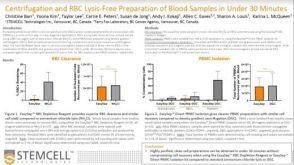 科学海报Centrifugation and RBC Lysis-Free Preparation of Blood Samples in Under 30 Minutes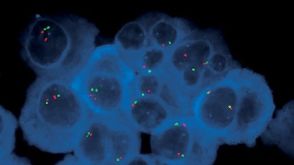
 技术公告B Cell Isolation for More Sensitive Array-Based CLL Assays
 专家访谈Dr. Theresa Brown Cell Isolation and FISH Testing in a Cytogenetics Lab


 沪公网安备31010102008431号