Survival of acute myeloid leukemia cells requires PI3 kinase activation.
The mechanisms that regulate the growth and survival of acute myeloid leukemia (AML) cells are largely unknown. We hypothesized that constitutive activation of phosphatidyl-inositide 3 kinase (PI3 kinase) could regulate survival in primary cells from patients with AML. Here we demonstrate that Akt,a critical substrate of PI3 kinase,is activated in AML blasts. In a short-term culture system,most AML patient samples showed a dose-dependent decrease in survival after incubation with the PI3 kinase inhibitor LY294002. This decrease in survival was partially due to the induction of apoptosis. Furthermore,we have shown that p70 S6 kinase and 4EBP-1,downstream mediators of Akt signaling,also are phosphorylated in AML blasts. Phosphorylation of these proteins is inhibited by the mTOR inhibitor RAD001. Incubation of AML blasts with RAD001 induces only a small decrease in survival of the cells; however,when combined with Ara-C,RAD001 enhances the toxicity of Ara-C. These results demonstrate that constitutive activation of the PI3 kinase pathway is necessary for the survival of AML blasts and that targeting of this pathway with pharmacologic inhibitors may be of clinical benefit in treatment of AML.
View Publication
产品类型:
产品号#:
09500
产品名:
BIT 9500血清替代物
Eden JA (JUL 2010)
Menopause (New York,N.Y.) 17 4 801--10
Human breast cancer stem cells and sex hormones--a narrative review.
OBJECTIVE: The aim of this narrative review was to evaluate the role of cancer stem cells (CSCs) and sex steroids in the pathophysiology of human breast cancer. METHODS: A key-word search was performed using the Scopus database. Preference was given to studies using human cells and tissues. RESULTS: Long-term estrogen-progestin hormone therapy is known to increase breast cancer risk,although the mechanisms are poorly understood. In the last few years,it has become clear that many human breast cancers contain CSCs,which may be responsible for much of the tumor's malignant behavior. Very recently,the impact of estrogen,progesterone,and progestins on breast CSCs and their progeny has been studied and clarified. Most breast CSCs are estrogen receptor negative and progesterone receptor negative,although some intermediary progenitor forms have hormone receptors,especially progesterone receptor. Most mature human breast cancer cellsare estrogen receptor positive and can thus be stimulated by estrogen. Breast CSCs usually elaborate CD44+,CD24j/low and/or ALDEFLUOR+ cell markers and are lineage markers negative. One of the main roles of progesterone and progestin seems to be on certain breast cancer stem intermediate forms,inducing them to revert back to a more primitive breast CSC form. CONCLUSIONS: As the pathophysiology of human breast CSC is clarified,it is probable that this will lead to novel,effective breast cancer treatments and,perhaps,new breast cancer preventive agents. This research may also lead to safer hormone therapy regimens.
View Publication
产品类型:
产品号#:
01700
01705
01702
产品名:
ALDEFLUOR™ 试剂盒
ALDEFLUOR™ DEAB试剂, 1.5 mM, 1 mL
ALDEFLUOR™检测缓冲液
Todaro M et al. (NOV 2010)
Cancer research 70 21 8874--85
Tumorigenic and metastatic activity of human thyroid cancer stem cells.
Thyroid carcinoma is the most common endocrine malignancy and the first cause of death among endocrine cancers. We show that the tumorigenic capacity in thyroid cancer is confined in a small subpopulation of stem-like cells with high aldehyde dehydrogenase (ALDH(high)) activity and unlimited replication potential. ALDH(high) cells can be expanded indefinitely in vitro as tumor spheres,which retain the tumorigenic potential upon delivery in immunocompromised mice. Orthotopic injection of minute numbers of thyroid cancer stem cells recapitulates the behavior of the parental tumor,including the aggressive metastatic features of undifferentiated thyroid carcinomas,which are sustained by constitutive activation of cMet and Akt in thyroid cancer stem cells. The identification of tumorigenic and metastagenic thyroid cancer cells may provide unprecedented preclinical tools for development and preclinical validation of novel targeted therapies.
View Publication
Coffman KT et al. (NOV 2003)
Cancer Research 63 22 7907--12
Differential EphA2 epitope display on normal versus malignant cells.
The EphA2 receptor tyrosine kinase is overexpressed in many different types of human cancers where it functions as a powerful oncoprotein. Dramatic changes in the subcellular localization and function of EphA2 have also been linked with cancer,and in particular,unstable cancer cell-cell contacts prevent EphA2 from stably binding its ligand on the surface of adjoining cells. This change is important in light of evidence that ligand binding causes EphA2 to transmit signals that negatively regulate tumor cell growth and invasiveness and also induce EphA2 degradation. On the basis of these properties,we have begun to target EphA2 on tumor cells using agonistic antibodies,which mimic the consequences of ligand binding. In our present study,we show that a subset of agonistic EphA2 antibodies selectively bind epitopes on malignant cells,which are not available on nontransformed epithelial cells. We also show that such epitopes arise from differential cell-cell adhesions and that the stable intercellular junctions of nontransformed epithelial cells occlude the binding site for ligand,as well as this subset of EphA2 antibodies. Finally,we demonstrate that antibody targeting of EphA2 decreases tumor cell growth as measured using xenograft tumor models and found that the mechanism of antibody action relates to EphA2 protein degradation in vivo. Taken together,these results suggest new opportunities for therapeutic targeting of the large number of different cancers that express EphA2 in a manner that could minimize potential toxicities to normal cells.
View Publication
产品类型:
产品号#:
03800
03801
03802
03803
03804
03805
03806
产品名:
ClonaCell™-HY杂交瘤试剂盒
ClonaCell™-HY培养基A
ClonaCell™-HY 培养基 B
ClonaCell™-HY 培养基 C
ClonaCell™-HY 培养基 D
ClonaCell™-HY 培养基 E
ClonaCell™-HY PEG
Peacock CD and Watkins DN (JUN 2008)
Journal of clinical oncology : official journal of the American Society of Clinical Oncology 26 17 2883--9
Cancer stem cells and the ontogeny of lung cancer.
Lung cancer is the leading cause of cancer death in the world today and is poised to claim approximately 1 billion lives during the 21st century. A major challenge in treating this and other cancers is the intrinsic resistance to conventional therapies demonstrated by the stem/progenitor cell that is responsible for the sustained growth,survival,and invasion of the tumor. Identifying these stem cells in lung cancer and defining the biologic processes necessary for their existence is paramount in developing new clinical approaches with the goal of preventing disease recurrence. This review summarizes our understanding of the cellular and molecular mechanisms operating within the putative cancer-initiating cell at the core of lung neoplasia.
View Publication
产品类型:
产品号#:
01700
01705
01702
产品名:
ALDEFLUOR™ 试剂盒
ALDEFLUOR™ DEAB试剂, 1.5 mM, 1 mL
ALDEFLUOR™检测缓冲液
Fang B et al. (APR 2005)
Blood 105 7 2733--40
Identification of human chronic myelogenous leukemia progenitor cells with hemangioblastic characteristics.
Overwhelming evidence from leukemia research has shown that the clonal population of neoplastic cells exhibits marked heterogeneity with respect to proliferation and differentiation. There are rare stem cells within the leukemic population that possess extensive proliferation and self-renewal capacity not found in the majority of the leukemic cells. These leukemic stem cells are necessary and sufficient to maintain the leukemia. Interestingly,the BCR/ABL fusion gene,which is present in chronic myelogenous leukemia (CML),was also detected in the endothelial cells of patients with CML,suggesting that CML might originate from hemangioblastic progenitor cells that can give rise to both blood cells and endothelial cells. Here we isolated fetal liver kinase-1-positive (Flk1+) cells carrying the BCR/ABL fusion gene from the bone marrow of 17 Philadelphia chromosome-positive (Ph+) patients with CML and found that these cells could differentiate into malignant blood cells and phenotypically defined endothelial cells at the single-cell level. These findings provide direct evidence for the first time that rearrangement of the BCR/ABL gene might happen at or even before the level of hemangioblastic progenitor cells,thus resulting in detection of the BCR/ABL fusion gene in both blood and endothelial cells.
View Publication
产品类型:
产品号#:
04435
04445
产品名:
MethoCult™ H4435 Enriched
MethoCult™ H4435 Enriched
Callahan KP et al. (OCT 2014)
Leukemia 28 10 1960--8
Flavaglines target primitive leukemia cells and enhance anti-leukemia drug activity.
Identification of agents that target human leukemia stem cells is an important consideration for the development of new therapies. The present study demonstrates that rocaglamide and silvestrol,closely related natural products from the flavagline class of compounds,are able to preferentially kill functionally defined leukemia stem cells,while sparing normal stem and progenitor cells. In addition to efficacy as single agents,flavaglines sensitize leukemia cells to several anticancer compounds,including front-line chemotherapeutic drugs used to treat leukemia patients. Mechanistic studies indicate that flavaglines strongly inhibit protein synthesis,leading to the reduction of short-lived antiapoptotic proteins. Notably though,treatment with flavaglines,alone or in combination with other drugs,yields a much stronger cytotoxic activity toward leukemia cells than the translational inhibitor temsirolimus. These results indicate that the underlying cell death mechanism of flavaglines is more complex than simply inhibiting general protein translation. Global gene expression profiling and cell biological assays identified Myc inhibition and the disruption of mitochondrial integrity to be features of flavaglines,which we propose contribute to their efficacy in targeting leukemia cells. Taken together,these findings indicate that rocaglamide and silvestrol are distinct from clinically available translational inhibitors and represent promising candidates for the treatment of leukemia.
View Publication
产品类型:
产品号#:
07930
07931
07940
07955
07956
07959
07954
100-1061
07952
产品名:
CryoStor® CS10
CryoStor® CS10
CryoStor® CS10
CryoStor® CS10
CryoStor® CS10
CryoStor® CS10
CryoStor® CS10
Schwieger M et al. (SEP 2009)
Blood 114 12 2476--88
Homing and invasiveness of MLL/ENL leukemic cells is regulated by MEF2C.
Acute myelogenous leukemia is driven by leukemic stem cells (LSCs) generated by mutations that confer (or maintain) self-renewal potential coupled to an aberrant differentiation program. Using retroviral mutagenesis,we identified genes that generate LSCs in collaboration with genetic disruption of the gene encoding interferon response factor 8 (Irf8),which induces a myeloproliferation in vivo. Among the targeted genes,we identified Mef2c,encoding a MCM1-agamous-deficiens-serum response factor transcription factor,and confirmed that overexpression induced a myelomonocytic leukemia in cooperation with Irf8 deficiency. Strikingly,several of the genes identified in our screen have been reported to be up-regulated in the mixed-lineage leukemia (MLL) subtype. High MEF2C expression levels were confirmed in acute myelogenous leukemia patient samples with MLL gene disruptions,prompting an investigation of the causal interplay. Using a conditional mouse strain,we demonstrated that Mef2c deficiency does not impair the establishment or maintenance of LSCs generated in vitro by MLL/ENL fusion proteins; however,its loss led to compromised homing and invasiveness of the tumor cells. Mef2c-dependent targets included several genes encoding matrix metalloproteinases and chemokine ligands and receptors,providing a mechanistic link to increased homing and motility. Thus,MEF2C up-regulation may be responsible for the aggressive nature of this leukemia subtype.
View Publication
产品类型:
产品号#:
03434
03444
09600
09650
产品名:
MethoCult™ GF M3434
MethoCult™ GF M3434
StemSpan™ SFEM
StemSpan™ SFEM
Eguchi M et al. (JAN 2005)
Proceedings of the National Academy of Sciences of the United States of America 102 4 1133--8
Directing oncogenic fusion genes into stem cells via an SCL enhancer.
TEL-TRKC is a fusion gene generated by chromosomal translocation and encodes an activated tyrosine kinase. Uniquely,it is found in both solid tumors and leukemia. However,a single exon difference (in TEL) in TEL-TRKC fusions is associated with the two sets of cancer phenotypes. We expressed the two TEL-TRKC variants in vivo by using the 3' regulatory element of SCL that is selectively active in a subset of mesodermal cell lineages,including endothelial and hematopoietic stem cells and progenitors. The leukemia form of TEL-TRKC (-exon 5 of TEL) enhanced hematopoietic stem cell renewal and initiated leukemia. In contrast,the TEL-TRKC solid tumor variant (+ TEL exon 5) elicited an embryonic lethal phenotype with impairment of both angiogenesis and hematopoiesis indicative of an effect at the level of the hemangioblasts. The ability of TEL-TRKC to repress expression of Flk1,a critical regulator of early endothelial and hematopoietic cells,depended on TEL exon 5. These data indicate that related oncogenic fusion proteins similarly expressed in a hierarchy of early stem cells can have selective,cell type-specific developmental impacts.
View Publication


 EasySep™小鼠TIL(CD45)正选试剂盒





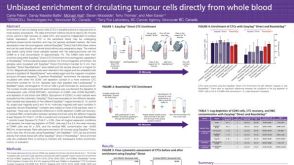 科学海报Unbiased Enrichment of Circulating Tumour Cells Directly from Whole Blood


 沪公网安备31010102008431号