A comprehensive library of familial human amyotrophic lateral sclerosis induced pluripotent stem cells
Amyotrophic lateral sclerosis is a progressive disease characterized by the loss of upper and lower motor neurons,leading to paralysis of voluntary muscles. About 10% of all ALS cases are familial (fALS),among which 15-20% are linked to Cu/Zn superoxide dismutase (SOD1) mutations,usually inherited in an autosomal dominant manner. To date only one FDA approved drug is available which increases survival moderately. Our understanding of ALS disease mechanisms is largely derived from rodent model studies,however due to the differences between rodents and humans,it is necessary to have humanized models for studies of disease pathogenesis as well as drug development. Therefore,we generated a comprehensive library of a total 22 of fALS patient-specific induced pluripotent stem cell (iPSC) lines. These cells were thoroughly characterized before being deposited into the library. The library of cells includes a variety of C9orf72 mutations,sod1 mutations,FUS,ANG and FIG4 mutations. Certain mutations are represented with more than one line,which allows for studies of variable genetic backgrounds. In addition,these iPSCs can be successfully differentiated to astroglia,a cell type known to play a critical role in ALS disease progression. This library represents a comprehensive resource that can be used for ALS disease modeling and the development of novel therapeutics.
View Publication
产品类型:
产品号#:
05850
05857
05870
05875
07923
85850
85857
85870
85875
产品名:
Dispase (1 U/mL)
mTeSR™1
mTeSR™1
Duan S et al. (DEC 2015)
Nature communications 6 10068
PTEN deficiency reprogrammes human neural stem cells towards a glioblastoma stem cell-like phenotype.
PTEN is a tumour suppressor frequently mutated in many types of cancers. Here we show that targeted disruption of PTEN leads to neoplastic transformation of human neural stem cells (NSCs),but not mesenchymal stem cells. PTEN-deficient NSCs display neoplasm-associated metabolic and gene expression profiles and generate intracranial tumours in immunodeficient mice. PTEN is localized to the nucleus in NSCs,binds to the PAX7 promoter through association with cAMP responsive element binding protein 1 (CREB)/CREB binding protein (CBP) and inhibits PAX7 transcription. PTEN deficiency leads to the upregulation of PAX7,which in turn promotes oncogenic transformation of NSCs and instates 'aggressiveness' in human glioblastoma stem cells. In a large clinical database,we find increased PAX7 levels in PTEN-deficient glioblastoma. Furthermore,we identify that mitomycin C selectively triggers apoptosis in NSCs with PTEN deficiency. Together,we uncover a potential mechanism of how PTEN safeguards NSCs,and establish a cellular platform to identify factors involved in NSC transformation,potentially permitting personalized treatment of glioblastoma.
View Publication
Badja C et al. (DEC 2014)
Stem cells translational medicine 3 12 1467--72
Efficient and cost-effective generation of mature neurons from human induced pluripotent stem cells.
For years,our ability to study pathological changes in neurological diseases has been hampered by the lack of relevant models until the recent groundbreaking work from Yamanaka's group showing that it is feasible to generate induced pluripotent stem cells (iPSCs) from human somatic cells and to redirect the fate of these iPSCs into differentiated cells. In particular,much interest has focused on the ability to differentiate human iPSCs into neuronal progenitors and functional neurons for relevance to a large number of pathologies including mental retardation and behavioral or degenerative syndromes. Current differentiation protocols are time-consuming and generate limited amounts of cells,hindering use on a large scale. We describe a feeder-free method relying on the use of a chemically defined medium that overcomes the need for embryoid body formation and neuronal rosette isolation for neuronal precursors and terminally differentiated neuron production. Four days after induction,expression of markers of the neurectoderm lineage is detectable. Between 4 and 7 days,neuronal precursors can be expanded,frozen,and thawed without loss of proliferation and differentiation capacities or further differentiated. Terminal differentiation into the different subtypes of mature neurons found in the human brain were observed. At 6-35 days after induction,cells express typical voltage-gated and ionotrophic receptors for GABA,glycine,and acetylcholine. This specific and efficient single-step strategy in a chemically defined medium allows the production of mature neurons in 20-40 days with multiple applications,especially for modeling human pathologies.
View Publication
产品类型:
产品号#:
05850
05857
05870
05875
85850
85857
85870
85875
产品名:
mTeSR™1
mTeSR™1
Matsuoka AJ et al. (MAR 2017)
Stem cells translational medicine 6 3 923--936
Directed Differentiation of Human Embryonic Stem Cells Toward Placode-Derived Spiral Ganglion-Like Sensory Neurons.
The ability to generate spiral ganglion neurons (SGNs) from stem cells is a necessary prerequisite for development of cell-replacement therapies for sensorineural hearing loss. We present a protocol that directs human embryonic stem cells (hESCs) toward a purified population of otic neuronal progenitors (ONPs) and SGN-like cells. Between 82% and 95% of these cells express SGN molecular markers,they preferentially extend neurites to the cochlear nucleus rather than nonauditory nuclei,and they generate action potentials. The protocol follows an in vitro stepwise recapitulation of developmental events inherent to normal differentiation of hESCs into SGNs,resulting in efficient sequential generation of nonneuronal ectoderm,preplacodal ectoderm,early prosensory ONPs,late ONPs,and cells with cellular and molecular characteristics of human SGNs. We thus describe the sequential signaling pathways that generate the early and later lineage species in the human SGN lineage,thereby better describing key developmental processes. The results indicate that our protocol generates cells that closely replicate the phenotypic characteristics of human SGNs,advancing the process of guiding hESCs to states serving inner-ear cell-replacement therapies and possible next-generation hybrid auditory prostheses. textcopyright Stem Cells Translational Medicine 2017;6:923-936.
View Publication
产品类型:
产品号#:
05850
05857
05870
05875
05790
05792
05793
05794
05795
85850
85857
85870
85875
产品名:
BrainPhys™神经元培养基
BrainPhys™神经元培养基和SM1试剂盒
BrainPhys™ 神经元培养基N2-A和SM1试剂盒
BrainPhys™原代神经元试剂盒
BrainPhys™ hPSC 神经元试剂盒
mTeSR™1
mTeSR™1
Hothi P et al. (OCT 2012)
Oncotarget 3 10 1124--36
High-Throughput Chemical Screens Identify Disulfiram as an Inhibitor of Human Glioblastoma Stem Cells
Glioblastoma Multiforme (GBM) continues to have a poor patient prognosis despite optimal standard of care. Glioma stem cells (GSCs) have been implicated as the presumed cause of tumor recurrence and resistance to therapy. With this in mind,we screened a diverse chemical library of 2,000 compounds to identify therapeutic agents that inhibit GSC proliferation and therefore have the potential to extend patient survival. High-throughput screens (HTS) identified 78 compounds that repeatedly inhibited cellular proliferation,of which 47 are clinically approved for other indications and 31 are experimental drugs. Several compounds (such as digitoxin,deguelin,patulin and phenethyl caffeate) exhibited high cytotoxicity,with half maximal inhibitory concentrations (IC50) in the low nanomolar range. In particular,the FDA approved drug for the treatment of alcoholism,disulfiram (DSF),was significantly potent across multiple patient samples (IC50 of 31.1 nM). The activity of DSF was potentiated by copper (Cu),which markedly increased GSC death. DSF-Cu inhibited the chymotrypsin-like proteasomal activity in cultured GSCs,consistent with inactivation of the ubiquitin-proteasome pathway and the subsequent induction of tumor cell death. Given that DSF is a relatively non-toxic drug that can penetrate the blood-brain barrier,we suggest that DSF should be tested (as either a monotherapy or as an adjuvant) in pre-clinical models of human GBM. Data also support targeting of the ubiquitin-proteasome pathway as a therapeutic approach in the treatment of GBM.
View Publication
产品类型:
产品号#:
05750
05751
产品名:
NeuroCult™ NS-A 基础培养基(人)
NeuroCult™ NS-A 扩增试剂盒(人)
Rushkevich YN et al. (AUG 2015)
Bulletin of experimental biology and medicine 159 4 576--81
The Use of Autologous Mesenchymal Stem Cells for Cell Therapy of Patients with Amyotrophic Lateral Sclerosis in Belarus.
We studied a new method of treatment of amyotrophic lateral sclerosis with autologous mesenchymal stem cells. Autologous mesenchymal stem cells were injected intravenously (intact cells) or via lumbar puncture (cells committed to neuronal differentiation). Evaluation of the results of cell therapy after 12-month follow-up revealed slowing down of the disease progression in 10 patients in comparison with the control group consisting of 15 patients. The cell therapy was safe for the patients.
View Publication
产品类型:
产品号#:
05761
产品名:
用于小鼠和大鼠神经干细胞和祖细胞分化培养的试剂盒
Qu Q et al. (MAR 2014)
Nature communications 5 3449
High-efficiency motor neuron differentiation from human pluripotent stem cells and the function of Islet-1.
Efficient derivation of large-scale motor neurons (MNs) from human pluripotent stem cells is central to the understanding of MN development,modelling of MN disorders in vitro and development of cell-replacement therapies. Here we develop a method for rapid (20 days) and highly efficient (˜70%) differentiation of mature and functional MNs from human pluripotent stem cells by tightly modulating neural patterning temporally at a previously undefined primitive neural progenitor stage. This method also allows high-yield (textgreater250%) MN production in chemically defined adherent cultures. Furthermore,we show that Islet-1 is essential for formation of mature and functional human MNs,but,unlike its mouse counterpart,does not regulate cell survival or suppress the V2a interneuron fate. Together,our discoveries improve the strategy for MN derivation,advance our understanding of human neural specification and MN development,and provide invaluable tools for human developmental studies,drug discovery and regenerative medicine.
View Publication
产品类型:
产品号#:
05850
05857
05870
05875
85850
85857
85870
85875
产品名:
mTeSR™1
mTeSR™1
Takayama Y and Kida YS (FEB 2016)
PloS one 11 2 e0148559
In Vitro Reconstruction of Neuronal Networks Derived from Human iPS Cells Using Microfabricated Devices.
Morphology and function of the nervous system is maintained via well-coordinated processes both in central and peripheral nervous tissues,which govern the homeostasis of organs/tissues. Impairments of the nervous system induce neuronal disorders such as peripheral neuropathy or cardiac arrhythmia. Although further investigation is warranted to reveal the molecular mechanisms of progression in such diseases,appropriate model systems mimicking the patient-specific communication between neurons and organs are not established yet. In this study,we reconstructed the neuronal network in vitro either between neurons of the human induced pluripotent stem (iPS) cell derived peripheral nervous system (PNS) and central nervous system (CNS),or between PNS neurons and cardiac cells in a morphologically and functionally compartmentalized manner. Networks were constructed in photolithographically microfabricated devices with two culture compartments connected by 20 microtunnels. We confirmed that PNS and CNS neurons connected via synapses and formed a network. Additionally,calcium-imaging experiments showed that the bundles originating from the PNS neurons were functionally active and responded reproducibly to external stimuli. Next,we confirmed that CNS neurons showed an increase in calcium activity during electrical stimulation of networked bundles from PNS neurons in order to demonstrate the formation of functional cell-cell interactions. We also confirmed the formation of synapses between PNS neurons and mature cardiac cells. These results indicate that compartmentalized culture devices are promising tools for reconstructing network-wide connections between PNS neurons and various organs,and might help to understand patient-specific molecular and functional mechanisms under normal and pathological conditions.
View Publication


 EasySep™小鼠TIL(CD45)正选试剂盒





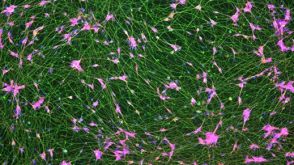 实验方案How to Culture Human Pluripotent Stem Cell (hPSC)-Derived Induced Forebrain Neurons for MEA Analysis Using the Maestro MEA™ System
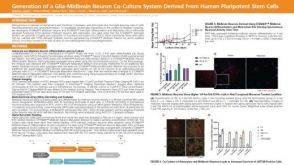 科学海报Generation of a Glia-Midbrain Neuron Co-Culture System Derived From Human Pluripotent Stem Cells
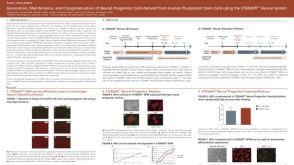 科学海报Generation, Maintenance and Cryopreservation of Neural Progenitor Cells Derived from Human Pluripotent Stem Cells Using the STEMdiff™ Neural System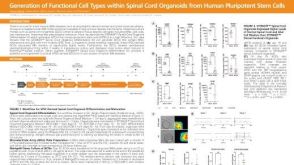

 沪公网安备31010102008431号