Shahbazi M et al. (JUL 2013)
Journal of the Neurological Sciences 330 1–2 85--93
Inhibitory effects of neural stem cells derived from human embryonic stem cells on differentiation and function of monocyte-derived dendritic cells
Neural stem cells (NSCs) possess immunosuppressive characteristics,but effects of NSCs on human dendritic cells (DCs),the most important antigen presenting cells,are less well studied. We used an in vitro approach to evaluate the effects of human NSCs on differentiation of human blood CD14+ monocytes into DCs. NSCs derived from H1 human embryonic stem cells (hESC-NSCs) and human ReNcell NSC line,as well as human bone marrow derived mesenchymal stem cells (MSCs),were tested. We observed that in response to treatment with interleukin-4 and granulocyte macrophage colony-stimulating factor CD14+ monocytes co-cultured with NSCs were able to down-regulate CD14 and up-regulate the differentiation marker CD1a,whereas MSC co-culture strongly inhibited CD1a expression and supported prolonged expression of CD14. A similar difference between NSCs and MSCs was noted when lipopolysaccharides were included to induce maturation of monocyte-derived DCs. However,when effects on the function of derived DCs were investigated,NSCs suppressed the elevation of the DC maturation marker CD83,although not the up-regulation of costimulatory molecules CD80,CD86 and CD40,and impaired the functional capacity of the derived DCs to stimulate alloreactive T cells. We did not observe any obvious difference between hESC-NSCs and ReNcell NSCs in inhibiting DC maturation and function. Our data suggest that although human NSCs are less effective than human MSCs in suppressing monocyte differentiation into DCs,these stem cells can still affect the function of DCs,ultimately regulating specific immune responses.
View Publication
产品类型:
产品号#:
05850
05857
05870
05875
85850
85857
85870
85875
70025
70025.1
70025.2
70025.3
70047
70047.1
70047.2
70048
70048.1
70048.2
产品名:
mTeSR™1
mTeSR™1
冻存的人外周血单个核细胞
冻存的人外周血单个核细胞
冻存的人外周血单个核细胞
冻存的人外周血单个核细胞
Zhou P et al. (MAY 2016)
Biomaterials 87 1--17
Simple and versatile synthetic polydopamine-based surface supports reprogramming of human somatic cells and long-term self-renewal of human pluripotent stem cells under defined conditions
Human pluripotent stem cells (hPSCs) possess great value in the aspect of cellular therapies due to its self-renewal and potential to differentiate into all somatic cell types. A few defined synthetic surfaces such as polymers and adhesive biological materials conjugated substrata were established for the self-renewal of hPSCs. However,none of them was effective in the generation of human induced pluripotent stem cells (hiPSCs) and long-term maintenance of multiple hPSCs,and most of them required complicated manufacturing processes. Polydopamine has good biocompatibility,is able to form a stable film on nearly all solid substrates surface,and can immobilize adhesive biomolecules. In this manuscript,a polydopamine-mediated surface was developed,which not only supported the reprogramming of human somatic cells into hiPSCs under defined conditions,but also sustained the growth of hiPSCs on diverse substrates. Moreover,the proliferation and pluripotency of hPSCs cultured on the surface were comparable to Matrigel for more than 20 passages. Besides,hPSCs were able to differentiate to cardiomyocytes and neural cells on the surface. This polydopamine-based synthetic surface represents a chemically-defined surface extensively applicable both for fundamental research and cell therapies of hPSCs.
View Publication
Rapid and Efficient Direct Conversion of Human Adult Somatic Cells into Neural Stem Cells by HMGA2/let-7b.
A recent study has suggested that fibroblasts can be converted into mouse-induced neural stem cells (miNSCs) through the expression of defined factors. However,successful generation of human iNSCs (hiNSCs) has proven challenging to achieve. Here,using microRNA (miRNA) expression profile analyses,we showed that let-7 microRNA has critical roles for the formation of PAX6/NESTIN-positive colonies from human adult fibroblasts and the proliferation and self-renewal of hiNSCs. HMGA2,a let-7-targeting gene,enables induction of hiNSCs that displayed morphological/molecular features and in vitro/in vivo differentiation potential similar to H9-derived NSCs. Interestingly,HMGA2 facilitated the efficient conversion of senescent somatic cells or blood CD34+ cells into hiNSCs through an interaction with SOX2,whereas other combinations or SOX2 alone showed a limited conversion ability. Taken together,these findings suggest that HMGA2/let-7 facilitates direct reprogramming toward hiNSCs in minimal conditions and maintains hiNSC self-renewal,providing a strategy for the clinical treatment of neurological diseases.
View Publication
产品类型:
产品号#:
05750
05752
产品名:
NeuroCult™ NS-A 基础培养基(人)
NeuroCult™ NS-A 分化试剂盒(人)
Xu Y et al. (DEC 2015)
Cryobiology 71 3 486--492
Sensitivity of human embryonic stem cells to different conditions during cryopreservation
Low cell recovery rate of human embryonic stem cells (hESCs) resulting from cryopreservation damages leads to the difficulty in their successful commercialization of clinical applications. Hence in this study,sensitivity of human embryonic stem cells (hESCs) to different cooling rates,ice seeding and cryoprotective agent (CPA) types was compared and cell viability and recovery after cryopreservation under different cooling conditions were assessed. Both extracellular and intracellular ice formation were observed. Reactive oxidative species (ROS) accumulation of hESCs was determined. Cryopreservation of hESCs at 1 °C/min with the ice seeding and at the theoretically predicted optimal cooling rate (TPOCR) led to lower level of intracellular ROS,and prevented irregular and big ice clump formation compared with cryopreservation at 1 °C/min. This strategy further resulted in a significant increase in the hESC recovery when glycerol and 1,2-propanediol were used as the CPAs,but no increase for Me2SO. hESCs after cryopreservation under all the tested conditions still maintained their pluripotency. Our results provide guidance for improving the hESC cryopreservation recovery through the combination of CPA type,cooling rate and ice seeding.
View Publication
产品类型:
产品号#:
05835
05839
产品名:
STEMdiff™ 神经诱导培养基
STEMdiff™ 神经诱导培养基
Kim YY et al. (SEP 2016)
PLOS ONE 11 9 e0163812
Alcohol-Induced Molecular Dysregulation in Human Embryonic Stem Cell-Derived Neural Precursor Cells
Adverse effect of alcohol on neural function has been well documented. Especially,the teratogenic effect of alcohol on neurodevelopment during embryogenesis has been demonstrated in various models,which could be a pathologic basis for fetal alcohol spectrum disorders (FASDs). While the developmental defects from alcohol abuse during gestation have been described,the specific mechanisms by which alcohol mediates these injuries have yet to be determined. Recent studies have shown that alcohol has significant effect on molecular and cellular regulatory mechanisms in embryonic stem cell (ESC) differentiation including genes involved in neural development. To test our hypothesis that alcohol induces molecular alterations during neural differentiation we have derived neural precursor cells from pluripotent human ESCs in the presence or absence of ethanol treatment. Genome-wide transcriptomic profiling identified molecular alterations induced by ethanol exposure during neural differentiation of hESCs into neural rosettes and neural precursor cell populations. The Database for Annotation,Visualization and Integrated Discovery (DAVID) functional analysis on significantly altered genes showed potential ethanol's effect on JAK-STAT signaling pathway,neuroactive ligand-receptor interaction,Toll-like receptor (TLR) signaling pathway,cytokine-cytokine receptor interaction and regulation of autophagy. We have further quantitatively verified ethanol-induced alterations of selected candidate genes. Among verified genes we further examined the expression of P2RX3,which is associated with nociception,a peripheral pain response. We found ethanol significantly reduced the level of P2RX3 in undifferentiated hESCs,but induced the level of P2RX3 mRNA and protein in hESC-derived NPCs. Our result suggests ethanol-induced dysregulation of P2RX3 along with alterations in molecules involved in neural activity such as neuroactive ligand-receptor interaction may be a molecular event associated with alcohol-related peripheral neuropathy of an enhanced nociceptive response.
View Publication
产品类型:
产品号#:
05850
05857
05870
05875
85850
85857
85870
85875
05835
05839
产品名:
mTeSR™1
mTeSR™1
STEMdiff™ 神经诱导培养基
STEMdiff™ 神经诱导培养基
Bershteyn M et al. (MAR 2014)
Nature 507 7490 99--103
Cell-autonomous correction of ring chromosomes in human induced pluripotent stem cells.
Ring chromosomes are structural aberrations commonly associated with birth defects,mental disabilities and growth retardation. Rings form after fusion of the long and short arms of a chromosome,and are sometimes associated with large terminal deletions. Owing to the severity of these large aberrations that can affect multiple contiguous genes,no possible therapeutic strategies for ring chromosome disorders have been proposed. During cell division,ring chromosomes can exhibit unstable behaviour leading to continuous production of aneuploid progeny with low viability and high cellular death rate. The overall consequences of this chromosomal instability have been largely unexplored in experimental model systems. Here we generated human induced pluripotent stem cells (iPSCs) from patient fibroblasts containing ring chromosomes with large deletions and found that reprogrammed cells lost the abnormal chromosome and duplicated the wild-type homologue through the compensatory uniparental disomy (UPD) mechanism. The karyotypically normal iPSCs with isodisomy for the corrected chromosome outgrew co-existing aneuploid populations,enabling rapid and efficient isolation of patient-derived iPSCs devoid of the original chromosomal aberration. Our results suggest a fundamentally different function for cellular reprogramming as a means of /`chromosome therapy/' to reverse combined loss-of-function across many genes in cells with large-scale aberrations involving ring structures. In addition,our work provides an experimentally tractable human cellular system for studying mechanisms of chromosomal number control,which is of critical relevance to human development and disease.
View Publication
产品类型:
产品号#:
05850
05857
05870
05875
85850
85857
85870
85875
产品名:
mTeSR™1
mTeSR™1
Zhu X et al. (JUL 2010)
Molecular cancer therapeutics 9 7 2131--41
Identification of internalizing human single-chain antibodies targeting brain tumor sphere cells.
Glioblastoma multiforme (GBM) is the most common and aggressive form of primary brain tumor for which there is no curative treatment to date. Resistance to conventional therapies and tumor recurrence pose major challenges to treatment and management of this disease,and therefore new therapeutic strategies need to be developed. Previous studies by other investigators have shown that a subpopulation of GBM cells can grow as neurosphere-like cells when cultured in restrictive medium and exhibits enhanced tumor-initiating ability and resistance to therapy. We report here the identification of internalizing human single-chain antibodies (scFv) targeting GBM tumor sphere cells. We selected a large naive phage antibody display library on the glycosylation-dependent CD133 epitope-positive subpopulation of GBM cells grown as tumor spheres and identified internalizing scFvs that target tumor sphere cells broadly,as well as scFvs that target the CD133-positive subpopulation. These scFvs were found to be efficiently internalized by GBM tumor sphere cells. One scFv GC4 inhibited self-renewal of GBM tumor sphere cells in vitro. We have further developed a full-length human IgG1 based on this scFv,and found that it potently inhibits proliferation of GBM tumor sphere cells and GBM cells grown in regular nonselective medium. Taken together,these results show that internalizing human scFvs targeting brain tumor sphere cells can be readily identified from a phage antibody display library,which could be useful for further development of novel therapies that target subpopulations of GBM cells to combat recurrence and resistance to treatment.
View Publication
产品类型:
产品号#:
05751
产品名:
NeuroCult™ NS-A 扩增试剂盒(人)
Pollak J et al. (MAR 2017)
PLOS ONE 12 3 e0172884
Ion channel expression patterns in glioblastoma stem cells with functional and therapeutic implications for malignancy
Ion channels and transporters have increasingly recognized roles in cancer progression through the regulation of cell proliferation,migration,and death. Glioblastoma stem-like cells (GSCs) are a source of tumor formation and recurrence in glioblastoma multiforme,a highly aggressive brain cancer,suggesting that ion channel expression may be perturbed in this population. However,little is known about the expression and functional relevance of ion channels that may contribute to GSC malignancy. Using RNA sequencing,we assessed the enrichment of ion channels in GSC isolates and non-tumor neural cell types. We identified a unique set of GSC-enriched ion channels using differential expression analysis that is also associated with distinct gene mutation signatures. In support of potential clinical relevance,expression of selected GSC-enriched ion channels evaluated in human glioblastoma databases of The Cancer Genome Atlas and Ivy Glioblastoma Atlas Project correlated with patient survival times. Finally,genetic knockdown as well as pharmacological inhibition of individual or classes of GSC-enriched ion channels constrained growth of GSCs compared to normal neural stem cells. This first-in-kind global examination characterizes ion channels enriched in GSCs and explores their potential clinical relevance to glioblastoma molecular subtypes,gene mutations,survival outcomes,regional tumor expression,and experimental responses to loss-of-function. Together,the data support the potential biological and therapeutic impact of ion channels on GSC malignancy and provide strong rationale for further examination of their mechanistic and therapeutic importance.
View Publication
产品类型:
产品号#:
05751
70913
产品名:
NeuroCult™ NS-A 扩增试剂盒(人)
Nie S et al. (FEB 2015)
Journal of proteome research 14 2 814--22
Tenascin-C: a novel candidate marker for cancer stem cells in glioblastoma identified by tissue microarrays.
Glioblastoma multiforme (GBM) is a highly aggressive brain tumor,with dismal survival outcomes. Recently,cancer stem cells (CSCs) have been demonstrated to play a role in therapeutic resistance and are considered to be the most likely cause of cancer relapse. The identification of CSCs is an important step toward finding new and effective ways to treat GBM. Tenascin-C (TNC) protein has been identified as a potential marker for CSCs in gliomas based on previous work. Here,we have investigated the expression of TNC in tissue microarrays including 17 GBMs,18 WHO grade III astrocytomas,15 WHO grade II astrocytomas,4 WHO grade I astrocytomas,and 7 normal brain tissue samples by immunohistochemical staining. TNC expression was found to be highly associated with the grade of astrocytoma. It has a high expression level in most of the grade III astrocytomas and GBMs analyzed and a very low expression in most grade II astrocytomas,whereas it is undetectable in grade I astrocytomas and normal brain tissues. Double-immunofluorescence staining for TNC and CD133 in GBM tissues revealed that there was a high overlap between theses two positive populations. The results were further confirmed by flow cytometry analysis of TNC and CD133 in GBM-derived stem-like neurospheres in vitro. A limiting dilution assay demonstrated that the sphere formation ability of CD133(+)/TNC(+) and CD133(-)/TNC(+) cell populations is much higher than that of the CD133(+)/TNC(-) and CD133(-)/TNC(-) populations. These results suggest that TNC is not only a potential prognostic marker for GBM but also a potential marker for glioma CSCs,where the TNC(+) population is identified as a CSC population overlapping with part of the CD133(-) cell population.
View Publication
产品类型:
产品号#:
05750
05751
05752
产品名:
NeuroCult™ NS-A 基础培养基(人)
NeuroCult™ NS-A 扩增试剂盒(人)
NeuroCult™ NS-A 分化试剂盒(人)
Bhinge A et al. (JAN 2016)
Stem cells (Dayton,Ohio) 34 1 124--134
MiR-375 is Essential for Human Spinal Motor Neuron Development and May Be Involved in Motor Neuron Degeneration.
The transcription factor REST is a key suppressor of neuronal genes in non-neuronal tissues. REST has been shown to suppress proneuronal microRNAs in neural progenitors indicating that REST-mediated neurogenic suppression may act in part via microRNAs. We used neural differentiation of Rest-null mouse ESC to identify dozens of microRNAs regulated by REST during neural development. One of the identified microRNAs,miR-375,was upregulated during human spinal motor neuron development. We found that miR-375 facilitates spinal motor neurogenesis by targeting the cyclin kinase CCND2 and the transcription factor PAX6. Additionally,miR-375 inhibits the tumor suppressor p53 and protects neurons from apoptosis in response to DNA damage. Interestingly,motor neurons derived from a spinal muscular atrophy patient displayed depressed miR-375 expression and elevated p53 protein levels. Importantly,SMA motor neurons were significantly more susceptible to DNA damage induced apoptosis suggesting that miR-375 may play a protective role in motor neurons.
View Publication
产品类型:
产品号#:
05850
05857
05870
05875
85850
85857
85870
85875
产品名:
mTeSR™1
mTeSR™1
Yoshikawa K et al. (FEB 2013)
Biochemical and biophysical research communications 431 1 104--10
Multipotent stem cells are effectively collected from adult human cheek skin.
Skin-derived precursor (SKP) cells are a valuable resource for tissue engineering and regenerative medicine,because they represent multipotent stem cells that differentiate into neural and mesodermal progenies. Previous studies suggest that the stem cell pool decreases with age. Here,we show that human multipotent SKP cells can be efficiently collected from adult cheek/chin skin,even in aged individuals of 70-78years. SKP cells were isolated from 38 skin samples by serum-free sphere culture and examined for the ability to differentiate into neural and mesodermal lineages. The number of spheres obtained from adult facial skin was significantly higher than that of trunk or extremity skin. SKP cells derived from cheek/chin skin exhibited a high ability to differentiate into neural and mesodermal cells relative to those derived from eyelid,trunk,or extremity skin. Furthermore,cheek/chin skin SKP cells were shown to express markers for undifferentiated stem cells,including a high expression level of the Sox9 gene. These results indicate that cheek/chin skin is useful for the recovery of multipotent stem cells for tissue engineering and regenerative therapy.
View Publication


 EasySep™小鼠TIL(CD45)正选试剂盒





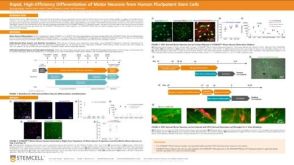 科学海报Rapid, High-Efficiency Differentiation of Motor Neurons from Human Pluripotent Stem Cells
 沪公网安备31010102008431号