Louis SA et al. (JAN 2013)
Methods in molecular biology (Clifton,N.J.) 946 479--506
Methods to culture, differentiate, and characterize neural stem cells from the adult and embryonic mouse central nervous system.
Since the discovery of neural stem cells (NSC) in the embryonic and adult mammalian central nervous system (CNS),there have been a growing numbers of tissue culture media and protocols to study and functionally characterize NSCs and its progeny in vitro. One of these culture systems introduced in 1992 is referred to as the Neurosphere Assay,and it has been widely used to isolate,expand,differentiate and even quantify NSC populations. Several years later because its application as a quantitative in vitro assay for measuring NSC frequency was limited,a new single-step semisolid based assay,the Neural Colony Forming Cell (NCFC) assay was developed to accurately measure NSC numbers. The NCFC assay allows the discrimination between NSCs and progenitors by the size of colonies they produce (i.e.,their proliferative potential). The evolution and continued improvements made to these tissue culture tools will facilitate further advances in the promising application of NSCs for therapeutic use.
View Publication
产品类型:
产品号#:
05700
05701
05715
产品名:
NeuroCult™ 基础培养基(小鼠和大鼠)
NeuroCult™ 扩增添加物(小鼠和大鼠)
NeuroCult™成年中枢神经系统(CNS)组织酶解试剂盒(小鼠和大鼠)
Beamish CA et al. (APR 2016)
Islets 8 3 65--82
Insulin-positive, Glut2-low cells present within mouse pancreas exhibit lineage plasticity and are enriched within extra-islet endocrine cell clusters.
Regeneration of insulin-producing β-cells from resident pancreas progenitors requires an understanding of both progenitor identity and lineage plasticity. One model suggested that a rare β-cell sub-population within islets demonstrated multi-lineage plasticity. We hypothesized that β-cells from young mice (postnatal day 7,P7) exhibit such plasticity and used a model of islet dedifferentiation toward a ductal epithelial-cell phenotype to test this theory. RIPCre;Z/AP(+/+) mice were used to lineage trace the fate of β-cells during dedifferentiation culture by a human placental alkaline phosphatase (HPAP) reporter. There was a significant loss of HPAP-expressing β-cells in culture,but remaining HPAP(+) cells lost insulin expression while gaining expression of the epithelial duct cell marker cytokeratin-19 (Ck19). Flow cytometry and recovery of β-cell subpopulations from whole pancreas vs. islets suggest that the HPAP(+)Ck19(+) cells had derived from insulin-positive,glucose-transporter-2-low (Ins(+)Glut2(LO)) cells,representing 3.5% of all insulin-expressing cells. The majority of these cells were found outside of islets within clusters of <5 β-cells. These insulin(+)Glut2(LO) cells demonstrated a greater proliferation rate in vivo and in vitro as compared to insulin(+)Glut2(+) cells at P7,were retained into adulthood,and a subset differentiated into endocrine,ductal,and neural lineages,illustrating substantial plasticity. Results were confirmed using RIPCre;ROSA- eYFP mice. Quantitative PCR data indicated these cells possess an immature β-cell phenotype. These Ins(+)Glut2(LO) cells may represent a resident population of cells capable of forming new,functional β-cells,and which may be potentially exploited for regenerative therapies in the future.
View Publication
Jhaveri DJ et al. (MAY 2015)
The Journal of neuroscience : the official journal of the Society for Neuroscience 35 21 8132--44
Purification of neural precursor cells reveals the presence of distinct, stimulus-specific subpopulations of quiescent precursors in the adult mouse hippocampus.
The activity of neural precursor cells in the adult hippocampus is regulated by various stimuli; however,whether these stimuli regulate the same or different precursor populations remains unknown. Here,we developed a novel cell-sorting protocol that allows the purification to homogeneity of neurosphere-forming neural precursors from the adult mouse hippocampus and examined the responsiveness of individual precursors to various stimuli using a clonal assay. We show that within the Hes5-GFP(+)/Nestin-GFP(+)/EGFR(+) cell population,which comprises the majority of neurosphere-forming precursors,there are two distinct subpopulations of quiescent precursor cells,one directly activated by high-KCl depolarization,and the other activated by norepinephrine (NE). We then demonstrate that these two populations are differentially distributed along the septotemporal axis of the hippocampus,and show that the NE-responsive precursors are selectively regulated by GABA,whereas the KCl-responsive precursors are selectively modulated by corticosterone. Finally,based on RNAseq analysis by deep sequencing,we show that the progeny generated by activating NE-responsive versus KCl-responsive quiescent precursors are molecularly different. These results demonstrate that the adult hippocampus contains phenotypically similar but stimulus-specific populations of quiescent precursors,which may give rise to neural progeny with different functional capacity.
View Publication
产品类型:
产品号#:
05700
05701
05702
产品名:
NeuroCult™ 基础培养基(小鼠和大鼠)
NeuroCult™ 扩增添加物(小鼠和大鼠)
NeuroCult™扩增试剂盒(小鼠和大鼠)
Baarine M et al. (NOV 2015)
PLoS ONE 10 11 e0143238
Functional characterization of IPSC-derived brain cells as a model for X-linked adrenoleukodystrophy
X-ALD is an inherited neurodegenerative disorder where mutations in the ABCD1 gene result in clinically diverse phenotypes: the fatal disorder of cerebral childhood ALD (cALD) or a milder disorder of adrenomyeloneuropathy (AMN). The various models used to study the pathobiology of X-ALD disease lack the appropriate presentation for different phenotypes of cALD vs AMN. This study demonstrates that induced pluripotent stem cells (IPSC) derived brain cells astrocytes (Ast),neurons and oligodendrocytes (OLs) express morphological and functional activities of the respective brain cell types. The excessive accumulation of saturated VLCFA,a hallmark" of X-ALD�
View Publication
产品类型:
产品号#:
05850
05857
05870
05875
05940
85850
85857
85870
85875
27845
27945
27840
27865
27940
27965
05835
05839
08581
08582
产品名:
mTeSR™1
mTeSR™1
STEMdiff™ 神经诱导培养基
STEMdiff™ 神经诱导培养基
STEMdiff™SMADi神经诱导试剂盒
STEMdiff™SMADi神经诱导试剂盒,2套
Chestkov IV et al. (JAN 2014)
Acta Naturae 6 1 54--60
The genetic reprogramming technology allows one to generate pluripotent stem cells for individual patients. These cells,called induced pluripotent stem cells (iPSCs),can be an unlimited source of specialized cell types for the body. Thus,autologous somatic cell replacement therapy becomes possible,as well as the generation of in vitro cell models for studying the mechanisms of disease pathogenesis and drug discovery. Amyotrophic lateral sclerosis (ALS) is an incurable neurodegenerative disorder that leads to a loss of upper and lower motor neurons. About 10% of cases are genetically inherited,and the most common familial form of ALS is associated with mutations in the SOD1 gene. We used the reprogramming technology to generate induced pluripotent stem cells with patients with familial ALS. Patient-specific iPS cells were obtained by both integration and transgene-free delivery methods of reprogramming transcription factors. These iPS cells have the properties of pluripotent cells and are capable of direct differentiation into motor neurons.
View Publication
产品类型:
产品号#:
05850
05857
05870
05875
85850
85857
85870
85875
产品名:
mTeSR™1
mTeSR™1
Burkhardt MF et al. (SEP 2013)
Molecular and Cellular Neuroscience 56 355--364
A cellular model for sporadic ALS using patient-derived induced pluripotent stem cells
Development of therapeutics for genetically complex neurodegenerative diseases such as sporadic amyotrophic lateral sclerosis (ALS) has largely been hampered by lack of relevant disease models. Reprogramming of sporadic ALS patients' fibroblasts into induced pluripotent stem cells (iPSC) and differentiation into affected neurons that show a disease phenotype could provide a cellular model for disease mechanism studies and drug discovery. Here we report the reprogramming to pluripotency of fibroblasts from a large cohort of healthy controls and ALS patients and their differentiation into motor neurons. We demonstrate that motor neurons derived from three sALS patients show de novo TDP-43 aggregation and that the aggregates recapitulate pathology in postmortem tissue from one of the same patients from which the iPSC were derived. We configured a high-content chemical screen using the TDP-43 aggregate endpoint both in lower motor neurons and upper motor neuron like cells and identified FDA-approved small molecule modulators including Digoxin demonstrating the feasibility of patient-derived iPSC-based disease modeling for drug screening.
View Publication
产品类型:
产品号#:
05850
05857
05870
05875
85850
85857
85870
85875
产品名:
mTeSR™1
mTeSR™1
Siney EJ et al. (JUL 2017)
Molecular neurobiology 54 5 3893--3905
Metalloproteinases ADAM10 and ADAM17 Mediate Migration and Differentiation in Glioblastoma Sphere-Forming Cells.
Glioblastoma is the most common form of primary malignant brain tumour. These tumours are highly proliferative and infiltrative resulting in a median patient survival of only 14 months from diagnosis. The current treatment regimens are ineffective against the small population of cancer stem cells residing in the tumourigenic niche; however,a new therapeutic approach could involve the removal of these cells from the microenvironment that maintains the cancer stem cell phenotype. We have isolated multipotent sphere-forming cells from human high grade glioma (glioma sphere-forming cells (GSCs)) to investigate the adhesive and migratory properties of these cells in vitro. We have focused on the role of two closely related metalloproteinases ADAM10 and ADAM17 due to their high expression in glioblastoma and GSCs and their ability to activate cytokines and growth factors. Here,we report that ADAM10 and ADAM17 inhibition selectively increases GSC,but not neural stem cell,migration and that the migrated GSCs exhibit a differentiated phenotype. We also observed a correlation between nestin,a stem/progenitor marker,and fibronectin,an extracellular matrix protein,expression in high grade glioma tissues. GSCs adherence on fibronectin is mediated by α5β1 integrin,where fibronectin further promotes GSC migration and is an effective candidate for in vivo cancer stem cell migration out of the tumourigenic niche. Our results suggest that therapies against ADAM10 and ADAM17 may promote cancer stem cell migration away from the tumourigenic niche resulting in a differentiated phenotype that is more susceptible to treatment.
View Publication
产品类型:
产品号#:
05750
05751
产品名:
NeuroCult™ NS-A 基础培养基(人)
NeuroCult™ NS-A 扩增试剂盒(人)
Misiak M et al. (FEB 2017)
Aging cell 16 1 162--172
DNA polymerase β decrement triggers death of olfactory bulb cells and impairs olfaction in a mouse model of Alzheimer's disease.
Alzheimer's disease (AD) involves the progressive degeneration of neurons critical for learning and memory. In addition,patients with AD typically exhibit impaired olfaction associated with neuronal degeneration in the olfactory bulb (OB). Because DNA base excision repair (BER) is reduced in brain cells during normal aging and AD,we determined whether inefficient BER due to reduced DNA polymerase-β (Polβ) levels renders OB neurons vulnerable to degeneration in the 3xTgAD mouse model of AD. We interrogated OB histopathology and olfactory function in wild-type and 3xTgAD mice with normal or reduced Polβ levels. Compared to wild-type control mice,Polβ heterozygous (Polβ+/- ),and 3xTgAD mice,3xTgAD/Polβ+/- mice exhibited impaired performance in a buried food test of olfaction. Polβ deficiency did not affect the proliferation of OB neural progenitor cells in the subventricular zone. However,numbers of newly generated neurons were reduced by approximately 25% in Polβ+/- and 3xTgAD mice,and by over 60% in the 3xTgAD/Polβ+/- mice compared to wild-type control mice. Analyses of DNA damage and apoptosis revealed significantly greater degeneration of OB neurons in 3xTgAD/Polβ+/- mice compared to 3xTgAD mice. Levels of amyloid β-peptide (Aβ) accumulation in the OB were similar in 3xTgAD and 3xTgAD/Polβ+/- mice,and cultured Polβ-deficient neurons exhibited increased vulnerability to Aβ-induced death. Olfactory deficit is an early sign in human AD,but the mechanism is not yet understood. Our findings in a new AD mouse model demonstrate that diminution of BER can endanger OB neurons,and suggest a mechanism underlying early olfactory impairment in AD.
View Publication
产品类型:
产品号#:
05707
产品名:
NeuroCult™化学解离试剂盒(小鼠)
Lin H et al. (JAN 2017)
Neuro-oncology 19 1 43--54
Fatty acid oxidation is required for the respiration and proliferation of malignant glioma cells.
BACKGROUND Glioma is the most common form of primary malignant brain tumor in adults,with approximately 4 cases per 100 000 people each year. Gliomas,like many tumors,are thought to primarily metabolize glucose for energy production; however,the reliance upon glycolysis has recently been called into question. In this study,we aimed to identify the metabolic fuel requirements of human glioma cells. METHODS We used database searches and tissue culture resources to evaluate genotype and protein expression,tracked oxygen consumption rates to study metabolic responses to various substrates,performed histochemical techniques and fluorescence-activated cell sorting-based mitotic profiling to study cellular proliferation rates,and employed an animal model of malignant glioma to evaluate a new therapeutic intervention. RESULTS We observed the presence of enzymes required for fatty acid oxidation within human glioma tissues. In addition,we demonstrated that this metabolic pathway is a major contributor to aerobic respiration in primary-cultured cells isolated from human glioma and grown under serum-free conditions. Moreover,inhibiting fatty acid oxidation reduces proliferative activity in these primary-cultured cells and prolongs survival in a syngeneic mouse model of malignant glioma. CONCLUSIONS Fatty acid oxidation enzymes are present and active within glioma tissues. Targeting this metabolic pathway reduces energy production and cellular proliferation in glioma cells. The drug etomoxir may provide therapeutic benefit to patients with malignant glioma. In addition,the expression of fatty acid oxidation enzymes may provide prognostic indicators for clinical practice.
View Publication


 EasySep™小鼠TIL(CD45)正选试剂盒





 产品手册ALDEFLUOR™: For Identification and Isolation of Viable Stem & Progenitor Cells
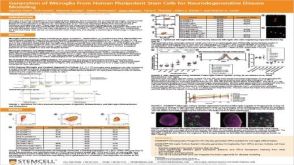 科学海报Generation of Microglia From Human Pluripotent Stem Cells for Neurodegenerative Disease Modeling
 产品手册NeuroCult™-XF: Xeno-Free Culture Medium for the Proliferation of Human Neural Stem Cells
 沪公网安备31010102008431号